



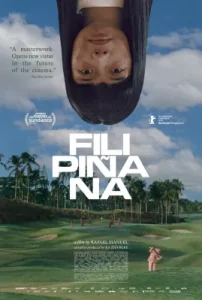
“Filipiñana”
(Philippines/Singapore/UK/Netherlands/France)
Metacritic (6/10), Letterboxd (3/5), Imdb.com (6/10), TMDB.com (6/10), Imdb critics review
#BrentMarchant #Filipiñana #Philippines #Manila #countryclub #teegirl #patriarchy #capitalism #chauvinism #Ilocos #debutfeature #RafaelManuel #sacredcow #Chinesetourist #satire #subservience #condescension #strongarming #industrialist #trophyspouse #MissUniverse #filmshort #golfclub #tempo #sidelines #philandering #shenanigans #trailer #travelogue
Films that seek to scathingly satirize such sacred cow institutions as unchecked capitalism and unabashed patriarchy generally work best when carried out at a breezy or even breakneck pace. It’s as if this approach steps on the gas and never lets up in relentlessly making its opinions known. So, when a picture attempts to achieve the same end with a slow and steady tempo, the effect is frequently watered down, if not lost entirely. And that, unfortunately, is what nearly derails this debut feature from writer-director Rafael Manuel. This wannabe satire tells the story of 17-year-old Isabel (Jorrybell Agoto), a native of the idyllic Ilocos Region of the northern Philippines who has recently relocated to Manila. She works as a tee girl at the driving range of a luxury country club that obsequiously caters to Chinese tourists. In turn, the new hire is expected to operate under a cloak of subservience when it comes to interactions with the guests, especially the men, most of whom are blatant pinnacles of chauvinism and condescension. Although Isabel is not openly adversarial toward these required working conditions, she’s new to them and naturally has a lot of questions, an attitude not particularly appreciated or understood by management. However, she somehow manages to endear herself to the club president, Dr. Palanca (Teroy Guzman), another Ilocos transplant to Manila who claims to understand her (though, as she is cautioned by others, looks can be deceiving). Much of the narrative finds Isabel looking for Dr. Palanca to return a lost golf club to him, a plot device that takes her on an extended tour of her workplace (including many places where she’s allegedly not allowed), showcasing the disparities of capitalism, privilege and gender equality. The exploration of these themes parallels the experiences of other subplot characters, such as Clara (Carmen Castellanos), a Philippine native who has expatriated to America and is under more than a little seemingly tactful strongarming to relocate back to her roots by her wealthy industrialist uncle, Renato (Carlos Siguion-Reyna), and Palanca’s wife (Agot Isidro), a former Miss Universe and trophy spouse who often finds herself sitting on the sidelines while her husband engages in an array of apparently philandering shenanigans. Through these experiences, the women discover insights about their country, their culture, the men in their lives and themselves, but will these revelations inspire them to action? As clearly as these points are made, however, the execution of the story could use some serious retooling. For one thing, the picture’s glacial pacing and numerous overlong reaction shots often cause the film to fall flat and feel needlessly padded (a likely result of the fact that this offering is an expansion of the director’s 2020 film short of the same name). What’s more, the picture’s overly simplistic narrative approach feels more like a localized travelogue at times. Even this offering’s trailer is somewhat misleading, portraying the title as lighter and more amusing than it actually is (despite a few genuinely inspired comedic moments). Nonetheless, perhaps this production’s failings are largely attributable to the inexperience of a first-time feature filmmaker, or maybe they’re due to the fact that the material is inherently underdeveloped to begin with. Clearly, this is a release with something to say, but how that message is articulated is another matter altogether.