



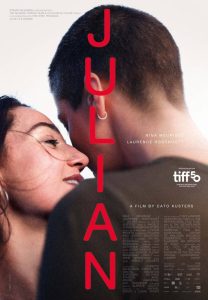
“Julian”
(Belgium/Netherlands)
Screened at the 44th Reeling Chicago International LGBTQ+ Film Festival (3/5)
Metacritic (6/10), Letterboxd (3/5), Imdb.com (6/10), TMDB.com (6/10), Imdb.com critics review
#BrentMarchant #ReelingFilmFestival #LGBTQ #Julian #FleurPierets #JulianBoom #Project22 #samesexmarriage #Belgium #Netherlands #France #USA #medicalemergency #factbasedstory #CatoKusters #debutfeature #homevideo #nonlineartimeline #gaymarriage #hydrographer #artistLGBTQactivist #loveislove #Brazil
As increasingly common as same-sex marriage has been becoming in recent years, there was time not all that long ago when it was more the exception than the trend. In 2017, there were only 22 countries where it was permitted, and, even though the number has significantly increased (and continues to do so) since then, it was still generally considered anomalous when the concept was first emerging. So, to help raise awareness of this new institution, Belgian artist-LGBTQ+ activist Fleur Pierets (Nina Meurisse) and her fiancé, hydrographer Julian Boom (Laurence Roothooft), decided to celebrate their engagement by launching Project 22, a plan to promote the concept of gay marriage by participating in ceremonies validating their betrothal in each of the 22 nations where the practice was legal at the time. They made their marriage official in their native Belgium and then symbolically renewed their vows in The Netherlands, France and the US. But, after only four such weddings, a medical emergency arose, derailing their plans, despite having made preliminary arrangements in other countries where ceremonies were planned. This crisis not only placed a serious damper on carrying out their objective, but it also threw into doubt the viability of their future together, all the while ironically deepening their love for one another. Based on Pierets’ fact-based 2023 account of the couple’s experience, writer-director Cato Kusters’ debut feature tells the tender, heartfelt and agonizing fact-based story of Fleur and Julian’s relationship and their commitment to carrying out their plan to raise visibility about the validity of same-sex marriage. On the romantic side, the picture profoundly conveys the love they held for one another, in sickness and in health, and the heartache that the conditions that such a relationship can also unwittingly induce. In addition, this offering illustrates their dedication to their goal, including addressing such challenges as financing, logistics and other arrangements, such as security in locales like Brazil, where the notion was still often looked at askance. Viewers are truly immersed in the depth of feelings and frustrations that the couple faced in these regards, quite an accomplishment for a first-time filmmaker. Where the picture drops the ball, however, is in the area of film editing. This release’s nonlinear timeline and frequent insertion of home video-style footage (a nice but overused touch that is sometimes clearly superfluous) seriously bog down the narrative flow at times, making the storyline challenging to follow. In some ways, this approach appears to have been employed to avoid playing spoiler too early on in the film, but it truly could have been handled more effectively without producing the needless confusion it does now. It’s unfortunate that this aspect of the production didn’t live up to the same quality as its other attributes, for, if it had, that would have made this a truly outstanding picture rather than one that only gets things right part of the time. Nevertheless, perhaps the most important takeaway that viewers can glean from this effort is an appreciation of the love the two women held for one another and their commitment to making its legitimacy known to a world that was still getting used to the idea of the affirmation of such relationships, something for which anyone who believes in the notion that “love is love” should be thankful.