



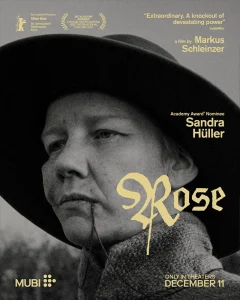
“Rose”
(Austria/Germany)
Letterboxd (3/5), Imdb.com (6/10), TMDB.com (6/10), Imdb.com critics review
#BrentMarchant #Rose #SandraHüller #Europe #Germany #Austria #ThirtyYearsWar #17thCentury #disquisedsoldier #CaroBraun #MarkusSchleinzer #maledominatedculture #mysterioussoldier #remotevillage #longmissingheir #rundownfarm #battlefield #selfdetermination #composite #personalindependence #sexuality #sovereignty #abandonedestate #farmingoperation #conservatism #defiance
Whenever we might be tempted to believe it’s difficult to truly be ourselves these days, we should consider what it was like to experience such circumstances several hundred years in the past. So it was for a woman in 17th Century Europe who diligently sought to pass herself off as a man in the male-dominated culture of the day. In the aftermath of the Thirty Years War (1618-1648), a mysterious soldier shows up in a remote village claiming to be the long-missing heir to a rundown farm. Secretly, however, this soldier is not what “he” appears to be; rather, while the newly arrived stranger, Rose (Sandra Hüller), genuinely served as a combatant in the recently completed conflict, she did so disguised as a man, just as she did on the battlefield. While her specific reasons for doing so aren’t made particularly clear, it’s suggested that she has been making choices like this for years as a path to self-determination for herself, defying the conventions of the time to be the individual she wants to be. Rose’s story is a fictional one, said to be a composite of many similarly situated women of the era who clandestinely hid their true physical identities in exchange for a shot at defiant personal independence, an existence not driven so much by sexuality but by a quest for individual sovereignty. So, when she learns of the abandoned estate from a fellow soldier during the waning days of the war, she sets out to avail herself of the opportunity to claim it when her term of service is over. She successfully acquires title to the property and begins renovating it as a productive farming operation. She also engages in deeds that benefit her newly adopted community and reinforce her personal profile, even taking a wife, Suzanna (Caro Braun), and becoming a father, gestures designed to reinforce her perception as a man and as a respected, upstanding member of the village. But can she maintain this persona? That’s the key question in this story – and the one that, in my view, places the narrative on somewhat shaky ground. While the conservatism of days gone by may have made it easier to hide the truth from others, how truly realistic should it be considered, especially in a story that’s at times vague and unexplained and employs plot devices that seem to be a little too convenient or contrived to be taken completely seriously? Rose’s defiance of the conventions of the day is definitely noteworthy, but how believable is it? Hüller’s fierce, physically demanding performance (her best in what has been a busy year for the actress) and the picture’s stark, stunning black-and-white cinematography go a long way toward telling a compelling tale, but are they enough to overcome the other aforementioned shortcomings? In my view, that’s where this offering doesn’t always feel as convincing as it might have been, despite the uncompromisingly radical message it’s seeking to convey. Writer-director Markus Schleinzer’s release represents a valiant effort at telling a story with contemporary overtones in a historical setting, but it never feels quite as authentic or credible as it might have to successfully grab viewer attention and hold it in a persuasively absorbing way. Indeed, “Rose” may be a noble attempt at putting an alternative spin on a present-day matter set against a bygone backdrop, but it simultaneously comes across as forcing an issue that ultimately might be seen as a premise just as difficult for us to accept as it was for the protagonist’s neighbors.