



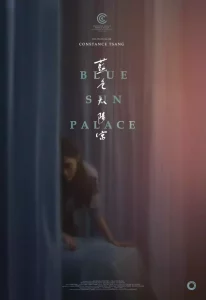
“Blue Sun Palace”
(USA)
Metacritic (4/10), Letterboxd (2/5), Imdb.com (4/10), TMDB.com (4/10), Imdb critics review
#BrentMarchant #BlueSunPalace #ConstanceTsang #NewYork #massageparlor #grief #loss #CannesFilmFestival #IndependentSpiritAward #LunarNewYear #Taiwan #immigrant #loneliness
I can’t begin to count how many times I’ve seen movie reviews use high-minded words like “understated” and “nuanced” as euphemisms to describe pictures that are more aptly characterized as “unfocused” and “meandering.” But those words, unflattering though they may be, would certainly make better choices when it comes to capturing the nature of this debut feature from writer-director Constance Tsang, a tedious, glacially paced slog that aspires to be something that’s quite apparently beyond its grasp. When Didi (Haipeng Xu), a Taiwanese immigrant who works in a massage parlor in the Chinese community of New York’s Flushing Queens neighborhood, falls victim to a tragedy during the Lunar New Year, two of her closest kindreds (and fellow immigrants) subsequently form an impromptu bond as they attempt to work through their grief. Amy (Ke-Xi Wu), Didi’s friend and co-worker, and Cheung (Kang-sheng Lee), Didi’s budding romantic interest, are devastated by their loss but end up seeking comfort in one another’s company. But what does their extemporaneous connection mean, and where is it ultimately headed? Are they sympathetic touchstones for one another, or are they destined to become potential romantic partners? This situation is further complicated by the fact that Cheung is trapped in an unhappy marriage to a shrewish, demanding wife back in Taiwan, one of the reasons that prompted his immigration to the US (and lack of desire to return home). In addition to overcoming their loss, Amy and Cheung also search for meaning in their lives as they grapple with the loneliness that comes from being strangers in a strange land, feelings that drew them to Didi and their association with her in the first place. On the surface, this scenario probably sounds like the foundation of an engaging character study, but, unfortunately, this “understated” and “nuanced” offering more fittingly embodies the “unfocused” and “meandering” labels noted above. The problem here is a fundamentally thin narrative whose screenplay is unable to effectively bring the story to life. The picture limps along from unrelated incident to unrelated incident, yielding a seriously disjointed tale packed with an abundance of uninteresting filler, overlong sequences desperately in need of editing and a wealth of pregnant pauses that add nothing. And, because of this, I’m genuinely at a loss to understand how this release captured three Cannes Film Festival nods (including one win), along with four Independent Spirit Award nominations, none of which, in my view, were deserving. Hypothetically, with a better story and script, “Blue Sun Palace” probably could have been a moving, heartfelt drama and insightful essay on loss. But, as it stands now, this is a film futilely in search of something to say and an intriguing way of saying it.