



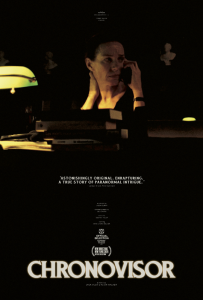
“Chronovisor”
(USA)
Metacritic (6/10), Letterboxd (3/5), Imdb.com (6/10), TMDB.com (6/10), Imdb.com critics review
#BrentMarchant #Chronovisor #scifi #fantasy #ether #ColumbiaUniversity #professor #Vatican #Benedictinemonk #crucifixion #Thyestes #GustavHolst #ThePlanets #Venus #Saturn #Neptune #debutfeature #JesusChrist #SenecatheYounger #EnricoFermi #WernhervonBraun #scientist #milestoneevent #GrecoRomantragedy #rewindbutton #remote #vintagelibraries #subtitledpassage #secretarchives #researcher
Is a compelling premise enough to make a movie work? Well, it certainly helps, especially for films in the sci-fi, paranormal and fantasy genres. But, if that premise isn’t backed up with a comparably competent execution, the picture’s chances of succeeding can be considerably diminished. And that, regrettably, is what holds back this inventive debut feature from co-writer-directors Jack Auen and Kevin Walker. While the specifics behind the story here are somewhat complicated from a scientific, philosophical and metaphysical standpoint, this release essentially follows the research of Columbia University Professor Beatrice Courte (Anne Laure Sellier) after she stumbles onto the long-hidden work of an obscure Benedictine monk, who, in the 1950s, with the supposed assistance of scientists like Wernher von Braun and Enrico Fermi, was said to have developed an invention that enabled the recording of past events by tapping into the intangible imprints they left in the ether. These imprints could then be converted and viewed on a video screen, providing an allegedly authentic depiction of those occurrences, making it possible to draw upon them to dispel historical inaccuracies and exaggerations. Among the events supposedly recorded were the crucifixion of Jesus Christ and a performance of the Greco-Roman tragedy Thyestes by Seneca the Younger. But, given the device’s inherent functionality, it was believed to have been capable of chronicling anything that happens in physical existence – not just milestone events – in a faithful etheric depiction. The immense power of this invention, however, was looked upon with tremendous concern by the Vatican, which was said to have appropriated and hidden the device in its secret archives, a move that, in turn, prompted the monk to vanish and all work on the project to stop. However, when the intrigued Columbia researcher learns of the legacy of this undertaking, she earnestly seeks to unravel the mystery behind the chronovisor. Little is she aware, though, of what she’s getting herself into. Nevertheless, it goes without saying that Professor Courte’s ambitious investigation is utterly fascinating, but the narrative bringing it to life has its share of shortcomings. For example, even though this offering is highly atmospheric with its many visually stunning sequences shot in vintage libraries and assorted old world settings, much of the story is told through images of lengthy subtitled passages culled from assorted writings. And this calls for a lot of reading, much of which flies by on the screen at a rather brisk pace (keep your finger on your remote’s rewind button if you’re streaming this title). There are also a number of esoteric philosophical discussions included (particularly at the outset) that some viewers might see as overly intellectualized. While the script writers are to be congratulated for not spoon-feeding their audience with simplistic, dumbed-down dialogue, there also comes a point where the exchanges resemble long-winded exercises in condescending erudition that viewers may well find off-putting, perhaps even prompting them to give up on this title early on. What’s more, some segments feel deliberately padded as a means to fill out an already-scant 1:39:00 runtime. To its credit, though, the production boasts a mesmerizing background score featuring a superb adaptation of Gustav Holst’s The Planets (especially its excerpts from the movements Venus, Saturn and Neptune). Then there’s the aforementioned gorgeous 16-mm cinematography (even if the subject matter it captures is somewhat limited). And, of course, one can’t forget the reason for watching this release in the first place, its captivating premise. It’s just a shame, though, that the attributes behind “Chronovisor” aren’t consistent across the board, as that would have made for a much more impressive picture. Still, the first-time filmmakers can nonetheless take pride in having produced a commendable indie arthouse project on a shoestring budget. And, in light of the start they’ve made here, it would be interesting to see what they could turn out with more resources at their disposal in subsequent productions.