



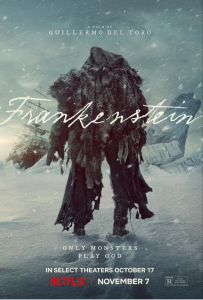
“Frankenstein”
(Mexico/USA)
Metacritic (6/10), Letterboxd (3/5), Imdb.com (6/10), TMDB.com (6/10), Imdb.com critics review
#BrentMarchant
#Frankenstein #OscarIsaac #JacobElordi #GuillermodelToro #creature #overcomingdeath #playingGod #horrorfilm #MaryShelley
An old adage in Hollywood advises against remaking the classics, since there’s a good chance the new iterations won’t live up to the quality of their predecessors (of course, given the plethora of reboots that have flooded the movie market in recent years, that admonition obviously hasn’t stopped ravenous producers from attempting to cash in). About the only way to potentially avoid the pitfalls of that trap is to devise remakes that provide different spins on their original stories, coupled with fresh new looks visually, changes akin to applying a new coat of paint. And, to a great degree, that’s precisely what viewers can expect from the latest retelling of the classic horror tale, “Frankenstein,” based on the time-honored novel by author Mary Shelley. In this current adaptation from writer-director Guillermo del Toro, the filmmaker recounts the odyssey of 19th Century scientist Dr. Victor Frankenstein (Oscar Isaac) in his attempt to overcome death by creating new life (essentially an effort to play God by reversing what’s seen as mankind’s inherently unavoidable fate). In the process, he creates a creature (Jacob Elordi) in the image of his own singular vision, one that draws upon the newly emerging scientific knowledge and technology of the day. But can his plan work? What’s more, is science by itself enough to make such a miracle happen? Or does this undertaking call for something loftier, elements rooted in ethics, morality, compassion, humanity and divine wisdom? And can a mere mortal like Dr. Frankenstein successfully pull off such an accomplishment without these qualities free of unintended ramifications? The director’s ambitions to infuse such grand notions in an otherwise-timeless tale of classic horror are indeed admirable, and the high-end look of the film is truly impressive. But are these attributes enough to distinguish this version of the story sufficiently and allow it to stand on its own? In my view, the results on this front are decidedly mixed, not so much because of failings on the aforementioned elements but because of shortcomings in other more fundamental filmmaking considerations. In particular, this edition could use improvements in pacing, writing and editing – issues not uncommon in a number of del Toro’s previous efforts – especially in the production’s opening half. For instance, the setup leading to the creature’s eventual emergence is noticeably bloated, belaboring narrative aspects that viewers are likely already well familiar with and thereby trying the patience of the typical moviegoer, regardless of how cinematically stunning the picture’s images might appear (credit this offering’s gorgeous cinematography, production design and special effects). Admittedly, the film’s second half is far more compelling than what precedes it, helping to offset some of the prevailing tedium, but it’s safe to say that the picture’s overall 2:29:00 runtime could be cut back without losing much. This version of “Frankenstein” genuinely has its strong points, but it could have used some tidying up to make it the masterpiece it aspires to be – and otherwise might have been.