



“I Play Rocky”
(USA)
Metacritic (7/10), Letterboxd (3.5/5), Imdb.com (7/10), TMDB.com (7/10), Imdb.com critics review
#BrentMarchant #IPlayRocky #SylvesterStallone #boxer #Oscar #boxofficesensation #CarlWeathers #BurgessMeredith #BurtYoung #TaliaShire #JohnGAvildsen #IrwinWinkler #RobertChartoff #jitteryinvestor #AnnaSophiaRobb #PJByrne #TobyKebbell #TracyLetts #MattDillon #JayDuplass #Philadelphia #feelgoodmovie #comedydrama #AnthonyIppolito #OrsonWelles #NewYork #makingofmovie
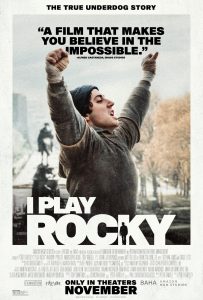
Whoever thought that a “making of” movie would turn out better than the picture whose production it was chronicling? Well, maybe this isn’t a bona fide “making of” film in the strictest sense of the term, but the intent is essentially the same. Director Peter Farrelly’s latest outing offers a fact-based interpretation of the behind-the-scenes story of the filming of “Rocky” (1976), the shoestring budget saga of an underdog boxer who follows his instincts and goes for broke in seeking a shot at the big time. The box office sensation captured 10 Oscar nominations, winning three awards (best picture, director and film editing), and made the career of actor-writer Sylvester Stallone, who was nominated in both capacities, the first individual to do so since Orson Welles. In “I Play Rocky,” viewers get an inside look at how a struggling Stallone (Anthony Ippolito) fought to get his name known and his work recognized in a business that continually downplayed his talents and repeatedly typecast him in a limited range of roles. However, when he pitched his script for “Rocky” – written in 3½ days – to producers Irwin Winkler (P.J. Byrne) and Robert Chartoff (Toby Kebbell), he got their and the industry’s attention. But that foot in the door was just the beginning of the challenges associated with this project, including Stallone’s campaign to convince the producers that he should play the lead, securing financing from jittery investors like Sandy Maddox (a fictional composite character played by Tracy Letts), moving the story’s setting and locations from New York to Philadelphia, working out a series of problematic shooting logistics, and dealing with irascible union officials, among other issues. Pulling this off meant getting creative to keep the production moving on schedule and on budget, a miracle somehow pulled off by director John G. Avildsen (Jay Duplass). This comedy-drama also features fitting homages to the actors who created memorable characters in the original, including Carl Weathers (Stephan James), Burgess Meredith (Robert Morgan), Burt Young (Scot Teller) and Talia Shire (Kiki Seto), as well as the people who had tremendous impact in Stallone’s personal life, his supportive wife, Sasha (AnnaSophia Robb), and his overbearing, hypercritical father, Frank (Matt Dillon). So how did things turn out in the end? You’ll just have to watch the movie for yourself to find out (if you don’t already know, that is). Surprisingly, though, perhaps the quality I found most intriguing about “I Play Rocky” is how much better it makes its predecessor look than it actually is. In the interest of full disclosure (and what is likely to be seen as an extremely unpopular opinion), I’m not an overly enthusiastic fan of the original (I find it somewhat clichéd and did so at the time of its debut). But this release takes what’s best from “Rocky” and plays to those strengths here, a tale of inspiration, following one’s dreams and adhering to one’s personal truth, both for the title character and his real-life creator. Because of that, audiences are likely to see this offering as a crowd-pleasing feel-good movie, and, for the most part, justifiably so. To be sure, “I Play Rocky” could stand some modest improvement in spots, such as the editing and pacing of its somewhat overlong opening hour, the acting quality of Ippolito’s opening scenes (despite an otherwise-fine performance subsequently), the exaggeration of Stallone’s allegedly unknown acting status at the time he launched into the project, and, frankly, a less-than-compelling (though ultimately understandable) title. But these minor shortcomings are compensated for by its many other fine attributes, such as the performances of an excellent ensemble, its faithful cinematic authenticity in re-creating well-known material from the original, a well-penned script (especially in some of its hilarious comic relief), and, of course, its wisdom in emphasizing what made both this film and its predecessor work best. “I Play Rocky” might not qualify as groundbreaking cinema, but it’s certainly a highly entertaining and inspiring time at the movies, and who can find fault with that?