



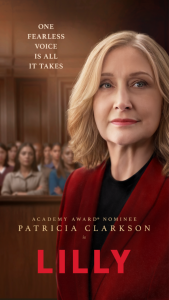
“Lilly”
(USA)
Metacritic (7/10), Letterboxd (3.5/5), Imdb.com (7/10), TMDB.com (7/10), Imdb.com critics review
#BrentMarchant #Lilly #LillyLedbetter #PatriciaClarkson #RuthBaderGinsburg #BarackObama #FairPayAct #Goodyear #equalpay #Alabama #Congress #HillaryClinton #NationalWomensLawCenter
Profiles of powerful, determined, dynamic women faced with long odds courageously staring down formidable opposition provide some of the most engaging and inspirational viewing one can witness on the big screen. And one of the latest additions to that roster is writer-director Rachel Feldman’s fact-based biography of unlikely but dedicated activist Lilly Ledbetter (Patricia Clarkson). The film chronicles the patient but relentless fight of the title character, a former manager at a Goodyear plant in Gadsden, AL, to secure equal pay for women earning far less than their male counterparts. After 19 years on the job and a stellar performance record, Ledbetter was demoted and then removed from her job, essentially for being a “troublemaker” who filed too many reports of unfair treatment against women and dared complain when she learned that she was being paid far less than the men at her plant. She took her claim to court, where she initially won her case but was later turned down on appeal as a result of a legal loophole in the law that was supposedly designed to guarantee equal pay. This controversial 5-4 Supreme Court ruling against the plaintiff nevertheless prompted the indignation of Justice Ruth Bader Ginsburg, author of the dissenting opinion, which garnered ample public attention and led to a legislative initiative to amend the law to eliminate the loophole, an effort in which Ledbetter and Ginsburg played crucial roles and captured the support of 2008 Democratic presidential contenders Barack Obama and Hillary Clinton. While the narrative here is admittedly somewhat formulaic, its message is nonetheless a clear and simple one – that fair is fair, no matter what one’s gender might be and regardless of the rights involved. It calls to mind the moving stories of valiant women fighting for justice found in such predecessor works as “Norma Rae” (1979), “Hidden Figures” (2016) and “On the Basis of Sex” (2018). In conveying the spirit behind these notions, the film is undeniably impassioned in its intent but successfully avoids the trap of becoming unduly dogmatic, excessively preachy, punishingly self-righteous or blatantly partisan. The picture makes its point without resorting to male bashing, political party bullying or shrill corporate condemnation, again, staying steadily on point with its core fairness message. The filmmaker also does a fine job of explaining the circumstances of this case without being simplistic or condescending, skillfully relying on archival footage featuring interview clips of Ginsburg as she outlines Ledbetter’s story, a de facto running commentary that effectively helps to keep viewers informed about what’s transpiring in each of the picture’s segments, There are also touching elements to the film, depicting what Lilly went through personally during the course of her odyssey, especially coping with the health challenges of her ever-supportive husband (John Benjamin Hickey) and seeking to rectify a protracted estrangement from her son (Will Pullen). In addition, as Lilly’s story unfolds, viewers witness the many committed partnerships she developed with colleagues, including her primary attorney (Thomas Sadoski), one of the amended bill’s sponsors, Rep. George Miller (Ray Bengston), and members of the Washington-based National Women’s Law Center (Deirdre Lovejoy, Rhoda Griffis). “Lilly” is, without a doubt, one of 2025’s most underrated cinematic offerings, one deserving of wider recognition and a commensurate audience, but, thankfully, it is now available for streaming online. We can only hope that one day the need for movies like this will no longer be necessary, but, until then, fortunately we have pictures like this to help keep reminding us of the work that remains to be done – and to help keep moving the needle forward.