



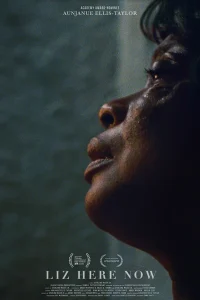
“Liz Here Now”
(USA)
Screened at the 62nd Chicago International Film Festival (3+/5)
World Premiere
Letterboxd (3+/5), Imdb.com (7/10), TMDB.com (7/10), Imdb.com critics review
#BrentMarchant #LizHereNow #ChiFilmFest #AunjanueEllisTaylor #Oakland #BlackPanthermovement #domesticdrama #childendangerment #housekeeper #FBI #JEdgarHoover #politicalaspirations #childcareprovider #civilrightsmovement #shootingincident #gentrification #forceddisplacement #socialitewife #scandal #maelstrom
It’s been said that no good deed goes unpunished, and that insightful aphorism would appear to be multiplied many times over in this new fact-based domestic drama from director Sterling Macer Jr. In 1967 Oakland, hard-working housekeeper and child care provider Elizabeth “Liz” Baxter (Aunjanue Ellis-Taylor) underwent more than her share of tragedies and challenges. First, she lost her son-in-law to a shooting incident, and then she and her neighbors faced the threat of gentrification, along with the prospect of forced displacement. Moreover, at the same time, the civil rights movement was headed toward a boiling point, and nowhere was this more apparent than in her own backyard, where the Black Panther movement was rising to prominence and targeted as a violent threat by FBI Director J. Edgar Hoover. But Liz tried to make the best of these circumstances by dutifully doing her job at the home of a wealthy family, Frank and Jane Connor (Ryan Wesley Gilreath, Rachelle Lefevre), a well-connected physician with political aspirations and his demanding socialite wife. As Liz came to discover, however, there was serious trouble in the household, most notably child endangerment issues inflicted against the couple’s two youngsters, Chrissy (Aniela Zeig) and Todd (Brady Wagner), at the hand of their mother, as well as an attempted cover-up of the matter by their politically motivated father seeking to avoid a scandal. As a fierce protector of the children in her charge, Liz sought to report the matter to authorities, but she was rebuffed by the police. And, as she became more aggressive in attending to the children’s welfare, circumstances quickly spiraled out of control, raising false accusations of a conspiracy against the Connors involving the Black Panthers and with Liz squarely caught in the middle. This thus begged the question, could she survive this ever-widening maelstrom with her reputation and well-being intact? In today’s comparably more progressive climate, it may be unfathomable for many of us to believe that the kinds of conditions depicted here could be allowed to get so out of hand, but “Liz Here Now” holds little back in telling the story of this deeply incendiary time. Some of it may appear somewhat overblown (especially in several of the more pivotal performances), but the picture effectively illustrates how conditions can be manipulated all too easily to achieve dubious ends – and how well-intentioned Samaritans can readily be disparaged by their altruistic actions. While much of the overall approach employed here follows the standard biopic formula, it’s nevertheless made convincing and compelling by the portrayals of Ellis-Taylor and the child actors, as well as those of Cedric Mays, Patrick Newson Jr. and Caisy Cole as members of the Baxter family. Admittedly, it’s somewhat disappointing that the narrative didn’t devote more attention to the role of the Panthers in this scenario and to the outcome of the gentrification issue, but the main thrust of this story is indeed capably handled and tells an inspiring tale from an era gone by. This offering also shows how one person can make a difference and that the “punishment” inflicted for doing a good deed might even be commuted.