



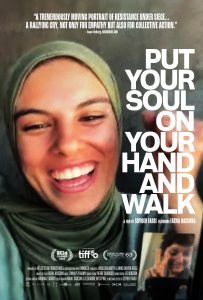
“Put Your Soul on Your Hand and Walk”
(France/Occupied Palestinian Territory/Iran)
Metacritic (6/10), Letterboxd (3/5), Imdb.com (6/10), TMDB.com (6/10), Imdb critics review
#BrentMarchant #PutYourSoulonYourHandandWalk #SepidehFarsi #FatmaHassona #Gaza #Israelioccupation #Hamas #documentary #CannesFilmFestival #NationalBoardofReview
Filmmaking under fire can’t be easy. In many respects, it’s akin to the task undertaken by war correspondents when reporting from combat zones. But, for all the difficulties associated with efforts like this, coverage of these stories certainly serves a valuable purpose in letting the world know what’s transpiring in such heated conflicts. That’s obviously the intent underlying this release from writer-director Sepideh Farsi, an account of the relentlessly protracted battle zone horrors that have been playing out in Gaza against the Palestinian people by Israeli Defense Forces. The filmmaker had originally hoped to cover the story from inside Gaza, but border closures and prohibitions against outsiders being allowed into the occupied territory kept her from entering Palestine. An alternate approach was thus needed. So, after evaluating her options, the director devised an inventive solution, telling her story through a series of cell phone conversations between her and 24-year-old Fatma Hassona, an aspiring journalist/photographer struggling to survive under the harsh conditions of her homeland’s onslaught. The dialogues between Farsi and Hassona cover a wide array of topics, ranging from coping with the logistical challenges of everyday life to the emotional toll of living under the constant threat of military annihilation to the ironically unexpected (albeit undeniably frustrated) sense of hope that pervades Fatma’s outlook for the future. A rollercoaster of emotions ensues as displays of heartbreak and hopefulness emerge, faithfully presented as they occurred – phone connection glitches, sound quality issues and all. However, as much as there is to be said for this documentary’s sincere commitment to authenticity, it could stand to have been cleaned up in the final cut. The flow of some of the content becomes rambling and repetitious, and there’s plenty of extraneous material unrelated to the cell phone conversations that easily could have been eliminated. While the effort involved in amassing the footage that was collected is indeed commendable in light of the inherent difficulties involved, the filmmaker’s failure to make the material more coherent, less redundant and better focused only serves to undermine the clarity and importance of the message that the picture is seeking to convey. As someone who lived through the tyranny inflicted against her in her Iranian homeland, Farsi is herself no stranger to the kinds of ordeals that her subject faces, and the filmmaker valiantly attempts to bring those circumstances to light, an effort that earned this offering a Cannes Film Festival nomination and the National Board of Review’s Freedom of Expression Award. Nevertheless, as laudable as this work strives to be, it could have been more effective if it had told its story with more of an eye toward informing than with simply presenting the unfiltered raw material for its own sake. Fatma and the people of Palestine deserve better.