



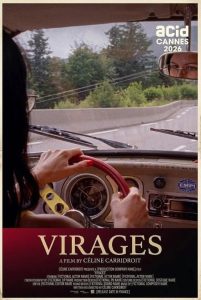
“Summer Drift” (“Virages”)
(Switzerland/France)
Screened at the 62nd Chicago International Film Festival (2/5)
North American Premiere, Gold Q-Hugo Award winner, OutLook Competition
Letterboxd (2/5), Imdb.com (4/10), TMDB.com (4/10), Imdb.com critics review
#BrentMarchant #SummerDrift #ChiFilmFest #GoldQHugoAwardwin #docudrama #Geneva #watchassembler #transsexual #JohannaSchopfer #CannesFilmFestival #VolkswagenBeetle #automechanics #dragracing #reinvention #transitioningprocess #transfemale #changeofgender #Switzerland #stability #lifelonghobby #uncertainty #homemovie #OutLookCompetition
Reinventing oneself can be a truly rewarding experience, especially when we finally get to be the person we always wanted to be. However, the transitioning process can be fraught with perils, as those in the transexual community can attest. Such was the experience of Johanna Schopfer, a trans female who at one time faced violent, abusive behavior at the hands of others simply because of her change of gender (her adoptive home of Switzerland being more innately conservative than many outsiders believe). Over time, though, she managed to find her new footing that helped her gain a sense of stability as a watch assembler at a company based in Geneva. And this docudrama from directors Céline Carridroit and Aline Suter examines her new life after the ordeals of her past – her relationship with a loving partner, her friendships with others and her passion for a lifelong hobby, auto mechanics. In fact, the film places considerable emphasis on her efforts to restore a dilapidated 1970 Volkswagen Beetle, both for transportation purposes and amateur drag racing competitions, a project that’s a metaphor for her own reinvention. While there’s certainly a laudable sentiment involved in this venture and its documentation, it doesn’t make for especially engaging storytelling unless one is really into cars (and a highly niche segment of this subject at that). The film is fittingly labeled a docudrama given that it’s based on Johanna’s own experience but with fictionalized elements incorporated in the finished product. But this naturally begs the question, how much of it is factual and how much is made up? That lingering uncertainty, in my view, undermines how seriously audiences should take this production. What’s more, given the unclear nature of “her story” and its meandering assemblage of material, it’s hard to get interested in or enthused about how it plays out. In the end, it comes across like a home movie (and not a terribly compelling one either). In addition, the praise that has been heaped upon it truly mystifies me, including two Cannes Film Festival award nominations and this event’s Gold Q-Hugo Award win, top prize in the festival’s OutLook Competition. I’m truly happy for Johanna that she has been able to find herself and put her life on track, but that doesn’t necessarily translate into enthralling material that makes for an engaging work of cinema, especially in a competition in which there were other far better offerings deserving of the accolades that have been bestowed on this work. Here’s hoping that Johanna and the filmmakers enjoy the honors and praise of the moment. But now go on and live your lives, and please don’t commit any more of this material to film unless you truly come up with something more interesting to say.