



“The Choral”
(UK/USA)
Metacritic (7/10), Letterboxd (3.5/5), Imdb.com (7/10), TMDB.com (7/10), Imdb critics review
#BrentMarchant #TheChoral #WorldWarI #choralsociety #RalphFiennes #England #Germany #conscription #EdwatdElgar #TheDreamofGerontius #oratorio #conscientiousobjector #SalvationArmy #angelicvoice
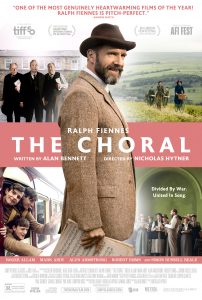
In 1916 England, when the nation was embroiled in its intense World War I confrontation with Germany on the European mainland, the country toiled mightily to maintain its civilized prewar status quo on the homefront as much as possible. But, try as they might, British subjects nevertheless had to contend with the unavoidable impact of that distant conflict on many aspects of life at home. And that discrepancy, ironic and paradoxical as it may be, is a major theme in the latest offering from director Nicholas Hytner. Set in the fictional Yorkshire mill town of Ramsden, the film follows the resolute efforts of its local choral society – the cultural heart of the community – to stay afloat at a time when many of its male vocalists are volunteering or being drafted for the war effort, including its beloved choir master. This inescapable reality thus forces the society’s leadership (Roger Allam, Mark Addy, Alun Armstrong, Ron Cook) into making some hard choices about how to keep the organization going as its talent pool is steadily depleted. Chief among these decisions is finding a suitable replacement choir master, a job that ends up going to the gifted but controversial Dr. Henry Guthrie (Ralph Fiennes), a talented musician who spent a number of years living in, of all places, Germany (Horrors!) and a “bachelor” known for leading a “questionable” lifestyle. Although initially reluctant to take the job (believing the English cultural scene to be inherently inferior to that of the enemy), he begrudgingly accepts the position. In doing so, he launches a far-reaching campaign to recruit new members and agrees to help bolster domestic patriotism through his choice of musical selections. He eschews performances of the works of renowned (and, in his view, vastly superior) German composers in favor of home-grown material – in this case, a production of The Dream of Gerontius, a little-known, underappreciated, seldom-performed oratorio by English composer Sit Edward Elgar (Simon Russell Beale). With this stage thus set, the film proceeds to follow preparations for the performance of Elgar’s opus, backed by the individual stories of a number of the vocalists, including, among others, the limbo imposed on young men facing the uncertainty of conscription (Taylor Uttley, Oliver Briscombe), an avowed conscientious objector conflicted about how to handle his draft notice (Robert Emms), townsfolk dealing with the grief of lost and missing loved ones (Emily Fairns, Eunice Roberts), and a Salvation Army volunteer with an angelic voice who doesn’t fully recognize the depth of her talent (Amara Omereke). This combination of story threads makes for an engaging, well balanced, evenly integrated, sufficiently resolved narrative. However, the sheer number of tangents incorporated here occasionally becomes a little unwieldy, with some being left less developed than others, leading one to believe that this project may have worked better as a PBS miniseries than a standalone theatrical release. But this shortcoming is largely made up for by its solid performances (particularly those of Fiennes, Allum, Fairns and Omereke), backed by gorgeous cinematography and a superb period piece production design. To be sure, “The Choral” may not hit all of the right notes, but it successfully manages to land quite a few of them, making for an enjoyable, entertaining story – something that’s always welcome during times of adversity, issues arguably just as pertinent today as they were a century ago.