



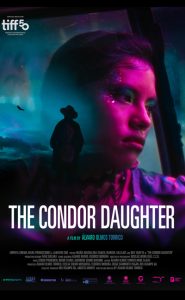
“The Condor Daughter” (“La hija cóndor”)
(Bolivia/Peru/Uruguay)
Letterboxd (3/5), Imdb.com (6/10), TMDB.com (6/10), Imdb critics review
#BrentMarchant #TheCondorDaughter #Bolivia #midwife #Quechuancommunity #clashofcultures #MaríaMagdalenaSanizo #MarisolVallejosMontaño #singer #motherdaughterdrama #timehonoredprofession #patriarchalcustom #cropfailure #livestockkilling #searchparty #punishment #comfortzone #familialconflict #playingfield
While those seeking social and cultural harmony would love to see everyone get along, the reality is that our world, sadly, is often beset by a clash of cultures, both at the macro level and in intensely personal interactions, scenarios that often prove difficult to resolve. And those are the very kinds of conflicts portrayed in this third big screen feature outing from writer-director Alvaro Olmos Torrico. Set primarily in a rural indigenous Bolivian Quechuan community, this mother-daughter drama follows the often-tense relationship between the local midwife, Ana (María Magdalena Sanizo), and her adoptive teenage daughter, Clara (Marisol Vallejos Montaño), whom she has raised since birth. Ana is anxious for Clara to follow in her footsteps, learning the ways of her time-honored profession and adhering to the traditional culture of her community. But Clara is uncomfortable with some of her people’s questionable longstanding patriarchal customs. In addition, she has aspirations of becoming a singer, perhaps even relocating from the countryside to the city to pursue such opportunities. So, when the tensions with Ana at last become too stressful for Clara to handle, she sneaks out of the house late one night to follow her dreams elsewhere. However, when villagers learn of her disappearance, they’re convinced that her clandestine departure is the cause of a number of problems that they’re experiencing, such as sudden, unexpected crop failures and mass livestock killings. They vow that she must be found and returned to the community to face punishment for these “evil deeds.” The village elders seek to form a search party, but Ana steps forward and insists that she assume the task, even if it means taking her out of her own comfort zone and journeying to the city to locate Clara. But what will each of them find once they’re both on a new playing field? What will it mean for their respective futures and the now-altered nature of their relationship? Can the clash of modern city life and traditional country values be overcome and harmonized? That’s what viewers hope to find out. To be honest, though, this is a narrative that’s not too difficult to figure out, which lends a certain degree of predictability. What’s more, the story suffers from occasional pacing issues, particularly in the opening half hour. However, the film nevertheless also presents a domestic drama that’s highly relatable for anyone who has experienced comparable familial conflict, especially the kind affecting Clara, who’s eager to soar like a mighty condor in her own individual milieu. Perhaps the greatest strengths here, though, rest with the picture’s spectacular cinematography (some of the best I’ve ever seen) and its impeccable production design spanning a variety of urban and rural settings. “The Condor Daughter” may not hit all of its marks, but it does offer audiences gorgeous imagery and a taut exploration into the dynamics of cultural and domestic clashes in a changing and challenging world, something we could all learn from.