



‘Rebuilding’ celebrates the virtues of compassion
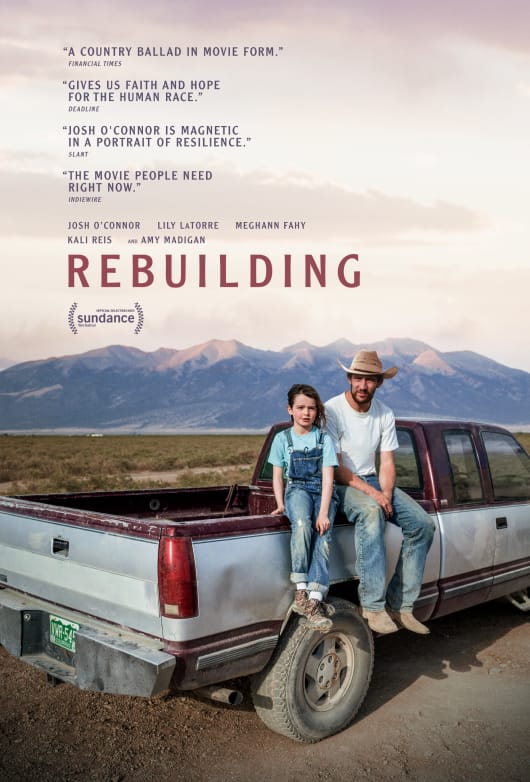
“Rebuilding” (2025). Cast: Josh O’Connor, Lily LaTorre, Meghann Fahy, Amy Madigan, Sam Engbring, Kali Reis, Zeilyanna Martinez, Dwight Mondragon, Christopher Young, Teresa Ott Beiriger, David Bright, Nancy Morlan, Kathy Rose, Jeanine London, Binky Griptite, Jefferson Mays. Director: Max Walker-Silverman. Screenplay: Max Walker-Silverman. Web site. Trailer.
When the slate gets involuntarily wiped clean, we generally have two choices available to us: (1) walking away and starting anew or (2) attempting to rebuild. Both options usually represent hard choices, not only because of the effort required, but also due to the emotional anguish we’re likely to face. Of those two choices, the restoration option can be particularly trying, given that, as we go through it, we’re constantly reminded of what we lost. However, there are also things to be gained, especially when it comes to the compassion, assistance and support we’re likely to receive from those who want to help. And that’s the message to be found in the heartfelt new story of recovery, “Rebuilding.”
Some might say that fate is playing some cruel tricks on Dusty Fraser (Josh O’Connor). The Colorado rancher has been forced off the land that has been in his family for generations by a wildfire that has decimated his property. As a consequence, he’s been forced to relocate into a FEMA camp until he’s able to get himself back on his feet. He’s also had to take a job working on a road construction crew to provide him with an income source, a position far removed from his experience, expertise and interest. It’s quite an adjustment for someone who has quietly but committedly tried to make something of himself and to uphold the reputation of his family’s longstanding ranching operation. But, difficult as these circumstances might be, he’s determined to rebuild.
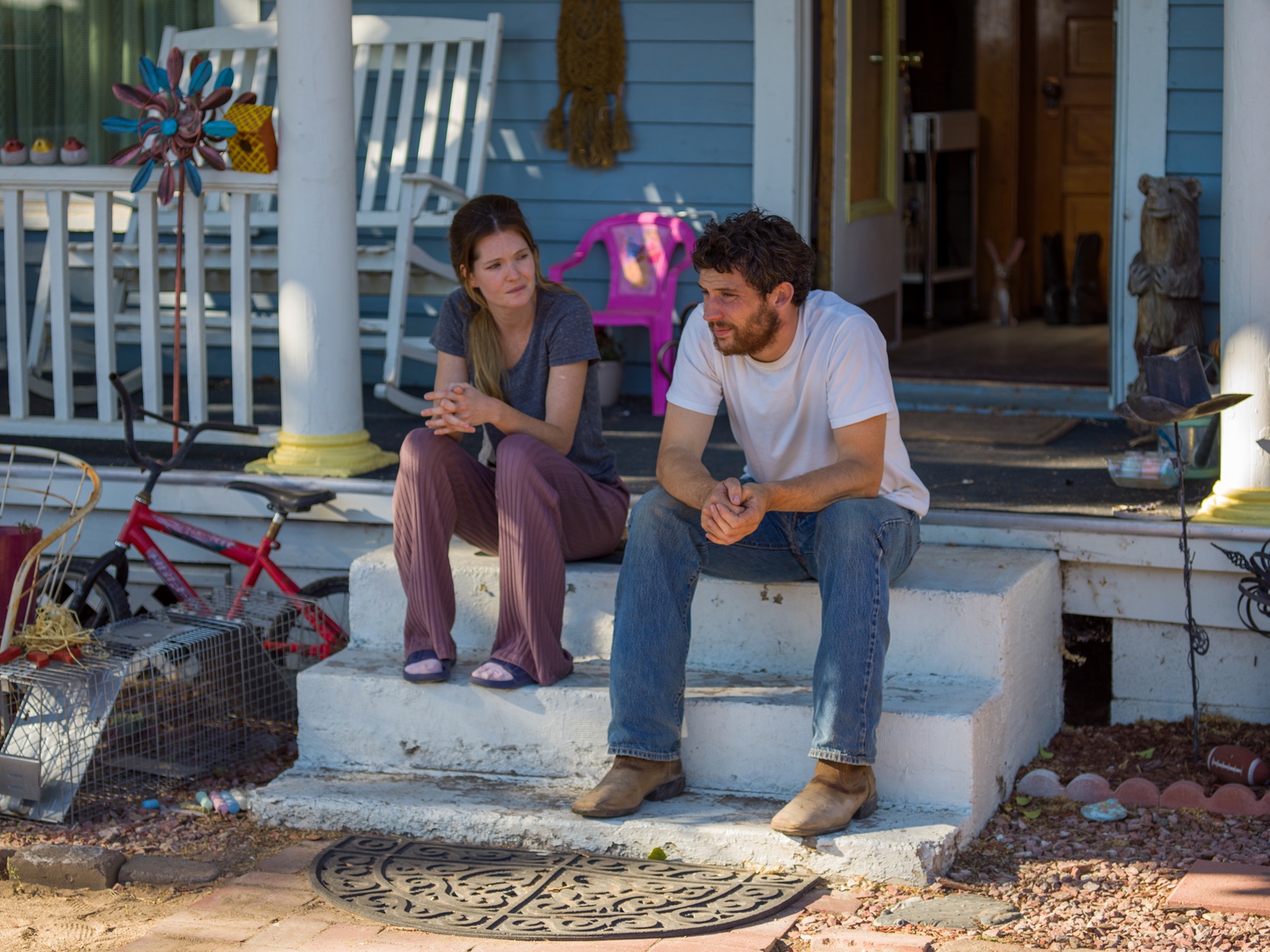
Unfortunately, he’s rebuilding more than the homestead he’s lost. He’s also attempting to put his personal life back together, having divorced from his ex-wife, Ruby (Meghann Fahy), and seeking to re-establish a good relationship with his young daughter, Callie-Rose (Lily LaTorre), who lives with her mother and her mom’s new romantic interest, Robbie (Christopher Young). It’s almost as challenging a venture as rebuilding the ranch, given that Dusty is often looked down upon by others as something of a failure, his loss of the family legacy being just the latest in a string of letdowns. And, considering how genuinely humble Dusty is, the disparagement being unfairly thrust upon him while he is down is anything but fair. These circumstances have left him looking rather sheepish, making it difficult to get his life back on track.
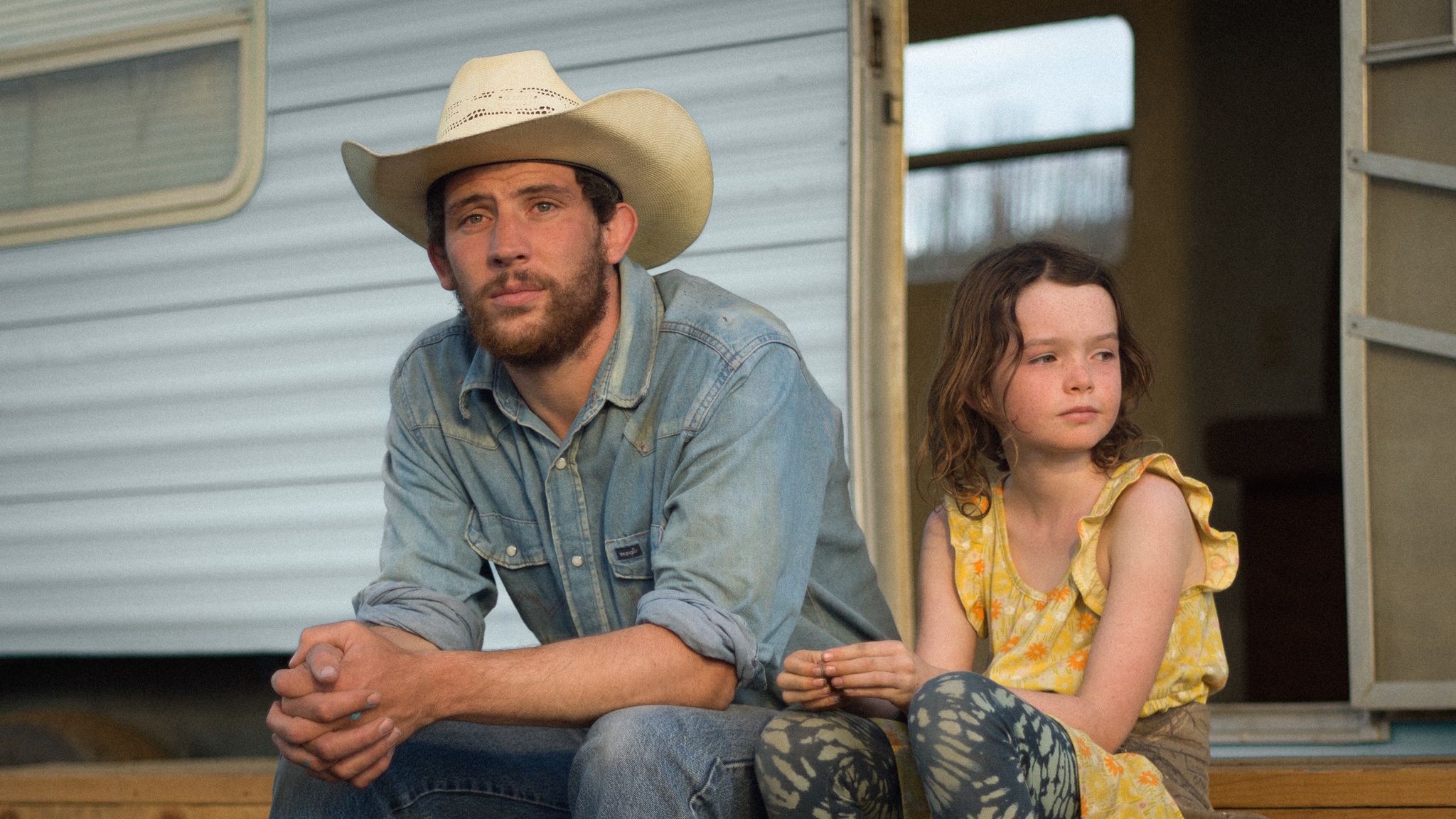
Fortunately, though, there are those who are in Dusty’s corner. Perhaps his biggest supporter is his former mother-in-law, Bess (Amy Madigan), who also lives with Ruby, Robbie and Callie-Rose. She recognizes that, despite his shortcomings, Dusty is fundamentally a good man who is doing his best under trying conditions. She appreciates the effort he’s making to be a responsible father to her granddaughter and to sincerely help out with raising her, despite the soft-spoken but undue ridicule Ruby inflicts upon him. And, because of this, Bess seeks to support and encourage him in any way she can, despite the fact that he and her daughter are divorced.
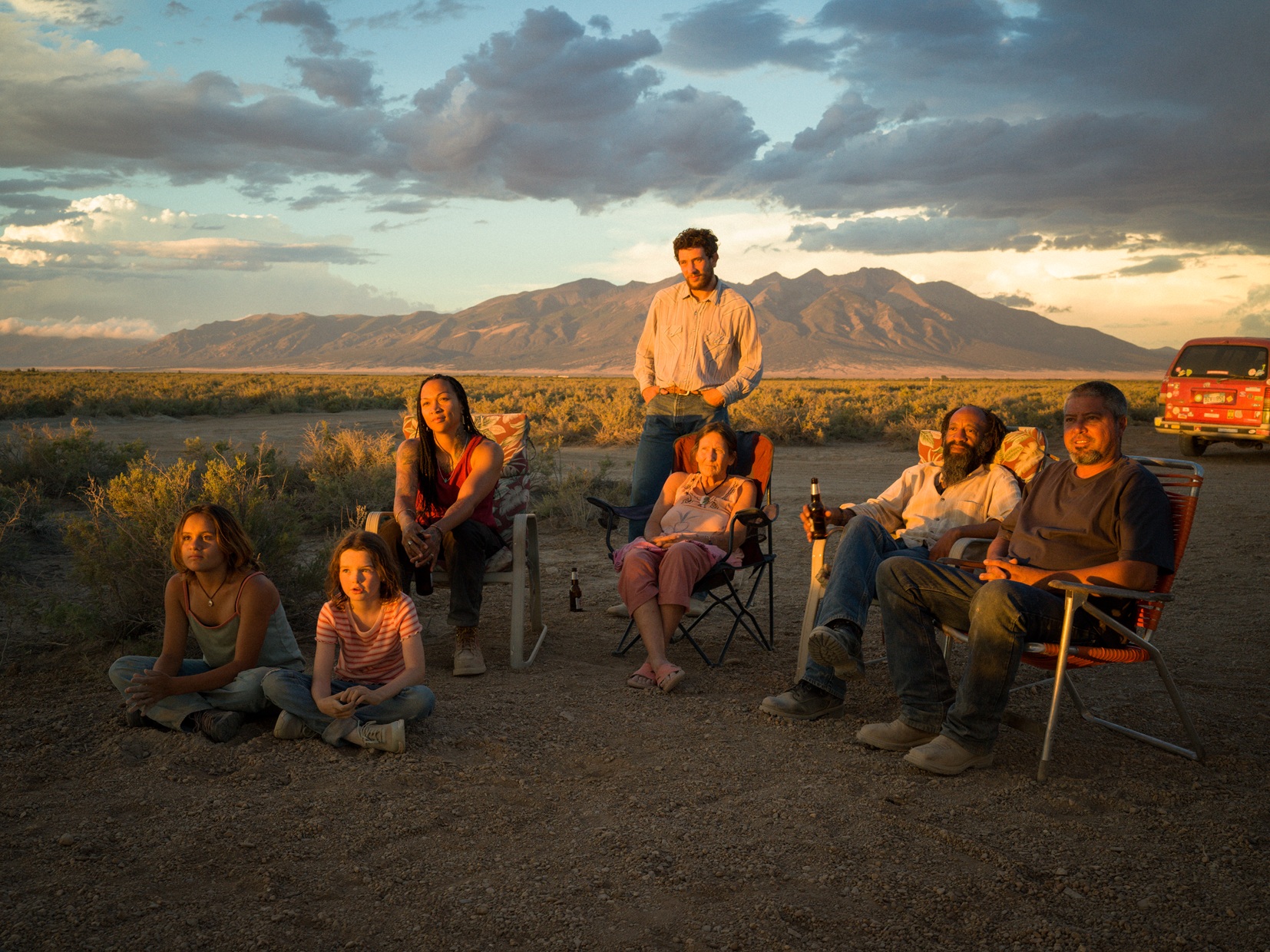
But Bess isn’t the only one trying to help Dusty. His rancher friend, Louis (Dwight Mondragon), tries to provide support, too, despite the fact that he’s experiencing dire straits of his own these days. Most notably, though, there’s much compassion and assistance to be had from Dusty’s neighbors at the FEMA camp, including Mila (Kali Reis), a recently widowed mother living with her daughter, Lucy (Zeilyanna Martinez), along with a colorful array of others (Teresa Ott Beiriger, David Bright, Nancy Morlan, Kathy Rose, Jeanine London, Binky Griptite). They’re all saddled with circumstances not unlike what Dusty is going through, but they have all pulled together to support one another as best they can, a true ray of hope under such difficult conditions.
This is not to suggest that everything goes smoothly, as Dusty finds out when he meets with a banker (Jefferson Mays) about obtaining a loan to get his ranch up and running again, especially when he learns that the scorched earth that makes up his property is unlikely to become productive again for a decade or more. Then there’s an unexpected traumatic family crisis, as well as housing complications involving FEMA management, unforeseen developments that test Dusty’s character, resolve and patience. Can he tough it out? Or are these character-building experiences designed to bolster his confidence and problem-solving capabilities? This would suggest that this scenario is as much about Dusty rebuilding (or, perhaps more precisely, reinventing) himself as it is about restoring the physical infrastructure of his life, an undertaking with implications greater than just once again securing a roof over his head.
Whatever underlying purpose underscores this experience, however it turns out will depend greatly on how Dusty views his circumstances, specifically what he believes about the character of his existence and the shape it takes as he moves forward in life. What’s more, does he believe in himself enough to see this experience through? These considerations are crucial in light of the role they play in shaping the beliefs responsible for framing his reality, a product of the conscious creation process, the philosophy that makes such outcomes possible. It’s unclear whether he’s aware of or familiar with this school of thought, but, given the ramifications involved, he’d be wise to consider it if he hopes to obtain the results he seeks. Is he up to the challenge? Considering everything that’s at stake, he’d be wise to give this notion serious thought and concerted follow-through.
I find it intriguing that the generosity of spirit that emerges in this picture tends to come about at times when things are at their worst, something that, strangely enough, often seems to happen in the real world and not just in stories like this. Consequently, it makes me wonder why we tend to wait for catastrophes like this to bring out the best in us. If we can invest in beliefs supporting these considerations at times like that, why do we wait to invoke them? Why don’t we do more of that on an everyday, ongoing basis? Think of how much better off we all might be if we were to make a regular habit of such behavior and practices.
As “Rebuilding” illustrates, these principles can be put to use not just in addressing natural disasters, but also in helping people to make their personal lives better in areas like relationships, personal fulfillment and individual satisfaction. Helping ourselves and others in these areas can be facilitated by embracing and implementing the same fundamental qualities that we employ in aiding with relief efforts. We could all be so much better off for doing so.
In that sense, then, this film is quite a metaphor, not just for recovering from tragedy, but in all manner of circumstances. This is the basis of the concept known as value fulfillment, the notion of being our best, truest selves for the improvement of our existence. Think of the world we could create by adopting this approach to life. We might even reach a point where we’re not having to face the prospect of rebuilding but of perpetually upgrading our reality. That would certainly seem to be a better use of our time, effort and resources, an initiative based on our overall betterment rather than just trying to restore what might have been lost.
We all read about the trials and tribulations endured by the survivors of natural disasters, but rarely do we get to witness what it’s like to go through them on a daily basis. Moreover, it’s even rarer to see such happenings movingly portrayed on the big screen. Which is what helps to make this second feature outing from writer-director Max Walker-Silverman not only a fine piece of filmmaking, but also such an unexpectedly touching cinematic experience. These conditions might easily overwhelm most of us, especially when hope seems like a rare commodity. However, through this ordeal, the hopeful protagonist discovers an unexpected support network and the ample compassion of kindreds to help him get past his challenges and setbacks. This inspiring, heartwarming tale of people reaching out to help one another in a spirit of compassion and fellowship is the kind of moving, uplifting story we can all use more of these days.

While the narrative might arguably come across as somewhat formulaic (perhaps even a bit predictable), it nevertheless feels real throughout, never manipulative, phony or the least bit forced. Those qualities are bolstered by the fine performances of the capably assembled cast (especially LaTorre in a noteworthy supporting role), the picture’s gorgeous depictions of the Western landscape and the film’s stirring score. Regrettably, cynical viewers might find this release a little corny, simplistic or overly sentimental, but, considering how genuine this one feels (more so than I ever anticipated going in), that sense of authenticity shows just how badly we need a story like this in today’s trying times. “Rebuilding” has flown somewhat under the radar thus far, but it’s a film that deserves an audience, a picture that fills us with the kind of inspiration and goodwill that we as a species could use these days.
Despite the film’s low-key recognition thus far, it’s received well-deserved critical attention, most notably its designation as one of 2025’s Top 10 Independent Films from the National Board of Review. It also earned an Independent Spirit Award nomination for Kali Reis in the best supporting performance category. It would be gratifying to see additional accolades come its way. “Rebuilding” is available for streaming beginning on January 13.
Copyright © 2025-2026, by Brent Marchant. All rights reserved.