



My ‘Starfleet Academy’ Rant
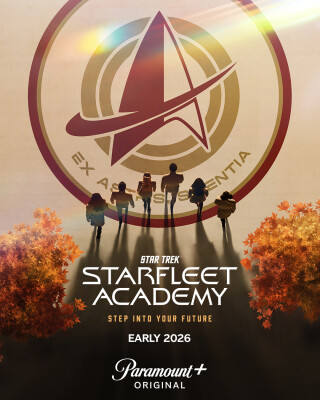
It’s with tremendous sadness that I must report a death, the passing of Star Trek: Starfleet Academy (SFA), along with its loyal companion and devoted muse, creativity. Both will be sorely missed, at least by anyone with a modicum of common sense and open-mindedness, who doesn’t fear change, diversity or fairness, or who doesn’t live in their parents’ basement.
I was truly saddened – though not surprised – to hear the news about Paramount’s cancellation of its latest offering in the Star Trek franchise. But, for a host of reasons, I’ve been waiting for the hammer to drop for several weeks. And, in all honesty, I find it to be a shortsighted, cowardly, and, above all, ill-considered programming decision – illustrative of one of the reasons why I prefer movies over television these days.
My Beef with TV
I rarely write about television these days for one very basic reason: I don’t watch a lot of it anymore. Why? It seems that, with extremely few exceptions, over the years, whenever I found myself taking a liking to a particular TV series and committed the time to watch it, the program would invariably get cancelled just as it was starting to get interesting. In fact, this happened so many times that I finally gave up on the notion of watching most series television altogether. It just wasn’t worth the time and effort. Why devote myself to it if it’s only going to get pulled after a brief broadcast run?
I found this to be particularly true with science fiction programming, a genre that’s one of my favorites. However, as a general rule, sci-fi is also something that takes time to develop its premise, characters, storylines, and, in many cases, a loyal audience. But the number of such series that have been given the chance to see that through has been fairly limited over the years, and the list has been growing ever shorter recently. That’s evident in the cancellation of such shows as Invasion (ABC, 2005-2006), Flash Forward (ABC, 2009-2010), Jeremiah (Showtime, 2002-2004), Odyssey 5 (Showtime, 2002-2004) and Caprica (Syfy, 2009-2010), to name a few. And, except for Jeremiah, all of these series were essentially given only one season to prove themselves (Jeremiah received two), though the most egregiously abrupt cancellation probably came about with Harsh Realm (Fox, 1999-2000), which was given the boot after only three of its nine completed episodes aired (the remaining six were eventually broadcast on FX). Realistically speaking, though, how can any television series establish itself in such an incredibly short tenure, especially for a program with a premise as involved as this one?
Because of the truncated treatment these series received, I switched my entertainment viewing habits to movies almost exclusively (even though I was already committed to being a longtime diehard cinephile). I figured that, since most movies are single, standalone events, I wouldn’t face the disappointment of awaiting the next episode of something that would never materialize. At most, I’d only be out whatever time I might have wasted on a poorly made picture and not have to worry about a longer commitment that ultimately would not bear fruit. And so my days of actively devoting much time to watching series TV were now behind me.
The Case for Trek
Of course, as I noted above, there have been a few notable exceptions, and nearly all of them have been associated with the Star Trek franchise, of which I have been a fan since the initial airing of the original series (1966-1969). And, in all fairness, with the exception of that original series (which was, in many ways, provocative, controversial and ahead of its time, running during a volatile and turbulent time in the country’s history), all of the Trek properties have been given an adequate chance to succeed, despite some occasions that required heavy-duty ironing to remove various wrinkles.
Star Trek: Deep Space Nine (syndicated 1993-1999), for example, received so much hate mail and was so widely disliked by viewers at the outset that it was nearly cancelled after two seasons, as detailed in the feature documentary, “What We Left Behind: Looking Back at Star Trek Deep Space Nine” (2018). But, thankfully, the show received a reprieve to reinvent itself, an opportunity of which it took full creative advantage, ultimately lasting seven seasons and subsequently becoming, arguably, the most beloved series in the franchise.
Likewise, Star Trek: Enterprise (UPN, 2001-2005) faced cancellation after three seasons of less-than-stellar ratings. But Paramount unexpectedly gave the series a fourth season to approach the 100-episode threshold that was generally considered the necessary minimum for a show to qualify for syndication after its initial broadcast run. Ironically, here was a show that probably had a legitimate justification to be cancelled and yet Paramount still gave it a second chance to succeed. Indeed, it was accorded an opportunity to establish its viability as a property capable of living on in television perpetuity in spite of itself.
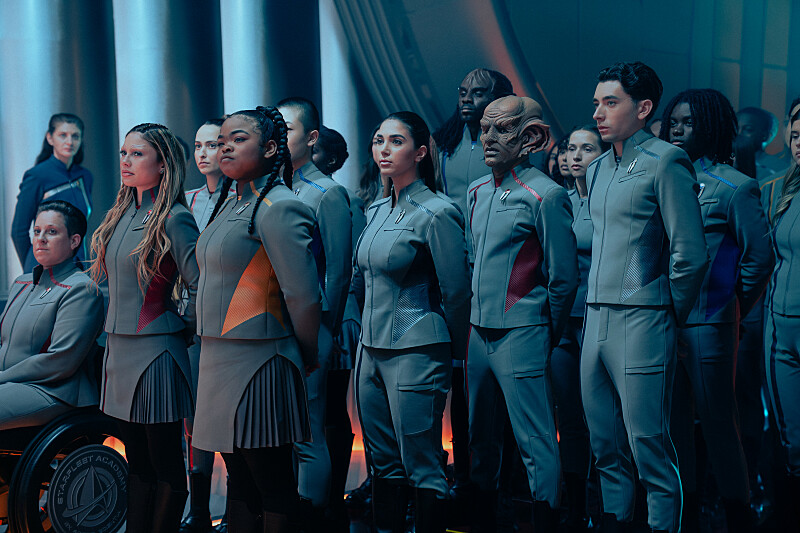
The point here is that these two series were provided an opportunity to make midcourse corrections in order to endure, fix issues and secure their audiences. Starfleet Academy, unfortunately, has not been given that same degree of grace (not that it had many problems to repair anyway, progressively getting better with every passing episode). And, sadly, we’re all the worse off for that, because we’ll never get the chance to see what it might have eventually become.
Bucking Precedent
I won’t say that this series is without flaws. There are some tweaks that could stand to be made. But, then, what Trek properties haven’t experienced such issues in their early days? Starfleet Academy is in its first season with only 10 episodes under its belt. How can cancellation be justified under such circumstances, especially in light of Paramount’s track record of giving breathing room to underperforming series like Deep Space Nine and Enterprise but not to SFA? In looking back at recent franchise history, one might justifiably argue that series like Star Trek: Discovery (Paramount+, 2017-2024) and even Star Trek: Picard (Paramount+, 2020-2023) might have been candidates for the chopping block, too, given some of the shortcomings in their respective narratives. But that didn’t happen in those cases, so why is it so with SFA?
To further bolster the legitimacy of SFA’s defense, despite mixed reactions from viewers, it has consistently ranked highly among critics, with an 87% freshness score on RottenTomatoes.com. With approval ratings as high as that, does that really merit cancellation? That seems like throwing out the baby with the bathwater to me. And, as for my own view, I can honestly say that there was only one episode of the series that I didn’t care for. Nine out of 10 hits at bat is a pretty good average if you ask me.
Negative Comments: “Not ‘Trek’ Enough”
I’m genuinely at a loss to understand the incessant venom that’s been spewing forth in this show’s direction. One of the criticisms I’ve heard most is that “it’s not ‘Trek’ enough.” Well, what exactly does that mean? If one were to go by the primary mission statement of the franchise – “to boldly go where no one has gone before” – it lives up to that sentiment in every regard: the premise of the show, the characters, the storylines, the writing and even the diversity in the manner in which its stories are told. If that’s not going where no one has gone before, I don’t know what is.
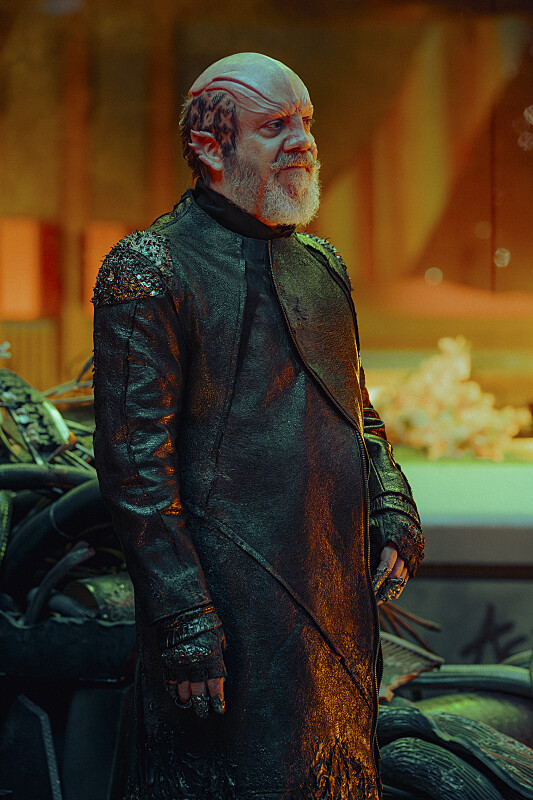
In conjunction with that mission statement, the Trek franchise has been built on the premise of taking viewers to strange new worlds, to introduce audiences to new environments, new cultures and new species of beings. And it has done just that in an array of iterations for 60 years. Consequently, if one were to look at SFA from this perspective, hasn’t it done the same thing? While it’s true that the Academy serves as a base of operations, there have been a number of off-world episodes. In addition, SFA features one of the most eclectic casts of aliens of any of the series in the franchise, including beings representative of old favorites, longstanding staples and new introductions. How is that not being Trek enough?
The same can been said of the characters’ archetypes and back stories. For example, over the years, characters like Spock (Leonard Nimoy) on the original series and Lt. Worf (Michael Dorn) on Star Trek: The Next Generation (syndicated, 1987-1994) have sought to find ways to fit in as minorities on their crews, just as cadet Jay-Den Kraag (Karim Diane), a Klingon whose uncharacteristic sensibilities defy those typical of his race, has sought to integrate himself among his SFA peers in the face of their assumed expectations about him. Similarly, SFA’s command candidate cadet Genesis Lythe (Bella Shepard) anxiously seeks to make a favorable impression for herself in the shadow of her father, a legendary starship captain, much the same way as onetime-radical Lt. Tom Paris (Robert Duncan McNeill) sought to redeem himself and live up to the expectations of his by-the-book career commander father on Star Trek: Voyager (UPN, 1995-2001). And those are just a few such examples from the past and this present series.
The franchise has also been known for featuring an array of different types of stories – action-adventure episodes, tales of personal growth and facing one’s demons, romantic interludes, morality plays, and even philosophical treatises. These narratives, in turn, have been backed up by top-self writing with thoughtful, insightful scripts featuring crisp yet realistic dialogue, attributes that have run through the writing of all of Trek’s series through the years, qualities that have been present in Starfleet Academy as well. If you doubt that, witness the sheer eloquence of Episode 8, “The Life of the Stars”, the edge-of-your-seat thrills of Episode 9, “300th Night”, and the multi-layered intertwined action sequences and philosophical discourse of Episode 10, “Rubincon”. So, again, I ask you, how is this not being Trek enough? And how can one rationalize the cancellation of a series that gets better and better in these regards with each succeeding episode?
Negative Comments: “It’s ‘too woke’”

Then there are the jabs that SFA is “too woke.” Well, when has Trek ever not been “woke”? It’s been that way to varying degrees going all the way back to the original series. Think of it: how many television series in the mid-1960s featured casts as diverse as Star Trek? How many other shows at that time had such characters as a Russian man (at the height of the Cold War no less), an Asian-American male and an African-American woman who held a position of responsibility and authority (and about whom a young Whoopi Goldberg at the time said she exclaimed that “there‘s a Black lady on the television and she ain’t no maid!”). Such diversity only increased in subsequent series through the years thereafter, so why should viewers be looking askance at this latest iteration of that notion? It’s in the DNA of the franchise.
In particular, there seems to be a fair amount of veiled (or, in some cases, less-than-veiled) homophobia that’s surfaced in comments about the show. But the presence of LGBTQ+ characters here is simply the latest expression of the inclusivity factor that has been a signature element of the Trek mythology over the years. Admittedly, it might be argued that SFA has overdone this aspect somewhat (that’s saying a lot coming from a gay man like myself), but the prejudiced pundits out there decrying this “abomination” simply have to get over it – we’re here, and we’re not going back into the closet just to assuage your own personal insecurities. We’re present in virtually every aspect of contemporary life, including the Star Trek universe, and that’s not likely to disappear in the future, even 900 years hence (end of soapbox).
Some commenters have not been especially kind about women, either. Some of the social media onslaughts on this front have regrettably reminded me of the chauvinistic attacks leveled against the first movie in the “Captain Marvel” franchise (2019), uncalled-for criticisms for an entertainment vehicle daring to feature a female character in a prominent hero’s role. There’s no place for the spewing of that kind of social bile with regard to SFA (or anywhere else for that matter), especially since Trek has long championed women’s equality, as evidenced by the inclusion of such characters as Capt. Kathryn Janeway (Kate Mulgrew) on Star Trek: Voyager and Capt. Michael Burnham (Sonequa Martin-Green) on Star Trek: Discovery. Those series didn’t undergo the kind of gender smearing that has been surfacing of late, and this show doesn’t deserve it, either. We should all be past that in this day and age.
In addition, Trek has never been afraid to tackle controversial issues of the day, including those that are at the top of the headlines and that deal with issues of social injustice, equality, diversity and inclusion, political leadership, and other social issues. They’re nearly always addressed metaphorically, but it’s clear what the episodes are talking about. Now, SFA has done this as well, but, in actuality, it appears that it hasn’t done so nearly as much in this series as the franchise has done in other previous iterations. So, on this point, how does that make this offering “too” woke? I’d argue that the original series and some of its progeny went a lot further and a lot more forcefully in this regard, making this criticism blatantly exaggerated and without serious merit.
I can’t say definitively what’s behind these petty, spiteful remarks; I can only guess that it’s a sad product of our incendiary times. This sentiment has already been echoed in a number of online posts by several SFA cast members, who courageously have not held back in their angry, frustrated reactions to these bonehead comments. William Shatner, Capt. James T. Kirk from the original series, also chimed in on the close-mindedness of such views in an online post in which he compared these reactions to those about an episode of his own show featuring television’s first interracial kiss, imagery considered so appalling at the time that it prompted many network TV affiliates (particularly in Southern markets) to pull the episode from their broadcast schedules. The prejudicial, bigoted and sexist sentiments expressed in the current running commentary, he added, unfortunately show that things don’t appear to have changed much in the nation’s mindset in past 60 years.
Negative Comments: Unbridled Immaturity
Perhaps the criticisms that I have found most laughable, however, are those comparing this series to other shows boasting young cast members, such as Beverly Hills 90210 (preposterously brandishing this series as Star Trek 90210), Dawson’s Creek and Glee. But, other than the fact that this series and those shows feature ensembles of mostly younger actors, there’s nothing in Starfleet Academy that even remotely parallels the nature of those programs. Admittedly, the characters here are inexperienced compared to the elder counterparts who have been featured on other Trek series, but learning valuable academic and life lessons is all part of what one typically goes through in that youthful stage of life. After all, it takes place in an academy setting, so what else would one expect?
Moreover, there are no hints of silly, juvenile, high schoolish antics in play here. For example, the action sequences in the aforementioned Episodes 9 and 10, as well as in Episode 6, “Come, Let’s Away”, are nothing like what one might find on a episode of Melrose Place. And anyone who tries to attribute such qualities to this series either hasn’t watched it, hasn’t paid attention to it or has been too distracted by what’s on their cell phone to grasp what’s going on. There’s nothing “immature” about any of this – except maybe those viewers themselves.
The Cure for Negativity
Given the foregoing, it would seem the detractors have plenty of fuel to power their arguments against the series, no matter how ultimately flimsy those contentions may inherently be. And it must be a living hell for them to know that, despite their best efforts to evangelize their spiteful opinions, the show actually has viewers who like it and that it successfully managed to make it all the way through an entire first season. Such a burden they bear.
But, in actuality, there’s no need for them to be weighed down by this millstone. Indeed, there’s a simple solution to removing the burden of responsibility for mercilessly tearing down SFA and actively seeking to spoil the enjoyment of its devoted followers: Turn it off. Simply change the channel or shut off the TV if you don’t like it.
Considering the wealth of viewing options available on cable and satellite television, the plethora of streaming services, and the wide range of home media choices, I’m sure there must be something acceptable that these fickle naysayers can find to watch. Indeed, that’s the beauty of having so many broadcast options nowadays. It’s a far cry from the limitations of the days when I grew up, when the only choices were the three networks, PBS and maybe, if one were lucky, an independent local channel (though they were generally available only in major markets).
This, of course, raises the question of why malcontents would rather use their time and energy to complain than to search for something else more to their liking. You have options, folks, so why not exercise them and stop spoiling the fun for the rest of us? When I read some of the truly appalling comments on social media – statements frequently amplified with the vitriol of hateful groupthink and relentless piling on – I often felt that I was in the midst of a horde of mean girls and cyberbullies. Sadly, it reminded me of a gut-wrenching scene from the movie “Talk Radio” (1988) in which a beleaguered talk radio host (Eric Bogosian) frustratedly lamented how we have all this tremendous communications technology available at our disposal, yet, for whatever inexplicable reason, we have chosen to use it to see how low and deplorable we can sink as a society. And this real life scenario, unfortunately, has demonstrated that shameful disgrace once again.
As a writer and trained journalist, I’ll defend the First Amendment and free speech to my last breath. But, at the same time, I’m also a staunch advocate for responsible and informed speech. Regrettably, that’s become an increasingly rare commodity these days, and this sniping campaign against a television show is woeful proof of that.
What Collapsed the Walls of Jericho?
So what actually brought about this downfall? Opinions seem to vary somewhat from such sources as artvoice.com, screencrush.com and slashfilm.com, but negative comments like those outlined above appear to have played a large part in torpedoing the show’s chances of surviving. Social media loudmouths who hide behind the cowardly anonymity of those platforms have, unfortunately, been successful in launching their onslaughts of poisonous attacks, drowning out reasoned voices attempting to make a case for the show’s quality and attributes. And Paramount, it would seem, has given the naysayers far too much credence for representing the majority view of public opinion (even though that’s not the same thing as representing the majority of posted opinions made to the internet). The cancellation thus might well represent a case of the squeaky wheel getting oiled first.
Then there are the ratings, which have admittedly been lower than expected, but I can’t help but think the aforementioned negative comments had something to do with that. So many internet users these days pay far too much attention to the bombastic hyperbole of empty-headed and agenda-driven “influencers” expressing opinions that may have scared off would-be viewers who might have otherwise given the series a look, thereby keeping audience numbers unduly low. But what I find more suspect are the potentially overstated laments attributed to the show’s failure to crack Nielsen’s Top 10 streaming charts. That may be disappointing, but, considering the voluminous amounts of content available for streaming these days, it seems to me that it would take nothing short of a miracle for virtually any program to break into that exalted level of popularity. And this “failing” sounds more like an excuse, a justification to rationalize the cancellation decision.
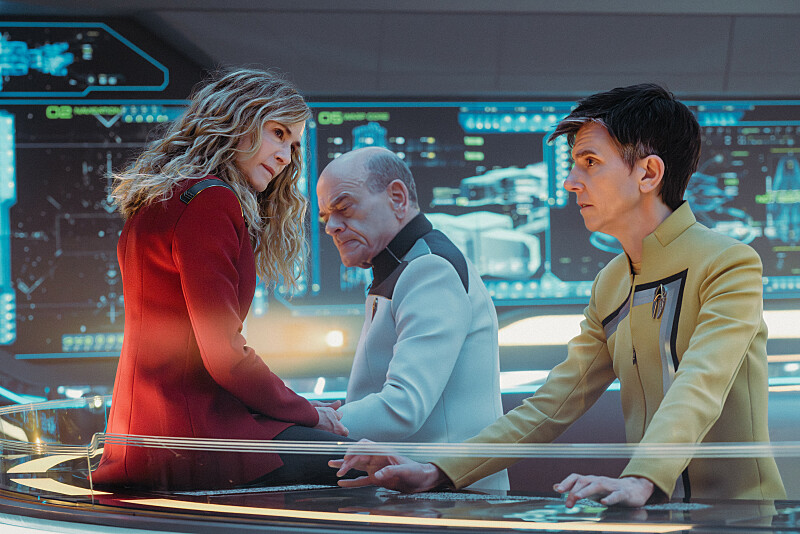
The show’s production costs have come under fire, too, and, given the lavishness of this series and the high-profile nature of its cast, this could have some legitimacy associated with it. The look of the show’s sets is stunning (one of its greatest assets), and they couldn’t have come cheap. And the cast, with such featured performers as Oscar winner Holly Hunter, Oscar nominee Paul Giamatti, Late Show host Stephen Colbert, stand-up comedian Tig Nataro and Star Trek: Voyager veteran Robert Picardo, is impressive in terms of talent (and, likely, its payroll). But, then, when has a sci-fi production (especially any of the Trek properties) ever come in at bargain basement prices? This would appear to come with the territory if one wants to make a quality product. Is it realistic to think this wasn’t foreseen?

Lastly, leadership changes and cost-cutting measures at Paramount have been cited as another reason for the show getting axed. This consideration doesn’t appear to have received as much attention as the others, but I believe it’s probably “paramount” among the reasons for the cancellation. Studios and distributors are under much pressure on these fronts these days, and keeping expenses contained can’t be ignored, a reasonable concern, to be sure. That calls for making sure the right people are in charge of such matters, and maneuverings in that regard can often create uncertainty and drama within corporate ranks that can interfere with the smooth flow of operations and continued production viability. Unfortunately, they can also take a toll on creativity, especially since quality ain’t cheap. There’s likely much more going on in this regard than is widely known publicly, yet it’s a shame that such matters could have had a deleteriously significant impact on the final outcome.
Peering into the Future: The Series Itself
So what does the future hold? As far as SFA itself is concerned, a second full season has already been filmed and is in the can, despite the cancellation decision. But will it air? Doubts are already circulating to that effect. Some have actively launched aggressive petition campaigns to scrap the broadcast of those episodes (a bit extreme if you ask me, although given the nature of the first season’s finale, I could see where that would arguably make a fitting end for the series). Personally, though, I’d rather see what’s yet to come, even if there’s nothing new to follow afterward.
In the meantime, impassioned (and incensed) fans who love the show and want it brought back have taken to the internet to launch petition drives of their own to save the series. I admire their gumption, though I’m not sure how much good it will do. Advocates have cited successful revival efforts to save previously cancelled series, bringing them back to life when they were thought to be dead ducks, thanks to fan-driven efforts and/or successes in syndication (cases in point: Cagney & Lacey (CBS, 1981-1988) and Family Guy (Fox, 1999-present)). I wish them well in their efforts, though industry conditions today are far different from when those other series were saved. Nevertheless, those who want to sign the petition can do so by clicking here or here.
In the meantime, if Paramount is dead set against any kind of renewal, I’d like to ask the company to stop promoting it in its efforts to win over subscribers for its streaming service. It comes across as hypocritical to give the appearance that the company still cares about a show that’s already been cancelled. Indeed, if Paramount had been so concerned about the welfare of this property, why didn’t it do more to promote it before its cancellation? It could have done more to counteract the impact of the naysayers, especially with such ammunition at its disposal as the highly favorable critics’ ratings, weapons that, if better circulated, might have been used to shoot black hole-sized openings in the hollow claims of the detractors. After-the-fact promos in social media and on television for a now-cancelled series seem tantamount to crocodile tears.
Peering into the Future: The Franchise
Is Paramount aware of how much potential damage could be caused by this decision? I have to wonder. Television historians have looked back on the cancellation of the original series as one of the industry’s biggest-ever programming blunders, despite the success that Trek achieved later thanks largely to the fan-driven passions that resuscitated it and made it a cottage industry all its own. But, if this decision spawns a new downward spiral in the franchise, could a successful resurgence be achieved again? Or would a different, deflating outcome result the next time? As Spock might honestly but lamentably observe regarding that second option, “It’s possible.”
Consider the following: Will SFA’s cancellation make show and movie developers more gun shy about putting forth the effort to promote daring new projects? And, if so, what will their quality be like? Will they be bold and audacious, living up to the franchise’s mission statement? Or will they play it safe, following lines of timid creativity to appease unimaginative fans in order to avoid summary cancellation for taking risks that don’t fly?
What’s more, is Paramount really listening to the wants of the franchise’s fans? Ever since the end of Star Trek: Picard, there has been strong fan support for a new series called Star Trek: Legacy, a spinoff carrying on from where Picard left off in 2023 with a cast featuring series alumnae Seven of Nine (Jeri Ryan) and Raffi Musiker (Michelle Hurd). However, actress Marina Sirtis, a Trek insider who played counselor Deanna Troi on Next Generation and Picard, has proclaimed the new series a dead issue, primarily citing ageism as a major impediment to its future. And, given the misogynistic criticism that has befallen SFA regarding women in key roles, it’s hard to picture a Trek series with two female leads getting off the ground in the current climate (despite the fact that Discovery initially launched with women in two prominent roles). This scenario itself would appear to speak to both timidity and an unwillingness to respond to fan requests, neither of which bode well for the future viability and vibrancy of the franchise.
In fact, it’s somewhat ironic that the show fans truly wanted after Picard ended – Legacy – was shelved in favor of a green light for Starfleet Academy, a series that had been rumored to be in development on multiple occasions as far back as the 1990s when the idea first emerged. Given that its development seemed to be going nowhere over the course of several decades, many had thought it to be a dead issue, but then it was suddenly and unexpectedly brought back to life and given the go-ahead – despite the fact that it wasn’t the show fans wanted at the time!
I’ll admit I’ve had my reservations about SFA from the beginning 30 years ago. I envisioned it playing like a sci-fi version of “Dead Poets Society” (1989) with a crop of Wesley Crusher clones running around, getting into mischief and being wisely counseled by groundskeeper Boothby (Ray Walston) and Engineering Prof. Miles O’Brien (Colm Meaney). It was a premise that I believed would run out of steam quickly. And those reservations carried over to the time of SFA’s green light announcement. But, needless to say, I was pleasantly surprised with what came of it for reasons I’ve outlined in detail above. And, by the time I reached the tenth episode, I didn’t want it to end. I was eager to see more – where it was headed, what new avenues it would explore and what new concepts it would introduce, and it was all coming from what I previously foresaw as an unlikely source. That’s proof that Trek still knows how to surprise me (and, I would like to think, all of us).
But is that creative spark gone now? It’s hard to say. In light of the foregoing, it has been suggested (not to mention even hinted at on occasion in the past) that Paramount should consider selling the Star Trek franchise to a buyer who could infuse it with new life and a fresh perspective, a visionary and financial savior whose outlook would be more in line with the essence of what franchise creator Gene Roddenberry was aiming for. This wouldn’t be the first time that Trek has needed to have its life and future resuscitated, and maybe now is the time for that kind of change once again.
This suggestion makes sense to me, and I agree with the name that’s been bandied about the most so far – Tyler Perry. He has a connection to the franchise, having appeared in the big screen feature “Star Trek” (2009), so he’s not unfamiliar with the territory. He’s also built quite a successful production empire, one that could take over the material handily. In fact, some have said that Perry could do for Trek today what Lucille Ball did for it at the inception of the franchise. It would indeed be interesting to see what Perry could do at the helm.
This situation also lends credence to the notion that television productions need to return to longer seasons with more episodes than at present. A season of only 10 episodes is not enough to provide a telling picture of a program’s potential or prospects for finding an audience and having a viable future. And, even though a full 10-episode second season of SFA is already in the can, it should not be forgotten that the series’ cancellation came about shortly after the finale of the first season, meaning that its fate was essentially sealed after only the airing of 10 episodes. That hardly seems fair, a decision not much different from what befell Harsh Realm.
Most importantly, though, this decision raises many questions – and doubts – about the future of the franchise. If SFA could be summarily dismissed as easily as it was, what’s to say that the same thing couldn’t happen to future Trek projects, especially if they don’t get “satisfactory” results right away? As noted, that could put a damper on creativity. It could lead to audience pandering. It could quickly lead to the development of a downward spiral. creatively and otherwise. And it might even sink the franchise at some point. And that would be unfortunate for all of us.
So who’s at fault here? That’s hard to say with specificity. It appears that there’s more than enough blame to go around. What it does illustrate, however, is the validity behind the notion of why we can’t have nice things.
Some might contend that I’m overstating my case here, and maybe that’s true. They might also argue that I’ll like anything that the Trek franchise produces, no matter what it might be. But that’s far from the truth. I positively detested the made-for-streaming movie “Star Trek: Section 31” (2025), naming it the worst movie of last year. I was not an especially ardent fan of Enterprise, given that it didn’t really live up to its promise of portraying the scariness of early starship flight. I was lukewarm in my feelings about Discovery seasons one, three and four, as well as Picard season two, for being unnecessarily convoluted in their storytelling. I was bored to tears watching “Star Trek: Nemesis” (2002) and “Star Trek: Beyond” (“Beyond” what?) (2016). And I found the animated series Star Trek: Lower Decks (Paramount+ 2020-2024) to be silly, cloying and juvenile. However, considering how much Star Trek has gotten right, as well as how much it has inspired us in so many ways, both creatively and in practical everyday life, we’d lose a lot if we lost the essence of what it has brought us, and the cancellation of SFA, in my view, represents a real threat to that. Let’s hope that doesn’t happen.
End of rant.
Copyright © 2026, by Brent Marchant. All rights reserved.