



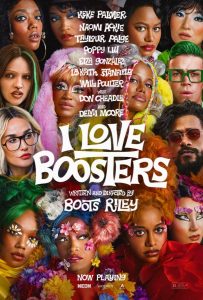
“I Love Boosters”
(USA)
Metacritic (5/10), Letterboxd (2.5/5), Imdb.com (5/10), TMDB.com (5/10), Imdb critics review
#BrentMarchant #ILoveBoosters #BootsRiley #KekePalmer #DemiMoore #LaKeithStanfield #WillPoulter #DonCheadle #NaomiAckie #TaylourPaige #PoppyLiu #satire #Oakland #China #designerclothingthieves #socioeconomiccommentary #overstatedmessage #sweatshop
The power of film to make statements and to effect meaningful change is truly quite impressive. But it’s also possible for the impact of that influence to be diminished when a picture overstates its case, a problem that seriously hampers the latest feature from writer-director Boots Riley. This second offering from the filmmaker in many ways echoes themes introduced in his debut release, the deliciously satirical “Sorry To Bother You” (2018), with its poignant but deftly balanced messages related to social and economic fairness, personal ethics, and the business and political climate. However, in this case, the volume on these notions has been turned up considerably, to the point where it fundamentally screeches at the audience, no matter how much viewers may personally agree with the points the director is attempting to make. The film essentially follows the exploits of a group of “boosters” – designer clothing thieves – in the greater Oakland, CA area, led by aspiring designer Corvette (Keke Palmer) and her associates (Naomi Ackie, Taylour Paige). They target the retail outlets of iconic clothing creator Christie Smith (Demi Moore), a notoriously self-absorbed, self-important designer of overpriced clothing that she sincerely though euphemistically looks upon as “body art,” an element that she believes is integral to the evolution and advancement of society. Smith has made a fortune through her efforts (many of which are less than honorable), but she quietly seeks more than money: she lusts for power and control over her loyal and easily bamboozled customers and overworked employees, many of whom toil under deplorable conditions in manufacturing sweatshops in China. As revelations surface regarding Smith’s methods, things turn both personal and focused on bigger social and economic causes, especially when supported by idealistic aims at reframing injustices in all of these areas. This sets up factional; battlegrounds on multiple fronts to address these issues. Regardless of one’s personal opinions, the premise here would appear to be a somewhat noble one. However, it becomes mind-bogglingly overwhelming and tedious through a narrative that loses its way by becoming overstuffed with images, superfluous story threads, and initiatives that are difficult to track and differentiate from one another. Consequently, it’s easy to lose interest, particularly when storylines turn silly and the basic distinctions between reality and fantasy become irretrievably blurred (surrealism is one thing, but this is wholly over the top). The need for ruthless editing (not to mention major script revision) can’t be emphasized enough, no matter how laudable the underlying inherent notions might be. To its credit, when the picture works, it often succeeds brilliantly, especially in some of its biting one-liners, inspired sight gags, and performances by the likes of Moore, Chinese employee advocate Poppy Liu, and retail store manager Will Poulter, who uncharacteristically plays against type in his usual bad ass persona. The film also sports a stunningly colorful production design that’s a vibrant feast for the eyes. But there’s a lot lost here as well, primarily the result of a cloying story that quickly becomes more annoying than enlightening, some surprisingly cheesy special effects, and the generally poor use of cast members LaKeith Stanfield, Don Cheadle and the trio of boosters. While it’s readily apparent that director Riley is genuinely gifted when it comes to the range of his vision, passion and imagination, it’s also equally apparent that he needs to be seriously reined in rather than let loose without restraint (there’s that notion of knowing “when to kill one’s darlings” again). Looking back at the virtues of his vastly superior debut effort would make for a good starting point, an exercise that might help the filmmaker get his artistic and storytelling sensibilities back on track. I’m convinced Riley ultimately has much to say of great importance, but he needs to find more effective ways to say it, and “I Love Boosters” is definitely not the vehicle for that.