



‘Eleanor the Great’ wrestles with the merits of ‘the good lie’
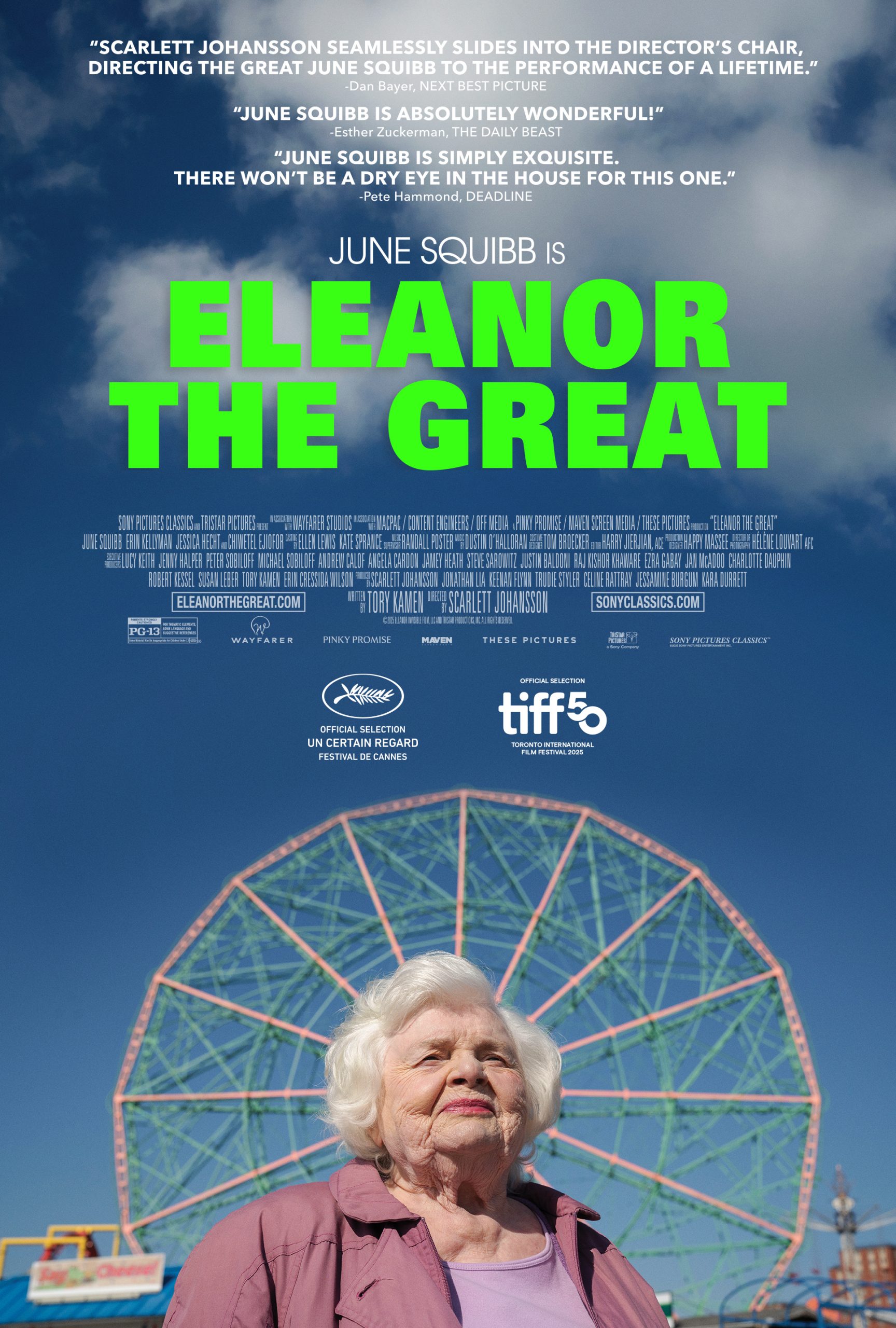
“Eleanor the Great” (2025). Cast: June Squibb, Erin Kellyman, Chiwetel Ejiofor, Jessica Hecht, Rita Zohar, Will Price, Lauren Klein, Stephen Singer, Elaine Bromka, Ray Anthony Thomas, Barbara Andres. Director: Scarlett Johansson. Screenplay: Tory Kamen. Web site. Trailer.
We’ve all been taught the wisdom behind the notion of “honesty is the best policy.” It’s sound, solid guidance that’s nearly always appropriate (provided it’s not carried to an unhealthy extreme). But what about the opposite of this advice: Is there ever any benefit in a falsehood, the so-called “good lie?” At first glance, it might be easy to dismiss this idea out of hand, but what if something less than truthful is capable of imparting insight, inspiration or comfort to someone in distress? In cases like that, can it realistically be summarily rejected? Those are intriguing questions raised in the new comedy-drama-character study, “Eleanor the Great.”
Eleanor Morgenstein (June Squibb) has lived a long and happy life. The spry 94-year-old former New Yorker has spent the past few decades in retirement in Florida, first with her devoted husband, who died 12 years ago, and since then with her longtime best friend and roommate, Bessie Stern (Rita Zohar). But, when Bessie passes, Eleanor is not so sure she can – or wants – to continue living on her own, so she decides to move back to the Big Apple to be with her daughter, Lisa (Jessica Hecht), and grandson, Max (Will Price).
Once back in New York, however, Eleanor now finds herself on her own much of the time. Lisa works during the day, and twenty-something Max has his own life. Eleanor feels the loneliness of being by herself, despite being in the company of family. And, admittedly, Lisa is somewhat uncomfortable leaving her mother on her own, suggesting that she consider moving into an assisted living center, an idea that Eleanor is unsure about. In the meantime, to help Eleanor adjust to her new surroundings and make new friends with others of her own age and background, Lisa enrolls her mom in a class at the local Jewish Community Center. However, due to a misunderstanding, Eleanor finds herself attending the wrong class – a support group meeting for Holocaust survivors.
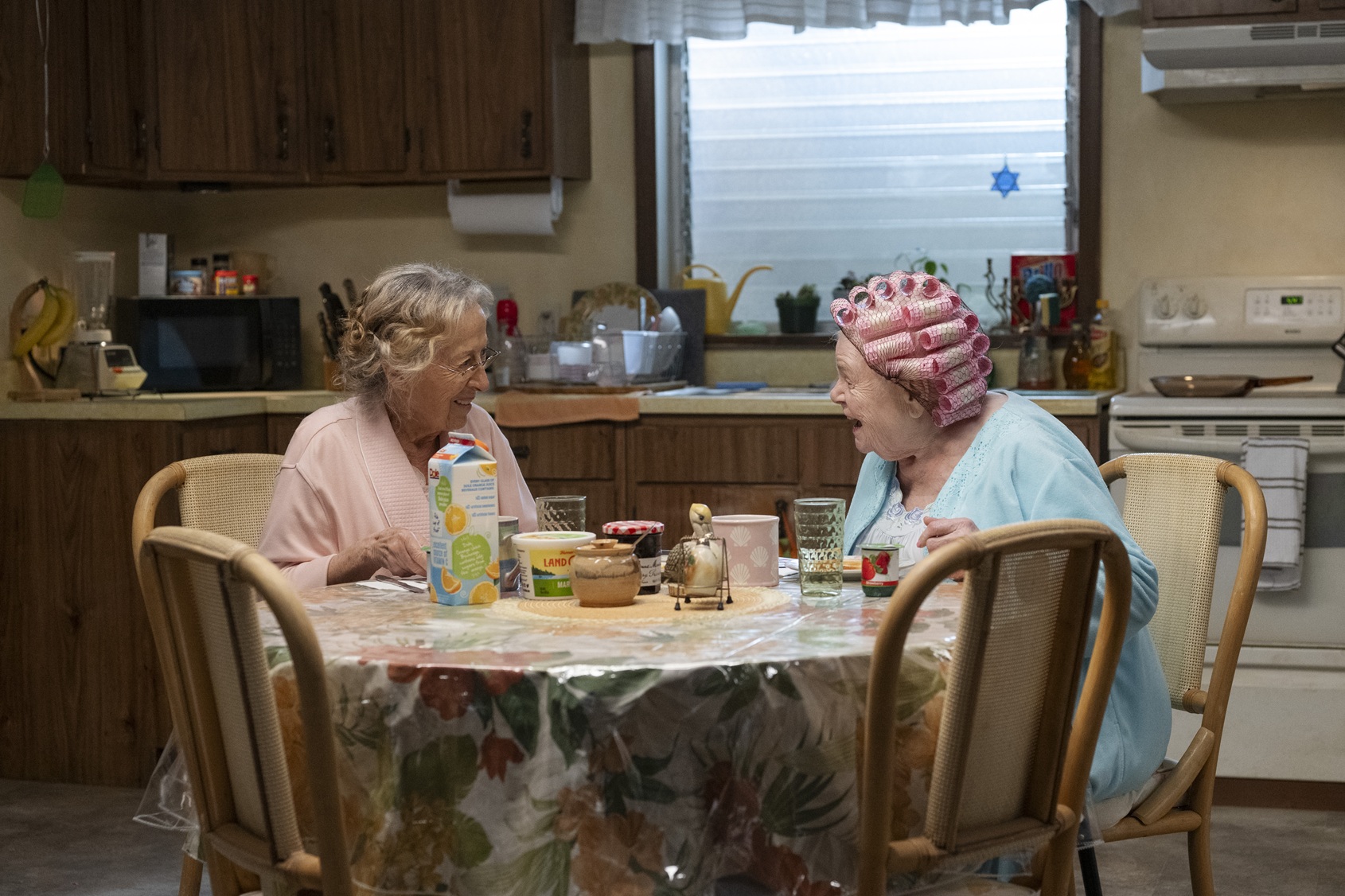
Eleanor is dumbstruck when she learns where she is, but the group members are so warm and welcoming that she doesn’t know how to react. And, unbeknownst to them, they’re unaware that Eleanor actually spent World War II stateside; they simply assume that, because of her Jewish heritage and “enrollment” in their class that she’s where she’s supposed to be, especially when she doesn’t let on otherwise. And so, after exchanging introductions and extending greetings to the group’s newest member, the facilitator (Elaine Bromka) asks Eleanor to share her story. So what is she supposed to do now?
Caught off guard, Eleanor warily but convincingly begins telling a story – a true one, but not her own. She proceeds to relate an account of the wartime experience of Bessie’s late brother, a heart-rending tale that her former roommate told her late one night when she couldn’t sleep, a story that profoundly moved Eleanor and that enabled her to offer comfort to her troubled friend. And, interestingly enough, Eleanor’s account to the group has the same effect on its members. They applaud Eleanor’s candor in opening up and being so willing to freely tell “her” story, unaware of the truth behind what they just heard.
To complicate matters further, this session of the group has an invited guest present, Nina Davis (Erin Kellyman), a young Jewish journalism student who’s looking to write about the experiences of the members. Like the group’s other participants, Nina, too, is seriously moved by “Eleanor’s” story and would like to feature “her” experience as the focus of her article. On top of this, the group members, in turn, also introduce Eleanor to Rabbi Cohen (Stephen Singer), an influential community religious leader at a nearby synagogue. Before long, Eleanor’s “experience” takes on a life of its own, snowballing out of control simply because her embarrassment kept her from speaking up in the first place.
In the ensuing days, Eleanor spends considerable time with Nina, and the two become good friends, a relationship that proves mutually beneficial. Eleanor gets a new companion to spend time with, and Nina forges a bond with her new confidante. That’s important to Nina, given that, like the group members, she has also suffered a tragedy of her own – the sudden accidental death of her mother, an incident that has left her unconsolable for months. But Eleanor’s apparent strength gives Nina much to draw from, a development she shares with her father, Roger (Chiwetel Ejiofor), a popular local broadcaster who, like Nina, has had difficulty overcoming the grief associated with the death of his wife. He, too, is intrigued by Eleanor’s experience and wants to feature her story on an upcoming episode of his TV show. Now what?
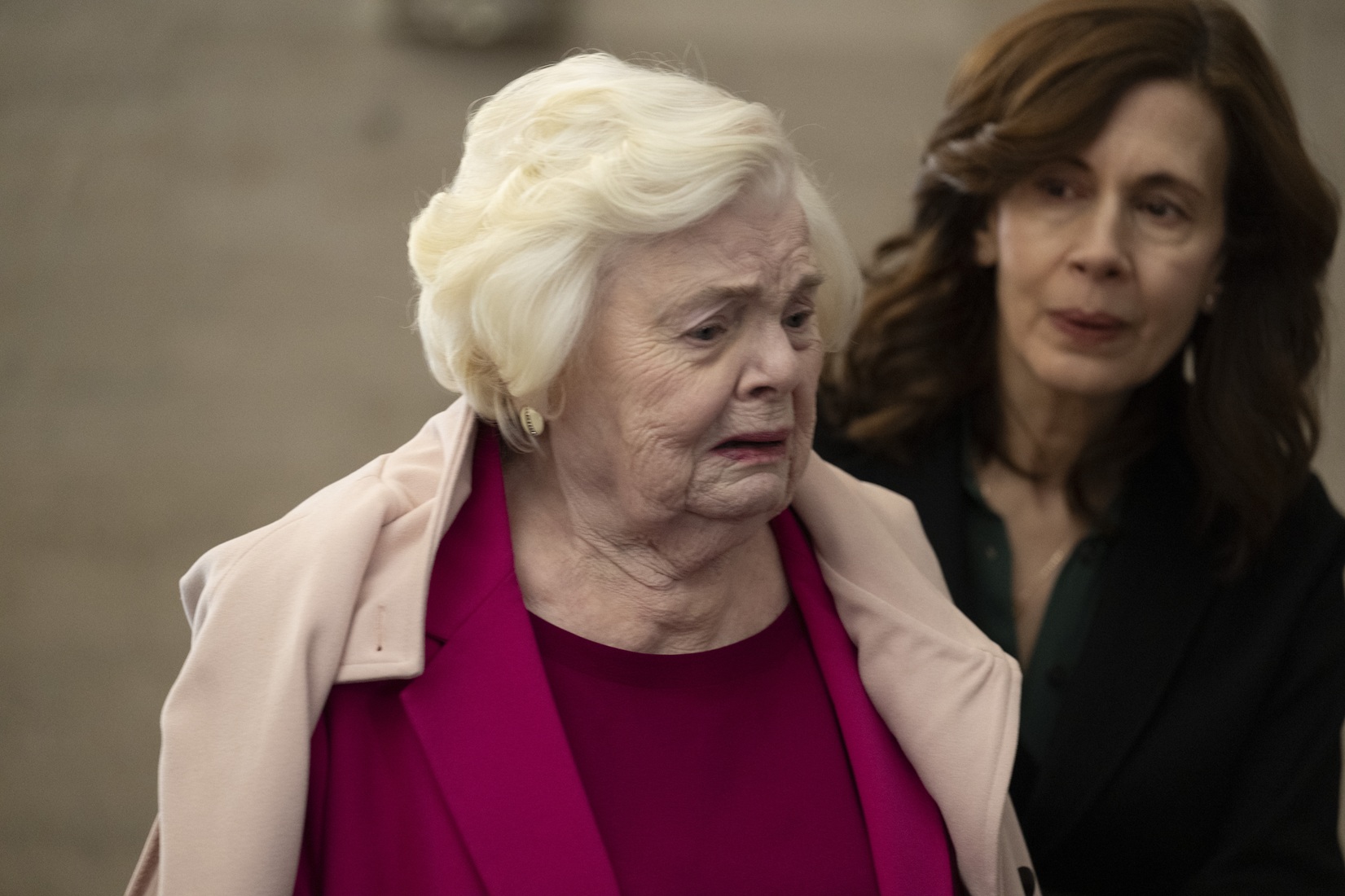
In an attempt to keep matters from being revealed, Eleanor tirelessly works at concealing the truth to everyone around her. This becomes particularly challenging where Lisa and Max are concerned, and they become worried when Eleanor’s behavior starts to appear erratic. Given her age, they’re concerned that her growing unpredictability might be a sign that she could be losing it.
Considering everything that’s unfolding in Eleanor’s life, it’s easy to see where things are headed. But what specifically will transpire? And what fallout will emerge if the full measure of the truth is revealed? What impact will it have on the group members, Nina and Roger, Lisa and Max, and, of course, Eleanor? How will everyone respond to the notion that they’ve apparently been lied to? Clearly, everyone has a lot to lose. But is it possible that something beneficial might somehow arise from this scenario? Can there indeed be such a thing as “a good lie?”
In the end, it comes down to what the characters in this story believe, for their beliefs dictate what comes into being, a product of the conscious creation process, the philosophy that makes such outcomes possible. It’s unclear whether any of the players in this story have ever heard of this way of thinking, but, considering the brink upon which they may all soon find themselves standing, they have options for how they choose to respond. And those choices are firmly rooted in the beliefs that underlie them, for they will determine what comes next. That’s a tremendous responsibility – and opportunity – for all concerned. So what will they choose? That remains to be seen, but one thing is for certain – the impact will be considerable, whatever they may decide, for better or worse.
That, inherently, is a matter of belief. Consider the options open to the characters here. If they believe they’ve been lied to, they might naturally default to a belief in betrayal, regardless of whatever other considerations might be associated with the circumstances. But is that kneejerk reaction truly the only choice available to them? What about forgiveness? What about making an effort to appreciate the potentially positive effects imbedded in the lie that was told to them? Does the inspiration offered by the lie help to enlighten them or enable them to better cope with their situation? And isn’t there a benefit to be had in that, even if it’s not entirely “truthful” in the sense in which they (or we) tend to think about the nature of truth?
For her part, Eleanor may have lied that the story she told was indeed hers, but she was nevertheless truthful when it came to imparting its uplifting content. So is it fair to dismiss that material and its message out of hand? Suddenly the answer might not seem so simplistic.
To make best use of the concept of choice in our beliefs, we need to keep an open mind to assess the options open to us, particularly when it comes to determining what everyone stands to gain from a resolution that delivers the widest range of good for all concerned. And, to arrive at that outcome, we need to dispense with the notion of limitation in examining our choices. It also probably helps to give ourselves the grace of time to conduct such an evaluation. Snap decisions and hasty judgments might well hinder us in considering all of the choices that are truly available to us. Avoid rash decisions, and take the time necessary to weigh the evidence of what happened and what we might have gained from it.
That’s especially important when it comes to taking stock of those aforementioned benefits that might be made available to us, even if they’re rooted in what we perceive to be a lie. To be sure, if we stand to gain from such insights, are they really so fundamentally terrible to begin with? By standing pat on a rigid, inflexible belief position like “a lie is a lie, period,” we could easily miss something helpful or comforting that may not come to us in any other way. And that speaks to the old notion about what happens when we blindly cut off our noses.
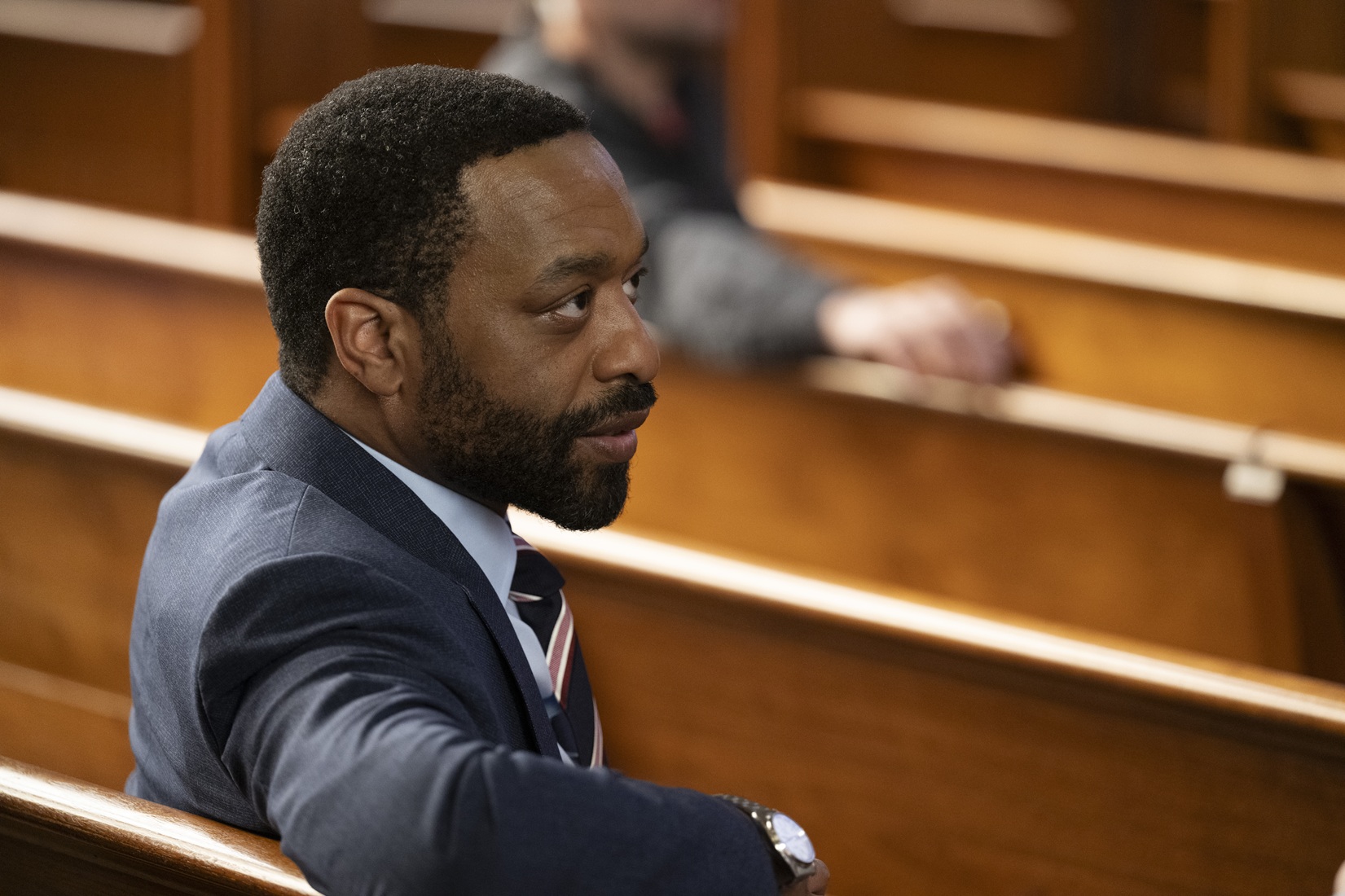
In essence, this comes down to a question of realistically and concertedly putting our beliefs in context, to take a hard look at what we’re getting out of the scenario. Yes, we may still place tremendous faith in the notion that honesty is the best policy, and it may be natural to feel deceived by circumstances like this, but make the effort to stop, breathe and consider what we may have gained from a good lie. We may well end up grateful that circumstances have turned out as they have. On some level, Eleanor seems to understand this; let’s hope others have the wisdom to do the same.
Grief tends to be one of those taboo subjects that many of us are reluctant to talk about, let alone address. But, by failing to do so, we may end up saddling ourselves with a tremendous burden that weighs us down and from which escape can be difficult. That’s especially true for those who’ve experienced devastating losses through such events as the death of loved ones or, even more horrifically, through significant traumatic experiences. And, if an act of deception makes its way into part of that mix, the hurt can be even greater. But, if such agony can be effectively alleviated in the process, isn’t that worth it in the end?
Admittedly, this may be a hard pill to swallow when associated with an event like the Holocaust. Some viewers have expressed serious reservations about that in connection with this film, and their arguments could be seen as having merit. But, at the same time, one could make an equally strong and persuasive argument about the opposite viewpoint, and, from my standpoint, that’s one of the qualities I admire most about this film. “Eleanor the Great” represents a courageous effort that could easily come under attack for this perspective. I particularly applaud first-time filmmaker Scarlett Johansson and actress June Squibb for undertaking such a daring and audacious project.
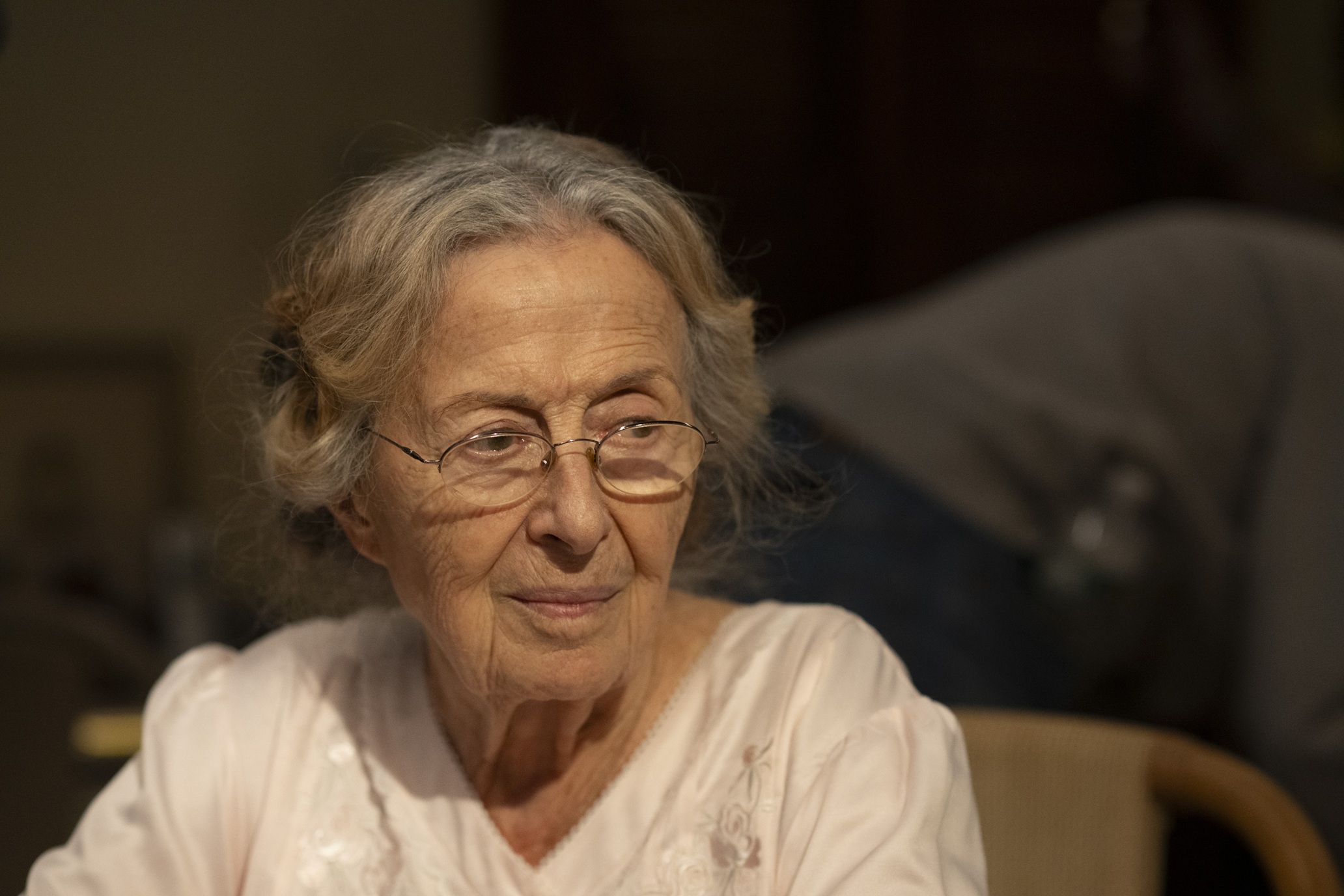
To some, this might seem like a strange, potentially unnerving tale for a movie narrative given the subject matter, but I believe that’s precisely the point – it’s intended to shake viewers out of their comfort zones when it comes to dealing with an often-tabooed subject like grief (and, considering the back stories of the characters involved here, there’s plenty of that to go around among them). Viewers struggling with conditions like these just might find that there’s new comfort to be had even when purposely being dragged out of their comfort zone. And, when that happens, is the alleged “betrayal” perpetrated in a situation like this truly a betrayal at all if its intrinsic sincerity ultimately helps to generate a sense of solace? That’s something worth thinking about, and it’s examined here with a great degree of sensitivity and surprisingly enlightened understanding.
Making all of this work are the superb performances of the ensemble across the board, most notably Squibb, who turns in yet another stellar portrayal, one definitely worthy of awards season consideration. This is particularly true when it comes to serving up the film’s strategically placed comic relief, deftly delivered with the kind of gleeful sarcasm for which Ms. Squibb has now become famous. Sadly, “Eleanor the Great” has flown well below the radar of most moviegoers since its release earlier this year, but, now that it’s available for streaming online, here’s hoping it finds the audience it genuinely deserves, especially for those lost in their grief and who are unclear about how to find their way out of it.
If we’re to ever get past what’s holding us back, we might well have to take a bold leap of faith to get us moving once again. In that sense, we might also have to ask ourselves, does it really matter how the insights needed to achieve this are delivered to us? Indeed, if the Universe sees a lie as the best way to send its message to us, who are we to question its means for conveying it? That might seem like uncharted territory, a potentially scary, unnerving prospect. But, if it enables us to get where we want to go, what’s really wrong with that?
Copyright © 2025, by Brent Marchant. All rights reserved.