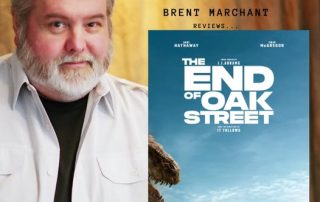




‘The End of Oak Street’ celebrates second chances

Movies about second chances are fairly common fare in the world of cinema. They provide opportunities to explore the value of themes like redemption and forgiveness. And these notions are usually examined within the context of interpersonal dramas or gentle comedies. So it’s truly unusual to find them as thematic underpinnings in as unlikely a context as science fiction. Nevertheless, such is the case in the new Spielbergian summertime blockbuster, “The End of Oak Street.”

The Life Lessons of Two Alternative Love Stories

The hope most of us hold for romantic comedy-dramas is that everything will ultimately work out in the end. But, in real life, relationships don’t always turn out that way. So when filmmakers try to fuse those two divergent scenarios, the results can be unexpected, even dismaying, if not handled properly. However, when addressed with a skillful touch, such stories can be surprisingly entertaining, even revelatory, in many ways. So it is with two alternative love stories now available for streaming online, “Magic Hour” and “Departures.”

‘Life is Short’ presents a plan for living

For what it’s worth, celebrities are often regarded as vain, narcissistic, self-absorbed and unapologetically materialistic, generally consumed with their own ambitions, being the center of attention and lining their pockets. Seldom are they widely recognized for qualities like artistic integrity, personal fulfillment and noble intentions. But those generalizations do not always provide realistic depictions; there are individuals who indeed embody sincere motivations that drive their craft and their lives. But how do they defy the so-called model and turn out like that? Such is the point behind the new Netflix documentary profile of actor-comedian Martin Short, “Marty, Life is Short.”

Obliviousness scrutinized in ‘The Invite’

Nineteenth Century Irish novelist, playwright and raconteur Oscar Wilde, widely known for his witticisms and observations about life, is generally credited for the following arguably astute advice: “One should always be in love. That is the reason why one should never marry.” And it’s most fitting that those very words should eloquently serve as a cinematic epigraph at the start of a new comedy-drama about a casual, neighborly social occasion that goes awry while simultaneously providing its unsuspecting participants with new, eye-opening, revelatory insights about life, love, marriage, sexuality and a host of other topics, “The Invite.”

Go to Top