



The Best and Worst Documentaries of 2025

With 2025 now in the books, it’s time to look back on the year in movies. In this third of three blogs, I spotlight my Best and Worst Documentaries of 2025, beginning with a Top 10 Countdown, followed by an open-ended list of Honorable Mentions and an abbreviated list of my choices for the Worst Documentaries of the year. As much as possible, I’ve included web site and trailer links, as well as links to my own reviews. In separate previously published blog posts, I examined my Best Films of 2025 and my Worst Films of 2025.
The year just passed was a good one for documentaries (certainly better than the past few were). In particular, there was greater diversity in 2025’s selections, a welcome change, to be sure. But, as I have said with regard to other such trends in movies, I believe there’s always room for more.
Some readers have asked me why I write about documentaries separately from narrative features when compiling my best and worst lists. The answer is simple: narrative features are fictional, while documentaries are not (or at least they’re not supposed to be, though there are two releases in this blog where that distinction is not as clear-cut as it probably could be). Lumping both types of films together, in my view, is fundamentally an apples-to-oranges comparison, one that can’t be easily made when it comes to assessing cinematic attributes, traits that I believe are thus best evaluated separately.
My discussion of documentaries that I disliked is done for the same reason why I write about narrative features that I dislike: As much as I enjoy celebrating good films, I also feel it’s my responsibility to call out those that end up failing in their missions, no matter what the cause might be. And, as someone who has never been bashful about making my feelings known in that regard, this is clearly reflected in my writings about those releases (and in my selections here). This includes not only offerings that most viewers find disappointing, but also releases that, in my view, simply don’t pass muster despite what others may say about them. Indeed, I never hesitate to point out when the Emperor is naked, no matter how unpopular my opinion might be.
As I noted in the two preceding blogs in this series, the past year marked my initial participation in the programs of Chicago Indie Critics and as a first-time member of the press corps for the Chicago International Film Festival. I look forward to a repeat of these efforts in 2026. And, as in many other past years, I was pleased to attend a number of special film events, including the Reeling Chicago International LGBTQ+ Film Festival, the Chicago Latino Film Festival, the Gene Siskel Film Center Chicago European Union Film Festival and the Gene Siskel Film Center Asian American Showcase.
So, with all that said, check out what I thought about 2025’s crop of documentaries. You may not agree with me, and I respect your opinions, regardless of whether our views align. I hope you’ll respectfully grant me the same. And your feedback, as always, is welcome. Here goes!
The Top 10 Countdown

10. “Come See Me in the Good Light” (USA)
In one of the many memorable lines from “Star Trek II: The Wrath of Khan” (1982), Dr. David Marcus (Merritt Butrick) echoes a quote once uttered by his father, Adm. James T. Kirk (William Shatner), that “how we face death is at least as important as how we face life.” A despondent Kirk, who was in the throes of grief over the loss of his best friend at the time, dismissively responds by chalking up the sentiment to “just words.” But, despite Kirk’s indifferent reply, his insightful observation speaks volumes, especially for those who are staring down the prospect of their own demise. And that’s particularly relevant in the minds of individuals who are facing the possibility of an untimely transition while still in the prime of life. Ironically, that’s precisely the central theme of the latest documentary feature from filmmaker Ryan White, a chronicle of the final year of the life of spoken word poet Andrea Gibson (1975-2025), who developed a following on par with that of a rock star, often performing to sold-out audiences in the 1990s and 2000s. Gibson, who would later go on to become Poet Laureate of the State of Colorado, was diagnosed with ovarian cancer in 2021, the beginning of a four-year odyssey characterized by alternating occurrences of disease onset and remission. However, as this recurring pattern continued, Gibson began to see the trajectory of where circumstances were headed and started looking at how to prepare for what appeared to be an inescapable eventuality. As the film unfolds, with the loving and unwavering support of fiercely devoted partner and fellow poet/writer Megan Falley, Gibson thoughtfully examines matters of life – and impending death – from an array of perspectives, attempting to come to terms with a disease that has been slowly but steadily worsening. In the course of the picture’s time frame, Gibson looks back on a life as an artist and gender identity activist, as well as the challenges of hard-won self-acceptance. The film also shares Gibson’s observations on matters of love, commitment and justice, as well as the resolve to carry on and complete cherished tasks with what time is left. The result is a heartfelt and at times surprisingly humorous portrait of a gifted, reflective individual courageously approaching the end of life with grace and a generous spirit of being grateful for what was and for what remains in whatever time is left. For its efforts, the picture was named one of 2025’s Top 5 Documentaries from the National Board of Review and has earned Oscar and Independent Spirit Award nominations for best documentary feature. And, even though the picture has a tendency to become somewhat repetitive as it plays out, it nevertheless eloquently embodies the existential intent expressed at the outset of this evaluation, reminding us all to prepare for what’s to come – as well as whatever might come next.

9. “Liza: A Truly Terrific Absolutely True Story” (USA)
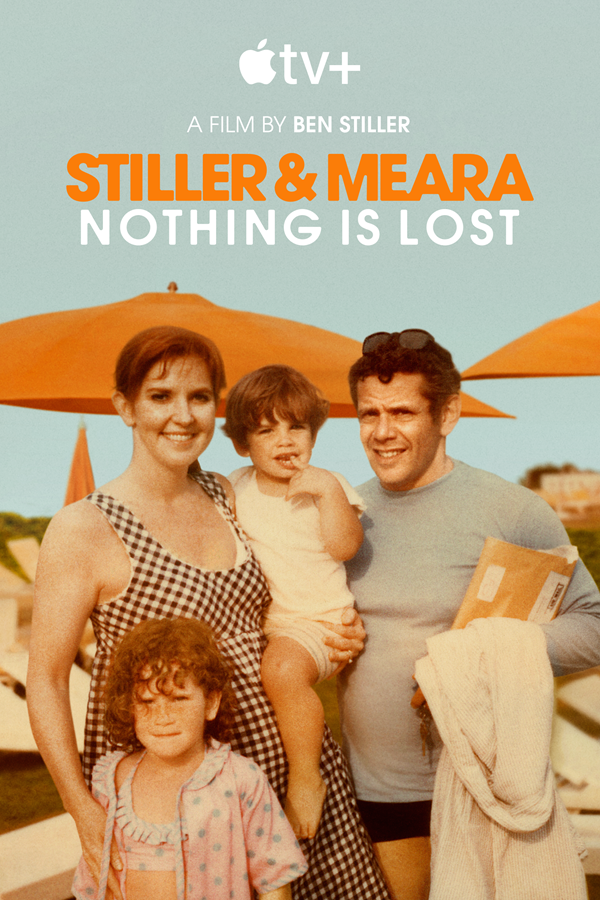
8. “Stiller & Meara: Nothing Is Lost” (USA)
The challenges of balancing home life and work life can be tremendous for those in committed relationships. Those conditions can be made even more difficult for partners who work together, essentially forcing them together 24/7 and never giving them a chance to get away from their circumstances (or one another). And, if they become parents, add to that already-full plate the responsibilities of child rearing, a scenario that can be just as hard on the kids as it is on those attempting to raise them. It’s certainly a gamble whether those spouses and their families can cope and survive, let alone thrive, but, for some, they manage to make it work successfully. So it was for the legendary comedy/acting duo of Jerry Stiller and Anne Meara, partners in life and work, as well as the proud parents of two successful children who followed in their folks’ professional footsteps. But juggling all that wasn’t easy for Anne and Jerry, as seen in this documentary memoir, an affectionate but frank tribute from their son, writer-actor-director Ben Stiller. In many regards, this offering is almost as much a release about the filmmaker and his older sister, Amy, and what it was like to grow up in the household of their famous parents. Stiller and Meara, who became a household name in entertainment circles thanks in large part to their frequent appearances on The Ed Sullivan Show and successful stints on the nightclub circuit in the 1960s, were a couple that was very much in love but who struggled to manage the demands of their relationship, their household and their careers. For all their devotion to one another and their commitment to their family and their work, their sometimes-rocky road together also included more than its fair share of conflict, counseling sessions, frustrated professional ambitions and ample alcohol consumption, among other challenges. These influences, in turn, rubbed off on the kids during their upbringing, qualities that subsequently and unwittingly carried over into their adult lives when they, too, became spouses and parents. In that sense, then, one could say that this project was as much a therapy session for the filmmaker as it was a candid but endearing homage to a couple that never gave up on making a good life for themselves and their children, no matter how much everyone may have been tested along the way. This truly heartfelt production thus provides an insightful look into their colorful and eclectic world and how it evolved over time and several generations. “Stiller & Meara” is a work characterized by uncensored, authentic feelings, fond familial recollections, an intimate look at the couple’s eccentric pack rat tendencies (hence the picture’s subtitle), and a wealth of memorable, wide-ranging archive footage from the prolific careers of this gifted group of entertainers. Fans of the title characters are sure to admire this endearing but honest tribute, not just for the retrospective of the couple’s repertoire, but also for how they lived their lives as consummate human beings and accomplished professionals. It took work to make all that happen, but, in the end, Jerry and Anne had a lot to show for their efforts, accomplishments from which we have all ultimately benefitted.
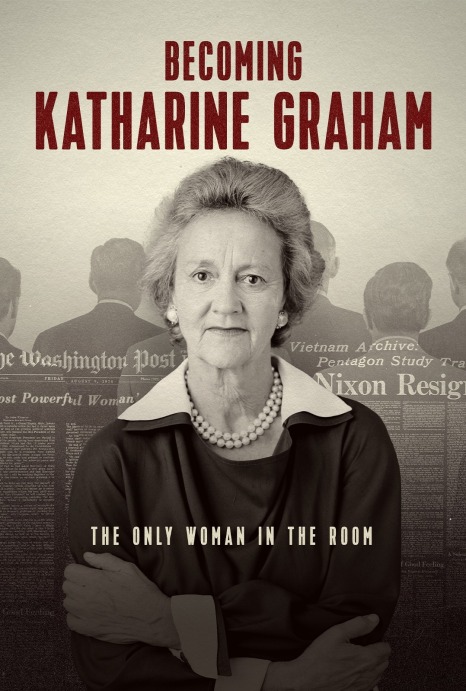
7. “Becoming Katharine Graham” (USA)
Living up to one’s potential is indeed inspiring, especially for those who successfully overcome tremendous challenges in doing so. Such was the case of Katharine “Kay” Graham (1917-2001), publisher of The Washington Post newspaper and CEO of the multimedia Washington Post Co. organization, the subject of this insightful documentary from directors George and Teddy Kunhardt. Having been unexpectedly thrust into this demanding management role after the tragic suicide of her husband Philip in 1963, Graham nevertheless assumed the reins of this position with the intent of keeping the Post as the respected family business that it had been since her father acquired it in 1933. Yet, even though Graham had some experience working for the paper and had always taken an interest in its quality and well-being, she nevertheless knew little about running a business. This was a task made all the more daunting simply by virtue of being a woman in what was at that time clearly seen as a man’s domain. Over the years, however, she learned much, becoming a role model for women in the business world, despite not seeing herself as a diehard feminist. What’s more, during this time, Graham confidently presided over the ample challenges posed by publishing the Pentagon Papers and breaking the story about the Watergate scandal, incidents that changed the nation’s political landscape and put fundamental First Amendment rights to the test. Viewers thus witness Graham’s evolution in becoming a respected and successful business leader, despite everything that could have worked against her. In telling this story, the filmmakers draw upon a wealth of historically significant archive footage, including damning excerpts from the secret White House recordings from the Nixon presidency, as well as recent interviews with friends, family members and colleagues who knew and worked with her, such as journalists Bob Woodward and Carl Bernstein, women’s rights activist Gloria Steinem, and close friend and mentor Warren Buffett. And, of course, there are numerous clips with Graham herself, candidly and succinctly revealing her perspectives on what she experienced and what we must collectively do when faced with the kinds of challenges that she and the Post had to contend with. At a time when the roles and rights of women are being threatened and the credibility and reliability of the press has come under increasing (and, some would say, justifiable) scrutiny, “Becoming Katharine Graham” serves as a powerful reminder of the hard-won nature of these fundamental protections and the need to fight for their preservation. We as a society should be grateful for individuals like Kay Graham for doing so much in bringing them into being. This film is an excellent chronicle of those efforts and a potent cautionary tale about what we might stand to lose if we let our diligence lapse.
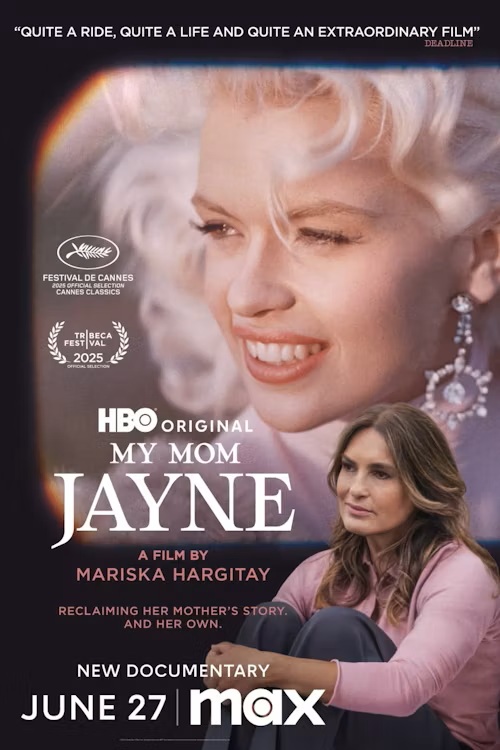
6. “My Mom Jayne” (USA)
It’s curiously ironic that the search to learn more about a loved one you barely knew turns out to be a journey of discovery about oneself. Nevertheless, such was the case for actress Mariska Hargitay, daughter of screen legend Jayne Mansfield (1933-1967), who directed this revealing HBO documentary about her relationship (or lack thereof) with the famous mother she lost in a tragic car accident when she was only three years old. Mansfield, one of the most visible movie idols of the 1950s and ʼ60s, was molded by the Hollywood star-making system into one of the era’s prototypical blonde bombshells in the same vein as Marilyn Monroe, often playing roles as a dimwitted but provocative sex symbol. Despite this typecasting, however, Mansfield had aspirations to be a serious actress, one capable of much more substantive parts. She also looked to make use of her underrated talents as an accomplished violin and piano virtuoso, capabilities that were often significantly downplayed as part of her monodimensional studio packaging. She was also a doting mother to her children – at least to her first three born. As the youngest, Mariska frequently received less attention than her siblings, which is partly why she believed, as she got older, that she hardly knew her mother during the short time they had together. As the film shows, however, Mariska arrived on the scene when her mother was undergoing her share of personal issues, having married three times and experienced a number of other turbulent relationships that often left Mansfield’s youngest sidelined. This documentary is thus a search for the filmmaker to learn more about the past she barely knew and why it unfolded as it did. Mansfield is brought back to life through an array of archive footage, interviews with Hargitay’s three elder siblings and her mother’s longtime publicist, and a revealing excavation into a family storage locker (closed off since 1969) in which artifacts of the actress’s life are uncovered, painting a telling picture of Jayne’s storied life and career. Through this investigatory process, Hargitay begins to understand why her mother’s life – and, consequently, her own life – turned out as it did. The picture thus provides an insightful, intimate, highly personal portrait of a Hollywood icon who, like Monroe, had very different public and private personas, one that was quite well known (albeit somewhat illusory) and one that few people outside of her inner circle (as well as some who were even within it) knew little about. The result is consequently both eye-opening for viewers, as well as the filmmaker herself. “My Mom Jayne,” the recipient of two Cannes Film Festival award nominations and a National Board of Review designation as one of 2025’s Top 5 Documentaries, makes for a captivating watch in terms of how much it unexpectedly exposes about someone whom most in the public thought they knew, not to mention the inherent surprises that emerge as Mansfield’s personal story unfolds on screen. Admittedly, there are points in the film where the flow of the timeline of Mansfield’s life isn’t always presented as clearly as one might think it should have been, but there’s a reason for that to a certain degree, one that becomes clear as her story plays out. On balance, though, this endearing memoir meticulously pieces together the challenging but heart-rending relationship of a mother and daughter whose connection has taken years to surface and with which the filmmaker has struggled to understand and come to terms. Indeed, life may not always be what we believe it to be, but, then, sometimes it also turns out to be something unexpectedly special. That’s the journey Hargitay takes through this film, and moviegoers should appreciate her willingness to share that profoundly personal exploration with the rest of us, especially if it helps to shed light on our own experiences in the same way that this odyssey has done for her.
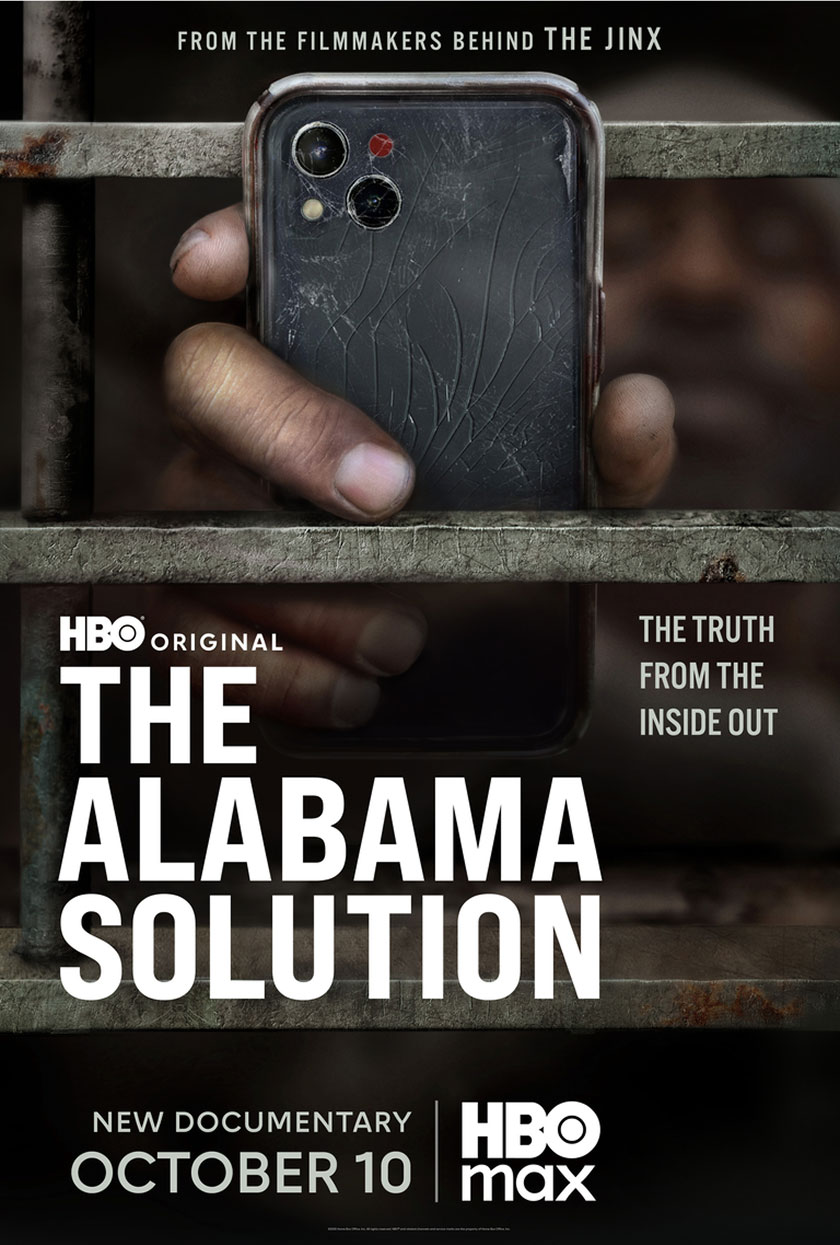
5. “The Alabama Solution” (USA)
When it comes to questions of crime and punishment, opinions vary widely, depending on one’s sensibilities and personal point of view, and we’re all entitled to our respective opinions. And most would probably agree that wrongdoers should indeed pay the price for their transgressions. But does that give authorities charged with the responsibility of meting out justice the right to essentially do whatever they want in handling the treatment of these perpetrators? What’s worse, is it at all acceptable to approach the management of inmates as a de facto form of often-lifelong, legally sanctioned enslavement, one characterized by inhumane treatment, deplorable living conditions, endless personal indignities, and mechanisms for producing lucrative windfalls for the state and/or a privileged few? And what about the promises of rehabilitation – do they have any realistic chance of being acted upon, or are they mere lip service? Those are among the disturbing questions raised in this alarming, revelatory HBO documentary about life in the 14 statewide facilities operated by the Alabama Department of Corrections, an agency whose name falls far short of living up to its allegedly stated intent. This superb but troubling offering from writer-directors Andrew Jarecki and Charlotte Kaufman tells the stories of a number of Alabama prisoners (zealously backed by their families) who courageously undertook a project to record the appalling way of life inside their facilities using contraband cell phones (devices that, in most cases, were, ironically, clandestinely smuggled into these institutions and sold to inmates by prison guards seeking to line their own pockets). The findings of these intrepid videographers reveal an ongoing program of unspeakable beatings by overworked, rage-filled, out-of-control staff members, often relentlessly conducted under filthy, hellish circumstances and prompted by assorted personal vendettas or the fulfillment of official policy aims. This is particularly true for squelching the disclosure of the foregoing atrocities and engaging in reprehensible, unsupervised acts of retaliation, nearly all of which have gone (and continue to go) unaddressed and/or unpunished by prison authorities. Inmates who participated in this undertaking bravely placed their well-being – and even their lives – at risk by doing so, all in hopes that they could get the word out to an uninformed public, given that journalists are prohibited from visiting these facilities. They also hoped to compile evidence of the ongoing barbarity as a means to encourage the US Department of Justice to investigate and possibly take over the management of the ADOC. But, despite attempts by the federal government to get involved, the state stubbornly and arrogantly pushed back, insisting that this was an Alabama problem that called for an “Alabama solution.” But this inflexible, unproductive posture, in turn, led to a remarkably well-coordinated effort by inmates across the state to fight back, an initiative that employed creative methods of protest never before seen in prisons in Alabama or elsewhere. “The Alabama Solution” is thus one of those watershed films that unflinchingly illustrates how low humanity can sink in inflicting horrific treatment on others, even those who have a debt to pay to society and, consequently, have been imprisoned for their self-acknowledged transgressions. But coping with such unacceptable conditions has placed unbearable strains on the incarcerated, prompting Alabama to lead the nation in prison deaths, suicides and overdoses, as well as one of the country’s lowest parole approval rates. And, sadly, this release also makes it abundantly clear that Alabama is not the only state where such conditions are present, a revelation that has come to light in part through the efforts of Alabama prisoners who have been networking with fellow inmates elsewhere. Admittedly, this Oscar nominee for best documentary feature can be a difficult watch at times (sensitive viewers take note). Indeed, just when one thinks that things can’t possibly get any worse, there are invariably new disclosures that maddeningly surpass what preceded them. However, this offering makes readily apparent what everyone who lives in a purported civilized society should know – and not be willing to tolerate.
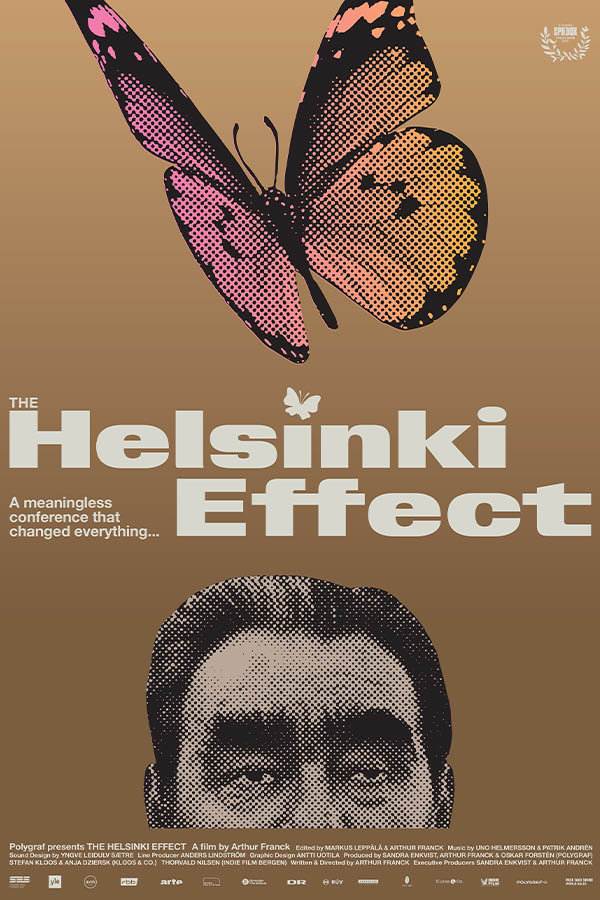
4. “The Helsinki Effect” (Finland/Germany/Norway)
Screened at the 61st Chicago International Film Festival
A widely held theory known as “the butterfly effect” maintains that seemingly small actions, like a butterfly flapping its wings on one side of the planet, can actually have tremendous impact at a distance, such as the ability to affect weather patterns on the other side of the globe. And, as this informative and entertaining documentary from writer-director Arthur Franck shows, it’s possible to see how this principle might apply in areas other than the fallout that stems from insect behavior. In 1975, 35 world leaders from Europe and North America gathered in Finland to sign a detailed but nonbinding document known as the Helsinki Agreement. Billed as an initiative aimed at promoting détente by addressing security and cooperation concerns in Europe for parties on each side of the Cold War, the conference at which the agreement was to be signed was eagerly supported by Soviet head of state Leonid Brezhnev, largely to formally establish firm borders separating the boundaries between NATO and Warsaw Pact nations. The West, meanwhile, was less enthusiastic, with officials like Secretary of State Henry Kissinger believing that this undertaking wouldn’t fundamentally change circumstances unless concessions could be secured from behind the Iron Curtain. And, as the protracted negotiations for the agreement dragged on, the Soviets grew impatient, ultimately agreeing to the demands of the US and its allies. With the deal set, the event proceeded, though not with much public interest, despite widespread media coverage and potentially significant ramifications waiting in the wings, developments that eventually unfolded and left the Soviets gobsmacked at what ultimately transpired. In telling the complicated story behind this event, the filmmaker does a superb job of making potentially indiscernible material understandable, even fun to watch. By breaking down the history of this venture into 12 easily digestible segments, aided by revealing archive footage, excerpts from previously classified documents and easily understood graphic aids, this painstakingly crafted documentary meticulously shows how the conference’s many contributing elements came together to make this effort a reality, one that unexpectedly unleashed “the Helsinki effect” in the process. It’s indeed refreshing to watch an engaging and important history lesson such as this without being bogged down in tedious, uninteresting detail that might otherwise serve as a surefire cure for insomnia. Quite the opposite here, to be sure, thanks in large part to this offering’s inventive approach and effective use of ample tongue-in-cheek humor. Watch this one, and you may never look upon history class in quite the same way ever again.
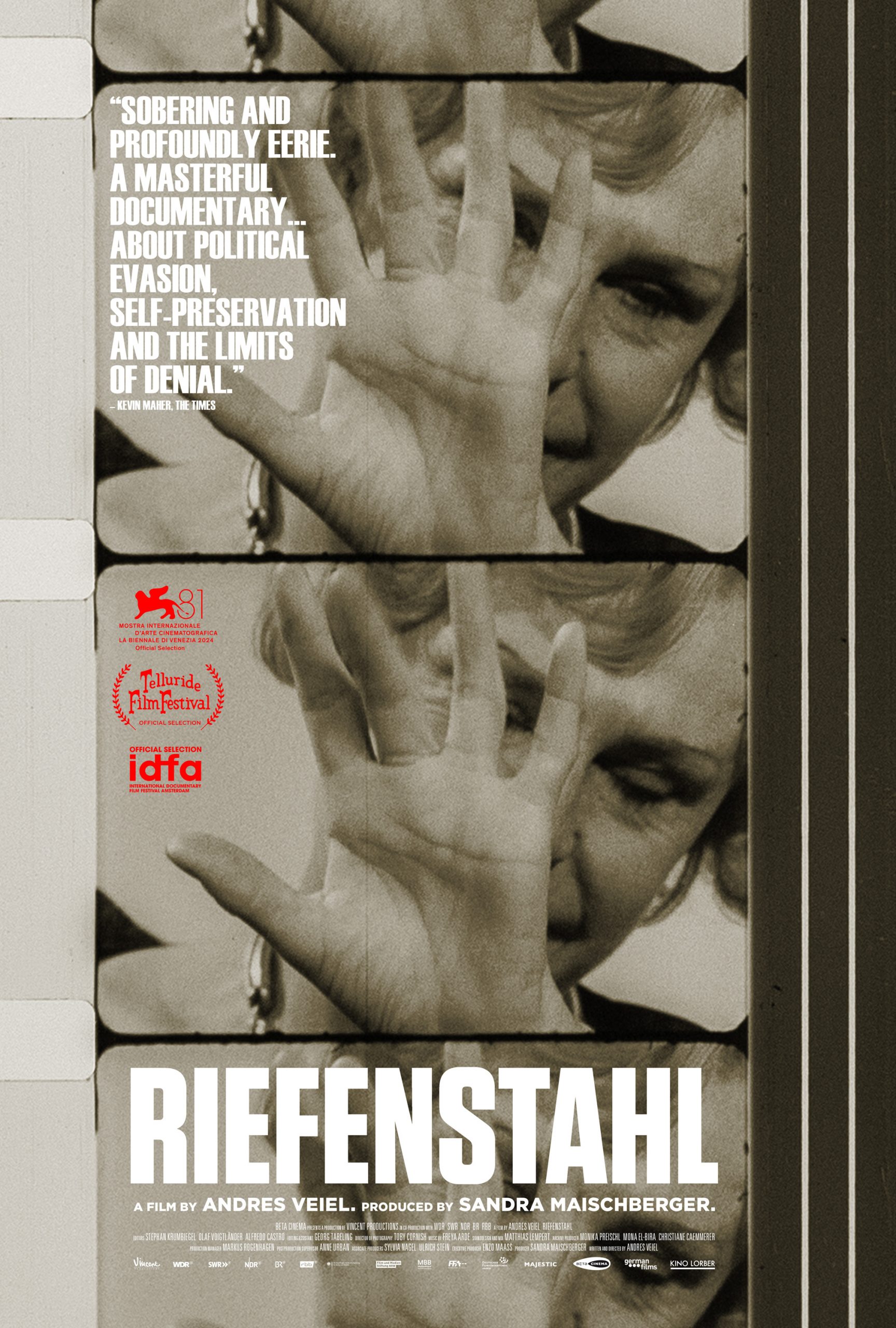
3. “Riefenstahl” (Germany)
“To thine own self be true” – it’s an admonition and affirmation generally held in high regard, but it’s also one that can be difficult to live up to. In many instances, that’s attributable to not really knowing oneself in the first place. And, as this telling documentary from writer-director Andres Veiel reveals, that was very much the case where German filmmaker Leni Riefenstahl (1902-2003) was concerned. At the risk of profound understatement, this colorful, controversial yet innovatively brilliant German-born actor-producer-director lived what could best be termed “a complicated life.” As an impassioned devotee of the arts, she developed a stellar reputation for her work as an actress and filmmaker in such pictures as director Arnold Fanck’s “Storm Over Mont Blanc” (“Stürme über dem Mont Blanc”) (1930) and her own directorial debut, “The Blue Light” (“Das blaue Licht – Eine Berglegende aus den Dolomiten”) (1932). Her considerable talents, in turn, caught the attention of the leaders of the country’s emerging National Socialist (i.e., Nazi) Party, who were looking for someone to serve as a creator of propaganda films (even if they weren’t officially called as much at the time). Riefenstahl was thus recruited to direct documentaries about the landmark Nuremberg Nazi Rally, “Triumph of the Will” (1935), and “Olympia” (1938), a two-part production celebrating the glories of the Third Reich at the 1936 Berlin Olympiade. Through these works, the filmmaker significantly advanced her reputation as a documentary filmmaker, introducing never-before-seen innovations in cinematography. She relished these opportunities to showcase her capabilities, but it came at a price when the truth of Nazi atrocities emerged during World War II – incidents about which she claimed to have no knowledge until she began witnessing them firsthand as a documentary war correspondent in Poland in 1939. Disillusionment subsequently set in. But, when she was accused of actively helping to sanction such unspeakable brutality, she assertively recoiled, insisting that this was not her intent when she agreed to make her films (despite remaining “friends” with the perpetrators who hired her). “Riefenstahl” thus raises the nagging question, “In light of the foregoing, was she truly unaware or remarkably naïve and delusional?” Through a wealth of archive footage, including numerous interviews with the filmmaker, there’s plenty of evidence that cuts both ways: Did she willingly turn a blind eye to avail herself of the opportunity (and consequently believe her own hype)? Or was she shielded from the truth by her Nazi overlords to get the agenda-driven output from her that they were seeking? This unceasing ambivalence would become a ghost that would haunt her for the rest of her life, especially when skeptics and investigative journalists in later years raised hard questions about her role in the rise of the Third Reich. Riefenstahl’s vociferous efforts to defend her name and work reflect the intrinsic indecision that pervaded her outlook during the 50+ years she lived after the war’s end, an attribute whose nature almost comes across as surreal at times. Regardless of what one might believe, there would appear to be plenty of room for justified ambiguity here, much of it based in the filmmaker’s apparent inability (or unwillingness) to examine her own true self. This outstanding release thus illustrates how clear-cut answers to pressing questions like this may not always be readily available, a quality that provides decidedly riveting viewing, particularly through the deliberately ambivalent ways in which this story is told and documented. So was Riefenstahl a victimized pawn? A gullible idealist? A bald-faced, lying collaborator? That’s up to viewers to decide, especially since the protagonist herself doesn’t appear to have a response to any of these characterizations. To thine own self be true, indeed.
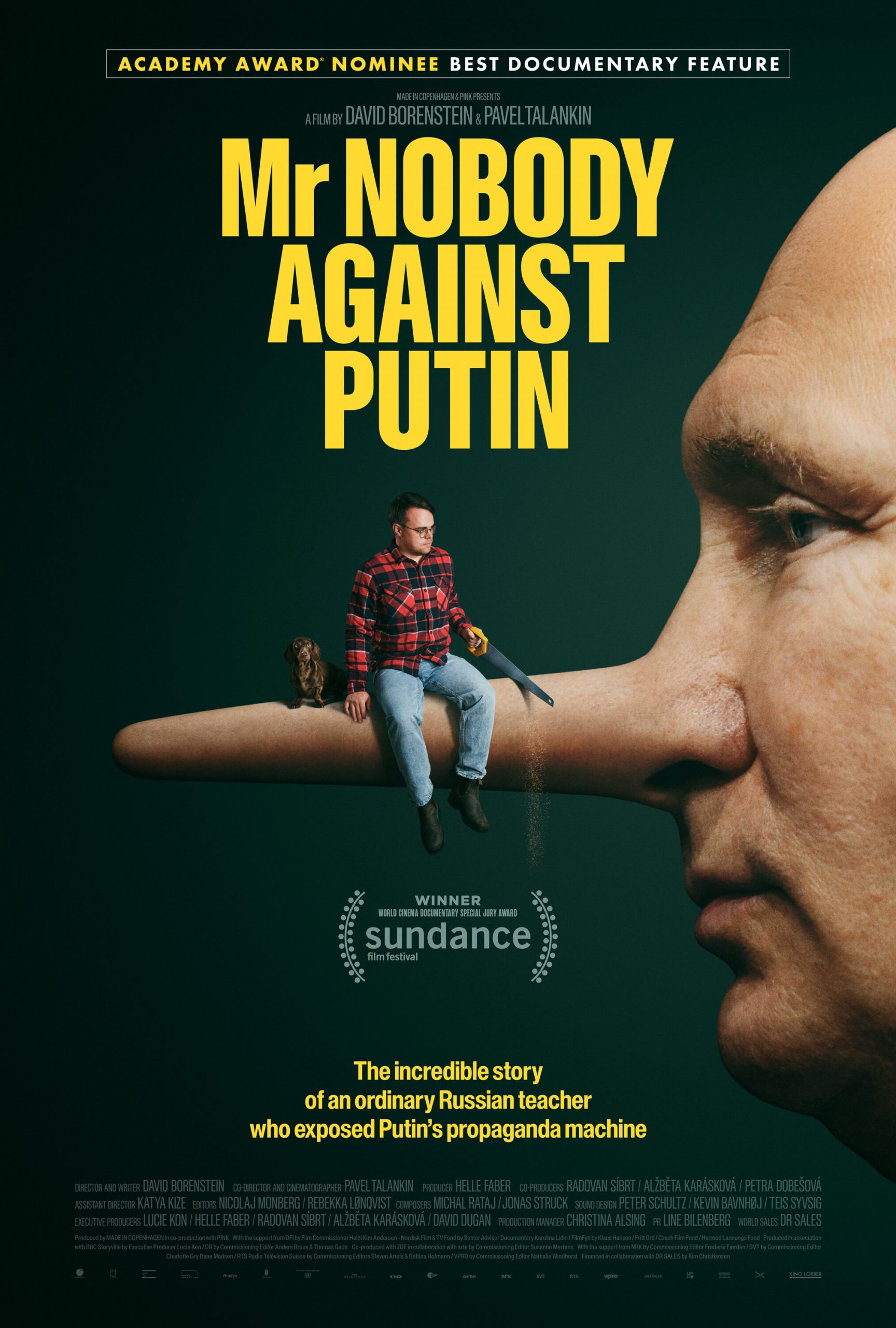
2. “Mr. Nobody Against Putin” (Denmark/Czechia/Germany)
If one were a tyrannical despot who recklessly launched his country into a questionable “special military operation” (i.e., unprovoked invasion) in a neighboring nation and needed to win over the unquestioning support of a skeptical populace, what would you do? That’s the question Russian head of state Vladimir Putin had to address when his country’s forces invaded Ukraine in a mercilessly brutal offensive in February 2022. To gain the backing of his people, Putin launched an extensive Soviet-style propaganda campaign that required coercive compliance with its stated objectives, regimented practices and unwavering belief in a pack of state-sponsored lies. And nowhere was this more apparent (and notoriously insidious) than in the nation’s schools, where young, impressionable students were forced into military-style drills, flawless recitations of political songs and poems, and indoctrination into daily brainwashing sessions. Seems like a foolproof plan, right? Well, one thing Mr. Putin didn’t count on was the masterfully implemented subversive scheming of Pasha Talankin, a mild-mannered primary school event planner and videographer from Karabash, a small industrial community in the Ural Mountains. Talankin was deeply troubled by the imposition of Putin’s plan and how it was being crammed down the throats of his kids, especially since he was required to document his school’s participation in the program in accordance with strict government requirements. However, in his capacity as official school videographer, he decided to draw upon that role to compile a record of what was transpiring for distribution to a wider audience – the world outside of Putin’s Russia. While essentially hiding in plain sight, he shot footage of the foregoing activities, many of which have been augmented here with whimsical graphics and tongue-in-cheek audio voiceovers showing how utterly preposterous they were. To those in the West, these incidents probably appear patently laughable and utterly ridiculous, even though they’re ultimately anything but funny. And, in making these potentially seditious recordings, Talankin put himself at ever-increasing risk of treason, a crime that would carry stiff penalties if he were to be tried and convicted. But, given his low-key, easygoing demeanor, as well as his ability to make it look as though he was simply going about his prescribed duties, he courageously managed to fly below the radar in compiling the footage for this brilliantly skewering first-person documentary, a film that has successfully (and deservedly) captured BAFTA and Oscar nominations. As effective as this release is in making Putin look foolish, though, there’s also a troubling underlying message here for those outside of Russia, a cautionary tale about the fine line between proud patriotism and dangerously dogmatic nationalism. Viewers should thus bear this in mind in between the laughs, encouraging us all to remain vigilant to avoid falling into that trap. Taking pride in one’s country is one thing, but freely embracing carefully calculated partisan falsehoods is something else entirely, and the journey from one to the other is a lot shorter than most of us would probably like to believe. This is truly a film to watch, listen to, and, above all, learn from.
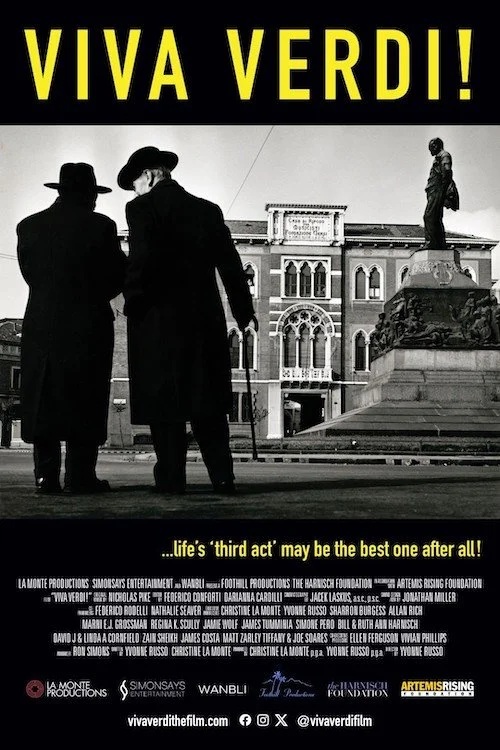
1. “Viva Verdi!” (Italy/USA)
One of the most inspiring messages I’ve run across in my life maintains that “The greatest joy is in creation,” a message that, ironically, came my way via a Chinese fortune cookie just as I had begun work on my first book. The timing couldn’t have been better, as this sentiment fed directly into my writing. It proved to me at the time – and ever since – that creativity is essential to help keep us feeling young, fulfilled and vital. And that lesson has also been crucial in the lives and well-being of the residents of Casa Verdi, a retirement facility in Milan, Italy for aging musicians established by famed operatic composer Giuseppe Verdi (1813-1901). At the time it was built at the turn of the 20th Century, Verdi wanted to provide help to retired musicians who needed financial and housing assistance in their later years. But his vision for the facility was much more than that – it was also set up as a haven for these artists where they could remain immersed in their music, a place where they could continue to perform for their peers and the public, as well as serve as mentors for aspiring young musicians. Casa Verdi thus gave its residents both a home, as well as a venue where they could feel useful, inspired, and, above all, youthful, their age notwithstanding. (Its essence, then, is very much like the musicians’ retirement community depicted in the narrative feature “Quartet” (2012).) In this captivating documentary, writer-director Yvonne Russo takes viewers inside this artistic sanctuary, providing an intimate look at how it has enabled its residents to feel a sense of renewal at a time many of their elderly peers might otherwise be winding down and withdrawing from life. The facility thus validates the sentiment noted at the outset above, giving those approaching the end of their lives purpose and joy for the time they have left. That’s a laudable mission, to be sure, one that provides benefits for helping to sustain and even help heal the body and the soul at a time when such nurturing is often needed most. Because of Casa Verdi’s success in that endeavor, this chronicle of that effort makes “Viva Verdi!” one of the most uplifting pictures that I have seen in some time. In fact, if I had any complaint at all, it would be that I wish it had been longer than its 1:18:00 runtime. The residents’ stories and performances (both archival and in the film itself) are rich, colorful and fulfilling, brimming with a sense of genuine pride and pleasure, rewarding experiences that have given them (and, by extension, us) tremendous satisfaction, enjoyment and fulfillment. The picture has even earned an Oscar nomination for best original song, “Sweet Dreams of Joy,” which can be heard playing over the closing credits. Fans of opera and fine arts truly owe much to the creatives featured in this film. But they and we also need to thank Verdi for his generosity in founding the institution that bears his name, helping to make their final years among the best of their lives. We can only hope that all of us end up being just as fortunate.
Honorable Mentions
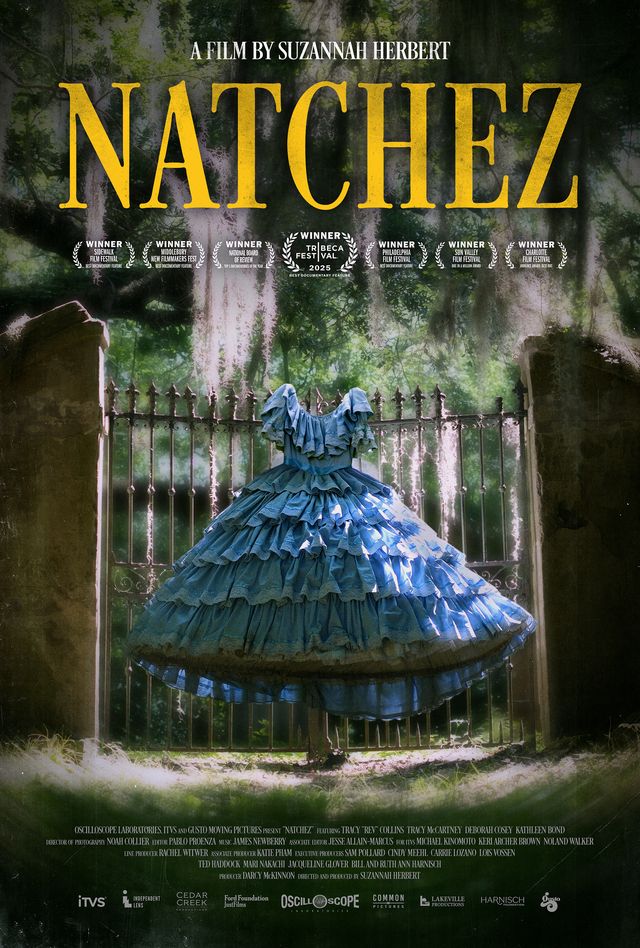
11. “Natchez” (USA)
Coming to terms with one’s own dubious past can be challenging, difficult and even embarrassing. That’s true not only for individuals but potentially entire communities. And one such case can be found in the Mississippi River community of Natchez, MS. As the oldest settlement on the Mississippi River, this city of 14,000 today struggles to define its identity as one that celebrates yet accepts its history as a place of both grand elegance and unrepentant human exploitation. Writer-director Suzannah Herbert’s incisive documentary succeeds in presenting a balanced assessment of a community that’s proud of the lavish architecture and beautiful gardens that have come to characterize it as an icon of the Old South (and made it a popular tourist destination) but that has also had to wrestle with the unsavory reputation of how that way of life came into being, one built on the backs of Black slaves who toiled in the fields of the region’s cotton plantations. Many contemporary residents like to believe in the notion that Natchez has become a symbol of the New South, one that accepts racial tolerance and equality (a blue enclave in an otherwise-red state as one resident observes). But then there are those who zealously cling to the genteel ways of antebellum culture who are reluctant to acknowledge (let alone discuss) how it came to pass, not to mention how it almost vanished in the wake of the Civil War and during Reconstruction. Owning up to that checkered history has thus placed Natchez in a position of having to reconcile these issues as it seeks to move forward in shaping its future. Indeed, in an age where cancel culture has gained considerable ground in recent years, is it still acceptable for manor house docents to conduct tours wearing hoop skirts and show off their structures’ unbridled ostentation, or are these elements of the past best forgotten? Or do these practices serve as valuable reminders of a past that we dare not forget lest we run the risk of losing sight of the atrocities and inequities associated with them? Or is there some kind of workable middle ground to be had here, one that can help everyone heal from those ordeals gone by? Those are the thorny questions this film attempts to answer, and it does so with an admirably skillful hand, one that shows both the beauty and the ugliness that have made Natchez what it is, as well as the present-day initiatives that are being undertaken to steer the city in a new direction for the future. The picture’s gorgeously colorful cinematography is a sight to behold, especially in its dreamlike cinematic allusions to films like “Gone with the Wind” (1939), all backed by an equally beautiful original score. Its candid interviews with its colorful residents provide a mosaic of viewpoints reflective of the various perspectives that Natchez residents hold. And it’s all presented with an even hand, one aimed at fairly but honestly depicting the outlooks at play here. For its efforts, “Natchez” was deservedly named one of the Top 5 Documentaries of 2025 by the National Board of Review, and it will be receiving a national broadcast audience on PBS once it completes its theatrical run. It takes courage to face up to one’s past, and, even though there’s still work to be done in this community at a cross-roads it appears to be making progress in that regard, doing so with grace, growing candor and a sense of acknowledging (but not forgetting) its own legacy.
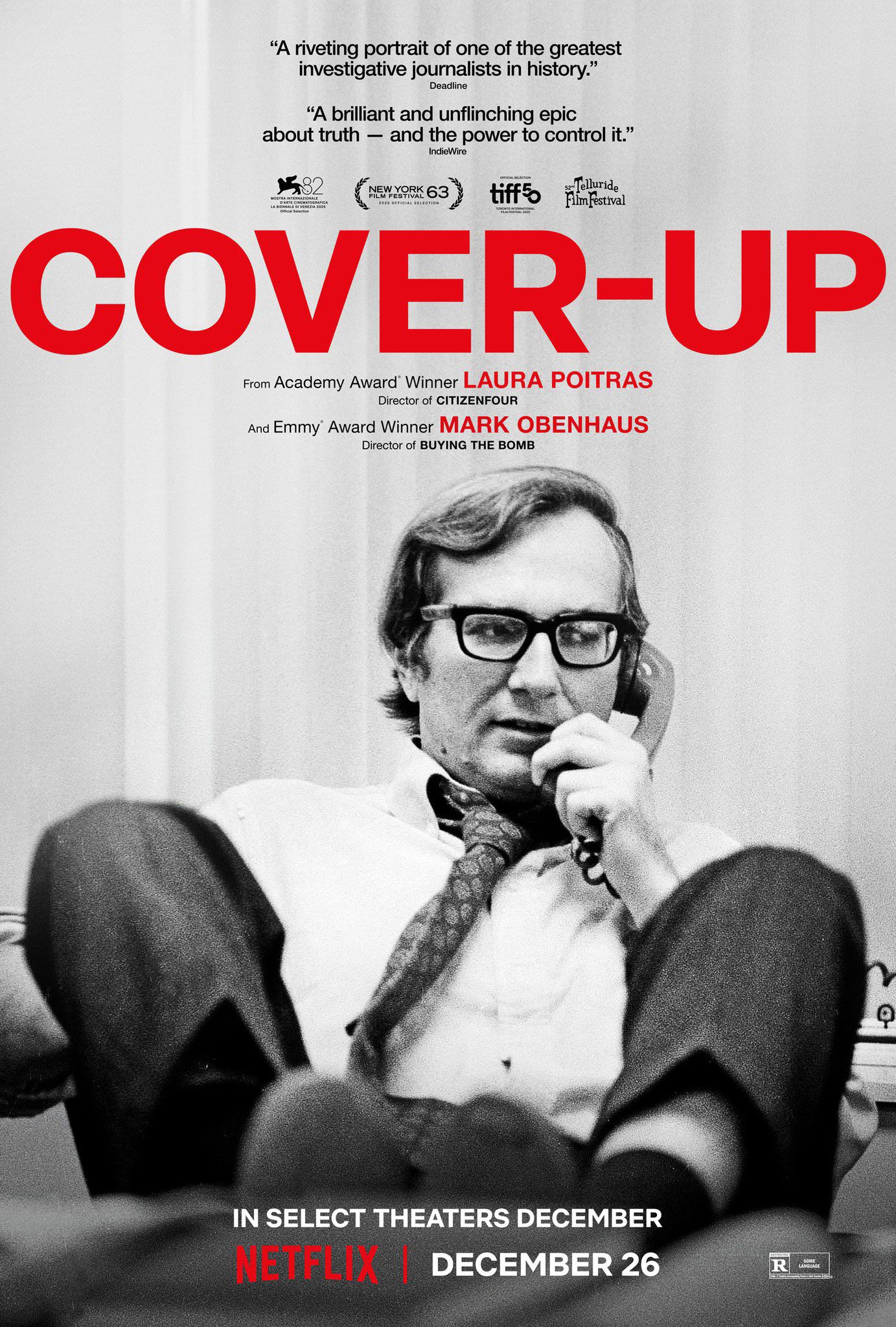
12. “Cover-Up” (USA)
In an age where it seems that troubling developments are ubiquitously lurking beneath the surface of public awareness, the need for intrepid investigative journalists to bring these stories to light is probably greater than ever. Unfortunately, such reporters have increasingly become a vanishing breed, especially in the mainstream media. Luckily, though, there are still some committed, courageous correspondents out there – mostly free-lancers – who are diligently working to bring these revelations to light. And one of the most prolific among them is veteran investigator Seymour “Sy” Hersh, who has made a career out of uncovering some of the biggest news stories for over 60 years. That prolific legacy is the subject of a documentary from directors Laura Poitras and Mark Obenhaus, showcasing the 88-year-old’s many accomplishments, beginning with his exposé on the 1968 My Lai massacre (one of the Vietnam War’s watershed moments) and continuing up to his present-day reporting on incidents in global hot spots like Ukraine and Gaza. Viewers also learn of his diverse initiatives in covering the questionable practices of public figures like Henry Kissinger and clandestine organizations like the CIA, the atrocities of institutions like Iraq’s infamous Abu Ghraib prison, and the dubious ventures undertaken by major corporations, all through articles in various periodicals and an array of books. Over the years, Hersh has also bolstered the efforts of fellow journalists by helping to keep their stories alive when public interest in them was tepid, as evidenced, for example, by his supplemental coverage of the Watergate scandal, material that dovetailed the groundbreaking but (at the time) underappreciated work of Washington Post reporters Bob Woodward and Carl Bernstein and helped to elevate awareness of that incident. In addition, the film profiles Hersh’s life outside the journalistic trenches, showing how his unplanned entry into the field was itself almost a sort of happy accident, one for which truth seekers and concerned citizens should be thankful. On balance, the filmmakers present an even-handed and comprehensive biography of their subject, driven by candid interviews with Hersh, accompanied by commentary from those who know and have worked with him, as well as a wealth of supporting archive footage. Admittedly, there are times when the narrative could benefit from some better organization of its content, given its tendency to occasionally skip around needlessly, an issue that has shown up in some of Poitras’s previous offerings. However, to its credit, this recipient of the National Board of Review’s award for best documentary of 2025 and a BAFTA Award nomination for best documentary feature nevertheless provides audiences with an informative and enlightening look at a man who has made us aware of a good many things that we might not have otherwise heard of. Indeed, we’re collectively better off for having had Hersh’s presence in our lives. Just think about everything we might have missed out on if he hadn’t been there to write about it.

13. “Final Vows” (USA)
In a stressful, complicated age such as this, there’s much to be said for wanting to pursue a quiet, contemplative life, the attraction to which can be quite strong once one gets a taste of it. So it is for the Cistercian sisters of the Santa Rita Abbey, who reside in a modest monastic compound in the idyllic, stunningly beautiful high desert of southern Arizona. These remarkable women, profiled in filmmaker Victoria Westover’s intimate and revelatory documentary, have freely chosen to commit themselves to this humble, stable and dutiful but eminently satisfying way of life by following the Rule of St. Benedict in service to God. Filmed over the course of four years, the director has captured an inside look at this little-seen order of devotees to the Divine through interviews with the sisters and footage of their everyday lives. The film thus presents a wide-ranging view of monastic life that is likely to be far different from what one might expect. This overview includes both the spiritually introspective elements of their existence, as well as the practical aspects of daily living, such as their work in manufacturing communion wafers, the abbey’s primary source of income. In turn, the film also shows how the sisters’ choice of this calling serves as a means to explore and discover their individual purpose in life through understanding their relationship with God. To this end, they have each taken different paths to get where they are, but the bottom line in each case is the same: finding one’s place in life and leading the existence one is meant to follow in expressing one’s true, authentic self and thereby setting an example for others to follow. In addition, even though the sisters are part of a religious order, their emphasis here appears to be more oriented to a spiritual approach, one less aimed at the group experience of religion and more directed toward the individual expression of spirituality. Consequently, this is something that those who have become disenchanted by dogmatic religious experiences may find refreshing and enlightening, providing a rejuvenated outlook for one’s personal spiritual life. No concerted effort is made here to try and convert anyone to anything; in fact, several of the sisters make a point of noting that the demands associated with a commitment such as this can be substantial, observing that it’s not for everyone, especially in light of the nature of the vows one must take in following through on this process. Interestingly, though, this is not to suggest that this is a dour, ever-serious, thoroughly stringent lifestyle. In fact, it’s portrayed as one filled with love, life and laughter, as seen, for example, in the wry, plainspoken, sometimes-whimsical observations of upbeat, ever-cheerful but self-effacing Prioress Sister Victoria (a.k.a., “Sister Vicki”), reflections of the inherent joy that comes with finding oneself and living a productive and thoughtful life through an experience such as this. As a result of all this, then, “Final Vows” is a truly eye-opening examination of a way of life that carries the tremendous potential for profound satisfaction, fulfillment and peace of mind at a time when those commodities might be hard to find otherwise. It’s a cinematic experience that delivers more than what one might expect at first glance, showing us that there are aspects of life we may well be overlooking and should consider pursuing, even if we don’t follow the same steps as the sisters in achieving that goal. Rather, this is a work that could well prompt us to emulate the inspiration and enlightenment these women have attained – and that we can attain for ourselves, too.
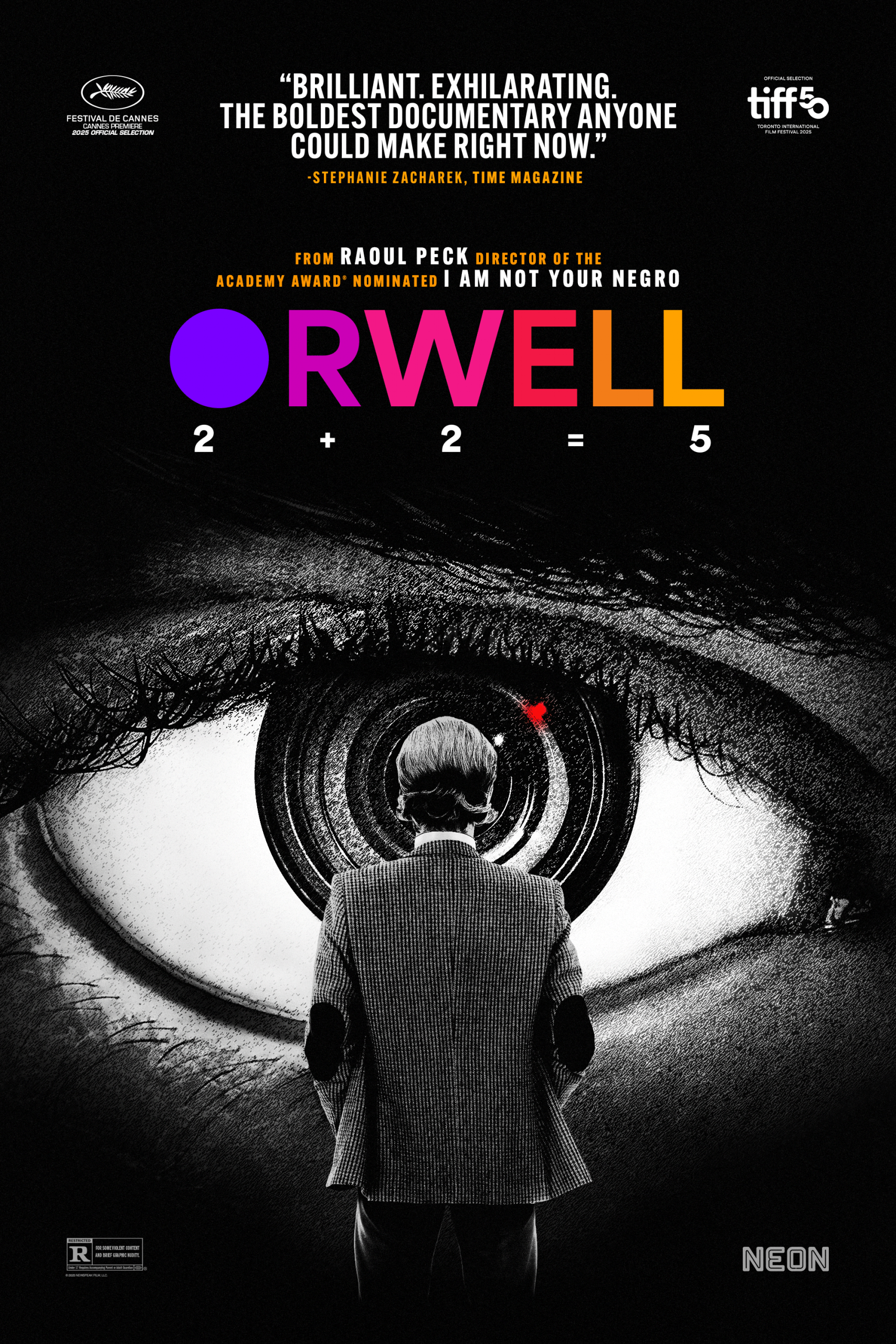
14. “Orwell: 2 + 2 = 5” (USA/France)
George Orwell (born Eric Arthur Blair, 1903-1950), author of such legendary novels as the allegorical Animal Farm and dystopian 1984, has been called one of the greatest and most insightful writers of the 20th Century. And, in light of recent history, he’s also been widely regarded as one of the most prescient, a plainspoken scribe who clearly saw the future long before it happened and wasn’t afraid to straightforwardly call it for what it would become. In recognition of that legacy, Orwell’s life, work and outlooks are now the subject of this latest production from prolific activist documentarian Raoul Peck. The film weaves together a biography of the author, the central themes of his journalistic and literary works, and illustrations of how those notions have materialized in the “management” (or, one might more accurately say, manipulation) of social, political and world affairs over the years, with an especially heavy emphasis on the present day. The filmmaker cites myriad examples of these manifestations to show just how on target Orwell was in predicting what would lie ahead, both in the places where he lived (England, Spain and Burma (now Myanmar)), as well as other locales around the globe, including Russia, Ukraine, Haiti, France, Latin America, Asia, and, most importantly, the US. And, while Peck largely targets the policies and practices of the right, he’s not afraid to take on anyone whose dogma is so rigid that it throws circumstances off balance for everyone. Most notably, though, the picture details just how insidious these initiatives can be, agendas accomplished through the skillful “handling” of language, media, beliefs and actions that lead to intentional, calculated and shameful obfuscation, creating purposely misleading impressions in the minds of an unwittingly susceptible public. The narrative places much emphasis on the signature double-talk expressions Orwell features in his narratives (especially 1984), including such meaningless phrases as “War is peace,” “Freedom is slavery” and “Ignorance is strength,” slogans that say nothing but become widely embraced with relentless and intimidating repetition. The director’s inclusion of these references thus depicts the deliberate war on truth being waged by those in power who will do anything to maintain their control over it, particularly when dealing with a compliant, quiescent population. These themes are further supported by an array of clips from other fictional and documentary works, such as the 1954, 1956 and 1984 versions of “1984,” “I, Daniel Blake” (2016), “Land and Freedom” (1995), “Minority Report” (2002), and “Orwell Rolls in His Grave” (2003), to name a few. And further enhancement is provided in numerous voiceover sequences from Orwell’s own writings, deftly narrated by Damian Lewis. All told, these elements provide a comprehensive look at the author and his work, as well as its relevance in today’s world, an effort that earned the film recognition from the National Board of Review and nominations from the Cannes Film Festival and the Chicago Indie Critics’ Windie Awards program. With that said, however, some aspects of this offering could use some work, most notably in the organization of its content, its overreliance at times on material that needs to be read (and that often flies by too quickly) and an occasional tendency toward redundancy, elements that have been known to intrude upon other films by this director. In addition, “Orwell: 2 + 2 = 5” has frequently been termed (and quite accurately at that) as the scariest picture of 2025, primarily due to its inclusion of some troubling graphic imagery (sensitive viewers take note). Nevertheless, this is an important film for our times, one that viewers should not be afraid to watch considering the stakes involved. Indeed, turning a blind eye might be easier to do in the moment – but probably not in the long run.
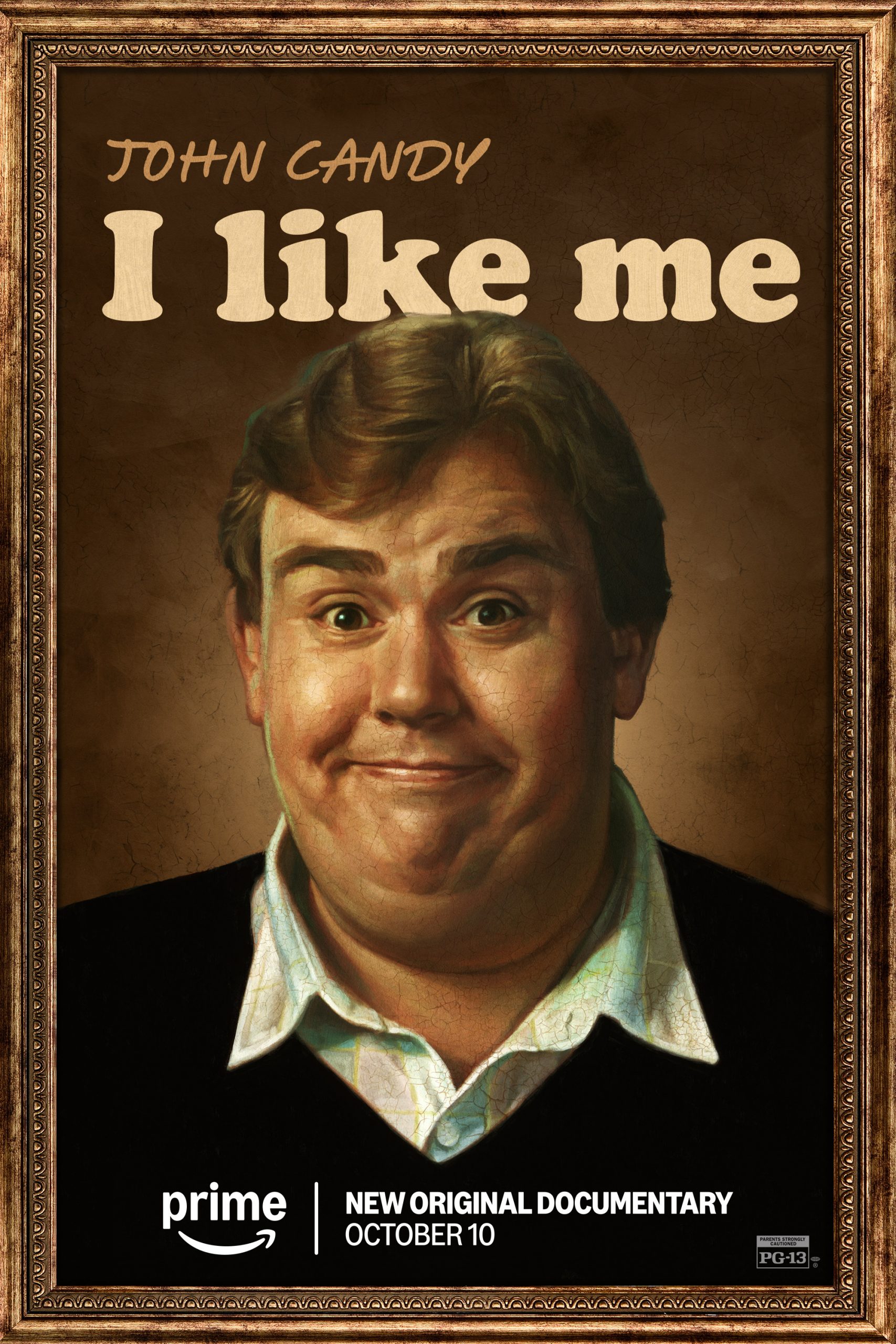
15. “John Candy: I Like Me” (USA)
Paying tribute to a talented, beloved entertainer is undoubtedly a noble gesture, especially for someone widely regarded as a kind, gentle soul in an industry all too often known for its self-absorbed personalities and who, sadly, passed on while still in the prime of life. Such is the sincere intent behind this third documentary feature from director Colin Hanks, a warm, respectful homage to the late John Candy (1950-1994). The Canadian-born actor-comedian made quite a name for himself in the ʼ70s, ʼ80s and ʼ90s, first as a member of Toronto’s Second City comedy troupe, then as a regular on the edgy sketch comedy TV show SCTV and then as a colorful character actor in more than 30 films. But, as this release shows, Candy was more than just a well-known funnyman. He was also a writer, director, producer and businessman, as well as a devoted husband and father. This reputation made him widely regarded as one of the nicest people in show business, a man with a big heart who made it a practice to take care of others, no matter what their needs might be. These are the qualities that come through loud and clear in the film in the many interviews with those who knew and worked with him, including television colleagues Eugene Levy, Catherine O’Hara, Andrea Martin, Dave Thomas, Martin Short and Robin Duke, as well as his comedy and big screen peers Steve Martin, Bill Murray, Dan Aykroyd, Macaulay Culkin, Tom Hanks, Mel Brooks, Don Lake and Chris Columbus, among others. They’re also apparent in the ample archive footage featuring conversations with Candy, backed by insights from his wife Rose, his children Chris and Jennifer, and an array of childhood friends and industry colleagues. And the picture’s numerous clips from his TV and movie work serve as welcome reminders of just how gifted he was as a performer, a thoroughly enjoyable trip down Memory Lane, fond elements that helped the picture earn a Windie Award for best documentary feature. However, in telling his story, the film has a tendency to become somewhat repetitive, depicting its subject with so much boundless reverence that it almost seems timid in telling a deeper and more complete story. In its defense, “I Like Me” doesn’t portray its protagonist with a whitewashed Pollyanna narrative, as evidenced by references to issues with his weight, ghosts from his past and unexpressed fears of not measuring up no matter how hard he tried, attributes that contributed to turning him into something of a people pleaser who had trouble turning down others while not always taking care of himself. But the overarching kid gloves approach employed here can be likened to the filmmaker walking on eggshells at times. Indeed, certain aspects of Candy’s story receive noticeable short shrift, such as his impressive dramatic turn in a cameo appearance in director Oliver Stone’s “JFK” (1991), a role that may well have provided moviegoers with an all-too-brief glimpse of greater acting abilities that never had a chance to further develop (a few clips from this release are included in the documentary but never really discussed). That kind of depth, regrettably, is lacking here and would have made for a better, fuller profile instead of repeatedly being told the same things over and over again. It’s a shame that this gentle giant of a man and gifted entertainer left us as young as he did, and it’s a safe bet that many of us probably would have liked to have known him and his range of capabilities better. However, when it comes to this biography, it often feels like we’re only getting part of the story, leaving us wanting more that, unfortunately, we’ll never have the chance to savor and enjoy.
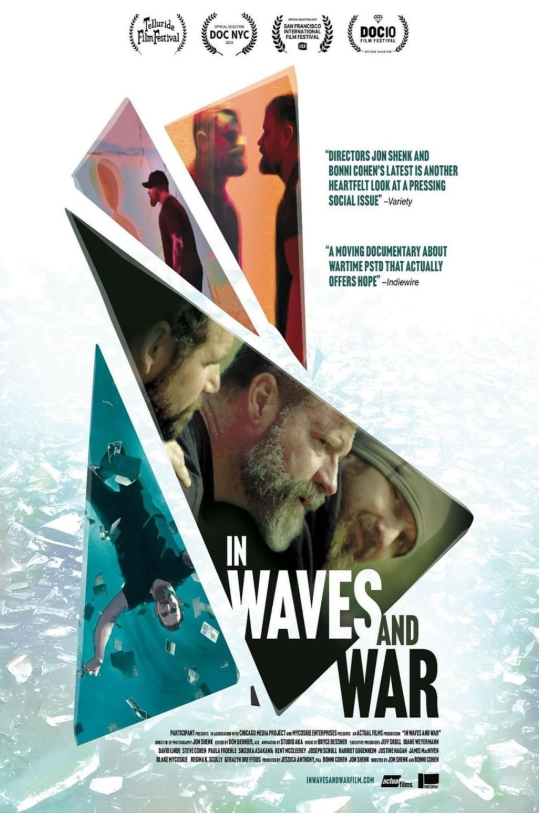
16. “In Waves and War” (USA)
The stresses of combat are virtually impossible to fathom. It’s any wonder how anyone could somehow survive such trying conditions. That’s especially true for those assigned to special forces units, the soldiers who take on the particularly tough missions, such as the members of the Navy SEALs. Considering what they go through, given their high-risk operations and multiple war zone deployments, it’s no surprise that they suffer the debilitating effects of conditions like PTSD and wrestle with such issues as uncontrollable rage, memory loss and suicidal thoughts. And, to make matters worse, many of the treatments they have been given upon returning home are often ineffective (sometimes even making things worse). However, as this revealing documentary from directors Bonni Cohen and Jon Shenk shows, there’s much hope for these veterans from a new – and unexpected – therapy: psychedelic drug treatment. The film follows the experience of three SEAL team members (Marcus Capone, DJ Shipley, Matty Roberts) who came back from multiple tours of duty in Afghanistan and Iraq seriously in need of help. With nothing left to lose, they decided to give this radical new treatment a shot. The program employs the administration of two substances: ibogaine, a bark derivative from the African iboga plant, and 5-MeO-DMT, a secretion from the exterior of the Sonoran Desert toad. Both hallucinogens are illegal in the US, so patients need to travel to Mexico to partake of the treatment. Much to the skeptical soldiers’ astonishment, however, they experienced miraculous relief from these remedies, which, though psychedelic in nature, are rooted in the folk medicine of indigenous peoples. The after-effects of their combat duty virtually disappeared after their initial drug treatments, in large part because the substances opened up their consciousness and revealed aspects of their inner selves that drove the development of their symptoms, conditions that had long been hidden and actually arose from personal experiences that occurred prior to their military service. While their wartime ordeals undeniably had an impact on them, they effectively masked the root cause; it was actually the underlying trauma that occurred previously that was principally responsible for their challenges, insights that might not have been revealed were it not for the therapy with psychedelics. In that sense, then, this treatment represents not only a potential breakthrough for distressed soldiers returning from war, but also possibly for anyone seeking to recover from other kinds of long-buried trauma. This is a truly remarkable story with the potential to provide much-needed relief for many. However, it’s somewhat disappointing that the film doesn’t always do the best job of imparting this information. For example, the picture comes up a little short on connecting the various dots involved in this narrative. In addition, it could use more background on the particulars of how the substances function and on the work of the researchers who developed, tested and administered the treatment in the first place. What’s more, with all due respect to the patients and their service, their wartime recollections could use some paring back in favor of other aspects of the story that could use more attention. To its credit, though, “In Waves and War” is a truly cathartic, heartfelt journey, made all the more authentic by its raw emotion, revelatory insights and joyful experience of recovery, all expressed through uncensored interviews and coupled with treatment depictions illustrated through inventive animation. It’s heartbreaking but also heartwarming to witness what these heroes endured, but who also managed to find a way to come back from this turmoil, both on the battlefield and off.
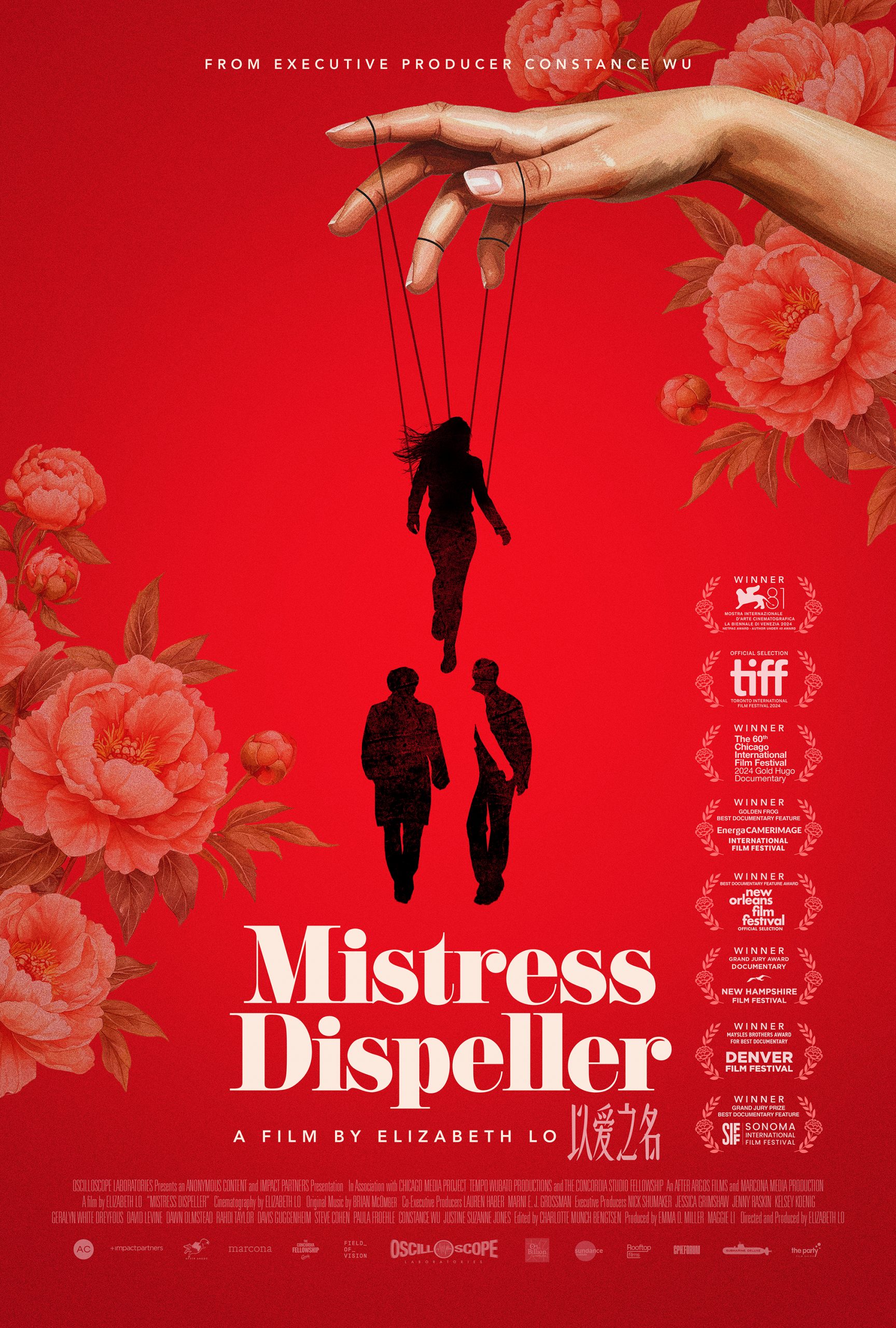
17. “Mistress Dispeller” (China/USA)
So suppose you find out that your husband is cheating on you – what do you do? If you’re a disgruntled wife living in China, you might want to consider hiring a “mistress dispeller,” a sort of “marriage fixer” who employs an unconventional combination of counseling and skillful clandestine manipulation to urge an unfaithful man to turn away from his philandering and return to a life of fidelity, essentially a “whatever it takes” approach. The methods used in this newly emerging profession may seem rather sneaky – if not unethical – in some respects, but, if it provides the parties in question with valuable advice and, in turn, manages to save what has been an otherwise-stable partnership, should its merits be automatically ruled out of hand? That’s one of the key considerations examined in this surprisingly intimate documentary from writer-director Elizabeth Lo. When middle-aged Mrs. Li begins to suspect that Mr. Li may be having an affair with a younger woman, she’s initially dumbstruck, not to mention profoundly hurt and suitably furious, by his actions. She’s convinced that her marriage is over, but is it? When her younger brother recommends that she consult with Wang Zhenxi, a professional mistress dispeller, to see if she can restore their marriage, Mrs. Li decides to give it a try. Working with both spouses and, eventually, the mistress, Fei Fei, “Teacher Wang” steers the parties in the desired direction of helping each of them get in touch with the feelings driving their actions. Teacher Wang’s work addresses the scenario from several angles, including psychology, cultural expectations, and the widespread sense of isolation and disaffection impacting many individuals and couples in modern-day China. In that regard, the film broadens the view behind what prompts infidelity among Chinese adults, concerns that the dispeller works into her counseling efforts to encourage couples to save their relationships and to help make third parties aware that becoming involved with a married individual is ultimately likely to result in unavoidable heartache. So is that really such a bad thing? Viewers are liable to have different perspectives on these tactics, but, in watching this offering, they should be sure to bear in mind that they’re peering into a different culture with different sensibilities than what one might typically find in the West (and who are we to question its values?). Perhaps the bigger question here, though, are the ethics that have been employed in the making of this film. Some might readily see it as a serious invasion of privacy, one that could be looked upon as exploitative as well. However, as the filmmaker makes clear on several occasions over the course of the picture, everything was ultimately done with the complete consent of all parties involved (as implausible as that may seem at times, given that one might get the impression that this was all secretly scripted). Moreover, even with that acknowledgment, some might nevertheless see this release as a somewhat voyeuristic experience, not unlike staring at a bad car accident from which one can’t easily turn away. But, on the other hand, considering the apparently sincere, heartfelt feelings openly expressed here by Mr. and Mrs. Li and Fei Fei, perhaps their sentiments might provide a valuable example to couples in peril who would like to save their marriages but don’t necessarily know how. And isn’t there some value to be had in that kind of baring one’s soul? While the film certainly has its share of drama, it also has its lighter moments to keep the narrative from becoming suffocating, including touches of gentle comic relief, especially in its apparently intentionally cheesy, melodramatic operatic score. To be sure, some viewers may see “Mistress Dispeller” as cringeworthy, but some might also see it as commendable and inspirational to keep something valuable from unduly dissolving, and there’s genuinely something to be said for that.
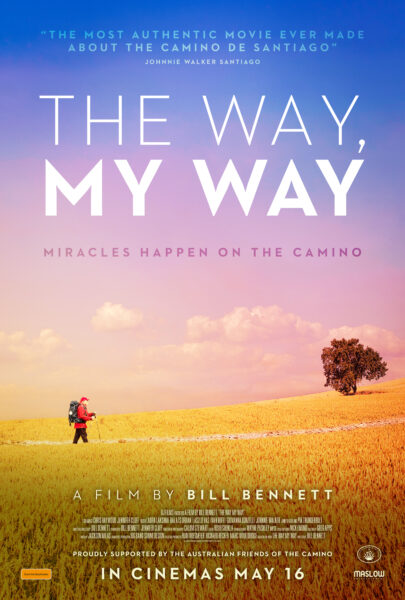
18. “The Way, My Way” (Australia)
There are times in life when we find ourselves becoming inexplicably obsessed with embarking on certain tasks that we know we must complete, even if we’re not entirely sure why. One such venture is walking the 800-km path of El Camino de Santiago, a legendary pilgrimage route that extends from southwestern France across northern Spain to the cathedral of Santiago de Compostela in Galicia, where the remains of the apostle St. James are said to be buried. Many have made this journey over the centuries in hopes of finding personal meaning, one of whom was Australian filmmaker Bill Bennett, who chronicled his trek in a best-selling memoir that provides the basis for this film, which he also wrote and directed. Technically speaking, “The Way, My Way” is probably best categorized as a docudrama with documentary-like elements. The filmmaker (portrayed here by actor and alter-ego Chris Haywood) first got the idea to walk the Camino while on vacation in Spain with his wife, Jenn (played by Bennett’s real-life wife, Jenniver Cluff), despite the fact that he had no idea why. He was not especially spiritually oriented at the time but nevertheless felt a need to make the journey, which he subsequently did on his own over the course of a 31-day odyssey. It was a venture punctuated with a variety of challenges, such as a flare-up of a bum knee injury that hampered his ability to walk, an ironic development given the fundamental nature of the undertaking. But, despite this setback, he was committed to seeing it through, and the experience was ultimately worth it. Over the course of his beautifully photographed travels, he encounters a diverse array of individuals with whom he engages in a series of profound exchanges, some of whom pass along meaningful messages to him and others to whom he relays insights that they sorely need to hear. He also comes upon revelations on his own, notions that provide him with greater clarity about himself and why he undertook this mission in the first place. While actors portray a few of the film’s characters (Laura Lakshmi, Pia Thunderbolt), many are the actual pilgrims whom Bennett met along the way (Johnnie Walker Santiago, Balazs Orban, Laszlo Vas, Ivan Boffi, Giovanna Donzelli), re-creating their encounters and conversations with him. These seemingly chance meetings vary widely in terms of content, depth and length, with some effectively more insightful than others. Moreover, some of these exchanges might have proven more meaningful if they had been accompanied by more fully developed back stories, both for the protagonist and his fellow seekers. But, considering the essential nature of this work, it imparts more intuitive and profound perspectives than what one typically finds in most cinematic offerings these days. What’s perhaps most telling here, however, is the message embedded in the title – Bennett’s commitment to walking “the Way” on his terms, despite whatever advice others may have offered him, and that’s the whole point of engaging in a journey of self-discovery like this, an approach likely to generate the most impressive and powerful results attainable. We can learn much from experiences such as this, and we’d be wise to avail ourselves of such opportunities when they present themselves.
The Bottom Countdown
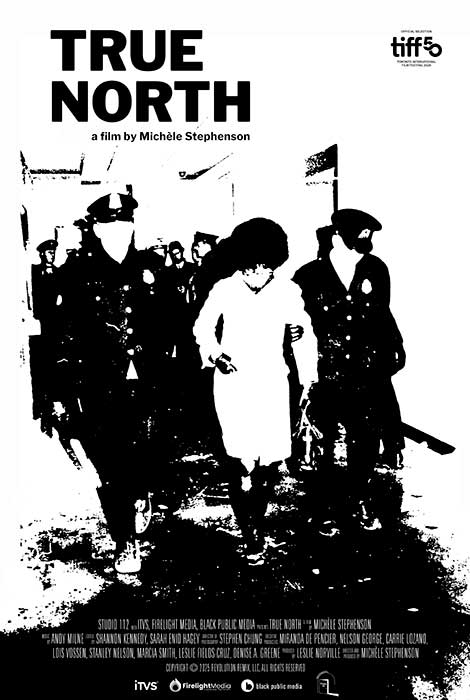
6. “True North” (Canada/USA)
Screened at the 61st Chicago International Film Festival
When one thinks about Canada, images of a country known for its open-minded, tolerant, polite people and culture usually come to mind. But, when considering the nation’s history, often serving as a way station along slave trading routes and a refuge for escaped slaves from the US, that has not always been the case. In fact, with some exceptions aside, as recently as the 1960s, many parts of Canada weren’t as readily accepting as they are today, a carryover from the days when it was more heavily tied to its conservative English cultural roots and legal traditions, as well as its role in human trafficking. Racism toward Canadian Blacks may not have been as blatantly obvious as in the American South, for example, but it was insidious in many quarters, camouflaged by practices hidden behind largely anonymous personal and institutional façades. But, as the US civil rights movement began to heat up – particularly in the wake of the Dr. Martin Luther King Jr. assassination – the influence of that activism spread northward, with Canadian Blacks (especially those of Caribbean origin) beginning to fight back in earnest. And that’s what this documentary from filmmaker Michèle Stephenson seeks to chronicle, exposing the country’s past racial issues, particularly in such locations as Montreal and Halifax. Through a wealth of archive footage and recent interviews with activists who lived through the surprisingly turbulent turmoil that erupted when justice was being railroaded, Canada’s attempts at clandestinely suppressing equality and civil rights against minorities are brought to light. Particular emphasis is placed on the work of leaders like Rosie Douglas and Brenda Dash, as well as the impact of events like the Montreal Black Writers Conference and a watershed uprising at the Sir George Williams College Medical School whose intensity rivaled that of many protests in cities across the US. As revelatory as these initiatives and incidents were, however, they’re not always presented as clearly as they might have been in this film, primarily due to a narrative that’s somewhat disjointed and in need of significantly better organization. While it’s indeed gratifying to see this “dirty little secret” finally surfacing, its effect nevertheless could have been greater with a more coherent approach in telling its story. The courageous advocates who selflessly toiled to bring about the results that Canadians of all backgrounds now enjoy have finally received their due with this offering. It’s just unfortunate that the result wasn’t on par with the magnitude of the accomplishments that they so valiantly helped to achieve.
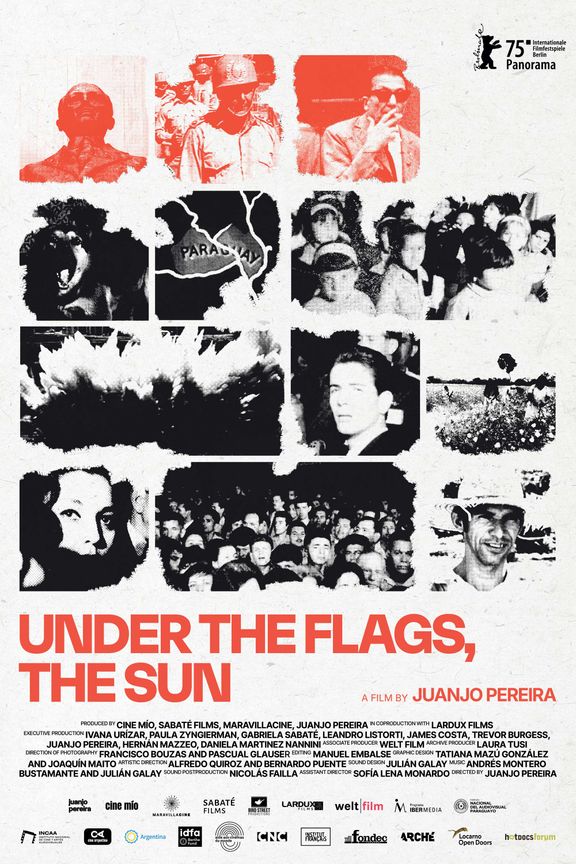
5. “Under the Flags, the Sun” (“Bajo las banderas, el sol”) (Paraguay/Argentina/Germany/USA/France)
For 35 years, Gen. Don Alfredo Stroessner led the land-locked Latin American nation of Paraguay, heading up one of the planet’s longest-lasting authoritarian dictatorships, holding power from 1954 until his ouster by a supposedly trusted political colleague in 1989. Like many comparable autocrats of his day, he built and oversaw a carefully crafted cult of personality characterized by unrelenting right-wing policies and ideology and backed by a solid core of staunch religionist, anti-Communist, anti-trade union followers in his all-powerful Colorado Party (the dominant political organization still in charge in Paraguay to this day). And, while in power, he faithfully conformed to the mold of many of his despotic peers, systematically marginalizing, torturing or exiling minorities and opponents (usually without trials), striking up alliances with the likes of Chilean strongman Augusto Pinochet, and even providing sanctuary to heinous war criminals, such as former Nazi Dr. Josef Mengele, all the while engaging in unapologetically insincere acts of self-glorification. Surprisingly, however, the Stroessner regime is one that many outside of Paraguay know little about, a result due in large part to a lack of documentation of his abuses during his years in power. And that fact in itself is what has made the production of this documentary something of a miracle, given that the bulk of its content has been drawn almost exclusively from what little archive footage of that period still remains, culled from sources far and wide all over the globe. Writer-director Juanjo Pereira is to be highly commended for sourcing the scarce materials still available that have been used in compiling this film. However, with that said, there are times when Stroessner’s story feels somewhat lacking in detail, particularly early on in the film. Yes, it’s obvious that the Paraguayan dictator followed in the footsteps of many political oligarchs of the era, and his scurrilous actions while in office likely come as little surprise to many observers, at least when examined superficially. However, throughout much of this documentary, the many allusions to his reprehensible deeds often go without substantive elaboration until well on into the film. In light of that, then, this production would have benefitted tremendously from the inclusion of a more explicit back story about Stroessner, his exploits and how he successfully managed to fly below the radar for so long. Interviews with experts providing perspective about this release’s subject would have no doubt bolstered the narrative, too. But, as it stands now, “Under the Flags, the Sun” feels like a work that has a strong but nevertheless underdeveloped foundation underlying it that could have used some significant expansion to strengthen the credibility of its story, especially for viewers unfamiliar with a historical figure whose atrocities deserve wider attention than they have typically received – and that deserve to be called out.
4. “White with Fear: A Documentary” (USA)
Many of us would likely agree that “truth” is a hard commodity to come by these days, especially in political and social matters. One need only look to the increasingly bombastic claims coming from each end of the spectrum to see that their agendas and perspectives are being driven by their respective polarized viewpoints, some of which probably contain kernels of truth but that have been significantly enhanced with ample doses of hyperbole and exaggeration. So what are we to believe? That’s a good question, one that this latest documentary from director Andrew Goldberg seeks to address, primarily from the standpoint of how right-wing conservative media and politicians have been deliberately engineering well-orchestrated campaigns of disinformation/propaganda/indoctrination (choose whatever word best suits you) to sway the hearts and minds of a largely uninformed and unquestioning public. Beginning with the Nixon presidency and continuing to the present day, this constituency’s game plan, according to an array of observers and experts, has been (and still is) based on implementing programming designed to play on the fears of White Americans who have come to believe they are targets for ever-increasing degrees of victimization and marginalization. Isolated incidents are blown out of proportion to make them seem like the norm, and threats to their well-being are seen as coming from all directions, potential dangers generally attributed to such scapegoats as immigrants, minorities and members of certain religious sects (the specific alleged perpetrators all being easy to figure out). And these dire warnings are typically packaged in gruesome, graphic, frightening detail and embellished with outright fabrications for maximum impact to fan the flames of support for their manufactured validity (after all, fear can be a powerful motivator and source of common ground in scenarios like this). Hence, individuals who might ordinarily not consider themselves racist or prejudiced are manipulated into viewpoints with which they concur that nevertheless are unwittingly laced with such feelings. Through video clips, sound bites and interviews with analysts of these efforts (as well as former participants in these initiatives), the filmmaker builds what seems to be a damning case against these calculated ventures. However, at the risk of playing devil’s advocate, one could also readily contend that the arguments against these undertakings (by implication) are fundamentally just as potentially biased as the criticisms being leveled here, their own version of the “truth” having been slanted to an opposite but comparable degree. This naturally begs the question, “Where is the objectivity in that?” It also muddies the waters when it comes to finding a suitable answer to the inquiry, “What exactly is the truth here?” While left-leaning viewers will undoubtedly cheer on the discussion raised in this film, the picture nevertheless fails to provide the kind of unblemished clarity and impartiality one might hope for when all things are considered. Sadly, the viewers who might benefit most from screening this release probably won’t see it, having already made up their minds about this subject. And, at the same time, for those who do watch it, this would most likely be seen as a case of preaching to the choir. Regardless of where one’s political leanings may lie, as strong a case as this production might be seeking to make, “White with Fear” ultimately probably won’t provide any of us with the answers we seek either way, and that’s a shame considering how badly we need them these days.

3. “Trinity” (USA)
The horrors of nuclear weapons and nuclear war have provided the foundation for many narrative and documentary films over the years, but few of those offerings have focused specifically on where it all began – the largely unaddressed Trinity test and the fallout (no pun intended) that came from it. But that’s an oversight that directors Anthony Audi and Martina Car have attempted to correct in this documentary about the quietly devastating effects to come out of the world’s first nuclear test in the New Mexico desert in July 1945 – and the lasting impact it had on both local residents and the world at large. The film features a series of interviews with first-hand witnesses to the Trinity test and how the explosion affected them, their families, their health and their way of life in the wake of this landmark event, one whose potential dangers they were not informed about in advance and for which they have not received any form of compensation for their losses. In many regards, these individuals can be looked upon as the forgotten victims of the birth of the nuclear age, unwittingly suffering the consequences of the hazards of this technology through no fault of their own other than living in, or downwind from, the wrong place at the wrong time. The film also examines the uranium mining boom that arose in the area after the bombing of Hiroshima and Nagasaki as the US military scrambled to build up its nuclear arsenal, told specifically from the standpoint of how it affected the miners and their families, many of whom came from the neighboring Navajo Nation. The accounts of these experiences are further augmented with clips from archived government propaganda films of the era, movies that touted the alleged merits of this technology and effectively painted over any negatives associated with it. And, in a final insult, the film incorporates a series of quotes from military leaders at the time who observed that the nuclear attacks on Japan likely had little meaningful impact on the eventual outcome of the war, raising questions of whether the bombs should have been dropped in the first place – particularly in light of what has come from their use since then. The impact of these revelations is indeed quite eye-opening, especially given that they’ve received precious little attention over the years – outcomes that have been overlooked as much as those who suffered injuries as a result of the testing. Regrettably, though, as enlightening as these disclosures are, they’re not always presented as deftly as they might have been. Some of the interviews, for example, are quite rambling in nature, presenting dialogues with witnesses who include a little too much extraneous information, speaking to the camera as if viewers are as intimately familiar with what they’re talking about as they are (clearly, better editing and “clean-up” would have helped with this). In addition, the relevance and connections between the archive material and the contemporary interviews aren’t always drawn as clearly as they could have been. There are also several overlong transition sequences between segments featuring high-speed open road footage set to avant-garde electronic music that add virtually nothing to the overall narrative and feel more like padding than anything else, a strange element for inclusion given the film’s relatively short 1:16:00 runtime. Nevertheless, there’s important information to be had here, and that helps to make up for some of these production shortcomings. It’s just a shame that the overall presentation doesn’t quite live up to the level of quality of the insights that the film imparts.
2. “Bear Week Diaries” (USA/Italy)
Screened at the 43rd Reeling Chicago International LGBTQ+ Film Festival
When one hears the word “Bear,” many different images come to mind, from majestic grizzlies to cuddly pandas to a Chicago football team and even a cartoon character named Yogi. But, for those in the LGBTQ+ community, the term “Bear” has a different meaning: it refers to a subculture of this diverse constituency made up primarily of big, burly, furry men known for their beards and bellies, masculine gents often compared to lumberjacks. And, despite their plentiful ranks, Bears are also largely unknown outside of the gay world (and often not especially well known inside it, either). However, their somewhat inconspicuous nature aside, Bears are famous for their well-attended unabashed social gatherings, weekend (or longer) celebrations (often called “runs”) characterized by prolific drinking, eating, dancing and erotic encounters. One of the most popular such assemblages is the annual summer congregation at Provincetown Bear Week on the tip of Massachusetts’s Cape Cod, a longtime sanctuary for those leading alternate lifestyles, including members of the gay community. And that event is now the subject of director Antongiulio Panizzi’s third feature outing, a chronicle of sorts of the weeklong pleasure-filled celebration. As a member of the Bear community myself, I’m gratified to see “my people” profiled on screen like this. However, at the same time, the end result here is somewhat disappointing. The main reason for this is the picture’s format – a hybrid documentary and narrative feature, a combination that, to be honest, is just downright … odd. That’s something I’d probably say about any film employing such a format, because it’s fundamentally difficult to determine how a vehicle like this should be taken. How much of it is a documentary? How much of it is fiction? And how are viewers supposed to determine the difference when it comes to assessing the content (and, even when it’s obvious, the distinction is frequently inherently awkward)? Indeed, is the material that appears to be documentary in nature true or made up? Is the narrative content genuine fiction or the result of a filmmaker who just happened to get lucky in fortuitously capturing a dramatic real life moment? Frankly, I don’t see the point behind making a movie like this – if you want to make a documentary, make a documentary; if you want to make a work of fiction, make a work of fiction; and, if you want to make a work of fiction in a documentary style, then go ahead and do so but make the intent clear to the audience up front. This kind of deliberate ambiguity makes no sense to me. Now, with that said, the film is also not without merit when it comes to depicting certain aspects of the Bear community, its values and its events. For instance, the picture is adept at explaining how the Bear community originally arose and the principles it embodies, such as celebrating body positivity and the capacity for not being afraid to be oneself. In addition, “Bear Week Diaries” does a fine job of depicting the joyous lust for life that many Bears heartily embrace in their celebration of unbridled hedonism and shared brotherhood. At the same time, it also doesn’t hesitate to point out the downside that can accompany such activities, especially those that can result in heartache and disappointment. But, these strengths aside, the film also tends to place too much emphasis on ancillary subjects that, while part and parcel of Bear gatherings, don’t necessarily account for as much attention and activity as they’re accorded here. In addition, the director does a woefully poor job in showing the community’s ethnic diversity, inaccurately portraying it as a nearly all-Caucasian fraternity, thereby reinforcing an unfair criticism often leveled against the Bear world. Sadly, like other film projects that have unsuccessfully attempted to capture Bear community life over the years, this one again comes up short, despite its effectiveness in illustrating some of the aforementioned aspects, qualities that have been ignored, downplayed or misrepresented in previous works. Nevertheless, in the meantime, I’m still waiting for a film that truly does justice to this subject matter, something that I hope eventually materializes – but that, regrettably, hasn’t shown up yet.
1. “A Brief History of Chasing Storms” (USA)
Screened at the 61st Chicago International Film Festival
For what it’s worth, first-time filmmakers are sometimes the target of exaggerated criticism that may or may not be warranted. And, even though constructive suggestions may indeed be helpful for improving the quality of future projects, it’s important to remember that their initial efforts might not be a fair reflection of their innate talents, so tact would be recommended when rendering advice. However, it should also be noted that there are exceptions to this rule, when frank, plainspoken observations – a form of cinematic tough love, as it were – would truly be called for. That’s very much the case with the debut documentary feature from writer-director Curtis Miller, a project in serious need of retooling. Let’s start with what works: the film incorporates a fine score and soundtrack, and there is some intriguing montage work scattered throughout the picture. That, unfortunately, is about where its assets end. This alleged look at the history of chasing storms in the Tornado Alley region of Texas, Oklahoma and Kansas falls far short of its stated goal, especially when it comes to examining the time-honored phenomenon of storm chasers, a subject about which considerable documentation has already been compiled and produced (including the two narrative features in the “Twister” franchise (1996, 2024)) but that has inexplicably been relegated to little more than a passing afterthought here. Instead, much of the narrative focuses on the history of several extreme tornadic events over the years (some of which predate the rise of the practice of storm chasing as it’s known today), with little meteorological documentation of these events, their aftermaths or those who may have attempted to track them. This is presented largely in the form of a loosely connected patchwork of anecdotal interviews with those who lived through the storms, the content of which often goes far off topic to innocuous and highly irrelevant material. But, if this is truly supposed to be an examination of storm chasing, where is the material about it? In fact, the one storm chaser who is interviewed for this film spends more time talking about his car than anything else. And, to put it bluntly, who cares? While the anecdotal material provides a personal touch, it sheds little light on the subject at large, the motivations driving those who engage in it, and the technology and practices used by its committed investigators. In essence, this release feels more like a collection of loosely assembled home movies and found footage strung together about a handful of specific storms without providing much insight or history into the larger subject it’s supposedly seeking to cover. To its credit, at least the picture’s title is accurate in that it offers up a “brief” history of storm chasing, given that it sports a scant 71-minute runtime, of which little is devoted to its purported primary subject. Indeed, considering what’s presented here, one might actually learn more about storm chasing by spending a few hours watching The Weather Channel instead. These are fundamental filmmaking considerations the director should sincerely take to heart when working on future projects.
Copyright © 2025-2026, by Brent Marchant. All rights reserved.