



The Best of 2025
With 2025 now in the books, it’s time to look back on the year in movies. In this first of three blogs, I spotlight my Top 10 Films of 2025, followed by 10 Honorable Mentions and an open-ended list (in alphabetical order) of other releases that I found noteworthy or worth a look. As much as possible, I’ve included web site and trailer links, as well as links to my own reviews. In separate blog posts, I examine my Worst Films of 2025 and my Best and Worst in 2025 Documentaries.
The year just passed was a decent one for movies, with many good (but not great) films, as will become apparent in my selections and reviews. It was certainly a good year for international releases, and many are represented here. It was also a year that saw a marked rise in the number of good smart horror offerings, offbeat comedies (especially romcoms), and releases with themes characterized by issues of contemporary relevance, true cinematic signs of the times. I certainly appreciate the diversity, though those familiar with my tastes and writings will recognize that I believe there’s always room for more.
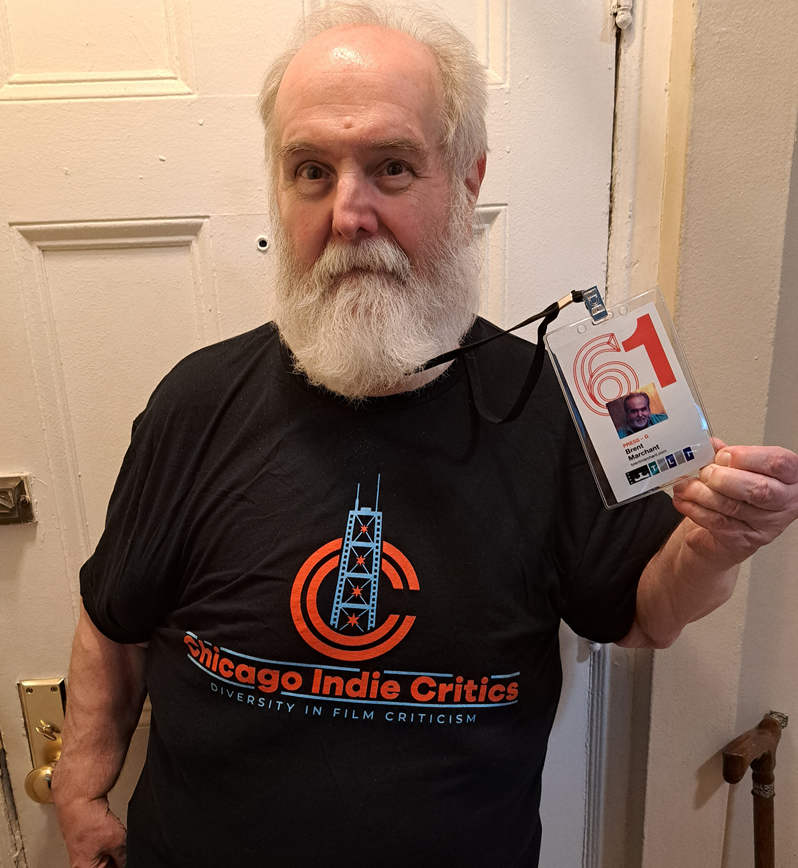
The past year also marked my initial participation in the programs of Chicago Indie Critics. It has been a thoroughly enjoyable experience, and I look forward to continuing and expanding my involvement in the years ahead. Last year was also my first time as a member of the press corps for the Chicago International Film Festival, an interesting variation on my attendance at an event that I’ve participated in many times since 1979. I look forward to a repeat of this coverage in 2026. And, as in many other past years, I was pleased to attend the Reeling Chicago International LGBTQ+ Film Festival, the Chicago Latino Film Festival and the Gene Siskel Film Center Chicago European Union Film Festival, along with my first-time attendance at the Gene Siskel Film Center Asian American Showcase.
So, with all that said, check out what I thought about 2025’s crop of movies. You may not agree with me, and I respect your opinions, regardless of whether our views align. I hope you’ll respectfully grant me the same. And your feedback, as always, is welcome. Here goes!
The Top 10 Countdown
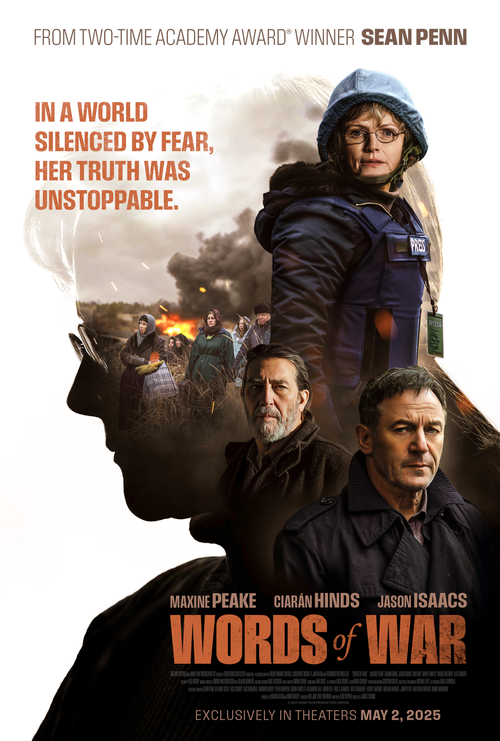
10. “Words of War” (USA/UK)
Before the barbaric Russian invasion of Ukraine, President Vladimir Putin’s Federation conducted an equally unspeakable campaign of brutality against the people of Chechnya in its attempt to become a breakaway independent state. However, the vicious, genocidal atrocities inflicted upon the Chechan population were not widely known at the time, especially amongst Russian citizens. But one intrepid journalist sought to change that. Reporter Anna Politkovskaya (Maxine Peake), a correspondent for Novaya Gazeta, an independent newspaper founded by former Russian Head of State Mikhail Gorbachev whose mission was to report the truth as an alternative to official Russian state propaganda, undertook the task of informing the public of the horrors unfolding in Chechnya. Backed by the unwavering support of her editor, Dmitry Muratov (Ciarán Hinds), from 1999 to 2006, Politkovskaya courageously struggled to get the word out about the ghastly events taking place in the largely Islamic state, incidents that were “justified” as a means to counter the “rising terrorist menace” churning within its borders and in surrounding areas. Politkovskaya’s graphic, unrelenting reporting, coupled with scathing criticisms of the Putin regime, gradually caught the attention of the world, earning her an invitation to testify before the United Nations Security Council and winning her Amnesty International’s 2001 Award for Humanitarian Journalism. But her writings and activism came at a cost, including attempts on her life, the torture of her on-the-ground Chechan liaison (Fady Elsayad), strained relations with her children (Harry Lawtey, Naomi Battrick), and the ruining of the career of her husband, Sasha (Jason Isaacs), a successful television talk show host. But, from Politkovskaya’s perspective, the challenges were worth it to let the world in on Putin’s dirty little secret. Indeed, the world might know a lot less about the estimated 60,000 victims of the Chechan Revolt were it not for Polikovskaya’s committed reporting. Director James Strong’s fact-based biographical feature tells a compelling, if at times formulaic and episodic story examining the tremendous impact of the protagonist’s work, as well as the painful impact it had on her and her kindreds. This is effectively brought to life by the positively fierce performances of its superb ensemble, particularly Hinds, Isaacs, and, especially, Peake, all of whom deliver outstanding portrayals worthy of well-deserved awards season consideration that, unfortunately, never materialized. But the message of this film goes beyond just what Politkovskaya did in Chechnya; it shines a bright light on the courageous work of journalists around the globe who have risked (and given) their lives in the pursuit of covering harrowing stories of combat, torture and genocide in the world’s political hotspots. It recalls many excellent and revealing previous releases that tell comparable stories, such as “The Killing Fields” (1984), “Viper Club” (2018), “A Private War” (2018) and “Civil War” (2024). And, for its accomplishments, “Words of War” rightfully belongs beside those offerings, poignantly reminding us all – and not just journalists – to remain vigilant in the face of what is or could be unfolding around us (a particularly relevant venture even in the US these days). Sadly, this release played fleetingly in theaters and has largely flown below the radar, and it’s been overlooked during the current awards season. But, for my money, this is truly must-see viewing, now accessible for streaming on multiple online platforms. Don’t miss this one.
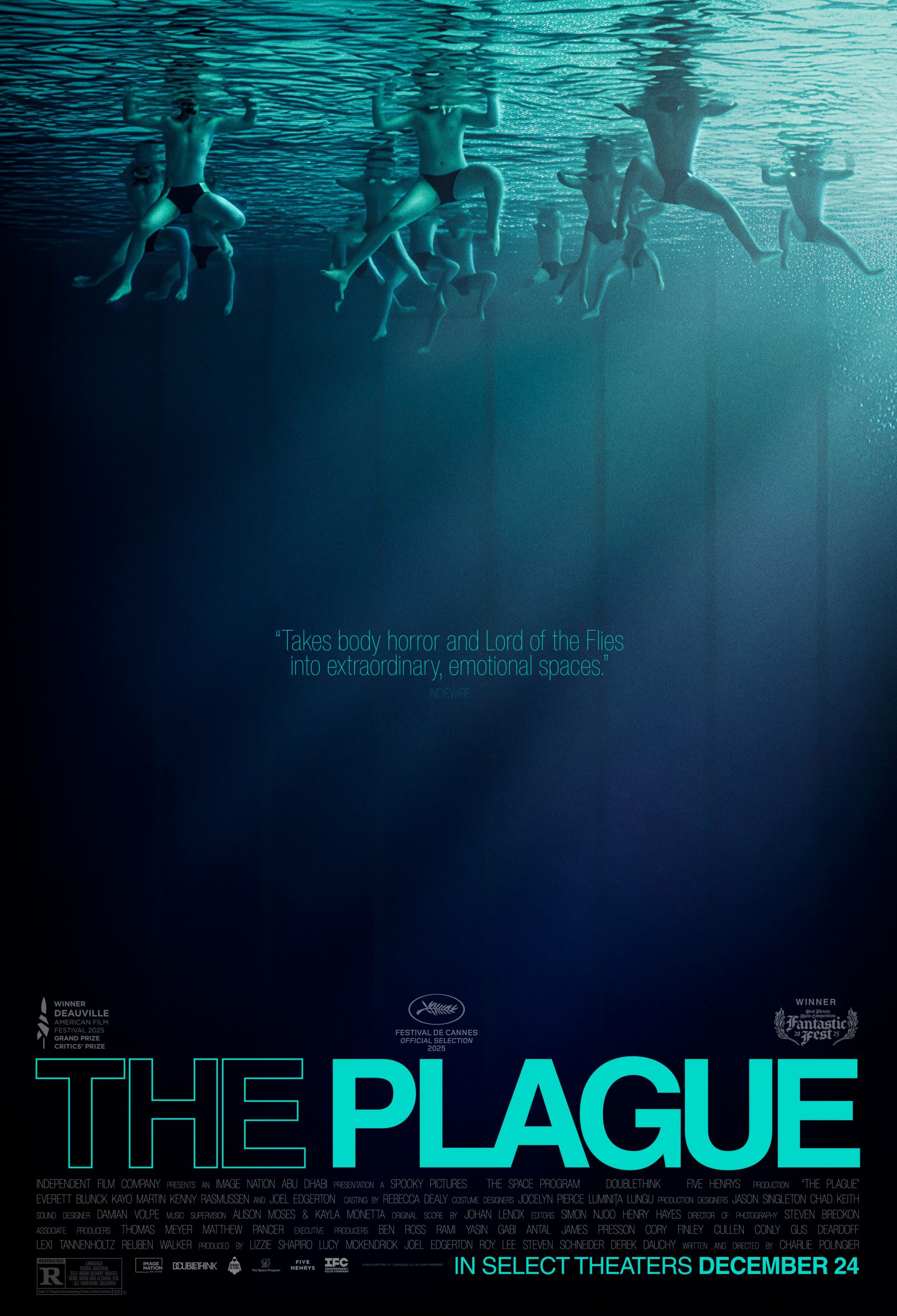
9. “The Plague” (Australia/UAE/USA/Romania)
Bullying and calculated ostracism have been around seemingly forever, but, in recent years, such antisocial behavior has increasingly been receiving the disparaging attention it truly deserves. Interestingly, the latest voice added to that welcome chorus of criticism comes from a somewhat unlikely source, the excellent and insightful debut feature film from writer-director Charlie Polinger. Set in a summertime water polo camp for tweeners, the picture follows the exploits of a group of impressionable adolescents who learn valuable life lessons on the dangers of the aforementioned toxic behavior and attitudes. At the center of this psychological thriller is 12-year-old idealistic, socially awkward Ben (skillfully portrayed by rising talent and Critics Choice Award nominee Everett Blunck), who struggles to fit in but, because of his profound sense of compassion and consideration, is often out of step with his more rambunctious (and frequently unkind) peers. He’s confused by the scorn they inflict on others, most notably an unconventional nonconformist named Eli (Kenny Rasmussen), who’s frequently marginalized for his unique views and decisively singular outlook on life. Eli’s circumstances are made worse by the development of a severe skin rash that the bullies (led by alpha male Jake (Kayo Martin)) openly and cruelly refer to as “the plague,” a condition that leads to his orchestrated ostracism. Ben is confused by this persistent ridicule and makes an effort to get to know his victimized colleague. But, in getting close to Eli, Ben also develops the same skin rash, causing him to be subjected to the kind of derision and mocking thrust upon Eli. Ben desperately tries to understand this uncalled-for treatment, frequently consulting his coach (Joel Edgerton), but he’s often on his own to try and sort out this relentless disparagement. Life at what is supposed to be an enjoyable experience quickly becomes a living hell. What makes this story work so effectively is the filmmaker’s skillful handling of the material, treating it almost as if it were constructed like a smart horror film – in many ways more chilling than a picture that needs to resort to gratuitous gore and excessive sensationalism to generate viewer gasps and frights (in this case, particularly at times when it appears the plague might actually be real and not just the menacing psychological fabrication of a bunch of teenage boys). This approach is significantly enhanced by the picture’s atmospheric score and inventive cinematography, adding a scary undercurrent to an otherwise-typical coming of age drama. Admittedly, there are times early on when the script could stand to be a little more sharply focused, but then that could also be chalked up to a reflection of the overwhelming confusion Ben experiences as he seeks to assimilate into this new, and sometimes-disturbing, environment. Some might also legitimately view this tale as somewhat clichéd at times, but the picture’s message truly can’t be overemphasized enough, especially for anyone who has ever been on the receiving end of such reprehensible treatment. As this Cannes Film Festival, Critics Choice Award and Independent Spirit Award nominee illustrates, there’s no place in this world for this kind of behavior – no matter what environment is involved – and the film drives home that point with clarity, purpose and a mission to prevent it from continuing to plague us all.
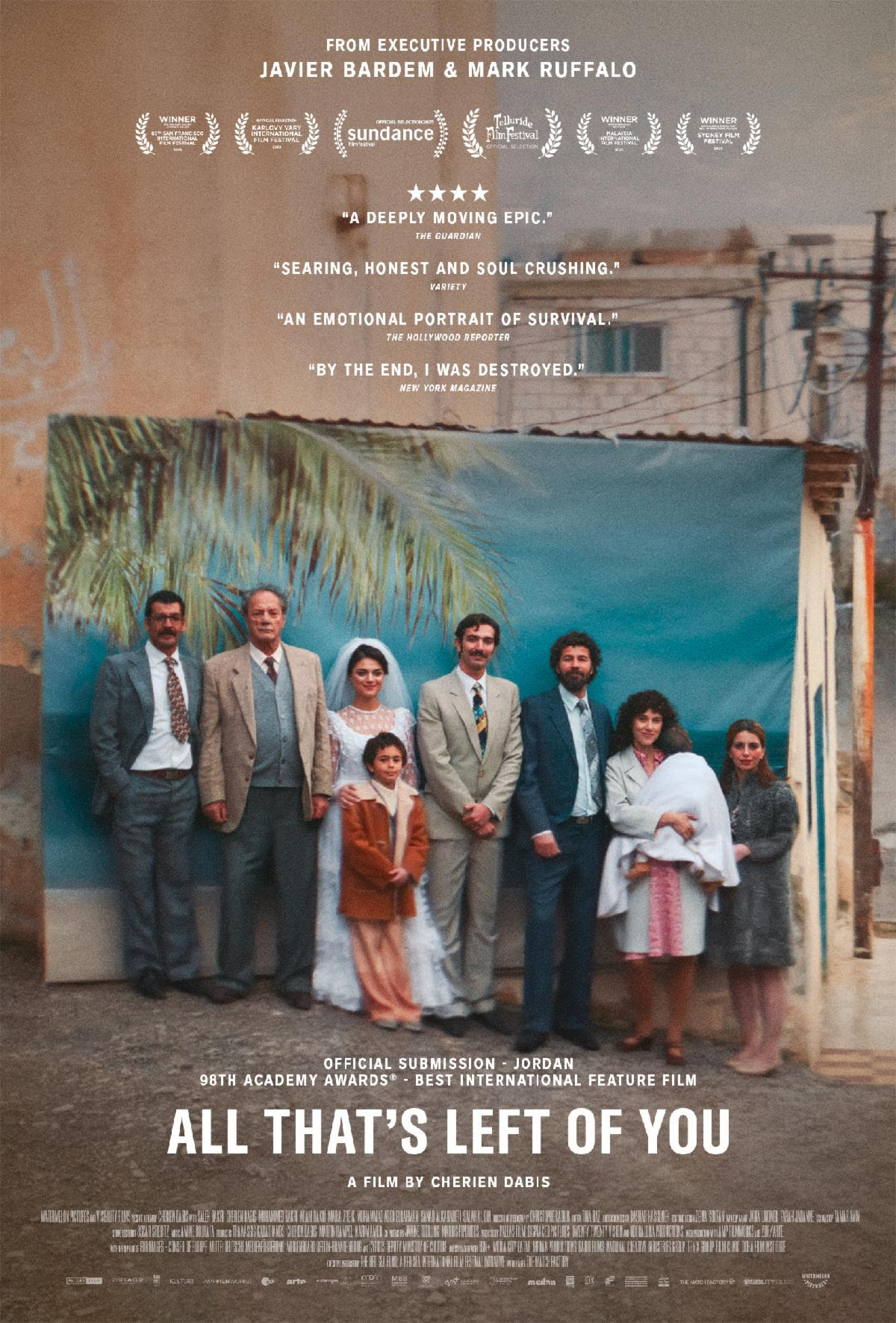
8. “All That’s Left of You” (“Allly baqi mink”) (Germany/Cyprus/Occupied Palestinian Territory/Jordan/Greece/Qatar/Saudi Arabia/USA/Egypt)
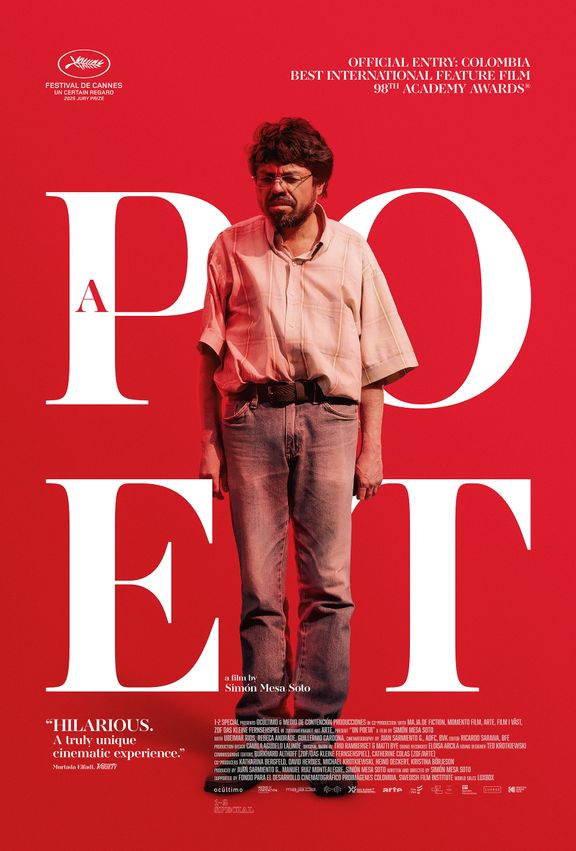
7. “A Poet” (“Un poeta”) (Colombia/Sweden/Germany)
They say that “no good deed goes unpunished.” If you doubt that, just ask Oscar Restrepo (Ubeimar Rios). The middle-aged, modestly talented poet struggles to get by on multiple fronts, but, to be honest, he’s often his own worst enemy, frequently getting in his own way, digging in his heels and refusing to make any compromises that might make his life easier and more palatable. He’s broke financially, living with his aging mother (Margarita Soto), and relations with his largely estranged college-age daughter (Alisson Correa) are severely strained, particularly since she pities him as a pathetic loser. He also pleads with the publishers of his two long-ago released poetry books (Guillermo Cardona, Humberto Restrepo) to provide more marketing support for these titles in the hope that it will attract more readers to his work, something he firmly and sincerely believes is vital to the betterment and survival of society, not to mention his artistic visibility and personal well-being. And, if all this weren’t challenging enough, he’s got something of a drinking problem. But, try as he might to rectify these matters, this “sad poet” (or, more aptly described, “sad sack”) sees little improvement in any of these areas. So, with his back against the wall, he at least finally relents on the financial front and takes a job as a teacher, a position he looks upon with disdain, as if he’s compromising his artistic sensibilities. However, while in this new job, he discovers a student who appears to have genuine talent as a poet, Yurlady (Rebeca Andrade), a 15-year-old minority from an economically challenged background. Oscar wants to help her develop her art, helping her become enrolled in the poetry school run by his publishers, an opportunity that would allow her to participate in its poetry festival, creating greater exposure for her work and possibly enabling her to win a cash prize. It also gives him a chance to vicariously experience her success, something that hasn’t come to pass in its own right in his own life. Indeed, Oscar’s plan to help Yurlady all sounds so eminently reasonable. But, as the opening line of this summary maintains, whatever can go wrong seems to find a way to fulfillment, especially for someone who’s convinced he’s irretrievably cursed, a “sad poet” in the truest sense of the term. However, as Oscar’s pathos plays out, it’s thoroughly tinged with droll humor, ironically but hilariously confirming his worst fears about himself and how others see him. His becomes a story of bad luck personified, not only in endeavors where he shoots himself in the foot, but also in undertakings where he earnestly attempts to do something good and noble. He’s truly a hard luck case for whom it’s easy to feel sorry, but his is more the tale of a sad clown than a genuinely tragic figure, one about whom it’s easy to laugh at, but more out of loving support than harsh ridicule. Even in the height of his anguish, he’s someone who viewers can’t help but pull for, hoping that he will somehow find a way to make things work and at last achieve a semblance of happiness in his life and calling. Writer-director Simón Mesa Soto has come up with a genuinely inspired piece of filmmaking in his second feature effort, one that has garnered more than its share of awards and nominations from film festivals and awards competitions, including as the winner of the 2025 Cannes Film Festival Un Certain Regard Jury Prize and as an Independent Spirit Award nominee for best international film. But, despite these accolades, “A Poet” is clearly one of those delicious little indie gems that has flown well under the radar thus far, even though its gentle, witty humor, fine performances, and atmospheric soundtrack are all elements well worth the watch. And, while poetry may not necessarily be everyone’s cup of tea, the filmmaker has successfully found a way to make it a warm and thoroughly enjoyable experience. Do yourself a good deed and give this one a look; I promise you won’t be punished for it.
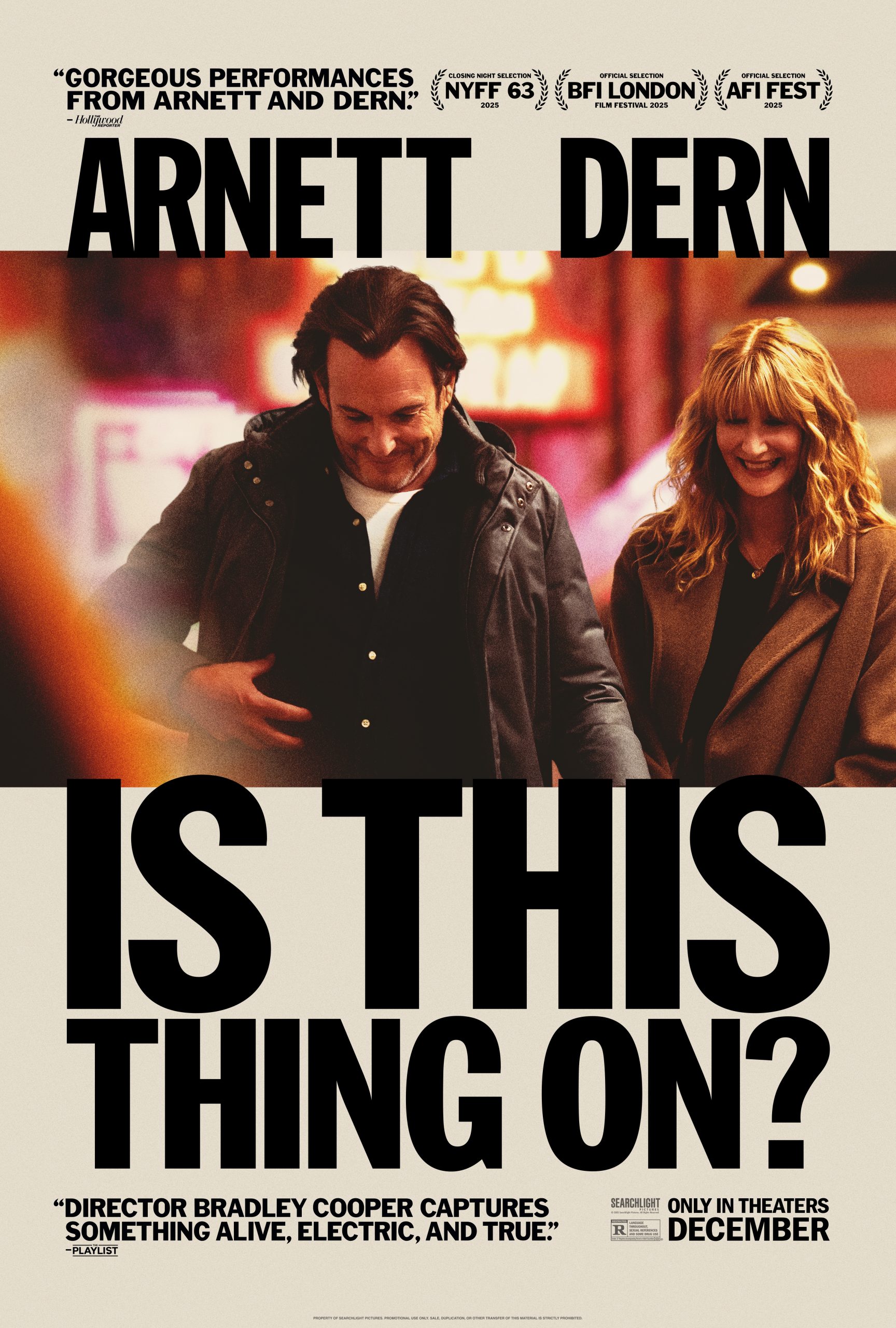
6. “Is This Thing On?” (USA)
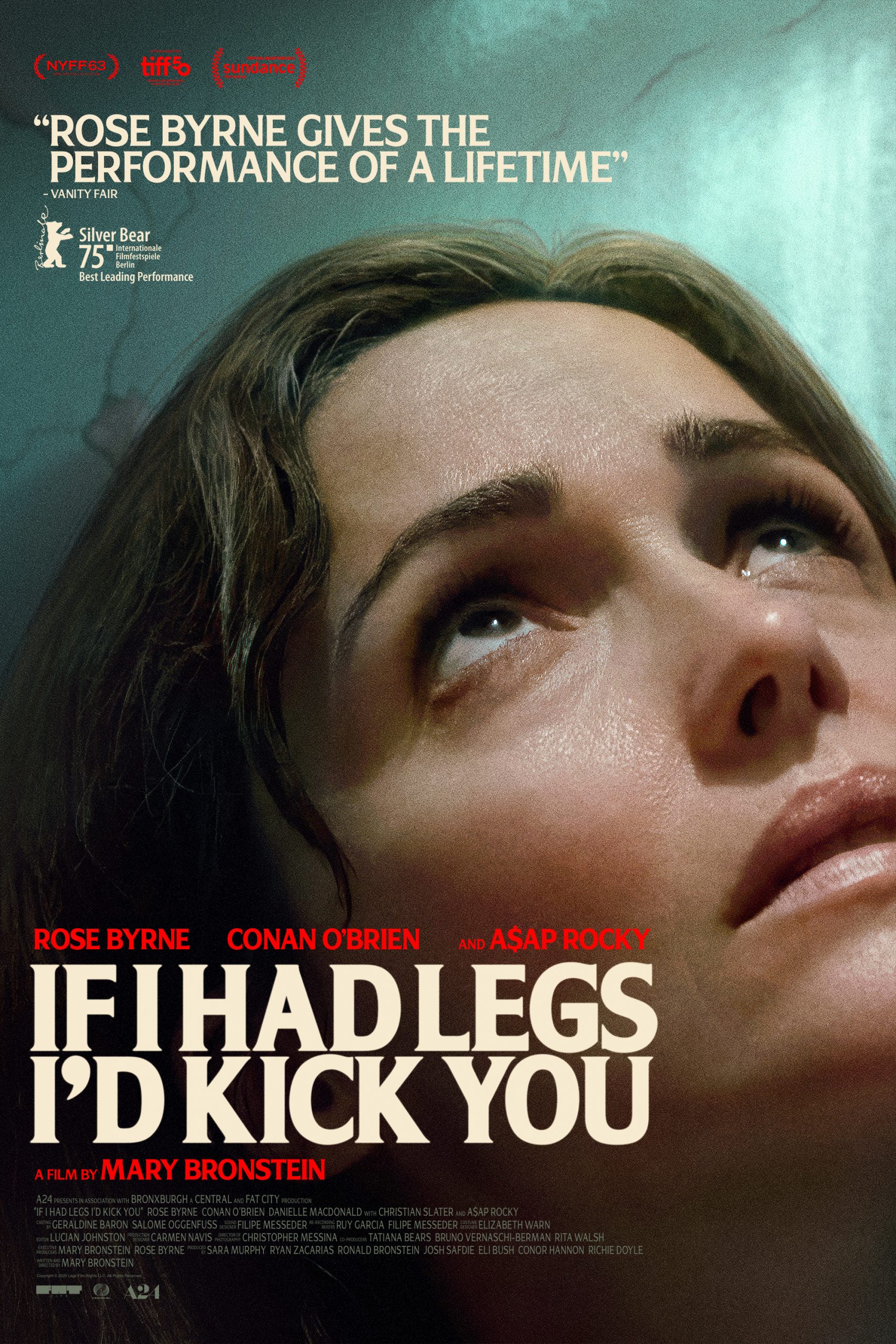
5. “If I Had Legs I’d Kick You” (USA)
In an age where life’s everyday challenges can test our wits, becoming overwhelmed is a real possibility when they pile up. Just ask Linda (Rose Byrne), a therapist who struggles to sincerely and sensitively assist her troubled patients. But that’s just the start of her problems. She’s also tending to a sick child (Delaney Quinn), the demands of which are considerable, both from the whiny, often-unappreciative youngster and her annoyingly insistent caregivers. To make matters worse, a burst pipe in the ceiling of her apartment has forced mother and child to move into a hotel, a stay that’s become unexpectedly extended due to the lack of repair work by her inattentive landlord. And, through all of these ordeals, Linda is on her own, given that her unfeeling husband (Christian Slater) is frequently away on business. As a consequence, this palette of issues has forced Linda into therapy herself with a peer counselor (Conan O”Brien), whose incessant indifference not only offers little help, but also tends to exacerbate the stress in her life. Over time, the specific pressures associated with each of these incidents begin to snowball, making coping nearly impossible. And, as time passes, Linda feels as though she’s losing herself and descending into her own personal madness. So what is she to do? That’s what this intense offering from actress-writer-director Mary Bronstein seeks to explore. This exceedingly dark comedy-drama examines what a woman on the edge might go through as the breaking point approaches. There’s an undeniably raw, edgy, realistic quality to this release, one that sometimes makes this a decidedly uncomfortable watch. The barrage of challenges to simply get through the day keeps coming at the protagonist (and, hence, viewers) relentlessly, presented here in nonstop fashion at breakneck speed. And it seems that, no matter what good faith efforts Linda makes to resolve her dilemmas, they’re never enough, often exposing her to petty, undue criticism that, in turn, prompts undue, unfair and unfounded accusations of blame and shame. All of these foregoing attributes are routinely intensified by the picture’s regular use of macabre comic relief, serving up laughs about incidents and subjects that many of us might genuinely feel guilty chuckling about. But this film’s real standout asset is the superb performance turned in by Byrne, easily the best work of her career, enabling her to capture best actress nominations in all of the major awards competitions (the Oscars, Critics Choice Awards, Independent Spirit Awards, BAFTA Awards and Actors Awards, as well as the Chicago Indie Critics’ Windie Awards), along with wins at the Golden Globe Awards and National Board of Review. Byrne’s superb portrayal is further capably backed by the work of Quinn, O’Brien and other cast members in fine supporting roles. In addition, the picture has earned an Independent Spirit Award nod for best director, a Top 10 Independent Film designation from the National Board of Review and a Windie Award nomination for Best Independent Film. To be sure, “If I Had Legs I’d Kick You” won’t suit everyone, and even avid cinephiles may at times find their patience, tolerance and sensibilities sufficiently challenged. Nevertheless, this is one of those “sign of the times” pictures that unflinchingly exposes much of what’s wrong with contemporary society and that we’d all be wise to take seriously if we ever hope to see improvement in a world where a lack of compassion, understanding and support are being allowed to run rampant. It’s no wonder that so many of us might feel like kicking back under conditions like this. Indeed, maybe it’s time we should all seek to grow some legs of our own.

4. “Sirât” (Spain/France)
Screened at the 61st Chicago International Film Festival
No matter how desperate circumstances may become in our lives, they can always get worse, presenting us with an exacting test of our capabilities and will to survive. And, in doing so, the experience provides us with an opportunity to look at how unimaginably resilient we can be, no matter how seemingly impossible the odds may appear stacked against us. Those are the conditions put to a worried father, Luis (Sergi López), and his young son, Esteban (Bruno Núñez Arjona), as they earnestly go in search of their missing daughter/sister at a rave in Morocco. Unfortunately, there’s no sign of her, but a band of ravers (Stefania Gadda, Joshua Liam Henderson, Richard “Bigui” Bellamy, Tonin Janvier, Jade Oukid) suggests that they consider looking for her at another upcoming event soon to be held in Morocco’s southern desert near the Mauritanian border. However, as the festivities play out, troops arrive on the scene, ordering the evacuation of all Europeans in the wake of the outbreak of war. But, as the attendees are rounded up for removal, the five rebel ravers flee, with Luis and Esteban in tow, with the intents of traveling to the next event and continuing the search for the missing woman. The unlikely traveling companions thus embark with a sense of adventure and hope, unaware of the many perils that await them on the road against a backdrop wherein World War III has apparently begun. The challenges soon descend upon the travelers thick and furious, significantly impacting their journey, not to mention their ability to stay alive. Can they rise to the occasion? That’s what writer-director Oliver Laxe explores in this edgy road trip saga, reminiscent of the William Friedkin classic “Sorcerer” (1977), punctuated by an array of shockingly unexpected developments, plot devices that successfully take big chances as this intensely engrossing story unfolds. The narrative is backed by a positively mesmerizing soundtrack, one of the best I’ve seen come out of a movie in ages, as well as stunning desert cinematography and fine performances by the entire ensemble. Admittedly, a few sequences could be better explained, and the back story across the board could have been better developed. However, when faced with conditions like these, it may be easy for the characters to disregard them in the face of more pressing concerns, and that could be the intent underlying their exclusion here. Either way, the lack of elaboration in these areas doesn’t significantly detract from the aspects that truly work best in this superb release, one honored with four awards at the 2025 Cannes Film Festival, including the prestigious Jury Prize, as well as a nomination for the Palme d’Or, the event’s highest honor. In addition, “Sirât” has earned best international picture nominations from the Oscars, Golden Globes, BAFTAs, Critics Choice Awards, Independent Spirit Awards and Windie Awards, along with a National Board of Review designation as one of 2025’s Top 5 International Films. Its accomplishments for best sound were also recognized with Academy Award and Critics Choice Award nominations, as well as a Golden Globe nod for best original score. This one is truly worth all the accolades it earns as one of the year’s best releases.
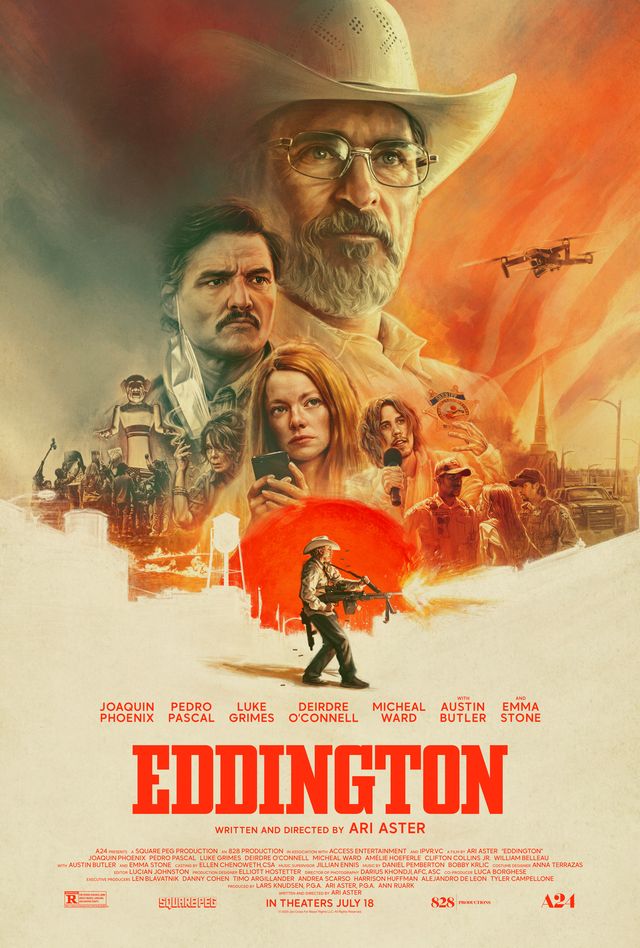
3. “Eddington” (USA/Finland)
Some would say – and quite astutely at that – there’s plenty of madness to go around these days, and they’d be right. But where and when did this begin? A good place to start looking would be the COVID-19 Pandemic, a time when fear was ratcheted up, conspiracy theories ran amok, “protective” measures slid into excessive overreach, neighbors routinely spied on (and often made unsupported accusations about) neighbors, and people’s imaginations were let loose without restraint. What began as an alleged but widely legitimized public health crisis soon spilled over into myriad other areas of life as tempers, paranoia and disinformation flared to new heights. So why did this happen? As we look back now with the benefit of hindsight, it’s gradually become clearer what unfolded, although many of us still don’t acknowledge it or discuss it much. Thankfully, this is where writer-director Ari Aster has stepped in, gobsmacking us out of our indifference, denial and complacency with his fourth feature outing, a no-holds-barred cinematic essay on that time of profound and rampant insanity in May 2020 as depicted through the lives of the citizens of the fictional small desert town of Eddington, New Mexico. This cross-genre blend of comedy, drama, modern-day Western and social satire shoves its content squarely in our faces, forcing us to take a critical look at it, no matter how much many of us would rather not do so. The result is an incisive, insightful, incendiary multifaceted examination of what can happen when all sense of reason is recklessly cast to the winds. While the film covers a wide range of material and numerous story threads, its primary plotline follows the simmering feud between longtime well-liked mayor Ted Garcia (Pedro Pascal), a by-the-book supporter of community welfare and official public health and safety policies, and sheriff Joe Cross (Joaquin Phoenix), a commonsense law enforcement professional who urges the public to assess their circumstances realistically and with an acute degree of discernment. But that’s just the beginning: when matters grow increasingly heated and inherently more unpredictable between them, Cross challenges Garcia in the upcoming mayoral race in which the incumbent had been running unopposed. And, as tensions mount in the wake of the stress caused by both the COVID outbreak, the local political discord and the emergence of inflamed social disturbances (such as the protests that broke out nationwide, including in Eddington, in the wake of the George Floyd killing in Minneapolis), conditions erode further, going from bad to worse, reaching an eventual breaking point, both for Garcia and Cross, as well as the entire local population. The filmmaker employs an intriguing approach in telling this epic saga, examining the prevailing conditions without judgment but pointedly depicting all of them with equal degrees of inspired and unfiltered lunacy, incorporating a narrative style that in some ways recalls the work of director Yorgos Lanthimos. In accomplishing this, the picture maximizes its impact through skillful cinematography and film editing, bitingly scathing writing, and an excellent ensemble including both leads and a host of colorful supporting performances from the likes of Emma Stone, Austin Butler, Deirdre O’Connell, Michael Ward, Cameron Mann, Matt Gomez Hidaka, Luke Grimes, Amèlie Hoeferle and William Belieau, among others. While the film’s final act is admittedly somewhat overlong and periodically unhinged, the finished product overall nevertheless represents quite an accomplished work of filmmaking, earning this release a Cannes Film Festival Palme d’Or nomination and a Windie Award nod for best original screenplay. To be sure, this offering won’t appeal to everyone and is likely to generate divisive reactions among both avid cinephiles and casual moviegoers. But, for those unafraid of confronting issues that have largely been swept under the rug, this one is right up your alley. As Mark Twain once wisely observed, “It’s easier to fool people than to convince them that they have been fooled,” and Aster draws on that sentiment frequently throughout this work. No matter what one may believe about the events of five years ago, the director skillfully spotlights the chaos of that time and how it often manifested as an exercise in deception, control and a loss of common sense in so many areas of everyday life. Let’s sincerely hope we learn our lesson from this film so that we needn’t go through an experience like that ever again.
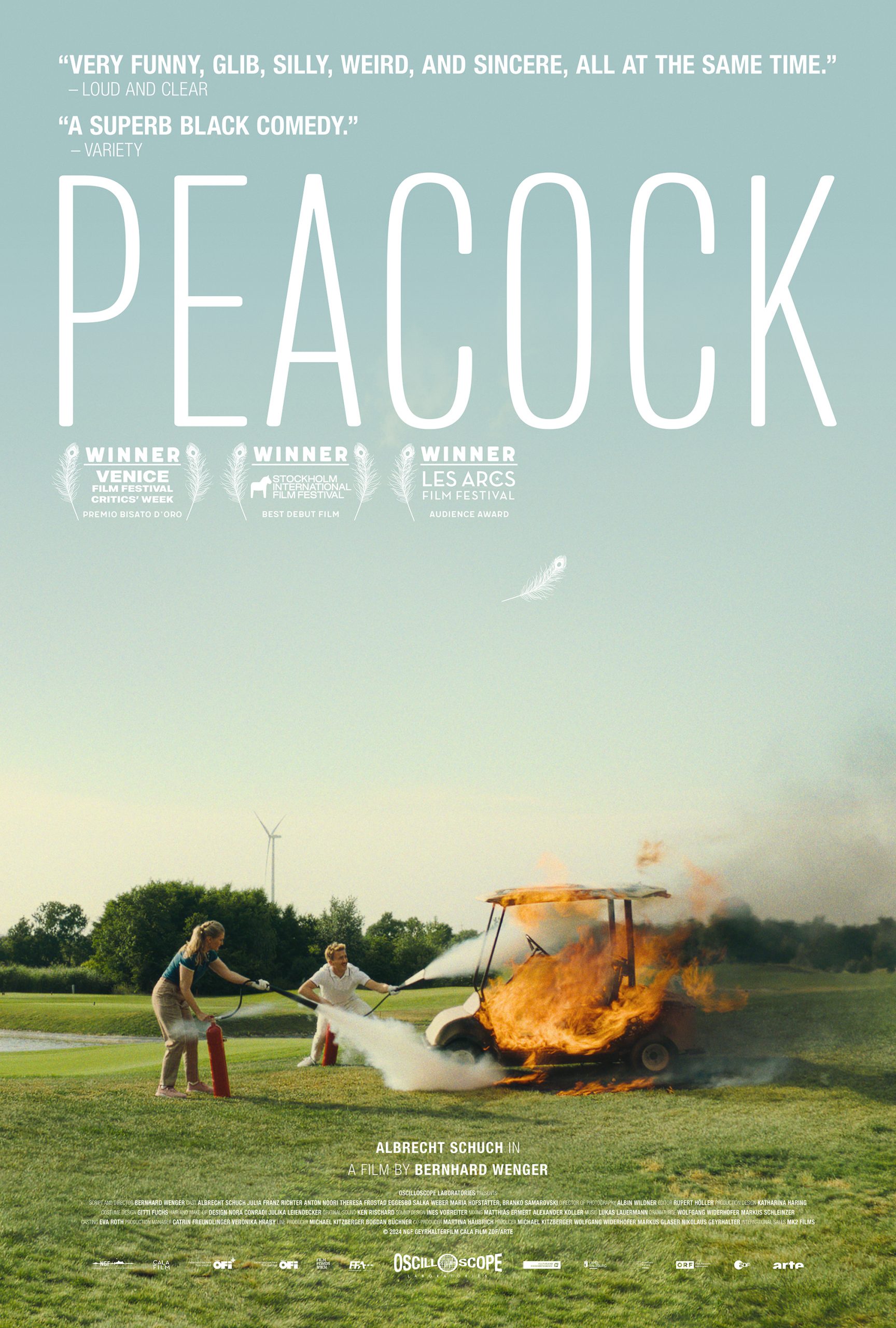
2. “Peacock” (“Pfau – Bin ich echt?”) (Austria/Germany)
In this age of increasingly untrustworthy AI, rampant fake news and unabashedly self-serving social media, it’s becoming ever more difficult for many of us to distinguish what’s “real” and what isn’t, almost as if we’re stuck in a frightening new Orwellian paradigm. That’s significant, not only for how we perceive existence, but even in terms of how we experience and respond to it. In fact, these circumstances might even be looked upon as a metaphysical or existential nightmare. So it is for Matthias (Albrecht Schuch), who works for a Vienna-based organization known as MyCompanion, a business that enables clients to hire individuals to serve as professional impersonators or stand-ins for those in need – any need – as conditions warrant. He has become so proficient at this that his services are in high demand. However, Matthias has become so adept at his work that he’s begun to lose himself in it, unsure of where his job leaves off and his own reality begins, and that inherent uncertainty comes with consequences. For instance, it has seriously impacted his relationship with his significant other, Sophia (Julia Franz Richter), who claims that she doesn’t know him anymore. On top of that, Matthias increasingly finds himself embroiled in dubiously complicated cases involving the likes of a bullied wife (Maria Hofstätter) who’s looking for coaching on how to argue more effectively with her overbearing husband (Branko Samarovski) and a wealthy senior (Tilo Nest) who wants someone to stand in as his absent estranged son at his lavish 60th birthday soiree, an event couched in an underlying agenda cooked up by the guest of honor. And, as the protagonist desperately seeks answers to better know his true self and to cope with these ever-maddening circumstances, he feels like he’s becoming hopelessly lost, frequently unable to discern or explain himself. He also unfairly becomes the unwitting object of conjecture, ridicule and blame from outsiders, including uninvolved third parties, who generally misinterpret conditions and see them through their own distorted (and often-shallow) filters, making them unconscious embodiments of unbridled pretention, not unlike superficial, proudly preening peacocks, as one character astutely observes. Writer-director Bernhard Wenger deftly explores these mind-boggling scenarios with delicately applied dry wit and hilarious situational humor, showing more than telling what’s driving his narrative’s objectives. At the same time, though, there’s a deadly seriousness beneath the laughs, making insightful observations about the blurred lines of reality and fantasy, in addition to scathingly symbolic references to social media toxicity and the undue judgmentalism that often tags along for the ride. What’s more, the filmmaker skillfully shows how all of these questionable, seemingly disparate elements ultimately tie together, leaving Matthias (not to mention the rest of us) with a noxious new form of existence that has us wondering about our very nature and what to believe about our fundamental sense of reality. “Peacock” is a smartly written, intelligently crafted debut feature from this gifted filmmaker, one that often reminds me of inventive, quirky pictures like director Ruben Östlund’s “The Square” (2017). It’s a picture that simultaneously entertains, enlightens and inspires in eye-opening ways – provided we leave ourselves open to that possibility. And, in this day and age, we had better do that if we want to avoid consequences that, frankly, could be too troubling to think about.

1. “The Voice of Hind Rajab” (“Sawt Hind Rajab”) (Tunisia/France/USA/UK/Italy.Saudi Arabia/Cyprus)
Some movies entertain. Some movies enlighten. And some movies haunt you to one’s very core in ways that are difficult to put into words. That description is most aptly applied to the latest offering from writer-director Kaouther Ben Hania, a fact-based dramatization that skillfully, sensitively yet effectively straddles the line between documentary and narrative features in a chillingly realistic story that can’t help but move viewers and leave an indelible impression on one’s soul. In January 2024, volunteer members of the Palestinian Red Crescent Society stationed in Ramallah in the Occupied Territories’ West Bank receive a harrowing phone call from a terrified six-year-old girl, Hind Rajab, who is trapped in a car with five deceased relatives killed in an ambush by Israeli Defense Forces as the family sought to flee the Gaza Strip while under siege from IDF troops. The emergency response workers, Omar (Motaz Malhees), Rana (Saja Kilani), Nisreen (Clara Khoury) and Mahdi (Amer Hlehel), desperately struggle to get an ambulance to the frightened child to evacuate her from an embattled location riddled with ubiquitous gunfire and menacing tanks, circumstances that deeply scare her and that she’s understandably unable to comprehend. Unfortunately, the Red Crescent staff’s hands are tied; they’re located 52 miles from Gaza yet have been assigned to process rescue efforts from a distance given the closure of the organization’s operations in the battle-torn region. And, if their remote location weren’t challenging enough, they’re frustrated by an elaborate “coordination” protocol that they must follow to safeguard rescue vehicles entering the combat zone, forcing them to wait for a “green light” to proceed, all the while listening to Hind’s panicked cries for help that doesn’t come. But what makes this film so particularly unsettling is that Hind’s pleas during the ordeal are the actual tapes of her voice that were recorded by Red Crescent as the incident unfolded. Knowing that makes this an especially anguishing cinematic experience for viewers, particularly since the audio of Hind’s voice is the only tie that audience members and the rescue workers have to her as these unspeakable atrocities are inflicted upon her, leaving both characters and viewers with an unfathomable sense of utter helplessness. It should thus go without saying that this is a truly difficult watch, one that may be more stressful than what many moviegoers (particularly sensitive viewers) can realistically bear. At the same time, though, this is also an exceedingly poignant vehicle for driving home the depth of the ineffable inhumanity taking place during this barbaric scenario. It naturally begs the question, how could anyone (or any military or political body) possibly be so inherently and uncaringly cruel? As a consequence, one can’t help but be powerfully affected by this release, in terms of invoking the seemingly incongruent combination of both profound compassion and suitably justified outrage. It’s the kind of film that we all must see to get an accurate appreciation of the callous brutality that’s thoughtlessly transpiring around us (and, as recent events have shown, not just in Gaza, either). For a picture like this, it’s difficult to talk about it in terms of accolades and honors, but, in its own way, “The Voice of Hind Rajab” has deservedly garnered considerable recognition at film festivals, in awards competitions and from film critics organizations, including well-earned Golden Globe, Oscar and BAFTA nominations for best foreign language film. It’s regrettable that it takes material like this to make us aware of the pain and horror that’s going on unchecked in our world today. But that knowledge is ultimately far more valuable to us than willfully turning a blind eye and looking the other way. We stand to lose a lot more by following that course, and, in this day and age, that’s simply unacceptable.
Honorable Mentions

11. “Bugonia” (Ireland/UK/Canada/South Korea/USA)
In an age where distinguishing what’s genuine on its surface from something that’s clandestinely veiled, it may be difficult to know what to believe. As a result, we might give up and disregard making any attempt to identify inherent (and potentially significant) differences. Or, by contrast, we may become so obsessed with reconciling such matters that we descend into a sea of paranoid conspiracy theories, potentially seeing them at every turn and placing us on the sidelines of reality with no credibility to our names. In actuality, the “truth” probably resides somewhere in between, but where and how do we draw the lines of accurate and meaningful distinction? Those are the considerations continually raised and examined in this new dark comedy/fable from director Yorgos Lanthimos in which a pair of intellectually challenged cousins, Teddy (Jesse Plemons) and Don (Aidan Delbis), kidnap the CEO of a major pharmaceutical company, Michelle Fuller (Emma Stone), believing that she’s an alien from Andromeda who’s quietly but determined to seek the destruction of mankind. But is their contention legitimate or the ravings of delusional madmen? The narrative continually vacillates in each direction, especially when the cousins’ captive employs some skillful psychological warfare to throw them off their game and undermine their confidence in their claim. In any event, this unlikely trio has an impending deadline of four days – the time before the alleged arrival of the Andromedan mother ship in connection with the next lunar eclipse – to resolve matters, a challenge made difficult by the emergence of several distracting subplots and the impact of Michelle’s gamesmanship on her captors’ plans. And, as the picture plays out, it raises intriguing questions about corporate motivations, unbridled greed, the sincerity (or lack thereof) behind public health initiatives, environmental degradation (particularly involving the welfare of bees and the role of colony collapse disorder (CCD)) and the true nature of Earth’s ancient past. It all makes for an intriguing mix of influences that never fails to captivate, an attribute made stronger by the fine, award-worthy performances of the three principals, a smartly penned screenplay, intriguingly clever special effects and an edgy, dramatic original score. A few pacing issues crop up at times, and several incidents of graphic violence may be more than what sensitive viewers can handle. But, those minor considerations aside, “Bugonia” is yet another brilliant work from Lanthimos, arguably one of the hottest directors in the business these days. And, for those efforts, the film has captured a boatload of awards season recognition, including four nods from the Oscars (including best picture), five BAFTAs, three Critics Choice honors, three Golden Globe nominations and three Windies. This decidedly quirky offering probably won’t appeal to everyone, and viewers may not come away from it with any greater sense of clarity in terms of how to distinguish truth from deliberately concealed fiction. But, if nothing else, it gives us all much to think about as we attempt – no matter how successfully or futilely – to figure out what’s really going on in our world and what we might be able to do about it.
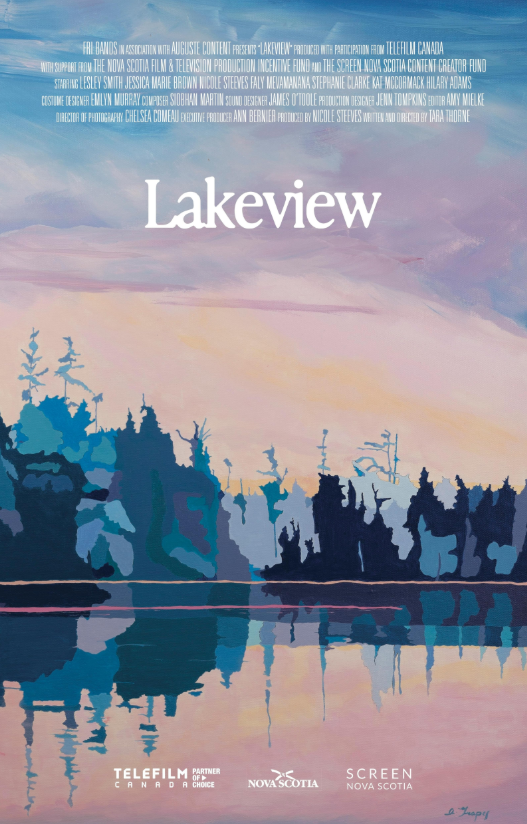
Screened at the 43rd Reeling Chicago International LGBTQ+ Film Festival
Friendships are one of the greatest treasures of the human experience. They can provide us with tremendous joy and fulfillment. But they can also come with frustration and heartache, especially if feelings of betrayal enter the picture or if we find ourselves having to go to extraordinary lengths to maintain them, bringing out the love-hate relationship we sometimes have with them. In the end, though, we generally discover that the effort we must put into them is more than worth it, particularly when we gather en masse to celebrate their innate splendor. Such is the case in writer-director Tara Thorne’s second feature, an intensely personal comedy-drama about a weekend reunion of seven dear friends. The occasion? Darcy (Lesley Smith), a middle-aged, well-to-do self-described “baroness,” invites six friends to her Nova Scotia lakefront home to celebrate her divorce, a time to say good riddance to her past and a warm welcome to what she hopes will be a new and more satisfying future. Joining Darcy are her longtime friend Lauren (Nicole Steeves) and her sweet but flirtatious young girlfriend, Phoebe (Faly Mevamanana); long-tenured couple Julien (Kathryn McCormack) and Julie Anne (Stephanie Clark), who have a big announcement of their own; Lucy (Jessica Marie Brown), whose irresponsible, cheating partner abandons her just as they were about to leave for the weekend’s festivities, prompting the inconsolable, newly jilted romantic castaway to embark on a protracted bender to drown her sorrows; and Dax (Hilary Adams), a successful, self-absorbed, shamelessly promiscuous recording artist who goes through women faster than free pizza at a happy hour buffet (including, at different points in the past, most of the attendees at Darcy’s celebration). Their weekend together consists of an array of antics in which the guests engage in a series of candid and profound yet often-sassy conversations about life, love, regrets, relationships, and, above all, friendships (with or without benefits). This delightfully engaging tale is peppered with snappy one-liners (many of which were brilliantly ad libbed) and razor-sharp observations scattered throughout a plethora of outrageous and unexpected plot developments (think of this essentially as an all-lesbian version of “The Big Chill” (1983) or “Return of the Secaucus Seven” (1979)). This is all brought to life with a smartly written screenplay, some of the best movie casting I’ve ever seen, spot-on character development and chemistry, and an excellent soundtrack with knock-out performances of original songs whose sentiments are perfectly coordinated with the narrative’s subject matter. “Lakeview” is a truly impressive entry in the filmography of contemporary LGBTQ+ cinema, an enjoyable, heartfelt offering that comes as a genuinely wonderful surprise, not just in its own genre, but in the world of movies overall. Give this one a look, not just for its entertainment value, but as an inspired, insightful exploration of the relationships we hold most dear. Indeed, you may never look at your friends the same way ever again.
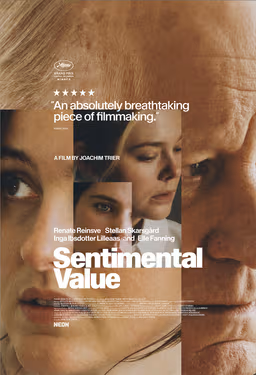
13. “Sentimental Value” (“Affeksjonsverdi”) (Norway/Germany/Denmark/France/Sweden/UK/Turkey)
When a film has the capacity to provide a template for overcoming domestic discord, promoting forgiveness and helping to heal one’s past, it’s to be truly commended for going beyond being mere entertainment or even an admired artform. It aspires to become a noble, laudable cinematic godsend, one verging on providing a valuable service to those requiring much-needed guidance and direction in their lives. At the risk of exaggeration, such is the case with the latest offering from writer-director Joachim Trier, arguably the best work of his storied career. When aging, esteemed Scandinavian filmmaker Gustav Borg (Stellan Skarsgård) unexpectedly reconnects with the family from which he has long been estranged, his two adult daughters, Nora (Renate Reinsve) and Agnes (Inga Ibsdotter Lilleaas), are baffled by his sudden reentry into their lives. After years of conflict and incessant arguing with his wife, Gustav departed without warning, leaving his now-recently deceased spouse to raise their two daughters on her own. Despite the challenges associated with such circumstances, Nora would go on to become a successful, if troubled and lonely, stage actress, while Agnes went on to live a comparatively stable life as a wife and mother. Gustav, meanwhile, launched into a noteworthy filmmaking career, though, due to the onset of failing health and problem drinking, he hasn’t worked on a new project for some time. However, with his re-emergence into his daughters’ lives, he now hopes to change that – by making a movie that he views as a legacy production, a less-than-veiled autobiographical piece that he claims to have written for Nora and for which he would like her to play the lead. But, given the longstanding bitterness between Nora and her father, she turns him down, a major setback for his plans to proceed – that is, until Gustav meets a young American rising star, Rachel Kemp (Elle Fanning), to whom he offers the part. The director’s casting choice, in turn, unleashes a barrage of new emotional turmoil, some of which involves rehashing the past and other parts of which uncover new, previously concealed issues involving both Gustav and his daughters, as well as family members from his own past. At the same time, taking on the role of Gustav’s protagonist pushes Rachel to examine her role in this complex scenario, both for the development of her own career as an actress and how she fits into what is clearly a metaphorical vehicle for sorting out Borg family drama. As challenging as all of this can be for everyone involved, however, it also provides the players with an opportunity for healing, personal and professional growth, and a fresh start for the future. The question is, can they rise to the occasion? Filmmaker Trier thus embarks on a rather involved storyline (sometimes a little too involved for its own good), but the narrative nevertheless eagerly takes on the ambitious task of intertwining various aspects of art and life and how one might be drawn upon to address the challenges and opportunities of the other. While the picture might potentially be seen as a little overlong, the director manages to successfully cover considerable ground without belaboring his material or incorporating extraneous elements. Moreover, the deftly penned screenplay effectively keeps the picture from becoming too heavy-handed through the inclusion of strategically placed comic relief, including several delightfully witty nudges at a well-known Scandinavian furniture retailer. These assets are further enhanced by this release’s gorgeous, creative cinematography and the superb performances of its fine cast, particularly Reinsve, Skarsgård and Fanning, all of whom turn in some of the best work of their respective careers. The picture has also been a stellar awards season performer, marked by nine Oscar nominations (including best picture), eight Golden Globe nods (including a win for Skarsgård as best supporting actor), eight BAFTA honors, seven Critics Choice nods, two Windie Award nominations and two National Board of Review accolades. In addition, as the winner of the Grand Prize of the 2025 Cannes Film Festival and a nominee for the event’s Palme d’Or (the festival’s highest honor), “Sentimental Value” represents another standout effort from this gifted Norwegian filmmaker, one very much in the same vein as – if not, arguably, even better than – his eminently praiseworthy previous offering, “The Worst Person in the World” (“Verdens verste menneske”) (2021). This offering truly is one of those films whose sentiments have genuine value.
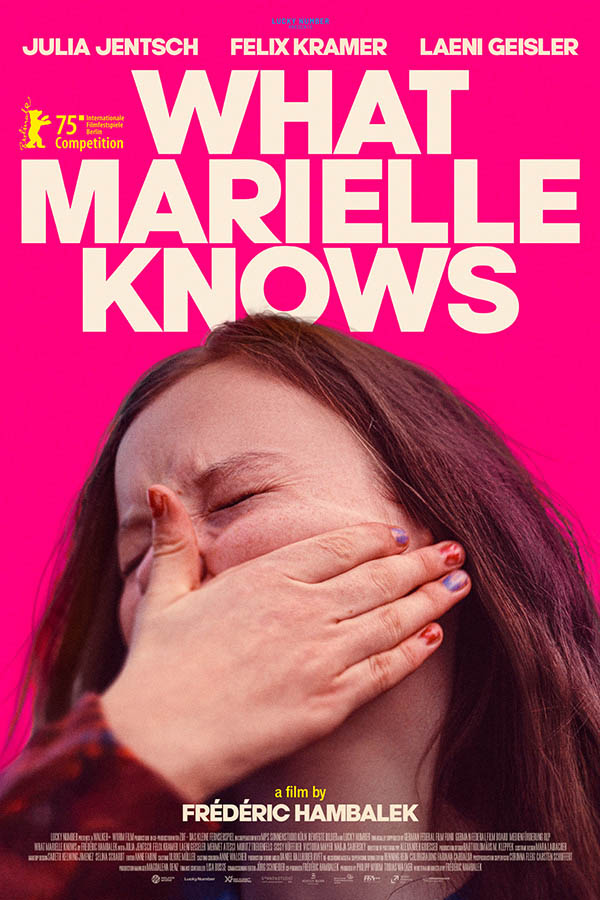
14. “What Marielle Knows” (“Was Marielle weiss”) (Germany)
Screened at the 61st Chicago International Film Festival
Honesty is a subject on seemingly everyone’s mind these days, for a variety of reasons. It’s widely regarded as something inviolable and sanctimonious, not to be questioned or minimized. But can there be such a thing as too much honesty, situations in which revealing more than what one realistically needs to know can be detrimental? And what if the truths that surface in those scenarios are impacted by a phenomenon like telepathy, where purposely containing the unrestricted and unfiltered flow of information can be challenging, if not impossible? Such are the circumstances set out in writer-director Frédéric Hambalek’s second feature. This contemplative dark comedy-drama tells the story of Marielle (Laeni Geiseler), an adolescent who develops the ability to see and hear what others are seeing, doing and thinking (even when they’re not present) after she was slapped across the face in an altercation with an acquaintance. Needless to say, she’s mystified by this unexpected development and consults her parents (Julia Jentsch, Felix Kramer) for advice on how to explain and handle it. But mom and dad dismiss their daughter’s assertions out of hand – that is, until she recites a detailed litany of what happened to each of them that day. Suddenly, they’re not so sure of themselves, especially when Marielle brings up potentially sensitive (and embarrassing) revelations involving the truthfulness of their thoughts and the events transpiring in their respective personal and professional lives. And, the longer Marielle’s ability persists, the more complications it causes for all concerned – some of them hilarious and others not so funny. So how is the family supposed to resolve this situation before matters get completely out of control, especially when excessive honesty flows so readily that it becomes weaponized as a tool of manipulation and blackmail? This superbly written comic morality play examines these issues from an array of angles, including the potential (and actual) permutations that arise from these conditions, frequently complemented with hefty helpings of wryly droll humor and a stark but fittingly appropriate classical soundtrack featuring the works of Beethoven and Schubert. But, as the story progresses, the narrative grows increasingly more palpable, raising the thorny question of whether a solution is even attainable, especially when only difficult options hold out the only hope available. In many respects, this release calls to mind issues like those raised in such films as “You Hurt My Feelings” (2023) but with a greater degree of depth and intensity, conditions we must all be prepared to address when circumstances like this arise, regardless of whether telepathy plays a role in the scenario. And that’s no laughing matter.
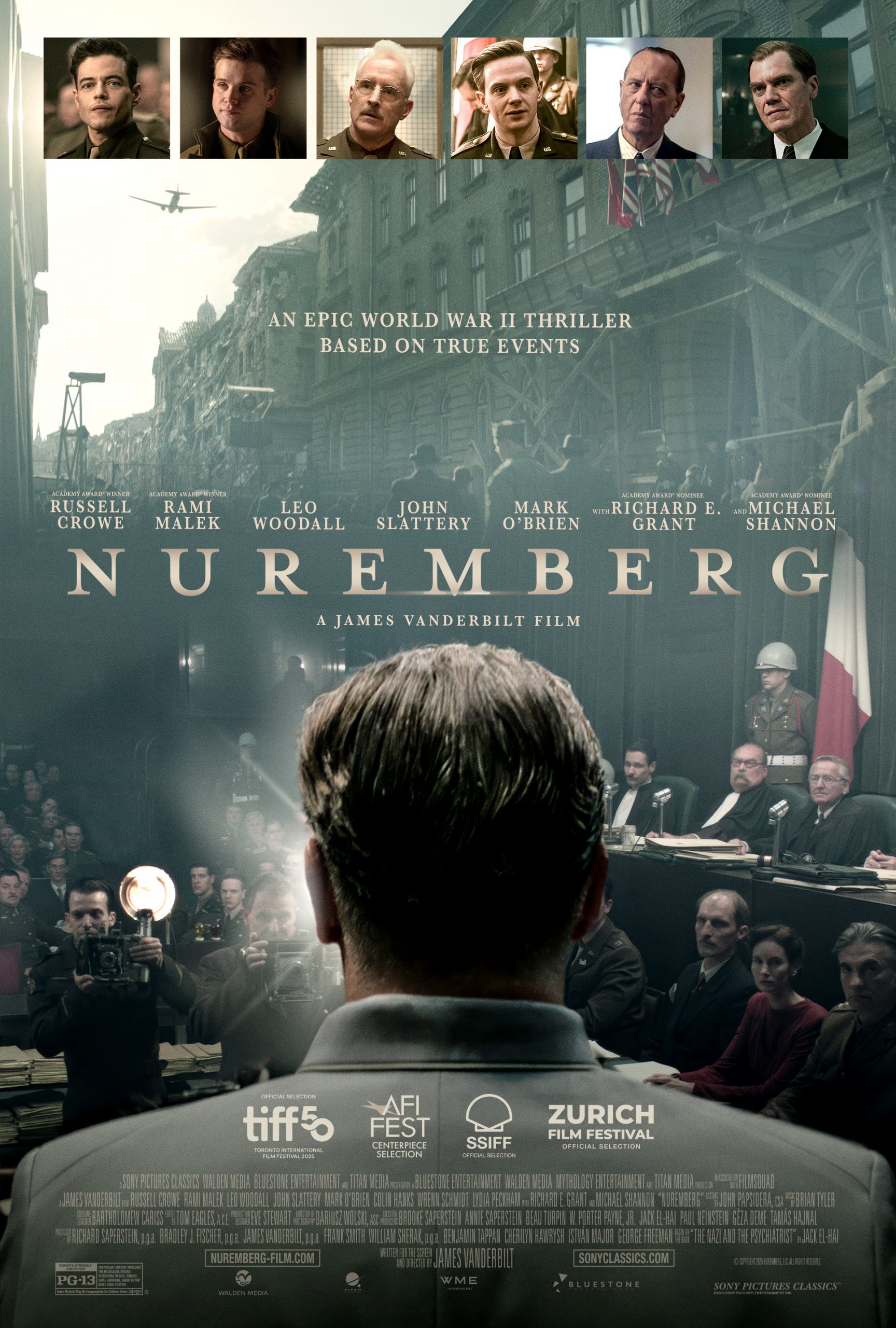
15. “Nuremberg” (USA/Hungary)
Itʼs widely maintained that those who don’t learn from history are destined to repeat it (despite the fact, unfortunately, that we also all too often disregard such sage advice). But, if there’s any message to be taken away from this latest offering from writer-director James Vanderbilt, this would be it, especially given the prevailing sociopolitical climate. This engaging historical drama/psychological thriller serves up a potent cautionary tale about the need to recognize, embrace and take seriously the lessons to come out of the Nuremberg trials in which former Nazis were prosecuted for crimes against humanity in the wake of World War II, the first time proceedings of this kind were ever conducted (however, viewers should note that this is not a remake of the 1961 iconic movie classic “Judgment at Nuremberg”). Specifically, the film follows the efforts of US Supreme Court Justice Robert Jackson (Michael Shannon) to convene an international tribunal for this purpose, one consisting of judicial representatives from the Allied Forces of the US, the UK, France and the USSR. In the first of what would become a series of 12 trials, the tribunal prosecutes 22 Nazi defendants, including Reichsmarschall Hermann Göring (Russell Crowe), second in command to deceased Führer Adolf Hitler. Göring’s capture at the end of the war represents a major coup for the Allies in their quest to secure justice, but, to assure his competency to stand trial, the US military assigns psychiatrist Dr. Douglas Kelley (Rami Malek) to evaluate his mental state, a process that accounts for much of the film’s narrative (based on author Jack El-Hai’s 2013 nonfiction title, The Nazi and the Psychiatrist). It’s a process that ultimately proves to be quite personal as well as professional, with some surprisingly fascinating revelations emerging from the duo’s intense and occasionally intimate dialogues. But, as becomes apparent, the picture also sheds a chilling light on the narcissistic and sociopathic traits characteristic of both Göring and his colleagues, attributes that Kelley finds troubling not only in the personas of the Nazi war criminals, but also quietly lurking in others, a wholly unexpected and disillusioning insight for the idealistic and fair-minded doctor. However, given the depth and relevance of the content here, I’m admittedly perplexed at the reaction this film has received. It has been shut out of nominations in all of the major awards competitions, despite the undeniable strengths in its writing, editing, production design, and musical score, as well as its outstanding performances by the three principals and in the supporting portrayals of Richard E. Grant, John Slattery, Leo Woodall and Colin Hanks. But, more than that, I fail to see the questionable justification behind a number of the criticisms that have been leveled against this title. What many have called boring I’ve found mesmerizing; what some have likened to a dry cinematic term paper I’ve found to be consistently engaging and profoundly affecting; and what some have said is a slow-moving slog is, in my view, a consistently paced, attention-holding release, quite an accomplishment for a picture with a 2:28:00 runtime. From these dubious observations, I can only conclude that this is yet another example of the American public’s general lack of interest in anything of a historical nature, which, as a college history major, I find sad given its all-too-frequent tendency to repeat itself, especially when willfully disregarded. Indeed, it’s a sentiment perhaps best summed up by a quote from British historian and philosopher R.G. Collingwood that appears before the start of the closing credits: “The only clue to what man can do is what man has done.” “Nuremberg” shows us that; let’s hope we’re paying attention, particularly now.

16. “Rebuilding” (USA)
We all read about the trials and tribulations endured by the survivors of natural disasters, but rarely do we get to witness what it’s like to go through them on a daily basis. Moreover, it’s even rarer to see such happenings movingly portrayed on the big screen. Which is what helps to make this second feature outing from writer-director Max Walker-Silverman not only a fine piece of filmmaking, but also such an unexpectedly touching cinematic experience. When Colorado cowboy Dusty Fraser (Josh O’Connor) loses virtually everything in a wildfire, he’s left to pick up the pieces as he faces an uncertain future. The ranch that has been in his family for generations is decimated, leaving him with just the land on which it stood. But, given the scorched earth left in the disaster’s wake, it’s essentially going to be a decade before the land can once again realistically be used as a working property. So, as he assesses his options financially and logistically, the unassuming, soft-spoken rancher moves into a FEMA camp and takes a job as a road construction worker, but that’s not what he wants nor who he is. At the same time, he also attempts to rebuild his fractured relationship with his young daughter, Callie-Rose (Lily LaTorre), who lives with Dusty’s ex-wife, Ruby (Meghann Fahy), her new partner, Robbie (Sam Engbring), and her doting grandmother, Bess (Amy Madigan). It’s a full plate for Dusty to deal with, conditions that might easily overwhelm most of us, especially when hope seems like a rare commodity. However, through this ordeal, Dusty discovers an unexpected support network to help him get past his challenges and setbacks. This includes not only his ex-wife and mother-in-law, but also the new “family” he finds among his neighbors in the FEMA camp, most notably a recently widowed young mother, Mila (Independent Spirit Award nominee Kali Reis), and her daughter, Lucy (Zeilyanna Martiniez), who becomes Callie-Rose’s new bestie. The result is a heartwarming tale of people reaching out to help one another in a spirit of compassion and fellowship, the kind of moving, uplifting story we can all use more of these days. While the narrative might arguably come across as somewhat formulaic (perhaps even a bit predictable), it nevertheless feels real throughout, never manipulative, phony or the least bit forced. Those qualities are bolstered by the fine performances of the capably assembled cast (especially LaTorre in a noteworthy supporting role), the picture’s gorgeous depictions of the Western landscape and the film’s stirring score, attributes that helped this release earn a National Board of Review designation as one of 2025’s Top 10 Independent Films. Regrettably, cynical viewers might find this release a little on the corny side, but, considering how genuine this one feels (more so than I ever anticipated going in), that sense of authenticity shows just how badly we need a story like this in today’s trying times. “Rebuilding” has flown somewhat under the radar thus far, but it’s a film that deserves an audience, a picture that fills us with the kind of inspiration and goodwill that we could all use in a world where they seem to be in short supply.
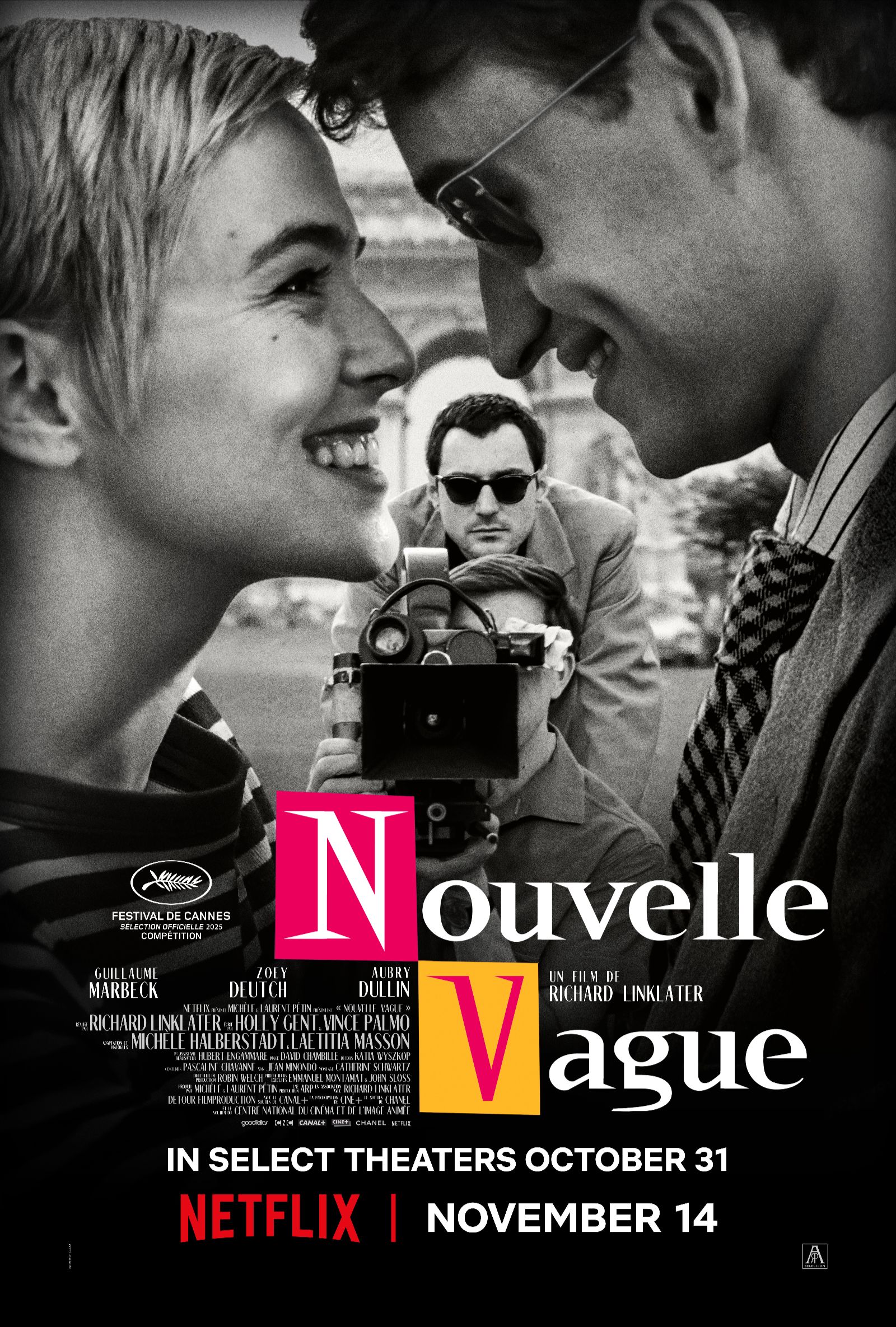
17. “Nouvelle Vague” (“New Wave”) (USA/France)
Landmark moments in virtually every area of endeavor are worthy of, and frequently celebrated in, films that applaud the significance of these accomplishments, and that even includes groundbreaking developments in moviemaking. These cinematic commemorations are generally imbued with a sense of respectful reverence regarding their subject matter, recognition befitting such achievements. However, the latest offering from director Richard Linklater presents a puzzle on that front, given that it incorporates a pervasive degree of ambiguity that may leave viewers scratching their heads, despite the undeniable excellence of the picture itself. In 1959, as the French New Wave filmmaking movement was beginning to find its stride through the works of new directors like François Truffaut (Adrien Rouyard) and Claude Chabrol (Antoine Besson), another new aspiring talent, Jean-Luc Godard (Guillaume Marbeck), a longtime, decidedly restless movie critic at the magazine Cahiers du Cinéma, began work on his first project, “Breathless,” the story of a thief on the run and his relationship with a young American woman in Paris. The film would star Jean-Paul Belmondo (Aubry Dullin), a longtime friend of Godard and newcomer to the business, and Jean Seberg (Independent Spirit Award nominee Zoey Deutch), a rapidly rising star in Hollywood circles. Like other New Wave offerings, the production featured innovative filming techniques, new approaches to storytelling, and alternative, sometimes-edgy content compared to conventional works of French cinema at the time. However, in the interest of experimenting with the untried, Godard took these principles to an extreme, working without a script, not informing his cast of what was being asked of them, making minimal use of rehearsal and shooting time, and abandoning many of the accepted standards of traditional filmmaking. Needless to say, this way of working frustrated his stars, as well as his producer, Georges de Beauregard (Bruno Dreyfürst), who envisioned his investment evaporating before his eyes amidst the relentless chaos on the set of this shoot. Yet, when offered suggestions or given orders on how to proceed, Godard would not be moved, insisting that his improvisations and spontaneity were essential to the creation of this project. In telling Godard’s story, Linklater masterfully taps into the rampant disorder on the set, depicting the filmmaking as an unfolding trainwreck, frequently commented upon by Godard with vacuous, stream of consciousness observations and justifications about how and why things were transpiring as they did. Yet, as history has since shown, “Breathless” went down as a groundbreaking work of cinema in the French New Wave, inspiring innovations that would subsequently make their way into the art of filmmaking, influences that have lasted to this day. But, based on this offering, one might readily develop doubts. Indeed, is “Nouvelle Vague” intended as homage or parody? Good cases could be made for either argument. (In the interest of full disclosure, I’m not an especially huge fan of “Breathless”; while it may have been inventive in some ways for the time it was made, it comes across today as terribly dated, perhaps even pretentious, despite the influence it had on many other New Wave releases that came along in later years.) Nevertheless, whatever impression one might ultimately take away from this film tribute, it’s an undeniably impressive work, beautifully filmed in gorgeous black and white, with fine performances by the ensemble, an excellent period piece production design, super cool costuming (right down to Godard’s ever-present sunglasses), a smooth, sophisticated jazz soundtrack, and utterly hilarious yet understated writing. Admittedly, this Golden Globe Award and Cannes Film Festival nominee is unlikely to appeal to anyone other than diehard cinephiles and those intimately familiar with “Breathless” and its cast and crew, but those in the know on these subjects are sure to enjoy this release immensely as one of 2025’s best films and, arguably, one of Linklater’s most noteworthy projects. Think of it as a love letter with a serious, tongue-in-cheek funny bone, and you’ve got an idea what this one is all about. This Netflix offering may not leave you breathless, but it will likely leave you vastly entertained.
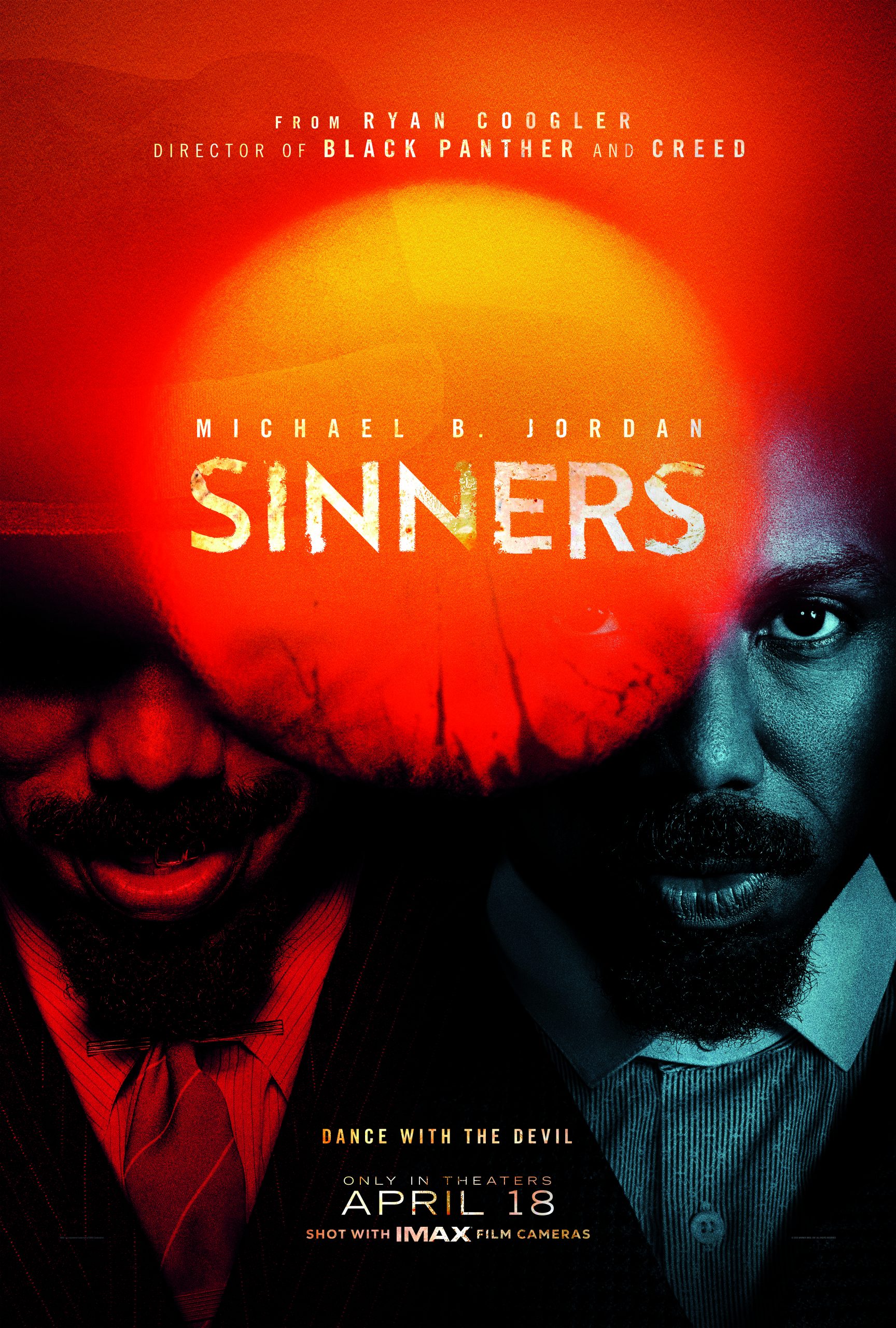
18. “Sinners” (USA)
It’s always gratifying to see a filmmaker take a big step up in his or her career, and that’s precisely what writer-director Ryan Coogler has done in his latest offering, a project that reflects a significant jump in the depth, artistry and sophistication of his creative output. Coming on the heels of his successes in “Black Panther: Wakanda Forever” (2022), “Creed” (2015) and “Fruitvale Station” (2013), Coogler has hit a home run with this period piece smart horror story about identical twin brothers (both played by Michael B. Jordan) who return to their Mississippi home in 1932 after years of working for Al Capone in Chicago, where they made huge money that they now plan to use to open their own juke joint in a converted sawmill. It’s an opportunity where they hope to make even bigger bucks while helping to promote their talented cousin, Sammie (Miles Caton), a blues musician who’s a killer guitarist and vocalist. But, as this ambitious trio launches this effort, they’re confronted with a variety of challenges, including ghosts from their past, the perils of deeply ingrained social prejudice, the dual-edged sword posed by creative and financial success, and, most menacingly, mystical forces that may be more than they’re capable of handling. These narrative components combine to tell a captivating tale about a troubled time in the country’s history, one made all the more ominous with the appearance of supernatural powers that simultaneously offer both potential promise and the prospects of tremendous evil taking root. In bringing this picture to life, the filmmaker has served up an entertaining and engaging offering, one replete with fine performances, superb production values, sharp-edged, perfectly timed comic relief, truly inventive, deftly orchestrated cinematography, and suitably restrained (graphic though not gratuitous) imagery. Admittedly, the screenplay could use some work in a few spots (most notably with tighter writing and clearer plot elaboration), but it also manages to successfully fuse the inherent nature of several genres, including drama, dark humor and smart horror, while also presenting a wealth of insights in an array of areas. Through this picture, it’s easy to see how Coogler has appreciably upped his game as a filmmaker, one that bodes well for his future in the field. It indeed represents the revelation of a talent more profound than anyone has previously recognized or properly acknowledged. And, despite its release early in the year, “Sinners” has been well remembered with the onset of awards season, capturing a record 16 Oscar nominations, 10 Windie Awards, honors from the National Board of Review, and a bushelful of nominations and awards in the BAFTA, Critics Choice, Golden Globe and Screen Actors Guild competitions. Look for this one to end up a big winner when awards season is all said and done.
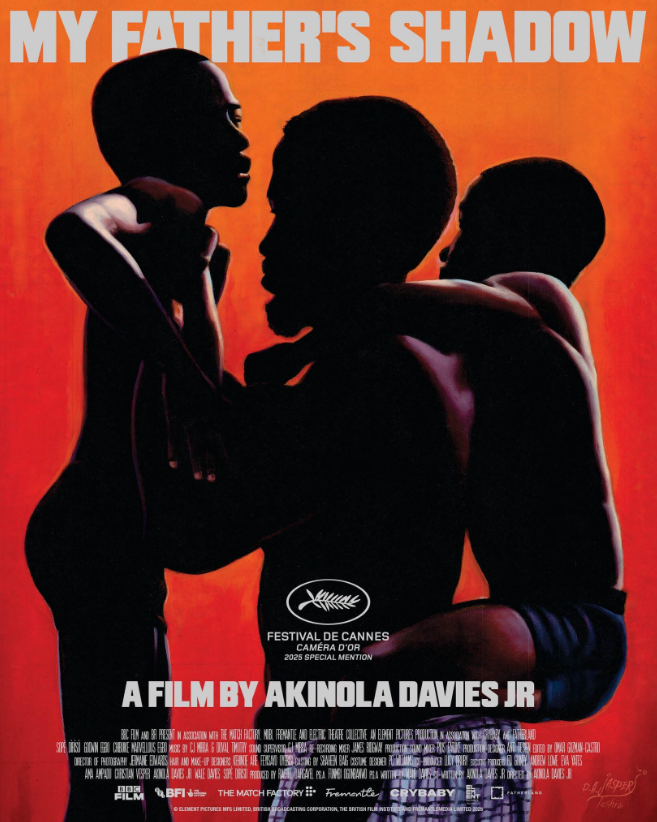
19. “My Father’s Shadow” (UK/Nigeria/Ireland)
Screened at the 61st Chicago International Film Festival
Fathers and sons often have complicated relationships. In many instances, boys often don’t know their dads as well as they would like (or at all), leaving them with many unanswered questions about these individuals whom they dutifully but frequently inexplicably call “parent.” So it’s entirely understandable how the curious would jump at the chance to get to know their fathers better when such opportunities present themselves. So it is for two young boys, Aki (Godwin Egbo) and Remi (Chibuike Marvellous Egbo), who are invited to join their father, Folarin (aka Kapo) (Sope Dirisu), on a day trip from their remote village to Lagos, Nigeria’s largest city, where their dad works. As a diligent head of the household, he often spends months at a time in Lagos without seeing his sons or their mother, Bola (Efon Wini), a noble but significant practice that leaves a sizable gap in the character of the family’s home life. Because of Folarin’s many extended absences, his sons know little about him other than his apparently profound love for them and his unwavering commitment to supporting them and his wife. But there’s more to this lack of awareness than just his physical absence; Folarin is, by his nature, a man of mystery in many ways, and Aki and Remi know virtually nothing about this aspect of their father’s life. This includes his past in Lagos, his courtship and relationship with Bola, and, perhaps most notably, his somewhat outspoken political outlook, a critical element of his background in light of the story’s backdrop, the highly controversial 1993 national election and its troubling aftermath. Over the course of their journey, Folarin gradually reveals himself to his sons, telling them stories about, and showing them the haunts of, his past, gestures that provide windows into his character. They also provide opportunities for imparting insightful life lessons, many of which offer a profound look into Folarin’s previously undisclosed self, the kinds of moments that usually leave lasting and meaningful impressions. Any son who has ever had a relationship with his father akin to the one portrayed here will undoubtedly find this a touching and comforting story, one sure to tug at the heartstrings and possibly bring a tear or two to one’s eye (so keep the hankies handy). This Cannes Film Festival and BAFTA Award nominee also provides an enlightening, eye-opening lesson into a key event in the history of Nigeria’s post-colonial era, one that’s relayed clearly and pointedly but without becoming unduly belabored, depicting a time in the country’s past that many Westerners likely know little about. But, perhaps most importantly, this is a moving tale (said to be semi-autobiographical of writer-director Akinola Davies Jr. in his feature film debut) that’s certainly affecting on multiple levels, thanks in large part to the picture’s fine script and excellent performances of its three principals, including the two young newcomers. “My Father’s Shadow” is clearly one of the most pleasant surprises to emerge out of the 2025 Chicago Film Festival, one well worth the time to watch, savor and enjoy.
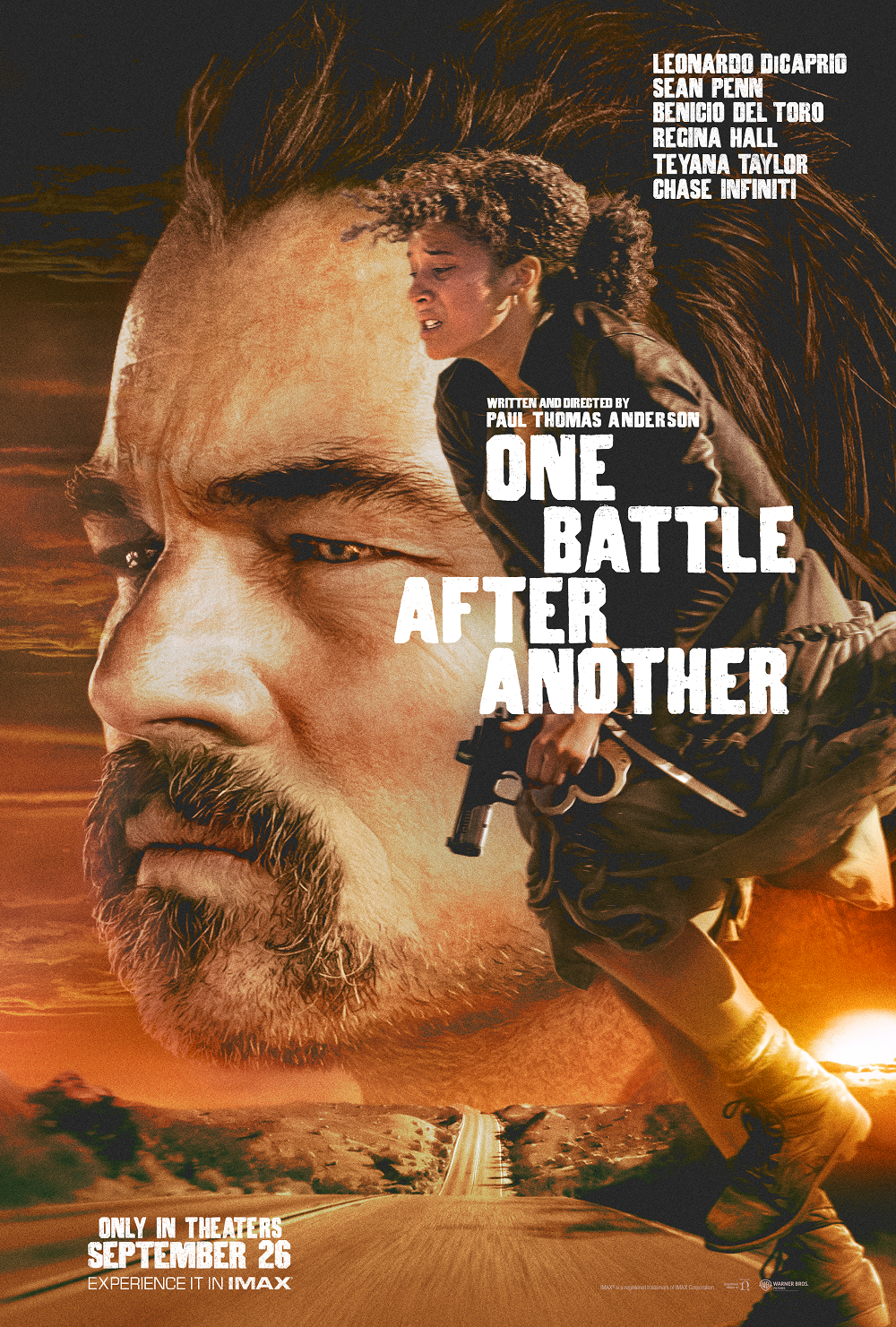
20. “One Battle After Another” (USA)
No matter how much we like to think that life’s bigger concerns have the greatest influence in dictating our actions, it’s nevertheless curious to see how the issues that affect us most personally – those seemingly “smaller” considerations – ultimately hold the most sway over our behavior. That becomes apparent in this latest offering from writer-director Paul Thomas Anderson, based on the 1990 novel Vineland by author Thomas Pynchon. In a quasi-dystopian version of America, a battle for control of the nation’s cultural and sociopolitical direction simmers between leftist vigilante rebels known as the French 75 and conservative authoritarian figures supported by the military and quietly backed by a moneyed class of ultra-right wing White supremacists known as the Christmas Adventurers. But, despite the magnitude accorded to this struggle, in the end, events in the personal lives of the combatants’ individual operatives have more impact in steering their actions. Set over the course of nearly two decades, the story follows the interracial relationship of French 75 members Perfidia Beverly Hills (Tayana Taylor) and Pat “Rocketman” Calhoun (Leonardo DiCaprio) as they carry out various missions reminiscent of 1960s radicals. The duo is in love (sort of), but, in the wake of one of their raids on an immigration detention camp, Perfidia meets and unexpectedly takes a shine to her opponent, Colonel Steven Lockjaw (Sean Penn), an encounter that leads to a tryst and unplanned pregnancy, all without Rocketman’s knowledge. Not long after Perfidia’s daughter is born, however, she leaves her partner to pursue her own rebel agenda, saddling Rocketman with the care of a daughter that he thinks is his. But, when Perfidia is captured by authorities, she rats out her colleagues (including Rocketman) in exchange for a spot in the witness protection program, forcing her former partner and his daughter into hiding. Skip ahead 16 years to a time when Lockjaw has an opportunity to move up in the Christmas Adventurers organization, provided he passes Caucasian purity scrutiny, a tricky proposition as the potential father of a mixed-race child. To cover his tracks on this possible “liability,” he must track down the missing child, now a teenager (Chase Infiniti), who has spent the ensuing years with her presumed dad, both of whom have assumed aliases while in hiding. And, when word of this gets back to them, they’re forced to go on the run to avoid capture (or worse). That’s easier said than done, though, given that Rocketman has developed substance abuse issues that have taken their toll on him. Fortunately, however, he’s aided by a cool, composed street smart sensei master (Benicio Del Toro) who confidently manages the affairs of the immigrant residents of a sanctuary city, having become adept at helping others stay ahead of officials. And so, despite the broader conflict going on around these characters, their priorities are almost exclusively personal as they seek to tend to their respective agendas. But can they? Thus begins a kickass thrill ride as all concerned seek to protect themselves at all costs, a story filled with great action sequences, riveting chase scenes, and mesmerizing twists and turns, with a good measure of comic relief thrown in to make it interesting. Admittedly, there are times (especially early on in the film) when the connections between the various story threads aren’t made as clear as they might have been, and Del Toro’s character and storyline feel somewhat underdeveloped. But those issues are more than compensated for by the picture’s other strengths, as well as an outstanding performance by Penn in a role in which he expertly plays against type. The film, which has a vibe somewhat reminiscent of another 2025 thriller, “Eddington” (see above), is surprisingly well paced for a movie with a 2:41:00 runtime, a noteworthy accomplishment, to be sure. And, like “Eddington,” this offering has drawn its share of mixed reactions from viewers and critics, probably for some of the same cultural and sociopolitical reasons as those associated with that other offering. However, “One Battle After Another” is truly worth the time, another fine release from a gifted filmmaker, and that’s apparent in its awards season success with 13 Oscar nominations (including best picture), 14 nominations each from the BAFTA and Critics Choice Award contests, 13 Windie Award nominations (including three wins), nine Golden Globe nods (including four wins), seven Actors Award honors and five National Board of Review accolades. Look for this one to come up another big winner by the end of awards season.
Noteworthy

“All Shall Be Well” (“Cong jin yihou”) (Hong Kong/China)
They say that “blood is thicker than water,” an observation that can manifest in many ways. This often becomes most apparent during times of crisis, such as when a death occurs or an inheritance is involved (money being on the line frequently speaks volumes). So it is in the fourth feature outing from writer-director Ray Yeung, which tells the touching story of long-tenured same-sex couple Angie (Patra Au) and Pat (Maggie Li Lin Lin), a duo very much in love. They’ve lived in the same Hong Kong apartment for 30 years and, over that time, have enjoyed reasonably good relations with their relatives, most notably Pat’s extended family. However, when Pat unexpectedly dies, matters become complicated, particularly when it comes to recognizing Angie’s status and her relationship to her late partner. That includes such issues as deciding on the handling of Pat’s remains, as well as the final dispensation of her considerable assets, including those she jointly held with her beloved Angie. Relations suddenly become strained, if not downright ugly, with a woman they’ve long seemed to accept as a member of the family. This is especially apparent when Pat’s relations try to grab all they can in an effort to solve the many fiscal problems that they’ve brought upon themselves. As all of this plays out, viewers thus witness the stark contrast that exists between the loving bond that the couple forged for one another and what Pat’s relatives have created for themselves in their largely failed attempts at making a supposedly healthy and inclusive extended family, a comparison deftly and sensitively yet candidly presented by the filmmaker. While this story may not be especially original, its pacing can be a tad slow and its overall handling may at times be a little too deliberate, this picture nevertheless packs quite a powerful emotional punch, superbly depicted in the stellar performances of the excellent ensemble cast, backed by beautiful cinematography and a subdued atmospheric background score. “All Shall Be Well” is, without a doubt, one of 2025’s underrated releases, a film that will both move and incense audiences, particularly when it comes to distinguishing what’s legally permissible and what’s ethically proper, especially in matters of love and what constitutes “family.”

“The Ballad of Wallis Island” (UK)
Recapturing the past may be an enticing, seductive prospect, especially when it involves revisiting pleasant memories of days gone by. But is it realistically achievable or just wishful thinking? That’s a question posed on multiple levels in the second theatrical feature from director James Griffiths. When Charles Heath (Tim Key), a wealthy, eccentric but lonely lottery winner living by himself on a remote North Atlantic island, furtively finances a command performance of his favorite now-disbanded folk rock duo – artistic and onetime-romantic partners Herb McGwyer (Tom Basden) and Nell Mortimer (Carey Mulligan) – he hopes to relive fond memories of their once-popular musical style and recollections of the days he shared them with the love of his life. There’s just one hitch – Charles conceals more than a few important details about the true nature of his plan, revelations that take the long-estranged musical duo somewhat by surprise. But, as their reunion on the island unfolds, old memories are rekindled, prompting Herb and Nell to question the choices they’ve made and whether they want to take another shot at what they once had, both artistically and personally. As a result, Charles becomes something of an impromptu, unwitting matchmaker living vicariously through his guests’ experience, enveloped in a cloak of his own bittersweet nostalgia. But, considering how the lives of all three characters have changed, can the past be brought back to life, especially now that Nell is married to an adoring husband (Akemnji Ndifornyen), Herb has moved on to new (albeit questionable) types of musical projects and Charles swoons (albeit bashfully) for the owner of the island’s general store (Sian Clifford)? Indeed, memories may prove to be heartwarming to relive, but can they be effectively and authentically re-created? Those are the scenarios that play out in this warm, touching alternative romcom, one that sports a quirky vibe not unlike that found in the charming comedy classic “Local Hero” (1983) mixed with the romantic reunion storyline of “A Mighty Wind” (2003). These elements are effectively enhanced by the natural, unassuming performances of the three principals, the fine original songs composed for the film and gorgeous cinematography of the craggy, windswept Welsh island location. It’s rare these days that a romantic comedy provides viewers with anything more than prototypical heartstring-tugging emotions a la Hallmark Channel productions, but this BAFTA and Critics Choice Award nominee serves up more, giving audiences a lot to ponder beyond whether the often-predictable outcomes often associated with releases in this genre will ultimately materialize. This is a great, if not entirely standard, date movie, one that’s sure to leave viewers with their own share of fond memories, even if they aren’t necessarily the kind one might expect.
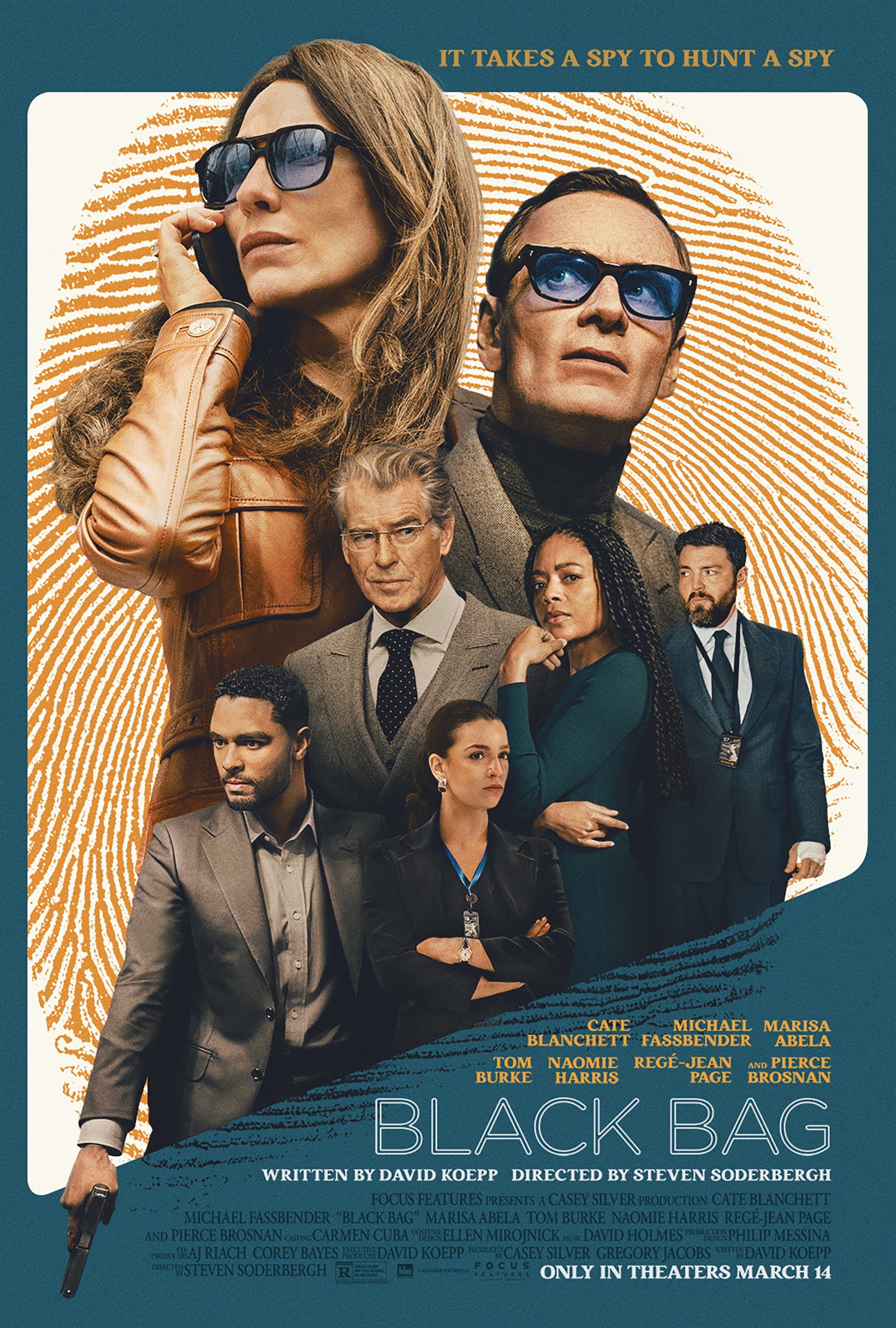
“Black Bag” (USA)
Putting the “cool” into a big screen offering – and actually having it turn out to be cool – is often easier said than done. Attempts at accomplishing this feat in many instances turn out to be hokey, trite or mishandled, so it’s gratifying to see a filmmaker pull it off successfully. Such is the case in the latest work from director Steven Soderbergh and screenwriter David Koepp, an expertly structured, superbly executed spy thriller masterfully laced with suspense, wit, charm, class and a dash of deftly placed camp. This savvy, top-shelf story follows a group of high-ranking British intelligence officers caught up in a web of international intrigue in which carefully calculated financial, political, military and technological misdirections are at work at seemingly every turn. On top of that, this cadre of colleagues is made up of diverse individuals who are allegedly good friends and/or romantic partners, though such loyalties and confidences become expendable and are conveniently swept under the rug as “black bag” considerations when they get in the way of agency operations (or, in some cases, personal agendas). To complicate matters further, it’s not always clear which puppet masters are purportedly pulling whose strings (or why), leading to a constant shuffling of the deck of priorities and the overall clarity of their missions. And, in making all of this clandestine subterfuge work, there’s the aforementioned cool factor that causes everything to seem so inherently logical, plausible, and, above all, entertaining. Think of this as a modern-day version of “The Ipcress File” (1965) (which is said to have inspired this release), combined with elements of “An Acceptable Loss” (2018), and you’ve got a good idea of what this one is all about. Of course, none of this would have been possible without the film’s generally crisp, on-point script and the fine performances turned in by its excellent Windie Award-nominated ensemble, including Cate Blanchett, Naomie Harris, Pierce Brosnan, Regé-Jean Page, Tom Burke, Marisa Abela and Michael Fassbender (in a surprisingly effective role for once, a nuanced, understated portrayal in which he’s not constantly mugging for the camera, enabling him to come across like a latter-day young Michael Caine). This production’s creators have skillfully packed a lot of punch into the picture’s economic 1:33:00 runtime, so there’s virtually no wasted footage or extraneous material bogging down the narrative of this tale, which becomes ever-more compelling the further it plays out (though, admittedly, some of the dialogue early on in the film feels a tad cryptic and overwritten, a quality that, thankfully, dissipates quickly). “Black Bag” is a fine collaboration for the creative duo of Soderbergh and Koepp, making it clear that it’s indeed cool to be cool, and this film shows us how that’s done, a fine example that many a filmmaker could learn a lot from.
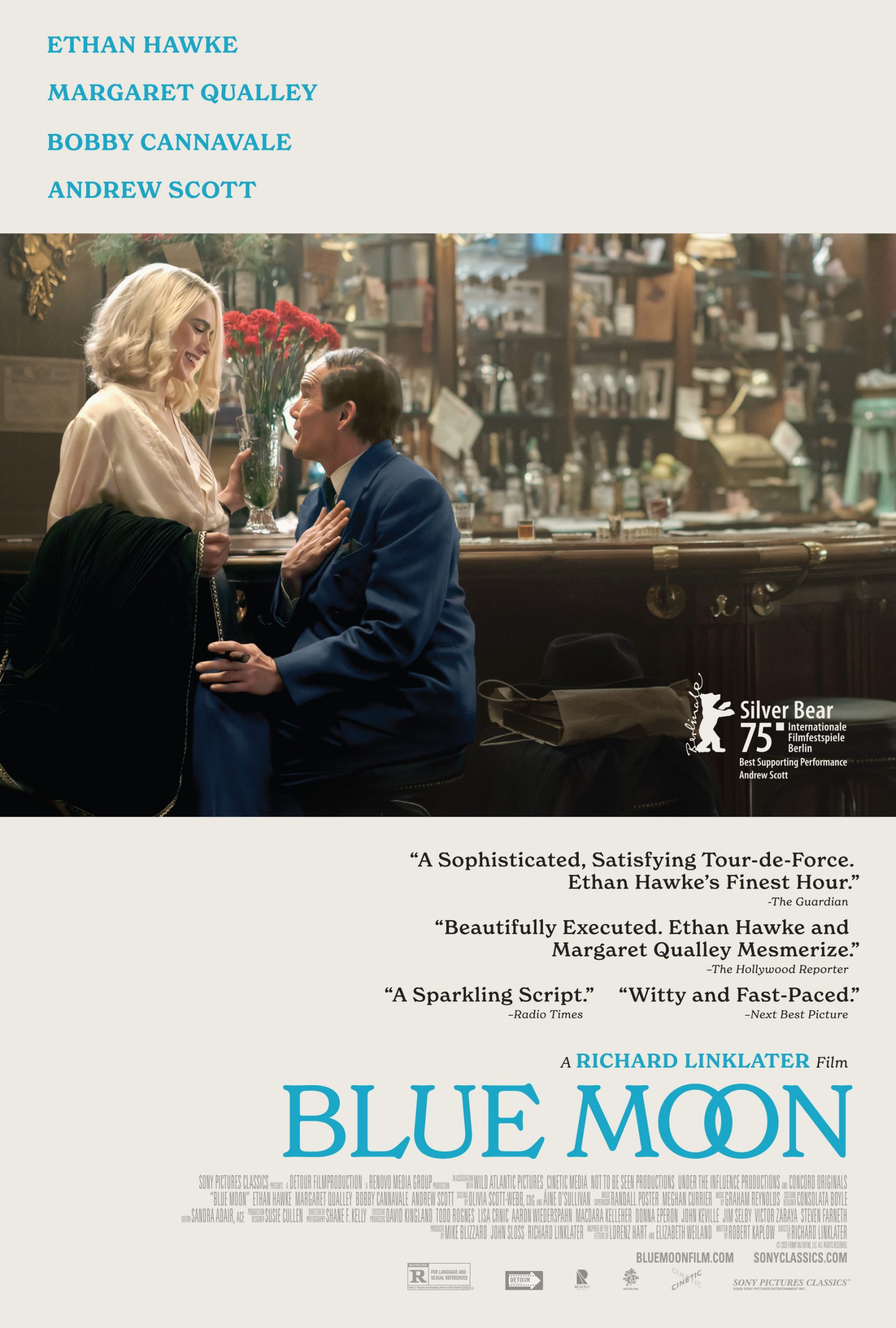
“Blue Moon” (USA/Ireland)
Lyricist Lorenz “Larry” Hart (1895-1943) may not be a household name to many, but his voluminous catalog of works written with composer Richard Rodgers (1902-1979) – a bona fide compendium of American musical standards – reads like a laundry list of this country’s most beloved favorites, including “The Lady is a Tramp,” “Bewitched, Bothered and Bewildered,” “My Funny Valentine,” “Isn’t It Romantic?” and, of course, the pair’s biggest sensation, “Blue Moon.” But, for all of Hart’s artistic successes, he led a turbulent professional life and a lonely, largely unhappy personal life, perhaps best exemplified by the events of March 31, 1943: opening night of the musical Oklahoma!, the smash hit collaboration of Rodgers and his new lyricist partner, Oscar Hammerstein II (1895-1960). Rodgers teamed up with his new colleague after Hart, a hopeless alcoholic, became too unreliable to work with. This change represented a devastating blow to the prolific lyricist, especially when the new duo’s musical was showered with rave reviews, the revelation of which Hart witnessed firsthand at the opening night party for the show, held at New York’s legendary Sardi’s restaurant. The foregoing events thus provide the foundation for director Richard Linklater’s latest offering, a re-creation of that evening’s tension-filled festivities in which a hapless and sometimes-hysterical Hart (Ethan Hawke) is buried under a pile of deflating professional disappointments, including emotionally intense exchanges with Rodgers (Andrew Scott) and a genial but largely unsuspecting Hammerstein (Simon Delaney). But, if that weren’t enough, Hart suffers personal setbacks, too, particularly in his efforts to win the affections of 20-year-old Yale co-ed Elizabeth Weiland (Margaret Qualley), a platonic friend whom the 47-year-old would-be suitor hopes will accept his sincere (albeit overzealous) romantic advances. (According to the film’s production notes, it’s not clear if Larry and Elizabeth actually met at this event, but the Oscar-nominated screenplay postulates what might have transpired if they had. And, even if they did, wooing her would have probably been a tall order for a “bachelor” widely believed to be closeted gay man, one of New York society’s biggest open secrets.) Through all of these ordeals, Hart struggles mightily to maintain his composure with an endless stream of shots, all the while pouring out his feelings to his friend and Sardi’s bartender Eddie (Bobby Cannavale), author and fellow restaurant patron E.B. “Andy” White (Patrick Kennedy), and barroom pianist Morty Rifkin (Jonah Lees). In telling this multilayered story, the dialogues among this cast of colorful cohorts cover a wide range of subjects and are tinged with an array of moods from bawdy to heartfelt to hilarious to cringeworthy, a true rollercoaster ride of emotions. However, what really brings this material to life is the depth of feeling exhibited by the gifted ensemble, especially Hawke, who handily delivers the best performance of his career, earning the actor Oscar, Golden Globe, BAFTA, Critics Choice, Windie and Actors Award nominations, as well as fine turns by Qualley, Cannavale and Scott. And, even though the film is essentially shot on one set, the exquisite production design, with its re-creation of the legendary New York nightspot, keeps the picture fresh without ever appearing the least bit stagey. Of course, a movie about a musician wouldn’t be complete without a fitting score, as is the case here with its excellent repertoire of works featuring the likes of Jerome Kern, George Gershwin, Irving Berlin, and, naturally, Rodgers & Hart. Admittedly, as the film plays out, some might see the narrative as somewhat repetitive and perhaps even exhausting to watch, contentions that arguably have some merit. Some have also criticized some of the picture’s open exchanges about homosexuality, something that likely wouldn’t have occurred in 1943, a time when same-sex acts were still criminal offenses that most closeted individuals wouldn’t have dared to bring up in public. Nevertheless, “Blue Moon” is otherwise an absorbing tale, a tragedy in the truest sense of the word set against a prototypically American backdrop. It’s truly sad that someone who gave us so much also had to endure so much pain, even if some of it was self-inflicted. Indeed, under circumstances like these, then, it should come as no surprise that the moon in a setting as sad as this would be any color other than blue.
“Can I Get a Witness?” (Canada)
Screened at the 2025 Gene Siskel Film Center Asian American Showcase
Successfully vanquishing global ills like environmental degradation, economic inequality, insufficient health care and armed conflict in order to purposely create an earthly paradise is undeniably an ambitious and virtuous goal. And, thanks to the adoption of the principles outlined in the Universal Constitution of Human Rights and Responsibilities, the world of the near future has managed to make this dream a reality. Humanity’s deliberate abandonment of its suffocatingly toxic ways and their devastating impact on the planet has enabled the establishment of an existence based on fairness, equality, sustainability and the guaranteed fulfillment of basic needs. But there’s a trade-off for this new way of life – individuals must willingly agree to live only to age 50, at which time they undergo an EoL (End of Life) ceremony of their choosing. It’s a rite of passage that evokes mixed reactions: many might seem reconciled to it outwardly, but is that how they truly feel about it on the inside? Indeed, is turning in one’s life while still in its prime an acceptably conscionable practice? On top of this, to ensure compliance with this universally sanctioned policy, authorities have established official protocols for transitioning individuals to follow, including agreeing to the presence of designated EoL witnesses to artistically document their passage, a type of work similar to that of courtroom sketch artists. But is the establishment of such a seemingly utopian reality ultimately worth it given the cost involved? One might argue that social dogma like the kind depicted here is simply too high a price to pay for what amounts to a truncated life in exchange for a few years of idyllic bliss. As a result, competing themes related to social stewardship and personal sovereignty come into discreet conflict. These notions are primarily explored through the experiences of a talented and sensitive apprentice EoL documenter, Kiah (Keira Jang), who’s learning the ropes of her job while wrestling with her feelings about it under the mentorship of her witnessing partner, Daniel (Joel Oulette), a consummate, albeit detached practitioner who goes about his tasks with perfunctory efficiency, never questioning the validity of this policy or his suitability for his calling. Kiah soon finds herself questioning the nature of the EoL protocol, both in principle and personally, given that her mother, Ellie (Sandra Oh), a onetime EoL witness herself, is approaching her own 50th birthday. Under conditions like these, will convention prevail? Writer-director Ann Marie Fleming’s insightful, intriguing offering gives viewers much to contemplate from both sides of a loaded coin minted from decidedly conflicting viewpoints, some of which arguably could be seen as heretical in the face of outlooks typically looked upon as unquestionably noble and incontestably honorable. But are they really? Indeed, for example, would most 49-year-old idealists honestly live up to the personal magnanimity they profess to embrace when confronted with circumstances like these? The film examines these themes through a captivating, deftly nuanced narrative that explores its subjects from a variety of angles, clothed in a stunningly gorgeous, skillfully blended palette of vibrant cinematography and inventive complementary animation. And this package is topped off with a fine ensemble headlined by yet another stellar performance from Sandra Oh. Admittedly, a few sequences are a little stretched out, and some viewers might find the ending a tad abrupt. But, considering everything this release has to say – particularly in its willingness to quietly but courageously raise issues that are seldom discussed on screen – “Can I Get a Witness?” thoughtfully covers ample ground rarely seen, matters that we might all have to face on multiple fronts one way or another someday.

“Damned Old People” (“Viejos Malditos”) (Ecuador/Argentina)
Screened at the 41st Annual Chicago Latino Film Festival
To most of us, an inconsolable loss is something from which recovery may often be next to impossible. The pain and anguish can be unbearable, especially when they’re piled on top of existing challenges and a legacy of disappointments. The elderly are particularly susceptible to these effects, as is the case with eighty-something widower Elias (Jaime Bonelli), who struggles to find a reason to carry on after the death of his wife. With his health failing, his finances in a freefall, his home in a shambles and his outlook on life being one of perpetual anger, the cantankerous senior reaches his last straw when he’s beset by the constant overnight howling of the neighborhood’s combative cats. Much to his surprise, though, one of the belligerent felines, a stubbornly affectionate tomcat, takes an undeniable liking to Elias, despite his longstanding and widely known contempt for pets of all kinds. However, given the animal’s loving persistence, he crawls his way into Elias’s heart. They become best buddies, providing the old man – who names his adopted new friend Simon – with a renewed outlook on life. Elias resumes taking care of himself, his house and his money matters, not to mention the well-being of his four-legged pal. (Think of this as like a latter-day “Harry and Tonto” (1974).) But, for various reasons, not everyone is agreeable with the changes in the old man’s ways, including his son (Danilo Esteves) and next-door neighbor (Poén Alarcón), circumstances fraught with consequences that can bring out the worst in those “damned old people.” This impressive debut feature from writer-director Xavier Chávez is a flat-out winner across the board, one that skillfully combines moving drama, ample heart tugs, dark comedy and macabre, chilling suspense with a seamlessly blended concoction of twists and turns sure to send one on a rollercoaster ride of emotions right up to the final shot. The gripping, heartfelt performance of Bonelli in his final film role will touch viewers in many ways, likely prompting frequent grabs for the hanky (so keep it handy). And then there’s dear Simon, who’s sure to work his magic on audiences as easily as he does with Elias. Admittedly, the opening act drags slightly in spots, but that’s more than made up for by what follows, a thoroughly engaging film that otherwise succeeds in virtually every way imaginable.
Screened at the 43rd Reeling Chicago International LGBTQ+ Film Festival
Road trip/buddy movies are one of my favorite film genres, primarily because of the myriad possibilities they afford for pairing up unlikely traveling companions journeying together under diverse, unexpected and often-outlandish conditions. And, when filmmakers figure out how to make the most out of these scenarios, their finished products are often entertaining, enlightening, and, above all, engaging. That’s very much the case with writer-director Michael Clowater’s debut feature, an insightful, sensitive, funny and touching story of two very different brothers on an unanticipated road trip through Eastern Canada. In this fact-based story set in 1970, Weldon (Charlie Creed-Miles), a cantankerous, blue collar plumber from small town New Brunswick, learns that his long-estranged gay brother, Perley (Alan Cumming), has been arrested on a morals charge for public indecency in Toronto. Authorities offer Weldon an opportunity to bail out his sibling, with all charges dropped, as long as he agrees to retrieve him and return him to his rustic, far-removed hometown, essentially taking him off the hands of the local police. However, the alternative, if Weldon declines the offer, is a five-year jail sentence for Perley, an outcome he has difficulty justifying, especially when his spry, elderly mother (Clare Coulter) assertively shames him into rescuing her baby, a request driven by her desire to make amends for regrettable considerations tied to the family’s past. Despite his obvious discomfort with the nature of this venture, not to mention the many inherent inconveniences involved in this 1,000-mile road trip in an old, unreliable pickup truck, Weldon relents and makes the drive to the big city to collect his brother. And, after a somewhat adversarial reunion, they set out on the return trip to their collective roots, a prospect Perley doesn’t particularly relish for a variety of reasons. Their challenge-filled journey is subsequently filled with an array of ups and downs, laughs and arguments, and more than a few recollections and revelations, developments that test the relationship of the two mismatched siblings. But, these conditions aside, the result is a tender, redemptive yet sometimes-trying reconciliation as they make their way back to New Brunswick and a very uncertain future. While a few of the sequences are a tad stretched out, they nearly always achieve their intended objectives, providing viewers with an involving, delightfully whimsical but sometimes-dark tale that’s sure to please, tug at the heartstrings, and shine a bright light on their respective issues, failings and awakenings. This is made possible to a great extent by the outstanding performances and character development of the two leads, whose deftly developed chemistry feels completely natural and never forced. But, perhaps most importantly, as with most successful road trip films, “Drive Back Home” effectively shows how disparate personalities can grow and evolve over time through an eventful shared experience, even among those who start out with differing, even antagonistic, outlooks on one other’s lives and circumstances. This release is easily one of the best offerings to come out of 2025’s Reeling Film Festival, a movie undeniably worth one’s time.
“Eric LaRue” (USA)
When a terrible domestic tragedy strikes a seemingly “normal” family, how do its members pick up the pieces and carry on? How are they to resolve their grief while dealing with the bitter backlash of others, some of whom have no connection to the incident in question? And is there responsibility or blame to be leveled against one or more of the individuals at the center of this calamity? Those are among the questions raised in this intense directorial debut from actor Michael Shannon, the story of a household torn apart when troubled teenage son Eric (Nation Sage Henrikson) shoots and kills three classmates at school one day in what appears to be a cold, unanticipated, matter-of-fact fashion. The incident leaves his parents, Janice (Judy Greer) and Ron (Alexander Skarsgård), to sort out matters and attempt to carry on with their lives. That’s easier said than done, however, given their respective responses to the event, reactions that affect their relationship, their work lives and their participation in proposed interventions by their pastors, Janice’s genial but largely inept Presbyterian minister (Paul Sparks) and Ron’s dubious fundamentalist preacher (Tracy Letts). While Janice struggles to find clarity in a sea of confusion, Ron believes everything can be made better by simply handing off his troubles to Jesus in what amounts to little more than an act of denial and an abrogation of his willingness to address what happened, an attitude politely but intrusively encouraged by his fellow parishioner and co-worker, Lisa (Allison Pill), whose interest in Ron’s “well-being” apparently extends beyond his spiritual healing. Then there are the differing reactions (or lack thereof) of the victims’ mothers (Jennifer Engstrom, Annie Parisse, Kate Arrington), who exhibit a range of emotions and behaviors that complicate matters even further. And, in the meantime, Eric sits alone in prison, receiving visits from no one, including his own parents. The gripping presentation of this story has an edge-of-the-seat quality that one might not typically find in a story like this, especially since resolution of the issues presented here always seems out of reach. But therein lies the captivating nature of this story, as it keeps viewers continually guessing what will happen next, especially when it turns in unexpected directions. In doing so, the film once again raises questions about the reasons and means behind teen violence, observations not unlike those brought up previously in such offerings as “Mass” (2021) and “We Need to Talk About Kevin” (2011). And, because of that, this can indeed make for an uneasy watch for sensitive viewers. Nevertheless, those who can handle such a degree of intensity are bound to be thoroughly impressed with this picture, most notably its fine ensemble, particularly Greer, Skarsgård and Pill, who deliver performances that reveal acting chops not seen before. “Eric LaRue” is also one of the finest stage-to-screen adaptations I’ve ever seen, successfully sustaining its pacing and narrative flow, never coming across as the least bit stagey, a true credit to screenwriter Brett Neveu in adapting his own play. To a great extent, this is made possible by the script’s deft inclusion of comic relief, effectively incorporated just when it’s needed most and held back when the dramatics need to take over for maximum impact. This 2023 production has admittedly been long time in coming to the big screen, but the wait was definitely worth it. Shannon has made an impressive debut with this offering, and I look forward to whatever directorial projects he comes up with next.
“Familiar Touch” (USA)
Age-related memory loss can be a harrowing, debilitating experience not only for the individuals suffering from it, but also for their families, friends and associates. And, in this superb release, such is the fate faced by 88-year-old Ruth Goldman (expertly portrayed by Independent Spirit Award nominee Kathleen Chalfant), a remarkably spry, intelligent, creative and physically active woman who appears to be on top of things except when it comes to her fading memory. She has moments when she seems perfectly lucid, as well as a reasonably good grasp of her long-term recall, but her short-term recollection has been failing fast, reaching the point where she doesn’t even recognize her son Steve (H. Jon Benjamin) as her own child. These faltering conditions have thus necessitated a change: Since she’s increasingly incapable of taking proper care of herself at home, Ruth is being relocated to a long-term care facility for the memory-impaired. It’s a transition that takes her by surprise despite the fact that she and Steve had toured the home previously and decided that this is where she should go when she’s no longer fit to attend to her own needs. Writer-director Sarah Friedland’s second feature outing thus proceeds to follow Ruth’s experiences in her new residence, including her diverse interactions with her primary caregiver, Vanessa (Carolyn Michelle), her resident physician, Brian (Andy McQueen), the jovial and accommodating dining room chef (Mike G.), and other facility residents, such as the perky and vivacious Pearl (Joahn Webb). This deftly crafted character study, a nominee for the Independent Spirit John Cassavetes Award, examines the various states of mind that the memory-impaired can go through, as well as the array of reactions that they experience in coming to terms with their circumstances. In telling Ruth’s story, the filmmaker expertly shows, rather than tells, viewers what the protagonist is undergoing, driving home the impact of what this heartbreaking condition can yield. At the same time, though, the picture also celebrates all of the little victories that can occur in the course of caring for a patient like Ruth. In addition, the film pays a fitting tribute to the exceptional caregivers who work tirelessly with the afflicted, especially when it comes to the patience and sensitivity that they’re expected to exhibit in their daily care routines. This offering also shows the tremendous levels of compassion and understanding associated with this kind of work, particularly when it comes to frankly but tactfully explaining how caregivers and their patients are each experiencing fundamentally different truths when it comes to the nature of their respective realities, a calling that requires being honest and forthright while simultaneously exhibiting a degree of mutual respect, tolerance and acceptance that many of us may find challenging to willingly extend. While this release admittedly begins to slow somewhat as it progresses, it generally holds audience interest well without becoming schmaltzy, manipulative or predictable, quite a feat in a story like this, which could easily fall prey to these traits if left in lesser-skilled hands. For its efforts, “Familiar Touch” has been generously rewarded with numerous award nominations and wins at various film festivals, as well as the 2025 Independent Spirit Awards’ Someone To Watch Award for the director. As the population continues to grow old and more of us (especially children of the aged) are left to address scenarios like this, this production presents an excellent look at what those affected might be up against, making for an engaging and informative watch, one that could provide insights that make a difference when the time comes to make the hard decisions of how to care for those who are no longer able to care for themselves.
“It Was Just an Accident” (“Yek tasadef sadeh”) (Iran/France/Luxembourg/USA)
The desire for vengeance is indisputably a toxic force, one that can lead us to engage in unspeakable acts whose despicable nature is often on par with the wrongs committed against us. Consequently, we can’t help but ask ourselves if this is an acceptable, justifiable course. What’s more, no matter how much we may wish to seek retribution, are we truly capable of following through on such acts, especially if we can genuinely appreciate the harm those heinous deeds may have had on us? Those are the thorny questions raised in this latest offering from acclaimed Iranian writer-director Jafar Panahi, showing us how a simple mishap can spiral out of control, creating a chain reaction of problems that grows progressively difficult to contain. What begins as a minor traffic accident involving Eghbal (Ebrahim Azizi), a young husband and father, quickly snowballs into a progressively dangerous, intricately complicated scenario in which he’s unexpectedly spotted by Vahid (Vahid Mobasseri), a onetime-persecuted Azerbaijani dissident who believes that Eghbal is the Iranian government intelligence officer responsible for having tortured him while in captivity. But is he? Vahid is uncertain, but he nevertheless avails himself of the opportunity to kidnap the suspected culprit, threatening to bury Eghbal alive to get his revenge. However, as Vahid zealously digs Eghbal’s grave, he pleads with the kidnapper that he has the wrong man. Given his nagging uncertainty, Vahid gives his victim a reprieve, holding him hostage while trying to definitively prove his identity. This sets off a series of both perilous and surprisingly comical incidents involving other former radicals (Mariam Afshari, Hadis Pakbatan, Mohamad Ali Elyasmehr), all of whom struggle to determine whether the suspect is who Vahid contends. And, as this increasingly madcap situation plays out, additional complications arise that prompt Vahid and his peers to question if they can carry out this dubious venture. Having been on the receiving end of monstrous state-sponsored treatment allegedly at the hands of their captive, they wonder whether they can impose the same kinds of atrocities on him that had been thrust upon them. Their compassion and humanity gradually rise to the surface, increasing their hesitancy. Then they also wonder what would happen to them if Eghbal’s claims of innocence prove correct? The filmmaker skillfully wrestles with both sides of these questions and does so in ways that successfully combine gut-wrenching drama, chilling moments of terror, and inspired, masterfully implemented episodes of comic relief. These strengths aside, however, the narrative occasionally gets bogged down in overly talky sequences (especially in the overlong closing act), but, given Panahi’s long personal history of censorship, harassment and arrest by Iranian authorities, this is understandable. In fact, given the courageous but controversial views expressed herein, in some ways, I find it hard to fathom how this film got made in the first place. Nevertheless, for his efforts, the filmmaker has been deservedly rewarded with some prestigious accolades, including the Palme d’Or at the 2025 Cannes Film Festival, the event’s highest honor, as well as the National Board of Review Award for Best International Film. In addition, the picture has also captured two Oscar nominations, four nods each from the Golden Globe and Windie Award competitions, and best international film nominations in the BAFTA and Critics Choice contests. Ironically, much of what has transpired in Iran over the past 75 years feels akin to the metaphor driving this story, an ongoing series of unfortunate events in which the stakes are continually upped with each passing incident. Yet, those similarities aside, as fitting as the film’s themes and title might thus seem, chalking up everyday real world matters to being “just an accident” comes up distressingly short in describing what has actually gone on in Iran. Perhaps it takes an ironic and uncomfortably distressing fable like this to help us see what can happen when we let our impulses get the better of us – and to realize that some things we might attribute to mere accidents are, in the end, nothing of the kind.

“Lilly” (USA)
Profiles of powerful, determined, dynamic women faced with long odds courageously staring down formidable opposition provide some of the most engaging and inspirational viewing one can witness on the big screen. And one of the latest additions to that roster is writer-director Rachel Feldman’s fact-based biography of unlikely but dedicated activist Lilly Ledbetter (Patricia Clarkson). The film chronicles the patient but relentless fight of the title character, a former manager at a Goodyear plant in Gadsden, AL, to secure equal pay for women earning far less than their male counterparts. After 19 years on the job and a stellar performance record, Ledbetter was demoted and then removed from her job, essentially for being a “troublemaker” who filed too many reports of unfair treatment against women and dared complain when she learned that she was being paid far less than the men at her plant. She took her claim to court, where she initially won her case but was later turned down on appeal as a result of a legal loophole in the law that was supposedly designed to guarantee equal pay. This controversial 5-4 Supreme Court ruling against the plaintiff nevertheless prompted the indignation of Justice Ruth Bader Ginsburg, author of the dissenting opinion, which garnered ample public attention and led to a legislative initiative to amend the law to eliminate the loophole, an effort in which Ledbetter and Ginsburg played crucial roles and captured the support of 2008 Democratic presidential contenders Barack Obama and Hillary Clinton. While the narrative here is admittedly somewhat formulaic, its message is nonetheless a clear and simple one – that fair is fair, no matter what one’s gender might be and regardless of the rights involved. It calls to mind the moving stories of valiant women fighting for justice found in such predecessor works as “Norma Rae” (1979), “Hidden Figures” (2016) and “On the Basis of Sex” (2018). In conveying the spirit behind these notions, the film is undeniably impassioned in its intent but successfully avoids the trap of becoming unduly dogmatic, excessively preachy, punishingly self-righteous or blatantly partisan. The picture makes its point without resorting to male bashing, political party bullying or shrill corporate condemnation, again, staying steadily on point with its core fairness message. The filmmaker also does a fine job of explaining the circumstances of this case without being simplistic or condescending, skillfully relying on archival footage featuring interview clips of Ginsburg as she outlines Ledbetter’s story, a de facto running commentary that effectively helps to keep viewers informed about what’s transpiring in each of the picture’s segments, There are also touching elements to the film, depicting what Lilly went through personally during the course of her odyssey, especially coping with the health challenges of her ever-supportive husband (John Benjamin Hickey) and seeking to rectify a protracted estrangement from her son (Will Pullen). In addition, as Lilly’s story unfolds, viewers witness the many committed partnerships she developed with colleagues, including her primary attorney (Thomas Sadoski), one of the amended bill’s sponsors, Rep. George Miller (Ray Bengston), and members of the Washington-based National Women’s Law Center (Deirdre Lovejoy, Rhoda Griffis). “Lilly” is, without a doubt, one of 2025’s most underrated cinematic offerings, one deserving of wider recognition and a commensurate audience, but, thankfully, it is now available for streaming online. We can only hope that one day the need for movies like this will no longer be necessary, but, until then, fortunately we have pictures like this to help keep reminding us of the work that remains to be done – and to help keep moving the needle forward.
“Mickey 17” (USA/South Korea)
Some movies have a way of hitting things right on the head, either intentionally or by happy accident. And such is the case in both regards in the latest offering from Oscar-winning writer-director Bong Joon Ho, a hilariously insightful sociopolitical sci-fi satire that knocks it out of the park in more ways than one can count. In an age of casual throw-away culture, “Mickey 17” takes this idea to an entirely new level by following the dubious exploits of the title character (Robert Pattinson), who works as an “expendable,” a human charged with determining just how lethal various new technologies and environmental conditions are in an off-world colony of the future. The ironic, questionable term for this profession is derived from the fact that its practitioners are considered wholly disposable in every sense of the word but are fully capable of being regenerated in full thanks to a form of digital human printing, allowing subsequent iterations of these beings to be created as often as needed. However, life isn’t quite so “simple and straightforward” for the Mickey expendable when he gets caught up in a series of complicated developments involving an illegal double, the whims of the maniacal cultist colony leader (Mark Ruffalo) and his self-absorbed wife (Toni Collette), the scheming of an unreliable, self-serving childhood friend (Steven Yeun), a relentless loan shark (Ian Hanmore) from his days back on Earth, and an aspiring romantic interest (Anamaria Vartolomei) who tries to get between Mickey and his girlfriend (Naomi Ackie), a passionate but badass security officer. The narrative’s various story threads blend well together (even if a few of them are a little stretched out or aren’t developed as fully as they might have been), but they collectively tell a well-integrated tale that generally keeps viewers riveted throughout. This captivating yarn is superbly supported by the picture’s inventive visuals, expert editing. and stellar performances, most notably Ruffalo, Collette, Ackie and the first-ever portrayal by Pattinson that I’ve actually liked. What makes this offering especially and somewhat inadvertently effective, however, is the timing of its release, which was originally scheduled for 2024 but was delayed due to the SAG-AFTRA strike, a truly fortuitous blessing in disguise. Given current conditions in today’s turbulent sociopolitical climate, particularly the unpredictable leadership of one particular high-profile politician, “Mickey 17” couldn’t have debuted at a more pertinently appropriate time in March 2025. (While I’ll spare the specifics here, let me just say that MAGA fans and evangelical conservatives probably won’t find this picture much to their liking.) In addition, the film deftly addresses a number of pressing social and cultural themes, such as how the average, everyday working class individual is looked upon and treated these days, bringing the expendability question front and center. Some might see these attributes as somewhat heavy-handed or preachy, but then such “excesses” are the essence of good satire, and the filmmaker holds nothing back here. I’m also amazed that all of this was foreseen so far in advance of the emergence of current conditions, decidedly prescient and poignantly relevant in its insights. Indeed, this is genuinely a cinematic fable for our times – a rather scathing one, to be sure, but a damning fable nevertheless. To be sure, happy accidents like this one can indeed be events truly worth celebrating.

“Quadrilateral” (“Cuadrilátero”) (Peru)
Screened at the 41st Annual Chicago Latino Film Festival
Minimalism is a filmmaking style that most moviegoers either love or hate. Admittedly, it’s not one of my favorites, as I feel that it’s often somewhat (excuse the pun) “lacking.” Occasionally, though, I get pleasantly surprised, as is very much the case with writer-director Daniel Rodríguez Risco’s latest feature offering. This suspenseful minimalist domestic thriller tells the tale of an upper middle class family whose matriarch, Adriana (Lizet Chavez), is inexplicably obsessed with everything in her life being based on multiples of four. Her family unit, for example, consists of her, her husband, Alfredo (Gonzalo Molina), and her two children, Lucía (Valentina Saba) and Felipe (Fausto Molina). They live in a home whose décor sports an undeniable preponderance of squares and rectangles, and virtually everything in their existence has a four-sided character to it. However, Adriana’s comfort level is decidedly upset when she gives birth to a third child, Tomás (Amil Mikati), because something in her existence in a multiple of five is simply beyond something she can handle. As a consequence, her youngest is intentionally marginalized, excluded from family activities and meals, forced to live inside a cramped armoire. But Tomás eventually grows tired of the ostracism and rebels against his relatives, who are subsequently quietly shunned in the same way he once was, a practice allowed to continue as long as the prototypical multiple of four is maintained. This, in turn, sets off a firestorm of retribution amongst the family members – including nasty physical violence against one another – to maintain the prevailing quadruple balance. However, this behavior soon takes a toll on the family, so all concerned willingly agree to take turns purposely disappearing from view from the others, voluntarily locking themselves in an oversized storage trunk until their turn is up. This arrangement isn’t much better, though, as these shifts of “nonexistence” begin seriously disrupting their lives outside the home. So how will this bizarre and puzzling approach to life play out? That’s what remains to be seen in a story that continually evolves, keeping viewers guessing about what’s coming next. This strange, creepy little narrative may prompt some audience members to wonder what’s the point of all this, and the director never supplies any definitive answers, skillfully keeping matters intentionally ambiguous. Nonetheless, the picture can certainly be interpreted in multiple ways with multiple messages, including the perils of limitation and excessive close-mindedness, the devastating effects of OCD when carried too far, and a social and economic metaphor for the effects of inequality and exclusion (especially the suffering of the have-nots in the face of the haves), among other possibilities. The minimalist approach used in telling this story works quite effectively, particularly in the production design, the cinematography and the scene settings, all of which are meticulously set up and executed. These elements are further enhanced by the purposely sparse dialogue, moody atmospheric score, deft film editing and fine performances of the cast, many of which recall the portrayals of characters from director Wes Anderson’s works. Admittedly, the pacing could stand to be stepped up somewhat in the first 30 minutes, but, once the picture finds its legs, it’s off to the races. Moreover, the conclusion is a tad on the predictable side as well, but these minor shortcomings aren’t enough to significantly detract from the overall quality of this quirky and understated production. “Quadrilateral” may be somewhat challenging to find outside of the Latino film festival circuit at the moment, but here’s hoping it at least earns a streaming release at some point, especially for cinephiles who truly believe that “less is more” when it comes to effective filmmaking.
“Sovereign” (USA)
In a time when it has become increasingly more prevalent to mistrust what those in officialdom have to say, it’s understandable how hardened resistance would arise in response, especially in light of recent events. But does this give individuals the right to willfully disregard widely accepted, reasonable social and legal standards in favor of their own questionable interpretations of these matters in the name of personal freedom? It’s a divisive issue, to be sure, one where opposing forms of extremism come into heated conflict with one another, often with disastrous consequences. That’s the issue raised in writer-director Christian Swegel’s powerful, fact-based debut feature. This gripping true crime psychological thriller chronicles the 2010 shootings of two police officers in West Memphis, Arkansas, during a traffic stop involving Jerry Kane (Nick Offerman), a vocal member of the Sovereign Citizens belief system, and his teenage son, Joe (Jacob Tremblay). As an ardent critic of the government, the former roofer, who became an activist to protest what he saw as questionable official policies and practices, attempted to fight the system and recruit followers with legal theories that aggressively and egregiously pushed the boundaries of credible interpretation in an effort to justify his own beliefs and actions. However, given his record of prior infractions, unsuccessful efforts to make his case and a growing sense of personal frustration, his circumstances and responses to them turned volatile, impacting not only himself, but also his perplexed, impressionable son, who struggled mightily to understand his father’s philosophy, one based on a blend of contrived resistance, zealous gun ownership advocacy and skewed interpretations of Christian thought. This riveting, largely overlooked offering from 2025 is an undeniably difficult watch (especially now), but it raises poignant questions about how far is too far on both sides of a very loaded coin. It also features two of the year’s strongest but overshadowed performances by Offerman and Independent Spirit Award nominee Tremblay, along with capable portrayals by a fine ensemble including the likes of Dennis Quaid, Martha Plimpton and Nancy Travis, all backed by a mesmerizing, unnerving Spirit Award-nominated screenplay. Some may find the protagonist’s convoluted and cryptic legal and philosophical ramblings hard to follow at times, but that shows the depth of his radical, single-minded convictions, regardless of how unconventional they may seem to most of us. It’s sad that this release is perhaps best characterized as one of those pictures that truly is a movie for our times, a troubling commentary on the current state of affairs in this country. But, if conditions are ever to change in meaningful ways, we must first confront ourselves and the beliefs and actions that drive us lest we slip into anarchy and chaos from which there may be no return.
“Twinless” (USA)
Finding compatible companions – let alone good friends or romantic prospects – seems to have become considerably more problematic than it once was. Such kindreds appear to be more elusive nowadays, and forging meaningful, lasting connections with them – for whatever reason – has become fundamentally more difficult, sometimes driving us to great lengths and even acts of desperation. That can be especially true for those in communities that fall outside the mainstream, as well as those grieving the passage of loved ones who are having trouble recovering from their losses. And now, in this latest offering from actor-writer-director James Sweeney, audiences get an opportunity to witness these dynamics play out firsthand in an unlikely but affecting, heart-tugging scenario, one that earned the auteur a Windie Award nomination for breakthrough behind-the-scenes work. When Roman (Dylan O’Brien) and Dennis (Sweeney) each lose their identical twin siblings, both seek comfort in the company of a support group for those similarly situated. Before long, their chance meeting leads to the development of a close friendship, one that seems to fill the void left by the deaths of their siblings. In addition to becoming pals, Dennis and Roman also provide encouragement and solace for one another as they work through the pain of loss. But, despite the relationship that emerges between them, something doesn’t feel quite … right. As background details begin to surface, matters don’t add up as thought, even though this has nothing to do with such things as the basic differences that exist between them (Dennis is gay but Roman is not, even though his late twin brother, Rocky, was). So what exactly is going on here? To say more would reveal too much, but suffice it to say that intriguing developments wait in the wings. And these revelations are very much tied to the considerations discussed at the outset above. In many ways, “Twinless” represents a continuation of themes the filmmaker first explored in “Straight Up” (2019), an examination of the loneliness and search for connection that many of us are looking for these days, particularly among those who belong to constituencies that feel inherently marginalized. Like its predecessor, this engaging comedy-drama, a recipient of three Independent Spirit Award nominations, accomplishes that goal through a cleverly constructed, intelligently crafted narrative that follows an intriguing and entertaining path in unwinding its story, one filled with gentle though occasionally chancy humor, touching moments (without becoming mawkish, manipulative or clichéd), inventive yet credible plot twists, and honest, hard-earned insights. Ultimately this offering may not provide definitive answers to all of the questions it poses, but it nevertheless serves up clues about how we may have arrived at where we’re at, as well as possible strategies for working through our sorrows and loneliness and how to move past them so that we don’t feel quite as isolated going forward.
“Wake Up Dead Man: A Knives Out Mystery” (USA)
How refreshing it is when a movie turns out to be better than expected. And such is very much the case in this third installment in the “Knives Out” murder mystery franchise, arguably the best offering in the series. In the interest of full disclosure, I was not particularly looking forward to watching this release. While the first two films were modestly entertaining, they had occasional tendencies toward silliness and incredulity that detracted from their core focus and overall quality. However, this latest effort is a pleasant surprise, primarily due to a noteworthy maturation of the material, with better writing, better storytelling, deeper and more believable character development, and solid performances across the board. In addition, the narrative has made a deliberate attempt to incorporate more substantive, more thoughtful content in the story and script, a notable improvement over the two previous pictures. Also, in an attempt to add a sense of relevance, the screenplay includes references to contemporary events and trends, elements noticeably lacking in the franchise’s two prior works. While the story here is too complicated to address in considerable detail, it essentially marks the return of unconventional private detective Benoit Blanc (Daniel Craig) in an investigation of the murder of a dubious monsignor, Jefferson Wicks (Josh Brolin), a killing that’s believed to have been committed by his parish’s junior priest, Fr. Jud Duplenticy (Josh O’Connor). Given Duplenticy’s checkered past as a boxer and his combative relationship with the monsignor, he’s seen as the prime suspect, but did he do it? And can Blanc prove his innocence? That’s a legitimate question in light of the possible motives of a handful of allegedly loyal parishioners, all of whom carry secrets that could prove devastating if revealed – and that the shady monsignor could readily do if he wanted to, his vows of confidentiality notwithstanding. The result is a complex tale full of twists and turns on its way to the revelation of the truth, one with intricate ties to the parish’s colorful past. Admittedly, some of those misdirections and other plot devices seem a little forced to carry the narrative forward. In addition, the pacing tends to sag a bit in the middle, which some viewers may find a little tedious. But these modest shortcomings are easily overlooked given the picture’s many other strengths, qualities that earned it a National Board of Review designation as one of 2025’s Top 10 Films. That’s especially true for this installment’s genuinely funny humor, the fine portrayals of the three principals, and the excellent performances of supporting players Glenn Close, Andrew Scott, Jeffrey Wright and Daryl McCormack. Writer-director Rian Johnson has turned in a better-than-expected outing with “Wake Up Dead Man,” qualities that one can only hope will be apparent again in any future episodes of this franchise.
“We Shall Not Be Moved” (“No nos moverán”) (Mexico)
Whether or not we realize or acknowledge it, our memories can have considerable impact on us, perhaps even going so far as to define our character and drive our motivations, for better or worse. This is especially true when it comes to significantly powerful recollections, the kind that leave profound, lasting impressions on us and our psyche. But are these remembrances fixed and unalterable, essentially representing unshakable, infallible records of past experiences? Or can they shift over time, despite perpetual reinforcement that makes them seem like they’re fundamentally unchangeable? And how does that affect us in terms of our character, perspective and actions with respect to them? Those are among the questions raised in this debut feature from writer-director Pierre Saint-Martin Castellanos, a fact-based memoir about his mother and a trauma she experienced in her youth. Retired Mexico City lawyer Socorro Castellanos (Luisa Huertas) leads a rather unfulfilling life in her cramped, rundown high-rise, sharing an apartment with a sister she despises (Rebeca Manríquez), her unemployed ne’er-do-well son (Pedro Hernández), and his industrious, inexplicably devoted wife (Agustina Quinci), a career woman who has become the couple’s principal breadwinner. Socorro had a long career skillfully maneuvering her way through Mexico’s corrupt political and legal system, but it’s worn down the gruff, surly, sometimes-ruthless counselor, contributing to the failing health and embittered outlook that have come to characterize her everyday existence. But, more than that, she’s spent much of the past 50 years obsessing over the memory of her older brother’s killing at the hands of Mexican troops during the 1968 student protests at the Tlatelolco Massacre, one of the most violent events in the nation’s recent history. She has long sought her own brand of “justice” (i.e., vengeance) against the soldier responsible for his death, but all to no avail. However, when she comes upon a vital clue about her brother’s killer, she at last sees an opportunity to exact revenge. With the aid of the building’s jovial but untrustworthy janitor (José Alberto Patiño), a criminal whom she helped keep out of jail, Socorro hatches a plan to take down the alleged killer. But is this a wise idea? Is it a genuinely foolproof scheme? Is she sure of her facts? And has time hardened her memories to the point where she doesn’t question their accuracy? “We Shall Not Be Moved” provides an intriguing look at the question of how reliably we can trust our recollections, especially as we age and as infirmity, limitation and unyielding inflexibility begin to take their toll on our outlook and physical well-being. These themes are brought to bear through the film’s superb character development and stunning black-and-white cinematography, a fitting and gorgeous metaphor for the protagonist’s determined, unbending mindset. The picture’s devilish comic relief further enhances these attributes, providing the narrative with an edge that sharpens the story’s unapologetically bold sensibilities. It may take a little effort to find this independent gem, which has principally been playing at film festivals and in special screenings, but the filmmaker’s premiere effort is well worth it, a thoughtful production from a promising new talent.
“We Were Dangerous” (New Zealand)
No matter what anyone might suggest to the contrary, generally speaking, girls will be girls, especially during those often-turbulent, rebellious adolescent years. What’s more, attempts at implementing “correction” are frequently frustrating and unsuccessful for those undertaking such efforts, an outcome that was usually just as true in the past as it is today. Such was the case in 1954 New Zealand, where a dozen social and sexual “deviants” were confined at the government-sponsored Te Motu School for Incorrigible and Delinquent Girls. The facility, located on a remote island that was once a leper colony and home to assorted misfits and undesirables, was established out of the alleged genuine concern of the state to help rehabilitate the behavior of young women gone astray with the aim of helping to transform them into proper ladies suitable for marriage and motherhood. This was accomplished by strictly following a three-step program of “Christianize, civilize and assimilate” (with particularly heavy emphasis on the first step). Narrated by the school’s stern, calculating, insincere head matron (Rima Te Wiata), the film chronicles the diverse life experiences and backgrounds of her girls, many of which are presented anecdotally and in flashbacks. Some of these incidents are wryly humorous (though quaintly archaic), while others are sad, tragic and profoundly unfair. As the story unfolds, however, matters take a more sinister and disturbing turn, one that prompts three of the island’s residents (Erana James, Manaia Hall, Nathalie Morris) to take cleverly clandestine yet courageously assertive steps to fight back to protect themselves and their peers from a potentially catastrophic and appalling fate. Writer-director Josephine Stewart-Te Whiu’s debut feature tells an engaging, economically paced coming of age tale (said to be inspired by actual events). The “life at a rigidly run girls’ reform school” narrative might be seen by some as rather episodic, formulaic and trite, but those shortcomings are handily overcome by elements that distinguish this offering from others of its kind, namely, its superb writing, excellent character development (especially among the residents and colorful supporting cast members), a well-balanced and deftly combined mix of comedy and drama, and gorgeous location cinematography. Then there are the outstanding performances of the ensemble, most notably James, Morris, Hall (who had no prior acting experience and auditioned for her role on a lark), and, most of all, Te Wiata, who delivers a truly award-worthy portrayal. What’s most impressive here, though, is the work of first-time feature filmmaker Stewart-Te Whiu, a promising new voice in the field whose initial release bodes well for a bright big screen future. Indeed, “We Were Dangerous” is one of those delightful arthouse gems that has largely flown under the radar but has quietly earned a well-deserved reputation as the inspiring work of a new talent who has managed to successfully knock it out of the park on her first try. Catch this one online; otherwise, report to the matron immediately.
Worth a Look

“A Big Bold Beautiful Journey” (Ireland/USA)
It’s been said that “life is what you make of it,” that “we become what we believe.” To some, this probably seems like the content of a warm, fuzzy, inspirational greeting card. But, if we truly take the time to examine ourselves and our lives, we’re likely to find that there’s more than a small kernel of truth in these observations. Such is the point of the latest offering from filmmaker Kogonada, who deftly explores how this principle is applied to our romantic lives, especially for those who are single and who believe that they’re all thumbs and hopelessly stymied where questions of love and relationships are concerned. The film follows the quirky, surreal, metaphysically driven experiences of David (Colin Farrell) and Sarah (Margot Robbie), who meet at a destination wedding. Their journey, however, actually begins before they meet when they each lease vehicles from an unusual car rental agency, one that’s more than it seems on the surface and that’s run by a pair of colorfully eccentric proprietors (Phoebe Waller-Bridge, Kevin Kline). As their experience unfolds, these unconventional circumstances continue, revealing that this scenario has much more going for it than meets the eye. And, before long, after the ceremony ends, they spontaneously embark on a road trip of self-discovery, one that takes them through a series of dreamlike, profoundly insightful experiences from their past. These astute re-creations help to show them how they’ve become the individuals they are, particularly where romance is concerned. They’re each initiated by passing through magical doorways to alternate realities to which they’re directed by an unusual, interactive GPS device located in their rental car. These portals walk them through a series of whimsical, increasingly intense, highly personal events that provide enlightening perspectives on their lives and individual natures – and how they needn’t be saddled with their outcomes if they choose not to be, especially when they’re rooted in past painful or awkward experiences that no longer serve them. The protagonists’ collective and respective stories are related with an array of emotions – some painful, some delightfully humorous and all of which provide them with an enhanced awareness of their past, present and potential future. As with his previous superb offerings “Columbus” (2017) and “After Yang” (2021), the director has again created a picture that packs a lot to ponder in a single, sensitive, skillfully layered cinematic package. But what sets this film apart from those other releases is its finely interwoven emotional textures, sentiments that create a tapestry covering a wider range of feelings than seen in those previous works. It’s without a doubt the director’s most “commercial” work to date, but Kogonada’s vision of what’s “commercial” is far more substantive and meaningful than what one typically finds in most contemporary releases, particularly in the romcom genre. There may indeed be an underlying element of the “boy meets girl” formula at work here, but it’s presented with far greater depth than what is usually found in such offerings. All of this is meticulously enhanced by a variety of inspired production elements, including the film’s inventive production design, gorgeous cinematography, smartly compiled soundtrack, perfectly timed comic relief and impressive performances (especially Robbie yet again). Admittedly, there are a few occasions when the pacing could stand some quickening. And the narrative is peppered with a handful of plot devices that might initially seem a little forced or even overly peculiar, but they all work out in the end, rewarding viewers with more than a fair share of revelatory and satisfying “a ha!” moments. When all is said and done, “A Big Bold Beautiful Journey” lives up to every bit of its suitably audacious title, making for both an enlightening watch, as well as a great date night movie. Don’t let this offering’s eccentricities and innovatively original approach keep you from enjoying everything it has to offer. You’re likely to be pleasantly entertained, and you might even learn a little something about yourself in the end, too.
“Eleanor the Great” (USA)
“Eternity” (USA)
Life can sometimes present us with hard choices. However, according to the latest feature from writer-director David Freyne, death can hand us some even bigger ones. That’s the dilemma posed to Joan Cutler (Elizabeth Olsen), who passes away after a long and happy life. But, once in the afterlife, she faces a task that’s not at all what she expected, given the unforeseen nature of what eternity turns out to be. It turns out that the deceased get to pick the form of eternity that they wish to experience, one drawn from a virtually infinite range of interests based on personal preferences. But there are a few catches: (1) newly arrived spirits have a week to choose the eternity they wish to experience, and (2) once they make their decision, there’s no changing it. However, this process is further complicated for Joan by the fact that two predeceased souls have awaited her arrival, both of whom want to accompany her into whatever form of eternity she selects: her recently deceased husband of 65 years, Larry (Miles Teller), and the first love of her life, her long-departed first husband, Luke (Callum Turner). She loves them both, feelings that Larry and Luke freely reciprocate. But how can Joan make such a difficult choice? Her assigned afterlife coordinator (AC) (John Early) tries to help, as does Larry’s AC (Da’Vine Joy Randolph), but there’s only so much they can do. The same is true for Larry and Luke, as well as Joan’s recently deceased best friend, Karen (Olga Merediz), but the final decision is hers. So what will she decide? “Eternity” presents viewers with an intriguing tale of what to do under circumstances as trying as these. It thus shows that what most of us imagine to be a time of ever-lasting bliss and harmony can carry challenges not unlike the lives we just left, even if potential happiness ultimately awaits us for successfully surviving such tests of character. In that sense, it calls to mind parallels examined in such previous related offerings as “Defending Your Life” (1991) and “What Dreams May Come” (1998). And, in doing so, this delightful supernatural romantic comedy-drama holds viewer interest well with its numerous plot twists, inventive and surprisingly edgy humor, steady narrative pacing, and fine performances from the entire ensemble, especially Randolph and Early in memorable supporting roles. It’s also gratifying to watch a romcom that doesn’t resort to clichés or get trapped in the kinds of sappy, manipulative tropes so often typical of releases in this genre. Indeed, it’s refreshing to see a depiction of eternity that certainly doesn’t unduly feel like it. Here’s hoping the real thing comes across the same way.
“The Naked Gun” (USA)
An old adage in Hollywood advises against remaking the classics given that, with few exceptions, most fail to live up to the quality of the originals. So it’s always a pleasant surprise when a reboot comes along that defies the conventional wisdom. Such is the case with this wild, wacky, sidesplittingly hysterical installment in the “Naked Gun” franchise, the first since the 1994 release of “The Naked Gun 33-1/3: The Final Insult.” To call this offering a remake per se isn’t entirely accurate; it’s more of a continuation of the franchise’s mythology, even though it’s also an origin story of sorts featuring the start of the legacy of Detective Frank Drebin Jr. (Liam Neeson), son of the late infamously incompetent but always-triumphant Detective Frank Drebin Sr. (Leslie Nielsen). As with this series’ prior releases, the story here is basically incidental, serving primarily as a vehicle for carrying the endless stream of hilariously silly bits, sight gags and slapstick humor that have come to characterize the zany nature of these films. Essentially, though, the younger Drebin intrepidly, albeit it ineptly, seeks to solve the mysterious death of an electronics genius in a fatal car crash that’s initially chalked up to suicide but that may actually be murder to cover up a bigger and more fiendish plot. Aiding Drebin is his trusty sidekick, Ed Hocken Jr. (Paul Walter Hauser), son of his dad’s late wing man, Ed Hocken Sr. (George Kennedy), and the sister of the deceased (Pamela Anderson), a blonde bombshell femme fatale who frequently and brilliantly steals scenes with her unexpected but often-unassuming antics. While most of the gags land solidly and consistently (including some very off-the-wall material), there are a few times when the picture tries a little too hard, but they are far more the exception than the rule. Along the way, the narrative also incorporates nods to an array of other releases, such as the “Mission: Impossible” and “Kingsman” movies, as well as passing homages to its predecessor pictures. At the same time, though, this offering deliberately introduces aspects of the protagonist’s character and back story that are all his own, efforts to clearly set it apart from predecessor films. That’s smart filmmaking, to be sure: A picture that pays tribute to its heritage while simultaneously establishing its own destiny, a release sure to make series creators Jim Abrahams, David Zucker and Jerry Zucker proud of what their successors have produced. Much of the credit for that goes to writer-director Akiva Schaffer, as well as the undoubtedly influential hand of producer Seth MacFarlane, whose presence here may be somewhat low key but is nevertheless undeniable. Kudos also go out to the fine ensemble, performers who absolutely rose to the occasion when needed, vanquishing the doubt that many may have held about them before the picture’s release. In fact, that could be said about “The Naked Gun” as a whole, a production that deservedly earned a Critics Choice Award nomination for best comedy: I’ll admit to having my doubts about whether the cast and crew would be able to pull this off, but they did – and skillfully at that. It’s a genuine pleasure to once again see a comedy in a theater that actually makes me laugh out loud, something I haven’t done to this degree in quite some time. So, to put it modestly, I guess you can probably tell I really liked this one.

“New Group” (Japan)
Screened at the 61st Chicago International Film Festival
In an age where asserting our independence and individuality has become something of a personal liability, it’s refreshing to see that some of us have not lost sight of its value and – in the case of this picture – have even gone so far as to celebrate the notion in a work of art. Such is the case in writer-director Yûta Shimotsu’s second feature effort, a truly strange but fun, insightful meditation on the perils of unquestioned conformity. In a nation like Japan, where a premium is placed on complying with cultural and social norms, those who seek to affirm their personal sovereignty are frequently looked upon with disdain and ostracism, perhaps backed with verbal or physical intimidation (including of a violent nature) and unbridled bullying (as seen in weaponized tools like social media). That’s the experience of Ai (Anna Yamada), a soft-spoken but self-aware high schooler whose peers spontaneously (and inexplicably) begin engaging in forming human pyramids. Their bizarre behavior is soon blessed by the school’s administration, activity that’s regarded as a hallmark of being a good, contributing member of society. But contributing of what? These nonsensical actions soon spread throughout Japanese society, with the powers-that-be enthusiastically encouraging participation in it. But, unlike those around her, Ai resists, not sure of its highly enigmatic purpose. She’s aided by one of her classmates, Yu (Yuzu Aoki), who understands the importance of being true to oneself, no matter how much pressure to conform is placed upon us, and is unafraid to question its unexplained purpose. The film thus metaphorically becomes a commentary on undisputed, willingly embraced group think, a lesson not just for residents of Japan, but for those in any society that tries to enforce behavioral compliance, no matter how ridiculous or illogical it might seem. The filmmaker masterfully accomplishes this goal with a smorgasbord of off-the-wall humor that grows progressively more sidesplitting as the story plays out, especially when once-well-adjusted individuals begin acting like machines or zombies. Admittedly, there’s a tendency for the film to meander somewhat initially and for it to become a little heavy-handed in delivering its message, but this offering is nevertheless a fitting, contemporary complement to earlier absurdist works in this vein, such as the stage play (and 1973 movie version) of Eugène Ionescu’s Rhinoceros (1959). It also illustrates, through several sequences characterized by graphic (though not gratuitous) violence (sensitive viewers take note), the observation of author and metaphysician Caroline Myss, who has noted how individuals who try to assert themselves in the face of a fiercely determined collective will “often be shot on sight” simply for attempting to be themselves. Those are wise words in this day and age, and, thankfully, we have movies like “New Group” to reinforce and remind us of that sentiment when we need it most.

“The Penguin Lessons” (Spain/USA/Ireland/UK)
There’s an old expression in show business that advises entertainers not to work with children or animals because they’ll upstage them every time. But, while that’s often true, it’s not always the case, as seen in the latest feature offering from director Peter Cattaneo. This charming comedy-drama tells the fact-based story of English teacher Tom Michell (Steve Coogan), who somewhat begrudgingly takes an instructor’s job at St. George’s College, a prestigious boarding school in Buenos Aires, just before the 1976 Argentine revolution. The cynical, curmudgeonly teacher has moved around a lot, and he’s not particularly thrilled at this latest stop, as becomes apparent in his classroom demeanor and overarching attitude. Not long after his arrival, when a military coup d’etat hits that overthrows the government, he decides to get out of town until the dust settles. He embarks on an impromptu vacation to a Uruguayan resort town, where he meets a beautiful, flirtatious woman, Carina (Mica Breque), in a nightclub. That encounter subsequently leads to a late night walk along the beach, but, while on this stroll, they find a penguin that’s barely alive and covered in oil, a victim of a recent spill. To impress his would-be one-nighter, Tom and Carina take the bird back to his hotel to clean it up. What Tom doesn’t realize, however, is that the penguin, who would subsequently come to be named Juan Salvador, has made its unwitting rescuer its friend for life, despite his repeated efforts to return it to the wild. It’s a prospect the professor doesn’t especially relish, but, upon returning to Argentina with penguin in tow, man and bird become the unlikeliest of friends, under prevailing conditions both at the school and in the country at large that prove threatening (but unexpectedly beneficial) to both. At first glance, one might think this sounds like a cutesy, schmaltzy, manipulative tale a la Disney, but far from it. The picture tells a sincerely engaging story of personal growth and the emergence of personal courage, brought about by the influence of an improbable feathered mentor in a tense social and political environment that has both Tom and virtually the entire Argentine population on edge. It’s also a tale the defies the timeless cautionary adage about casting decisions involving both man and beast, with Juan Salvador being just as much a member of the ensemble as his human counterparts. Admittedly, the film has a little trouble finding its footing in the opening act, but, once it does, it’s a delightful and touching release that’s moving without being drenched in saccharin. “The Penguin Lessons” is also one of those movies that needs to be seen to be believed, as the trailer truly doesn’t do it justice. Indeed, this is one of those heartfelt, uplifting stories that the world needs more of at a time when we could all use a little inspiration to help see us through the tough times.
Screened at the 43rd Reeling Chicago International LGBTQ+ Film Festival
Imagine a film that’s capable of moving the needle forward in multiple genres simultaneously. If you can picture that, then you owe it to yourself to see this imaginative, impressive third feature from writer-director Thijs Meuwese, an offering that effectively advances smart horror and LGBTQ+ cinema at the same time. In this dark futuristic tale, when an accidental shooting leaves Dylan (Yasmin Blake) fighting for her life from a severe head wound, her girlfriend, Maxime (Julia Batelaan), desperately looks for a way to save her. But, rather than take Dylan to a hospital, Maxime drives her to the home of her estranged mother, Samantha (Fiona Dourif), an alternative physician who employs a special diagnostic and treatment device for healing the sick and injured. However, when Dylan is hooked up to the equipment, Maxime and Samantha discover that the outlook is bleak unless they can help Dylan isolate an essential root memory that can be tapped by the device to rewrite the wiring of the injured portions of her brain, a tactic that’s hoped will restore her to full health. Despite the promise of this treatment, though, the question remains, what constitutes that essential memory and how can it be found? That’s the task Maxime undertakes when she electronically links her psyche with Dylan’s in an effort to locate the memory that will enable her recovery. What follows is a surreal psychological odyssey in which Maxime and Dylan explore their minds together to find what they’re looking for. The result is a seamless fusion of past experiences and present forensic investigation, a journey that reveals more than either of them expected, including revelations about themselves and their relationship, Maxime’s longstanding troubled connection with her mother, and how their current circumstances have turned out as they have, much of which has little to do with the catalytic shooting that launched this internal adventure. The filmmaker thus leads viewers on a captivating saga that successfully blends a variety of engaging elements, masterfully edited without missing a beat, including through the unexpected plot twists that pop up along the way. This dazzling journey is further enhanced by its gorgeous cinematography (shot largely in a captivating mix of black, white and red) and an inventively detailed production design, including its quasi-Gothic sets and thoughtfully chosen background elements. And, thankfully, unlike many other contemporary psychological thrillers, the film doesn’t overstay its welcome, skillfully telling its tale with an economic 1:27:00 runtime and no unnecessary filler or padding. What’s most notable, though, is the filmmaker’s ability to present a horror film that goes beyond trite tried-and-true tropes, as well as an LGBTQ+ storyline that pushes the envelope of most typical narratives in this genre, and that it effectively does both in one film. That’s quite an accomplishment, one worthy of high praise. Admittedly, there are a few times when this release verges on being a little too clever for its own good, but those instances are hardly worth mentioning in the wake of everything else it has to offer. “Psychonaut” is a sleeper that truly deserves an audience, especially for fans of films in either of these categories, a release that delivers brilliantly on both fronts.
“The Roses” (UK/USA)
Reimagining a classic film can be tricky business, especially when it involves one that’s well-liked and well-known. But, with the right team behind such a project, the result can be positively delightful, and such is definitely the case with this reworking of the 1989 dark comedy, “The War of the Roses.” In fact, in this case, I’d even go so far as to say that this new production is actually an improvement over its often-overrated predecessor. Director Jay Roach’s scathingly biting comedy follows the lives of Theo and Ivy Rose (Benedict Cumberbatch, Olivia Colman), a pair of successful British professionals who quickly fall madly in love, marry and resettle in northern California, eventually becoming the proud parents of two children. Theo is an accomplished architect, while Ivy is a gifted but underconfident chef who concocts spectacular culinary creations that only her family gets to sample. However, when Theo lands a plum contract to design a museum, he comes into a windfall whose proceeds he gifts to Ivy to launch her own eatery. As fate would have it, though, the partners’ fortunes trade places, with Ivy becoming a huge hit that leads to the opening of a chain of restaurants and Theo’s career taking an unexpected tumble, relegating him to the role of househusband as he struggles to revive his sagging reputation. This invariably leads to mounting petty jealousies and intensifying marital discord between two spouses who ostensibly once seemed to love one another deeply – and all with wickedly hilarious results. So what makes this version of the Roses’ story better than its forerunner? Several factors play into this, but nearly all of them are tied to the vastly improved writing at work here compared to the original. The scope of the narrative has been significantly enlarged in this iteration, and all to the better, primarily due to the inclusion of an array of colorful supporting characters and a diverse palette of genuinely sidesplitting scenarios. In addition, the dialogue is crisper, snappier and faster paced, enabling the story to flow more like a screwball comedy than an embittered, often-dour and frequently nasty exercise. That’s not to suggest the lack of an edge in this updated production; quite the contrary. But the pacing, delivery and contents of its inspired and devastatingly hard-hitting one-liners are virtually nonstop, giving the picture a rapid-fire immediacy that its predecessor frequently lacked. Those qualities are further enhanced by sharper character development and the award-worthy spot-on performances of the two leads, whose undeniable chemistry makes their portrayals even more compellingly on target. Add to that the incisive contributions of the film’s fine ensemble (most notably Kate McKinnon, Andy Samberg and Allison Janney), and you’ve got a cinematic formula that truly fires on all cylinders. Admittedly, there are a few elements that could have been handled a little differently, and some aspects of the screenplay feel a little overwritten at times, but these shortcomings are so minor that they’re hardly worth mentioning. Considering how well everything meshes in this production, I must confess that I’m somewhat surprised the picture was saddled with a late August release, typically one of the movie industry’s distribution wastelands. I was also concerned in advance that this could have turned out to be another of those misguided remakes that have come to characterize many of filmdom’s high-profile releases these days. But “The Roses” delivers the goods across the board and genuinely deserves an appreciative audience for its efforts as one of 2025’s better offerings, especially in the comedy genre. Don’t let preconceptions stand in your way of giving this one a look – you won’t regret it.
“A Useful Ghost” (“Pee Chai Dai Ka”) (Thailand/France/Germany/Singapore)
Screened at the 61st Chicago International Film Festival
Many of us have probably heard of the notion of “the ghost in the machine.” And now director Ratchapoom Boonbunchachoke’s debut feature brings entirely new meaning to that concept – literally ‒ in this impressive, offbeat comedy-drama-fantasy, the recipient of three 2025 Cannes Film Festival nominations. The film tells the unusual story of March (Wisarut Himmarat), the widowed young son of Suman (Apasiri Nitibhon), the cold, stone-faced, inflexible owner of a vacuum cleaner factory and an embittered widow herself. One might think that their mutual circumstances give them something in common, but such is not the case. Suman never cared much for her late daughter-in-law, Nat (Davika Hoorne), and doesn’t exactly miss her now that she’s gone. But those feelings become exacerbated when Nat’s ghost reincarnates, coming back to life by inhabiting the machinery of one of her factory’s vacuum cleaners, a development that Suman finds wholly unnatural and unacceptable but that March welcomes when he’s reunited with his departed beloved. Nat’s reason for returning is to care for her husband, who appears to be suffering symptoms of the same respiratory illness that killed her, one attributable to excess exposure to dust, a growing problem affecting the public in general, including the workers at Suman’s plant. In fact, this burgeoning environmental and public health issue has already killed one employee and soon leads to the factory’s shutdown by government officials, a development for which Suman blames Nat’s reincarnated spirit by drawing attention to the condition. And, in turn, much to March’s chagrin, Suman and her family do everything they can to get rid of the pesky ghost so they can reopen the plant and restore their severely diminished income stream. But can Nat be eliminated that easily? What’s more, this incident turns out to be just the beginning of an all-out war on ghosts by a public frustrated by their return (both in mechanical and human form) and the nagging, unwanted consequences that, for various reasons, generally accompany their unforeseen reincarnation. The question thus becomes, who will triumph in such an interdimensional war of wills, especially when it becomes apparent that ghosts can actually prove to be useful and not universally menacing? If the foregoing sounds like a highly unusual premise for a movie, you’d be right, but the filmmaker skillfully pulls off this quirky project in truly fine fashion, one replete with hilarious deadpan humor, heartfelt moments of touching revelation, creative special effects, and an array of symbolic references that metaphorically cover topics ranging from public health matters to alternate lifestyle acceptance to incidents of karma and forgiveness, among others. To be sure, this release packs a lot of material into its 2:10:00 runtime, and, admittedly, the narrative occasionally verges on getting out of control with too many ideas and recurring material whose impact can run a little thin at times. In general, though, most everything the director strives to say manages to come through, providing viewers with much to ponder in the picture’s wake. Because of that, this is the sort of offering that probably requires several screenings to appreciate its full impact, but that’s fine considering how much there is to like here. If nothing else, “A Useful Ghost” is certainly a memorable cinematic experience, an impression very much in line with one of the picture’s primary themes – the role that remembrance plays in sustaining the existence of departed loved ones in our hearts, minds and reality. Indeed, as has often been contended, those who have left us truly do live on as long as we remember them – whether in the shell of a vacuum cleaner or otherwise.
“Wicked: For Good” (USA/Canada/Australia)
Splitting a single story into two movies is a risky production decision that sometimes pays off and sometimes doesn’t. Is it truly merited artistically speaking, or is it simply an attempt at an unabashed box office money grab? When the creators of the cinematic adaptation of the smash hit Broadway musical Wicked announced in 2022 that they would be depicting the material through two films, the decision was met with somewhat mixed reactions. Could the pictures each stand alone despite being parts of the same story? Would the first installment be strong enough to retain audience interest over time before the release of the second part (in this case, a year, far longer than a typical Broadway intermission)? And would there be a distinct enough connection to seamlessly tie the two movies together? Those are among just a few of the potential pitfalls typically associated with a production decision like this. In this case, however, the move has appeared to pay off, both creatively and monetarily. The extra time taken to tell the story here has effectively facilitated a better understanding of the narrative and the nature of its characters than the original stage play, which was often criticized for throwing too much content at audiences too quickly, making it hard to follow. And, while this second part doesn’t have quite the same spark as its 2024 predecessor, it’s still a capable, polished effort thanks to its fine production design, stirring musical numbers and stellar performances. As for the somewhat diminished luster, that could be due to the fact that the material in this second act (as in the play itself) is darker and more serious than, and not quite as well organized as, part one, with decidedly fewer laughs and less overall whimsy. It could also be that the novelty of the first film has worn off in the time since its release in 2024, understandable for material as distinctive as this. Whatever the case, though, “Wicked: For Good” nevertheless presents an entertaining, enjoyable and at times enlightening tale, continuing the story of the two principals, Glinda the Good Witch (Ariana Grande-Butera) and Elphaba, now known as the Wicked Witch of the West (Cynthia Erivo), the onetime best friends who have been divided by the nefarious maneuverings of the Wizard of Oz (Jeff Goldblum) and the evil Madame Morrible (Michelle Yeoh). As the story threads of this quartet unfold, the film also picks up and substantively elaborates upon the roles of several supporting characters whose participation wasn’t always made clear in the first installment, giving them an opportunity to shine in their own right. This includes the plotlines involving Elphaba’s sister, Nessarose (Marissa Bode), Nessa’s romantic interest, Boq (Ethan Slater), and the charming, if conflicted, Prince Fiyero (Jonathan Bailey). It also opens the door to introducing characters from this work’s original cinematic source material, “The Wizard of Oz” (1939), including unexpectedly transplanted farmgirl Dorothy Gale (Bethany Weaver) and her sidekicks, the Tin Man and the Cowardly Lion (voiced by Colman Domingo), players who figure significantly in the overall narrative but are incorporated here without becoming overly intrusive. Admittedly, viewers may not find this offering from director Jon M. Chu quite as enthralling as “Wicked: Part 1,” and the film’s awards season performance didn’t quite live up to expectations with a complete shut-out at the Oscars. But it’s far from the unfairly overblown disappointment that some have labeled it, having been named a National Board of Review Top 10 Film and earning a total of 17 nominations from the Critics Choice, Golden Globe, BAFTA, Actors and Windie Award contests. For what it’s worth, “Wicked: For Good” once again proves that tales of life over the rainbow don’t disappoint, making us feel like warmly welcomed visitors who come to believe that there’s truly no place like our collective second home.
Copyright © 2025-2026, by Brent Marchant. All rights reserved.