



‘Is This Thing On?’ looks for solutions on the brink

“Is This Thing On?” (2025) (USA). Cast: Will Arnett, Laura Dern, Andra Day, Bradley Cooper, Christine Ebersole, Ciarán Hinds, Peyton Manning, Blake Kane, Calvin Knegten, Sean Hayes, Scott Icenogle, Chloe Radcliffe, Reggie Conquest, Amy Sedaris, Gabe Fazio. Director: Bradley Cooper. Screenplay: Bradley Cooper, Will Arnett and Mark Chappell. Story: Will Arnett, Mark Chappell and John Bishop. Web site. Trailer.
No matter how much we may care for our significant others, we sometimes appear to experience issues with them that threaten the future of our relationships. The love between us might still be seemingly present, but the overall tone of the partnership feels … off, and we’re unlikely to know why. Unfortunately, under those circumstances, we often give up and choose to separate, but is that really the wisest course? Perhaps there’s something more at work here. And those are precisely the questions raised in the new romantic comedy-drama, “Is This Thing On?”
Middle-aged couple Alex and Tess Novak (Will Arnett, Laura Dern) have been married for 20 years, but they’ve been slowly drifting apart for some time – so much so, in fact, that they now find themselves on the brink of divorce. The sad part in this, though. is that they still seem to be very much in love with one another. Nevertheless, they just can’t seem to make the relationship work any more, and that makes them think that the only realistic solution is to part ways, despite the challenges that they’ll soon face with setting up two households and figuring out the plans to co-parent their two sons (Blake Kane, Calvin Knegten).
Before long, Alex and Tess are each on their own. Alex moves out of the suburban family home, setting up his own place in a Manhattan apartment close to his workplace. Meanwhile, Tess continues to reside with the kids in the family home and begins considering her options to generate an income. She has her eye on becoming a women’s volleyball coach, a sport in which she once excelled herself as an athlete. It’s truly a time of transition, but they both do the best they can to manage, especially when it comes to sharing custody of the boys. And, even though they’ve parted ways, they maintain a genial and cooperative relationship with one another, as seen after their last social event together as a couple; when the evening ends, they appear noticeably hesitant about going their separate ways, despite the fact that they eventually do.
As Alex heads home by himself, he appears noticeably down, but, when he passes a comedy club, he seems inexplicably drawn to it. He decides to stop in for a drink, but doesn’t have enough money for the cover charge, so, to get in, he puts his name on the list for the club’s open mic night program. It doesn’t matter to him that he’s never tried his hand at stand-up comedy before; considering how his life has been going, he feels he has nothing to lose, even if he has to wing it. After all, that’s how he’s approaching most everything in this new stage of his life, so why should this be any different?

Much to Alex’s surprise, he’s fairly adept as a comic. He improvises a routine based on what he’s been going though personally, and it works well, both for its humor value and as a form of de facto therapy. It leads to subsequent on-stage appearances and other gigs, opportunities that give him a chance to polish his schtick. Most importantly, though, it gives him a much-needed ego boost, one that lightens his mood and jump-starts his self-esteem. And that’s important considering what he had been enduring in the time before his separation and in its wake since then. Others notice, too, such as his best friend, Balls (Bradley Cooper), and, particularly, Tess. In fact, even though they’re no longer together, they seem to have a renewed sense of connection, even though she doesn’t know what’s behind the change, because Alex has said nothing to her about his on-stage performances.
As Alex works on reinventing himself, Tess does the same, looking for ways to improve her chances of landing a volleyball coaching job, an opportunity that receives a boost when she meets with an old friend and athletics peer, Laird (Peyton Manning), who might also represent a possible romantic interest. In fact, with his help, she might even be in line for a position coaching the women’s team at the 2028 Summer Olympics in Los Angeles. They meet for dinner in Manhattan to discuss the possibilities and then pay a visit to a nearby comedy club afterward – the same one at which Alex performs – on a night when he’s making one of his appearances. Needless to say, Tess is dumbstruck to see Alex doing stand-up, especially since his act involves references to her and their marriage, allusions that only she recognizes for what they really are amidst the chorus of laughter.
In the aftermath of that incident, Tess confronts Alex about the material and the fact that he had not kept her in the loop about what he was doing. But this tense moment turns into an unexpected reconciliation in which they go back to Alex’s apartment together. Their renewed connection thus becomes even more intimate and more intense, and they begin seeing more of one another again. But, given that they’ve told all their friends and relatives about their split, how do they explain this apparent reconciliation? They decide to keep it quiet while they come up with a solution, but it seems silly for them to sneak around like this if they’re headed for getting back together again.
So why the hesitation? As it turns out, it’s not so much about saving face over announcing their separation and then looking for a way to explain it away (despite having to search for a way to get past any embarrassment); it’s more about each of Alex and Tess trying to figure out why they parted company in the first place, an answer that doesn’t readily reveal itself to them. Could it be that their seeming disconnect had nothing to do with the strength of their relationship but, rather, more to do with the relationship that each of them had with themselves? Indeed, were they feeling unfulfilled but unaware that the lack of sought-after satisfaction had more to do with them not doing anything about it for themselves, choosing to blame their marriage for their growing unhappiness instead? And, even if they did discover that they felt unfulfilled personally, would admitting that amount to appearing selfish and possibly embarrassing in the view of others given their expected obligations to one another and their family?
Considering the circumstances involved in this scenario, it would seem that determining the root cause of the problem is the key to coming up with a workable solution. And that’s especially crucial here given how close to the brink Alex and Tess have come. Throwing in the towel may seem to be the obvious choice, or is it simply the most expedient one? Does separating really solve the issues they’re experiencing? But what if the relationship itself isn’t the source of the trouble? Then what?
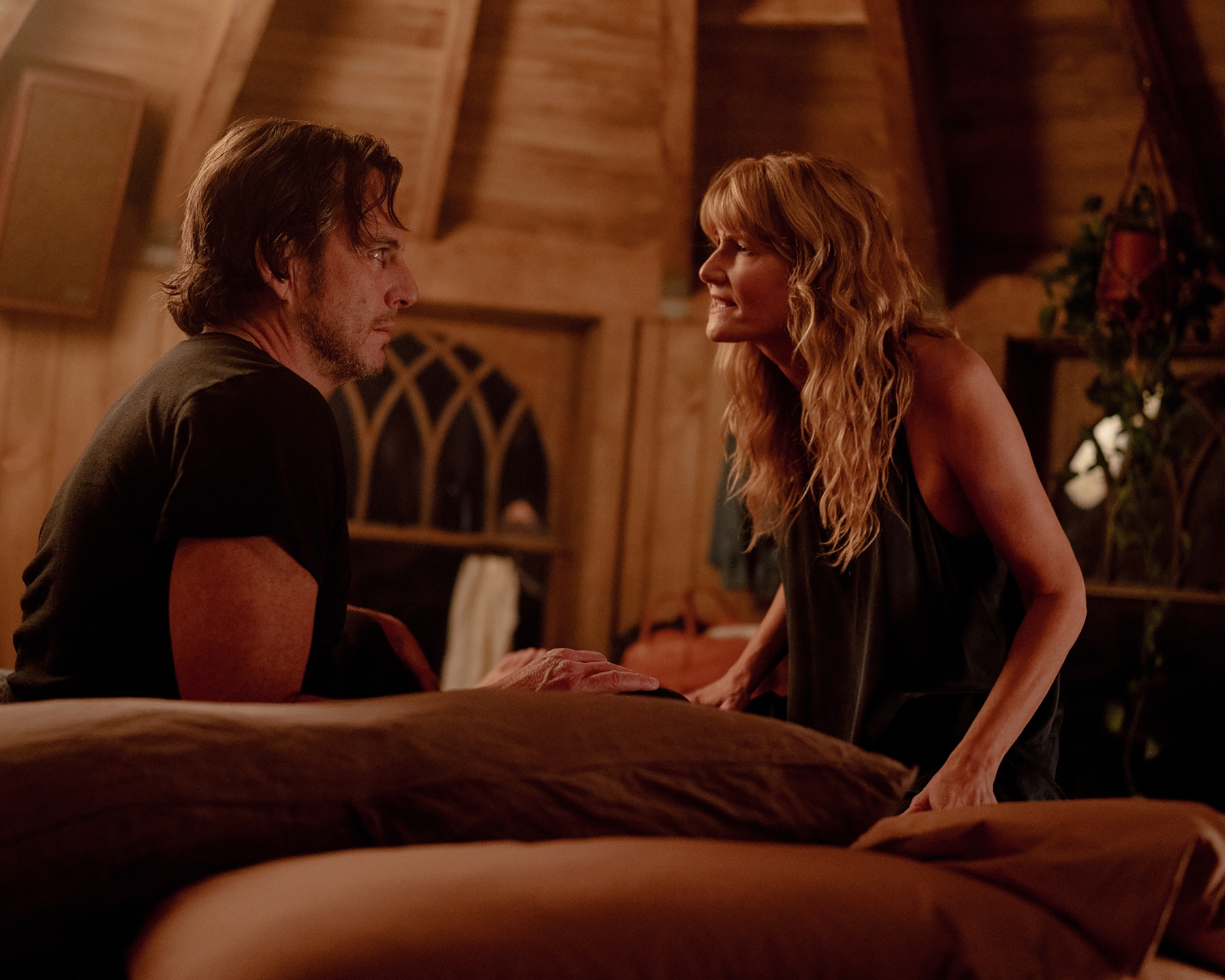
This is where finding a solution comes down to determining what each partner believes is behind the problem, and the answer to that may not be as apparent as one might think. Our beliefs in situations like this must be discovered in light of the role they play in the manifestation of the conditions of our existence, the product of the conscious creation process, the philosophy that makes such outcomes possible. It’s unclear whether the Novaks (or any of us for that matter) have heard of this school of thought, but, if they want to get to the root of the matter, they must determine that first to be able to devise new beliefs that can be employed to rectify the errant circumstances. In this case, that calls for an ability and a willingness to identify what the existing intents are as a step toward altering them as needed. In turn, it also calls for us to draw upon our powers of discernment, as well as the capacity to accept responsibility for what beliefs we have embraced and how to go about adjusting them. Without these pieces of the puzzle in place, we may default to an incorrect solution that only delays correction to a later time (if at all), and who knows how much further damage might be inflicted by doing so.
If Alex and Tess were unable and/or unwilling to look into their beliefs more fully, they might well opt for their original solution – separation – which they indeed resort to early in the film. But, given how much they still seem to love one another, is this the wisest course? It almost seems akin to throwing out the baby with the proverbial bathwater. Most of us would never realistically consider such an option in a literal sense, so why should we do so in a metaphorical context? If the relationship is built on a solid foundation, why should we abandon it when we hit a few speed bumps?
For whatever reason, neither Alex nor Tess seems to see that. So, once again, it brings us back to a question of inability or unwillingness. Inability can be problematic but is capable of being resolved. Unwillingness, however, is a potentially bigger issue, because it implies a deliberate (if unconscious) effort to purposely avoid addressing the question at hand. That cuts us off from possible solutions, because it prevents us from seeing what’s really at fault. And, in this case, it appears that the dissatisfaction Alex and Tess are experiencing is directly attributable to not facing up to the matter of addressing what’s eating them individually rather than collectively.
As noted earlier, this can be addressed through our powers of discernment, a process where we cut through the layers of clutter that obscure our ability to see the truth. Both protagonists here are quietly discontent with their existence because they have made sacrifices for their marriage and family while ignoring their own needs for personal satisfaction and fulfillment. Alex works hard to make a living to support his dependents, but is he doing anything that gives him any personal pleasure? Likewise, Tess has sacrificed her love of sport to run the household and raise her children, but what has she done for herself lately? In both cases, these decisions have led to a growing resentment where Alex and Tess have blamed one another for their unhappiness, but it’s not their marriage that’s at fault; it’s their respective unwillingness to do anything to resolve that issue individually, not the nature of their relationship itself, and that’s evidenced by the love they still hold for one another, even after they separate. Indeed, marriage is a commitment to love one another and make a life together, but it’s not an agreement to be irrevocably joined at the hip. And the longer that’s allowed to go on without resolution, the greater the problem can become.
Then again, perhaps Alex and Tess needed to manifest their exercise in separation to see this. If we’re unable to see the forest for the trees, sometimes it helps to take a step back to critically assess the circumstances, particularly from a belief standpoint. If we’re able to isolate the beliefs that are causing the trouble, the greater our chances of being able to rewrite them to our satisfaction, an outcome that allows us to retreat from the brink of needless calamity and move forward with a greater sense of happiness, joy and satisfaction. And isn’t that what we all ultimately want from life?
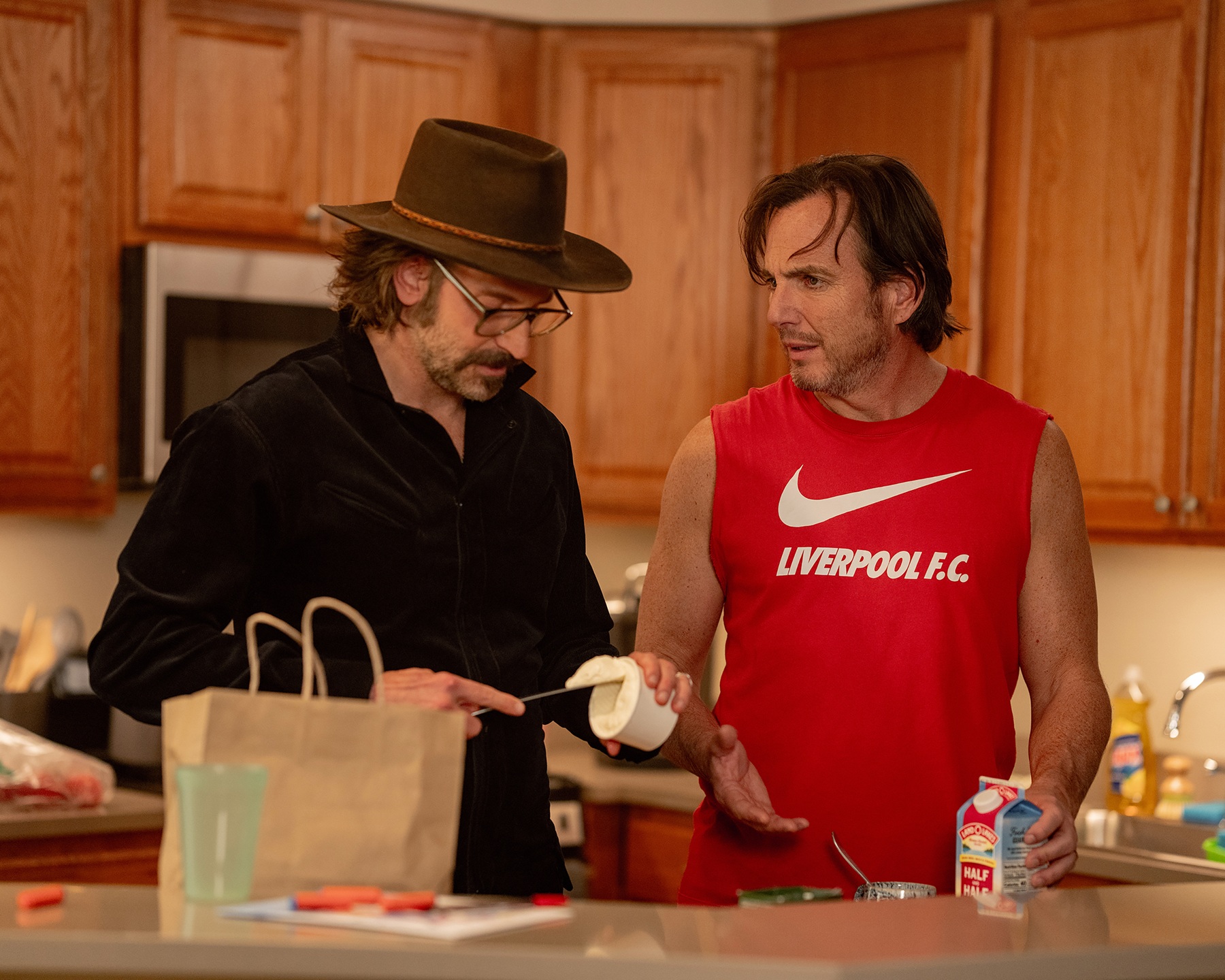
Given how this couple’s experience plays out, once they appear to be on the road to reconciliation, do they keep up the pretense of separation, or do they bite the bullet and announce that initiating divorce proceedings was a mistake? In that regard, then, this film’s title thus becomes an ironic, rhetorical double entendre, one that characterizes the resurgent on-again/off-again nature of their relationship, as well as a common face-saving observation that comedians make about the alleged malfunctioning of their on-stage microphones when a routine appears to be heading south. Both expressions of that sentiment would thus appear to be equally applicable here.
“Is This Thing On?” provides viewers with not only an intriguing look at the world of stand-up, but also how an impulsive venture might unwittingly help to transform an unsatisfying life into something richly rewarding at a time when such a change is least expected but never needed more. Its therapeutic nature, coming at a seemingly improbable, inopportune time, reveals much that had long been hidden, breathing new life into an undertaking that was nearly (and erroneously) written off for good. And it accomplishes this with a frankness and honesty rarely seen in movies about relationships, both with a partner and with oneself. This is largely made possible by the superb performances of Arnett, who shows off acting chops many of us probably never knew he possessed, and Dern, who turns in yet another signature portrayal, continuing to illustrate the tremendous range she possesses as an actress.
Admittedly, it was disappointing to see this release shut out of awards season consideration given the ample pre-release buzz that surrounded it, as well as its many fine attributes. But here’s hoping that the film finds a new audience now that it’s available for streaming online. And, from where I stand, that’s no laughing matter. After all, watching this just might help a couple on the brink save their marriage.
Copyright © 2025-2026, by Brent Marchant. All rights reserved.