



‘Tuner’ creates harmony from imperfection
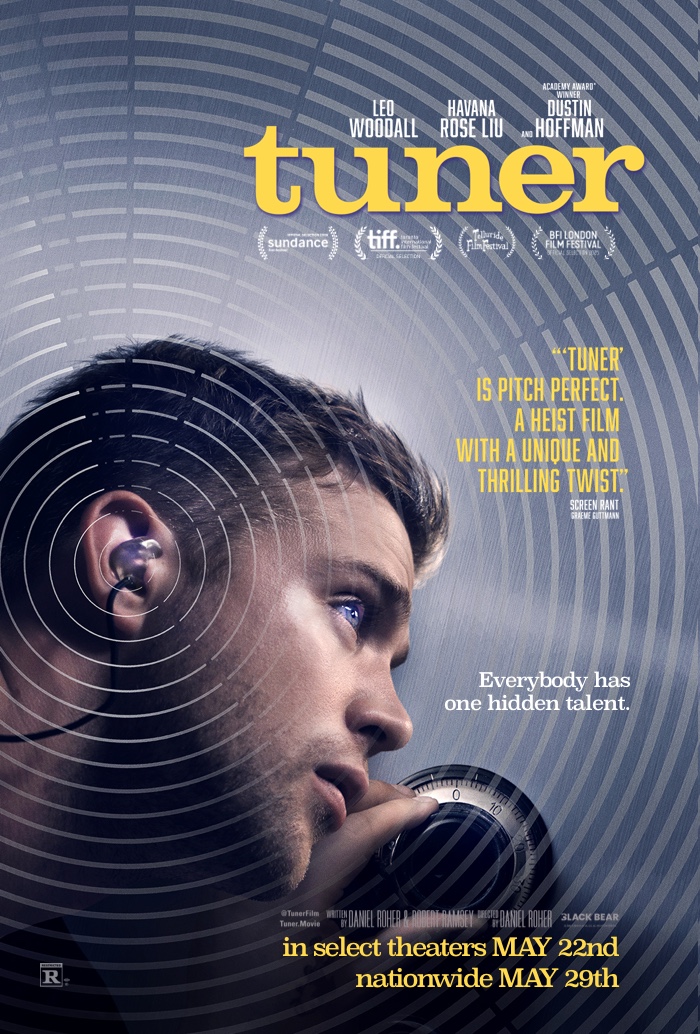
“Tuner” (2025 production, 2026 release) (Canada/USA). Cast: Leo Woodall, Dustin Hoffman, Havana Rose Liu, Tovah Feldshuh, Lior Raz, Gil Cohen, Nissan Sakira, Jean Yoon, Jean Reno, Herbie Hancock. Director: Daniel Roher. Screenplay: Daniel Roher and Robert Ramsey. Web site. Trailer.
It’s often been observed that “order comes out of chaos,” a notion that might seem counterintuitive but frequently rings true. It’s also something that can be seen in a variety of contexts, with corollaries all their own tailored to the area of endeavor in question. In the world of music, this idea can be applied to the tuning of instruments – specifically pianos – wherein it’s been said that “harmony can arise out of imperfection,” a principle that, ironically, can also be applied to each of us as well. And such is the case in the gripping new crime thriller/romance, “Tuner.”
New Yorker Niki White (Leo Woodall) isn’t living the life that he thought was ahead of him. The prodigy piano virtuoso’s career was derailed in childhood when he was afflicted by a rare but serious hearing impairment that made him sensitive and susceptible to the effects of loud noises, effectively sidelining his performance capabilities. So what was he supposed to do when he eventually grew up?
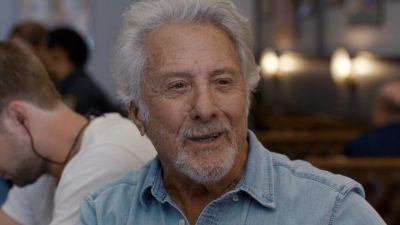
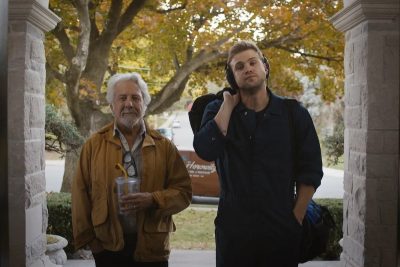
Over time, while learning how to manage his condition, he discovers that he can tolerate soft sounds. In fact, he’s so adept at this, that he can hear minor tonal differences in the individual notes produced by pianos, making him an ideal candidate for becoming a piano tuner (his sense of perfect pitch no doubt helped, too). He thus takes a job as an apprentice piano tuner with a seasoned veteran in the field, Harry Horowitz (Dustin Hoffman), an eccentric legend in musical circles well known to many prominent performers in different musical genres. Together they tune the pianos of mostly wealthy clients, individuals whose instruments are more decorative than functional in their high-end homes and who don’t fully appreciate Niki’s expertise.
Outside of work, Niki and Harry become good friends. In fact, Harry and his wife, Marla (Tovah Feldshuh), become like surrogate parents to their young friend. And the support and consideration they show him extends beyond helping him become a proficient piano tuner. Harry in particular encourages Niki to return to performing, that his hearing impairment need not become a crippling, career-ending condition. Harry believes that Niki’s reluctance to get behind a keyboard again is depriving the world of hearing the talents of a gifted individual. But Niki remains skittishly steadfast, refusing to perform again, even in the privacy of Harry’s sole company.

Not long thereafter, Niki’s life takes a drastic turn that changes his life and shifts his priorities. While tuning a piano at a local conservatory, he meets and befriends a gifted composition major, Ruthie (Havana Rose Liu), who’s preparing for a potentially career-changing recital at which an acclaimed composer, Marius Maissner (Jean Reno), will be in attendance. She’s hoping to impress the maestro and land an apprenticeship with him, one that would go a long way toward launching her future. However, despite the significance of this undertaking and her commitment to avoid the impact of unnecessary distractions while pursuing it, she nevertheless develops a strong attraction to Niki, one that quickly blossoms into a full-fledged romance.
Meanwhile, as Niki wrestles with the performance question and his newfound romance, he also seeks to get a handle on his financial situation. While his reputation as a gifted piano tuner may have given him a degree of professional distinction, it also doesn’t pay much, especially since Harry hasn’t raised his rates in decades. But that changes, too, when Niki has a chance meeting with the dubious owner of a security systems company, Uri (Lior Raz). As a contractor who handles the security needs of wealthy clients, he installs and upgrades their high-end, sophisticated systems. But, in doing so, he doesn’t hesitate to pilfer some of the expensive but less conspicuous possessions of those customers (watches, jewelry, collectibles, etc.), convinced that those items will never be missed.
So how does Niki fit into this? Given his ability to keenly sense soft sounds, it becomes apparent that it’s a skill that can be employed for more than tuning pianos: It also enables him to detect the nearly silent clicks in combination locks, making it possible for him to become an adept safecracker – just the kind of “business partner” Uri is looking for. In fact, Uri is so eager for Niki to join him that he’s willing to make it well worth his while. Niki is admittedly more than a little troubled by the ethical implications behind this, but, when he sees the kind of money he can make from this side hustle, he relents. And that’s especially important now that Niki has the added expenses of a romantic partnership and an unexpected financial emergency to contend with.
For a time, Niki lives large, and he basks in the comfort it affords, unaccustomed to what that feels like. However, there comes a time when a crisis moment arises that carries a high cost, one that affects his newfound affluence, as well as his relationship, his future in both of his “professions,” and his ability to avoid potential jail time and harm to his personal safety.
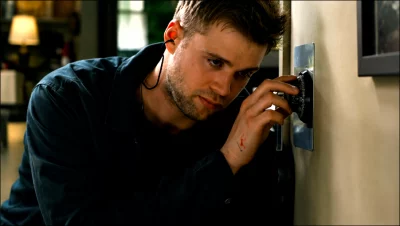
Ironically, when Niki first meets Ruthie, they discuss the practice of piano tuning, the aim of which is to create a perfectly pitched sound. However, he also observes that not all pianos – even the best of them – are manufactured in perfect uniformity. With 88 keys in play, there’s bound to be at least one that doesn’t measure up to the others in terms of its sonic resonance. So, because of that, the trick in effectively tuning a piano is to create the impression of harmony out of “inherent imperfection.” It might not be easy, but it is possible. But how?
This is where the skill of the tuner comes into play, and Niki is obviously quite adept at it. But can he apply the same principle to his own life given the scenario that he’s set up for himself, especially since he’s the one who got himself into these circumstances? Much depends, of course, on how he views the situation – specifically what he believes about it. That’s crucial considering the role that our beliefs play in how our existence unfolds, a product of the conscious creation process, the philosophy that makes such outcomes possible. While it’s impossible to say for certain whether Niki’s ever heard of this line of thinking, his insights about piano tuning would seem to indicate that he has an inkling about this school of thought, at least from a hypothetical standpoint. The question here, of course, thus becomes, can he make the leap of faith required to see how this rationale may be applied to a different context, namely, altering the conditions of his “imperfect” life?
The notion of “order out of chaos” or “harmony out of imperfection” are recurring themes throughout this film and on multiple levels. Every time Niki tunes a piano, for example, he’s bringing forth a harmonious sound from the instrument, even if some of its workings aren’t functioning perfectly. Similarly, as he openly acknowledges, every day that he manages to successfully get through it in spite of his hearing impairment is a personal victory over adversity. Even finding his way to a vocation where he has been able to turn his “disability” into an asset is something of a triumph.
In some ways, Ruthie does the same, as evidenced by the management of her compositional skills, transforming a disparate collection of notes into a unified finished recital piece. In fact, she accomplishes this so skillfully and creatively that it could put her in a position where she has a bright future in front of her.
Some might look at these achievements and undervalue them, suggesting that they’re just making use of their respective innate talents. But where do those talents emerge from? Indeed, how do they manifest themselves as they do? Given the outcomes they attain, it seems unlikely that they arise by random chance. They’re carefully crafted, even if it takes some time and effort to realize and yield the finished products behind them. Consequently, the legwork supporting these efforts shouldn’t be underestimated. And these results inherently involve a great deal of belief work to birth them, even if evidence of these foundational initiatives isn’t readily apparent at the outset. It takes some time for the means of manifestation to coalesce. That’s true for the materialization of virtually anything but especially so when bringing into being something that arguably has inherent flaws or challenges to be overcome.
The examples that Niki and Ruthie set can serve as inspirations to any of us grappling with the kinds of challenges they face, no matter how seemingly grand or mundane the ventures in question might be. We can draw from their efforts to help us achieve the same quality of results that they do, What matters, though, are the beliefs we embrace to back these undertakings, as they essentially drive the process to conclusion.
While it’s true that we likely have an ultimate goal in mind – including a belief that this objective can indeed be achieved – it’s important that we also recognize the beliefs underlying that belief. For instance, Niki’s sought-after accomplishments are driven not only by beliefs in the attainment of the finished product, but also in ardent commitments to such concepts as personal aptitude, overcoming limitations, faith in one’s abilities and countless other intangible notions that are intrinsically essential to success. Without them, it’s hard to say what might eventually materialize – or remain a mere pipe dream.
At the same time, while it’s important to amass the right mix of underlying manifesting beliefs, it’s also vital that we understand which beliefs can undermine our efforts. The three derailing beliefs that crop up most often are fear, doubt and contradiction; they can effectively torpedo anything we might try to accomplish. Although neither Niki nor Ruthie seem particularly beset by any of these considerations, they have cause for concern for one of contradiction’s corollaries – distraction. Niki’s venture into the dark side, for example, has the potential to compromise all of his achievements. The same could be said for Ruthie in the pursuit of her romance at a pivotal point in her education, including potentially devastating unforeseen perils that might suddenly appear out of nowhere.
In light of that, then, one might wonder why anybody would consider exploring these potentially blind alleys when so much is on the line. Curiosity and temptation, of course, come to mind, but perhaps such explorations could be seen as a way of testing ourselves – just how good are we at creating harmony out of imperfection. As becomes apparent in the film, this is a notion that, for better or worse, is just as applicable to people as it is to their respective undertakings. Admittedly, this may not be the wisest course to pursue if we want to assess our personal aptitude in this area, as it could easily blow up in our faces. However, it may also make us aware of strengths that we never knew we possessed, possibly even leading to unimagined successes. Now that’s what I call hitting the right notes.
At a time when certain new releases are having praise undeservingly heaped upon them, it’s truly unfortunate when a picture that genuinely merits such attention isn’t receiving the degree of credit it’s due. However, when a filmmaker truly knocks such a project out of the park, word about it can spread quickly, and that seems to be what’s happening with this latest offering from writer-director Daniel Roher, a romantic crime thriller that’s handily one of the best new releases of 2026. There’s a lot to like here – a story that involves characters and areas of life that generally have received little attention, a smartly written script that deftly fuses an unlikely combination of genres in one package, a tautly constructed narrative that weaves its diverse story threads into a cohesive tapestry, and a picture that serves it all up with an integrally insightful undercurrent that makes the project both entertaining and meaningful. (Talk about birthing order out of chaos.)
The elements driving this film deserve high praise as well. The excellent ensemble cast (particularly this breakthrough performance for Woodall and a return to form for Hoffman) is well assembled, and the performers make the most of the material they’ve been given to work with, especially in the areas of comic relief and its on-target philosophical observations. And, of course, there’s the music, which eloquently combines both original material and a collection of old favorites from multiple motifs. I seriously hope this offering is not forgotten come awards season, as it deserves the accolades it receives in many regards. “Tuner” should definitely be on the watch list of anyone who appreciates good cinema. And, if you see it, please spread the word to help the picture get the recognition it genuinely deserves. The film is currently playing theatrically.
Given the chaotic world we live in these days, it may seem like too much to hope for to see some semblance of order come out of it. Indeed, constant frustrations and setbacks can be disheartening. But, when we see what can transpire by screening a picture like this, maybe there’s hope after all, both for ourselves and the world in which we dwell. Perhaps getting harmoniously in tune with our existence isn’t as difficult as we thought it might be. And maybe the best place to start is by intently listening to our inner selves and the beliefs we hold. Just imagine what we might hear.
Copyright © 2026, by Brent Marchant. All rights reserved.