



‘Life is Short’ presents a plan for living
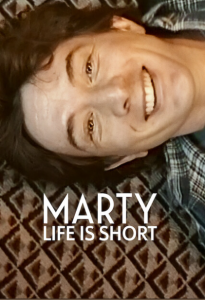
“Marty, Life is Short” (2026) (USA). Cast: Martin Short, Steve Martin, Eugene Levy, Andrea Martin, Catherine O’Hara, Tom Hanks, Rita Wilson, Steven Spielberg, Kate Capshaw, John Mulaney, Paul Shaffer, Deb Devine, Walter Parkes, Michael Short, Oliver Short. Archive Material: Nancy Dolman, Mel Brooks, Johnny Carson, Chevy Chase, John Candy, Dick Ebersole, Roger Ebert, Sally Field, Joe Flaherty, Glenn Frey, Victor Garber, Selena Gomez, Charles Grodin, Bill Hader, Goldie Hawn, Ron Howard, Lawrence Kasdan, Meg Kasdan, David Letterman, Rick Moranis, Bill Murray, Conan O’Brien, Bernadette Peters, Gilda Radner, Kurt Russell, Harry Shearer, Meryl Streep, Brian Short, Charles Short, David Short, Nora Short, Olive Short, Tom Snyder, Dave Thomas, Justin Timberlake. Director: Lawrence Kasdan. Web site. Trailer.
For what it’s worth, celebrities are often regarded as vain, narcissistic, self-absorbed and unapologetically materialistic, generally consumed with their own ambitions, being the center of attention and lining their pockets. Seldom are they widely recognized for qualities like artistic integrity, personal fulfillment and noble intentions. But those generalizations do not always provide realistic depictions; there are individuals who indeed embody sincere motivations that drive their craft and their lives. But how do they defy the so-called model and turn out like that? Such is the point behind the new Netflix documentary profile of actor-comedian Martin Short, “Marty, Life is Short.”
Born in Hamilton, Ontario, Canada in 1950 into a nurturing, creative, fun-loving family, the youngest of five children hadn’t initially considered a career in entertainment, even though he was surrounded by multiple influences for doing so within the household of his upbringing. His father, Charles, was known as a jovial sort both in the business world and at home. His mother, Olive, was a concertmistress for the Hamilton Symphony Orchestra. And his older brother, Michael (interviewed in the film), grew up to become a sketch comedy writer, earning 17 nominations and 3 awards for his work.
In an environment like that, it was hard for young Martin not to be influenced. And, once in college, he began acting upon that impulse under the advice and encouragement of his classmate and best friend, Eugene Levy, with whom he would later work professionally. Before long, Short gave himself a year off after graduating with a degree in social work to see if he could turn his newfound passion into a full-time pursuit. And the rest, as they say, is history.
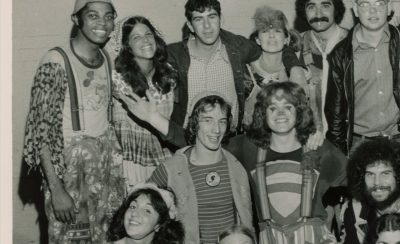
In no time, Short became a cast member of the now-famous 1972 Toronto production of Godspell, which launched the careers of such entertainers as Gilda Radner, Andrea Martin, Victor Garber and Levy, not to mention Short himself. He then went on to become part of the Canadian company of the Chicago-based Second City comedy troupe. These experiences subsequently launched Short into stints on SCTV and Saturday Night Live, a string of Hollywood movies (including such titles as “Three Amigos” (1986), “Innerspace” (1987) and “Father of the Bride” (1991)), and a run on Broadway in two Neil Simon musicals, The Goodbye Girl (1993) and a Tony Award-winning role in the revival of Little Me (1999). Not bad for someone who at one time hadn’t taken a career in show business seriously.
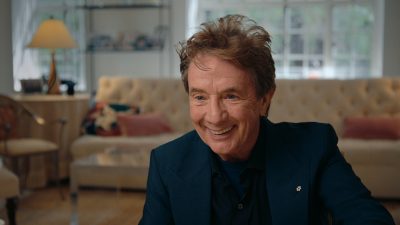
However, for all of the breaks that fell his way, not all of Short’s projects were successful. “Three Amigos,” for example, was widely panned by critics. And “Innerspace,” though critically acclaimed, bombed at the box office. But Short wasn’t concerned. He came to realize that not everything he undertook was going to work. In fact, he has been known for openly observing that “98% of all entertainment projects ultimately fail” but that those that flop are generally offset by the ones that succeed. For Short, the primary consideration is, “Was the project fun to work on?”
Some might see this as a way of whitewashing a failure, but Short is dead serious about his attitude. As a performer who loves to create, engage in experimentation and improvisation, and simply enjoy what he’s doing, material and critical success are almost secondary considerations. To be sure, he would be pleased if everything he touched turned to gold, but he doesn’t lament the experience if that doesn’t happen. Again, it goes back to a question of, “Was the project fun to work on?”
So where did Short’s eternally optimistic attitude come from? To a great degree, it grew out of his upbringing. Having come from a family in which having fun was a priority, that attitude became ingrained in his being. What’s more, when he began taking a more committed interest in entertainment as a career path, he found cohorts like Levy, his Godspell castmates, and his peers at Second City and SCTV who embodied similar attitudes. Those professional peers became like a second family, one that was characterized by the same traits as those found among his blood relatives.
Given his success in employing this approach to living in his professional life, he adopted a similar approach to his personal life. It was a key consideration, for instance, in the courtship of the love of his life, actress-singer Nancy Dolman, and the adoption of the couple’s three children, Katherine, Oliver and Henry. And, from home video footage of Short’s off-screen life incorporated into this documentary, it’s apparent that he derived as much enjoyment from being a dad as he did from working on professional projects.
Short’s attitude has also helped him get through hard times. For example, in his adolescence, he lost both his parents and his eldest brother, David, who was one of Martin’s best friends at that time. This sorrow came back again years later when Short lost his wife in 2010. These deaths were difficult losses, to be sure, but Short took comfort in being grateful for having had the opportunity to share joyful experiences with these loved ones rather than spend his days wallowing in grief. The heartache would always be there, but that didn’t mean that it had to come to dominate his thinking and behavior.
Short’s success in implementing this plan for living has provided him with a rich, fulfilling life both personally and professionally. In fact, he has even been able to combine relationships from both areas of his life into a larger family of sorts, one in which his professional peers and their relations have become integrated with those of his own kin. This is depicted through never-before-seen home video footage from many social gatherings in which all the members of this enlarged “family” have come together to participate, such as summer outings at his cottage in Canada and at his legendary holiday parties. And, just to illustrate how integrated these festivities have become from both personal and professional standpoints, these events include inventively hilarious impromptu entertainment activities in which everyone partakes, a contemporary expression of creativity not unlike what Short enjoyed in his household during his upbringing.
As a consequence, Short’s plan for living has paid off in many ways. It has provided him with ample satisfaction both on- and off-screen. It has shaped his outlook on life to one in which he derives much enjoyment, even when laughing and crying through the tears. It has made him one of the most connected individuals in show business. And it has enabled him to become one of the most in-demand commodities in Hollywood, as seen in his recent success in the TV series Only Murders in the Building with co-stars Steve Martin, Selena Gomez and Meryl Streep.
None of this would have been possible, however, were it not for Short’s beliefs, and that’s crucial in light of the role they play in shaping the nature of our existence, a product of the conscious creation process, the philosophy that makes such outcomes possible. It’s not clear if Short has heard of this school of thought, but, considering what he’s built for himself, it’s apparent thar he is well versed in its principles and how to employ them. What’s more, given that he has been able to apply them on multiple fronts, it would seem he has a masterful grasp of how to use them holistically, generating fulfilling results in an array of contexts. And, if that’s not a plan for living, I don’t know what is.

From the foregoing discussion, the core beliefs driving Short’s overarching perspective should be obvious, both in their inherent nature and the results they’ve wrought. His optimism, his belief in finding ways to take enjoyment from whatever situations one finds oneself in (no matter how flawed or impermanent they may be), and his commitment to creating a loving, nurturing family-like environment for oneself and others in both personal and professional circles are all undeniably apparent. But those notions, as important are they are, might not be as impactful were it not for some of the component beliefs that go into them, notions that enhance those that they support.
For instance, Short demonstrates a tremendous capacity for events to unfold naturally, which likely accounts for his talents in the area of improvisation. This is apparent in his public performances, as well as in his off-screen time. This is evident in some of the home videos from occasions like his summer outings at his cottage, where he and his guests put on impromptu “shows” for others that are totally made up on the spot. One of the best of these sketches features Short, as his signature character Ed Grimley, a spikey-haired geek he created while a member of the Second City troupe, and houseguest Tom Hanks, as his Oscar-winning character Forrest Gump, in re-enacting a scene from “Butch Cassidy and the Sundance Kid” (1969) in which the film’s protagonists, Paul Newman and Robert Redford, debate jumping off a cliff into a canyon river (or, in this case, off the upper deck of a ferry boat into a lake) in order to avoid capture by authorities but hesitate doing so because Sundance (Redford) can’t swim. This sidesplitting bit unfolds so naturally that one would swear it was scripted, but Short’s belief in letting things flow unimpeded demonstrates otherwise, a tactic that he readily applies in many areas of life.
Activities like this, in turn, illustrate Short’s penchant for blurring the lines between working and playing. When one watches one of his performances – whether improvised or not – he makes the outcome look effortless. And that’s because he believes that we must have fun while carrying out our work, that it really should be more like playing than straining. This is a recurrent theme in the film in which Short fervently speaks about the joys of his career, noting that he feels so fortunate to be in a line of work that is inherently so much fun. And, if that sounds like a resounding endorsement of being free to express gratitude for one’s fortunes, you’d be right. It’s yet another of the component beliefs that figures prominently in his plan for living.
Of course, this is not to suggest that everything is nonstop fun and games; Short is well aware of life’s practicalities like paying the mortgage, covering household expenses and addressing other fundamental obligations. But how one goes about these tasks matters, and that’s where striking a balance comes into play in the way one approaches them. This has figured into his thinking, and that becomes obvious when viewers witness Short enthusiastically going about his business, whether it’s performing the mundane chores of everyday life or performing a new comedy routine. It’s as if they carry equal weight, with one being just as important as the other, another element of his plan for living.
Perhaps the most important of his component beliefs, however, is his capacity for inclusivity, another of those traits that came out of his upbringing. When it comes to his work with others, he’s committed to offering support and making colleagues feel welcome. Likewise, when one sees the kinds of parties and social gatherings that he throws, it’s understandable how everybody would like to attend (and he would likely insist that everybody be invited). And, according to many of his friends, a good time is guaranteed at these events. In fact, as one of them puts it, being in Short’s company is so highly desired that, if he were asked to a dinner party but had to cancel, it’s a good bet that most of the other guests would follow suit if they knew he wouldn’t be there.
Sounds like quite an enviable plan for living, wouldn’t you say?
I find it interesting that this is the message that comes out of a film like this. It’s certainly not what I expected when I switched it on. While it’s true that, like many films that examine show business personalities, this offering chronicles the history of the prolific performer’s work, but there’s more to it than that. Rather than just rattle off a laundry list of accomplishments, “Marty, Life is Short” delves into how his career evolved and how he avoided many of the pitfalls of his peers. Consequently, in building his body of work and amassing an abundance of personal enjoyment, he has made this his yardstick for satisfaction.
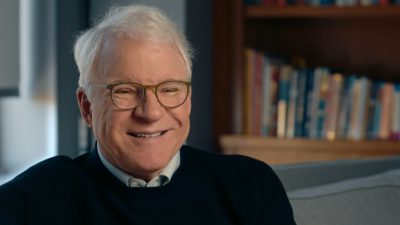
These are attainments that many cinematic show business profiles overlook or understate and that help to set this film apart from others like it. Credit the narrative approach employed by filmmaker Lawrence Kasdan in this effort. As a longtime friend of Short, Kasdan has added a valuable dimension to the core of this story, proving that sometimes familiarity with one’s subject trumps objectivity when telling a compelling biographical tale. The picture is also replete with many clips from Short’s film and television work, as well as ample archive material showing the subject’s on- and off-screen life. There are also numerous enlightening interview segments with Short’s friends, family and peers, both from the recent past and years ago, including such luminaries as Steve Martin, Tom Hanks, Steven Spielberg, Catherine O’Hara and Andrea Martin. In a nutshell, this release presents a balanced, insightful and heartfelt look at a comic genius (not unlike the protagonist himself), one who defies the image often associated with so many others in his profession, and gives us lots of well-earned laughs along the way. The film is available for streaming on Netflix.
Sadly, many of us drift through life without direction or any idea of how to live our lives. So it’s really quite ironic that those who have the fullest plates also somehow manage to formulate game plans for themselves that allow them to achieve much and derive the greatest levels of fulfillment from their endeavors. As this documentary so clearly reveals, Martin Short is one of those individuals who has learned how to pile up his plate without spilling anything (and, even if he did, he wouldn’t worry, because there’s always more to be had). The key, however, is believing in the possibility and incorporating those beliefs into a plan that works. He seems to have figured it all out, and his example sets a good precedent for the rest of us to follow – and, just maybe, to have a good time at it, too.
Copyright © 2026, by Brent Marchant. All rights reserved.