



‘Sentimental Value’ considers the challenges and rewards of forgiveness

“Sentimental Value” (“Affeksjonsverdi”) (2025). Cast: Renate Reinsve, Stellan Skarsgård, Inga Ibsdotter Lilleaas, Elle Fanning, Jesper Christensen, Cory Michael Smith, Catherine Cohen, Andreas Stoltenberg Granerud, Anders Danielsen Lie, Øyvind Hesjedal Loven, Lars Väringer, Ingunn Beate Strige Øyvan, Marianne Vassbotn Klasson, Vilda Søyland. Director: Joachim Trier. Screenplay: Eskil Vogt and Joachim Trier. Web site. Trailer.
These conditions notwithstanding, however, Nora has made a name for herself professionally, even though her personal life has never attained the same degree of success. She has been single for most of her adult life, and, whenever she found herself getting close to someone romantically, she always felt that the relationship would never last, a prophecy that virtually always came true and was undoubtedly a side effect of the influence that Gustav and Sissel had on her. But, when Sissel dies, things begin to change.
For the first time in years, Gustav makes an appearance in his daughters’ lives to attend Sissel’s wake. He and Nora are politely cordial toward one another under the circumstances, but he informs her that there’s another reason why he’s shown up: He’s written the script of a movie based significantly on Nora’s life, and he offers her the part to essentially play herself. He calls it a gift to her, contending that not only is she the best choice for the role, but that she’s essentially the only one who can portray it. Gustav is also convinced that it’s a role that could work wonders for the future of her career.
But Nora reacts in a way that her father doesn’t expect: She turns him down. In part it’s because she’s fundamentally uncomfortable playing herself, given that doing so could dredge up many ghosts of her past that she has struggled to put behind her. She’s also unclear about Gustav’s motivation for writing the script and offering her the role – does he really believe that she’s the best actress for the part, or is this some kind of attempt at making up for the parenting mistakes of his past? And, if it’s the latter, she wants nothing to do with something that he’s drummed up to assuage his own guilt.
Needless to say, Gustav is disappointed by her decision. In part, he’s trying (or has at least convinced himself he’s trying) to do something nice and beneficial for Nora (and, if it helps him to work through his demons, so much the better). But, perhaps even more importantly, Gustav sees this project as a comeback film: He hasn’t made a movie in years, and it’s been even longer since he’s had one that was an artistic and financial hit. And, given his advancing age, failing health and worsening drinking habit, this could be his last shot at shooting a film of any kind. The clock is ticking ever louder, and he wants to avail himself of the opportunity to make his legacy project while he still has the chance.

But is Gustav really as broken up about Nora’s decision as he leads others to believe? While attending a retrospective commemoration of his filmography, he meets an aspiring American starlet, Rachel Kemp (Elle Fanning), who is quite taken with his work and less than subtly expresses a desire to work with him. In turn, Gustav is impressed with the young actress and ends up offering her the part, an opportunity that she eagerly accepts. However, the news doesn’t settle particularly well with Nora. The idea of seeing someone else playing her is more than a little unsettling. And, because of that, can she quietly sit back and watch as this scenario plays out?
As preproduction work begins, it leaves Rachel somewhat unnerved, too. She begins to feel weirded out by the prospect of being an outsider stepping into what’s essentially an intimate family matter. She also wonders if casting an American as a member of a Norwegian family will come across as authentic and believable. Can she get the accent right? And will she be seen as someone who effectively captures Scandinavian cultural considerations in her portrayal? This leaves her with many doubts about whether she can convincingly carry on in the role.
As events play out, the impact of these considerations broadens even further, such as when Gustav offers a role to his grandson, Erik (Øyvind Hesjedal Loven), Agnes’s son. Having been a firsthand witness to what went on in her upbringing, she, too, has unsettled feelings about her dad and is uncertain that she wants her child to be a part of reliving that. She doesn’t have the same degree of animosity toward Gustav that Nora does, primarily because her older sister helped to shield her from some of the nastiness that unfolded in the household, but she’s still reluctant about letting herself or her family members from becoming involved.
Before long, it becomes obvious that matters are not transpiring as anyone had hoped for. But, at the same time, that’s not to suggest that any of them wants circumstances to continue along the same lines as they have for so many years. So what are they to do? That’s what this film seeks to sort out, and resolution will ultimately depend on what the principals each believe about themselves, their situation and their relationships with one another. Those beliefs, in turn, will impact how events materialize, as they play a central role in what ultimately manifests, a product of the conscious creation process, the philosophy that makes such outcomes possible. It’s unclear whether Gustav, Nora, Agnes or Rachel have ever heard of this school of thought, but it’s intriguing to watch what happens as they seek to familiarize themselves with its principles and what they do with them as they work their way through these quietly challenging circumstances. Can they make these conditions work to their benefit, or will the situation only become increasingly complex and difficult? That’s where their beliefs can truly be their guide.
From where Nora and Agnes stand, they can choose beliefs that hold on to the anger and bitterness they’ve felt toward their father for so many years. But what will they gain from that? While it’s true that they may realize a certain degree of self-satisfying retribution toward Gustav, a form of payback for his transgressions toward them and their late mother, will that suffice for the long term? Indeed, does maintaining such ill will provide any relief for their long-suffering anguish? After all, the events of the past can’t be changed, so is this form of “satisfaction” truly rewarding?
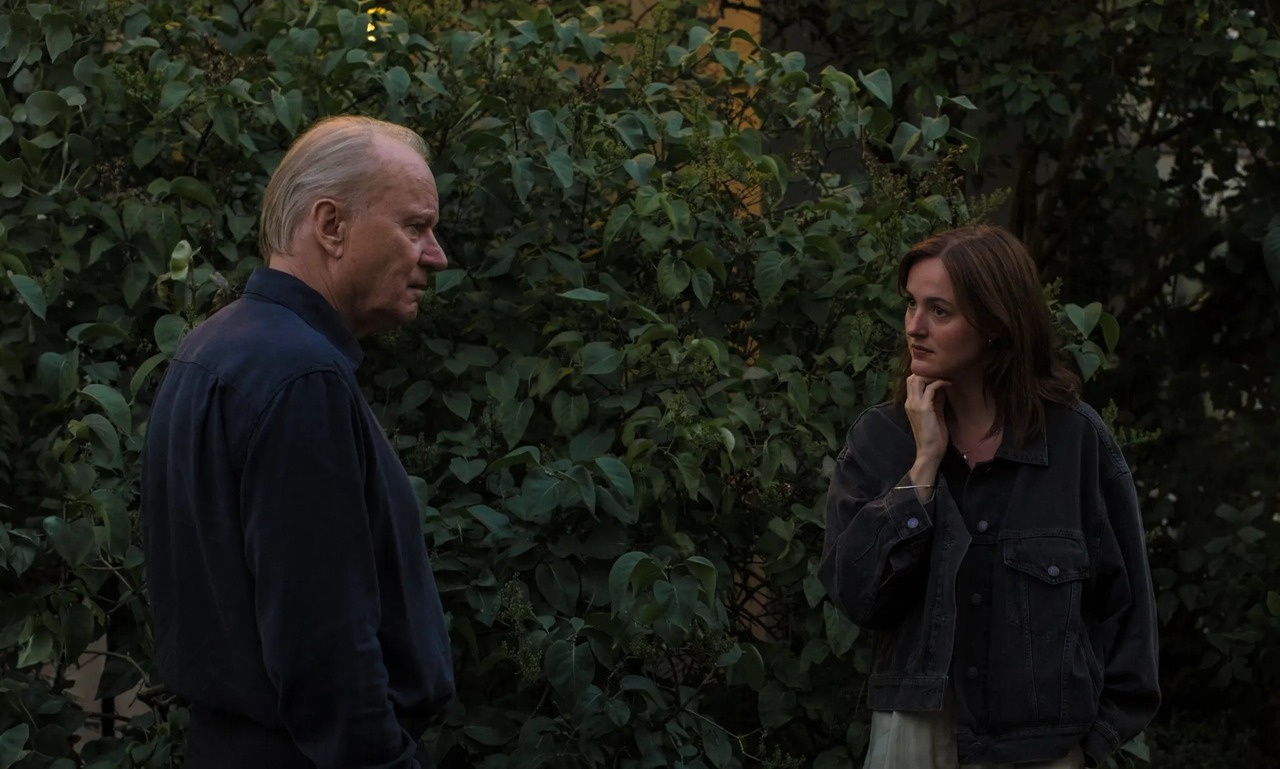
On the other hand, the daughters could opt to accept beliefs rooted in forgiveness. That might be seen as a hard pill to swallow, but isn’t unburdening themselves of the pain they’ve shouldered for so long preferable to continuing to hold onto it? And isn’t the possibility of having a shot at rebuilding the relationship with their father a better alternative than continuing to thrust scorn in his direction, especially given that his remaining time in their lives is likely to be limited? Obviously, only Nora and Agnes can answer those questions, but they should seriously consider what potential benefits could come from accepting forgiveness-related intents, no matter how difficult taking the first step toward it might be.
Gustav has choices when it comes to his beliefs, too. He’s been a jerk for a long time, and admitting the errors of his ways could be quite a hard pill of his own. But what will staying stubbornly selfish and unfeeling get him in the long run? Contrition calls for courage, and being willing to openly embrace it can be difficult. But consider the alternative – continued estrangement and no chance at making amends for a brighter future. The question remains, however, can Gustav succeed at this?
A key component in this has to do with embracing beliefs related to sincerity, those associated with living a life rooted in being one’s own authentic self. Considering Gustav’s questionable reliability through the years, this behavior certainly gives his daughters plenty of cause for skepticism. He also doesn’t help his own case by some of the belief decisions that he makes in the wake of Nora’s rejection of his offer. Some of them clearly lend credence to the notion of him being yet another leopard who refuses to change his spots. The speed with which he seeks to cast Rachel in the lead role that Nora turns down, for example, makes it appear that he may not be as distraught about his daughter’s rejection as he claims to be. Indeed, this action probably gives Nora pause to question his sincerity – was he being genuine in offering her the role, or was he acting out of expediency, especially considering the rapidity with finding a replacement. Were his intentions genuinely based on making amends with Nora or with finding someone – anyone (including someone seemingly as potentially unsuitable as Rachel to play the part) – to assist him in realizing the dream of producing his legacy project? This calls for some serious soul-searching, particularly on Gustav’s part, especially where Nora’s justified distrust is concerned.
Gustav gets some “help” with this process, too, from Rachel’s doubts about her participation in the production. Working with the famed director may represent a dream come true for her, but are the strings attached to it worth it in the end? While it seems she has some genuine talent, as seen in scenes where she rehearses for the role, that doesn’t necessarily equate to Rachel being the best choice to play the part. Indeed, does Gustav truly believe that an American actress is the best choice for playing a character who’s part of a Norwegian family? Is this based on an informed professional assessment on his part? Or is it a matter of mere logistical convenience? Even more questionable is the possibility that he may have opted to cast Rachel as a surrogate for his own daughter, unwittingly employing her in a quasi-therapeutic context for working through the longstanding, unresolved issues he’s been experiencing with his daughter. (The same might also be said for Gustav’s offer to cast Erik in a role as a means of resolving issues in his relationship with Agnes.) Whatever the reason for these beliefs, choices and decisions, though, it’s time for Gustav to get real about the intent behind these matters if he ever hopes to make authentic progress in dealings with his family.
But, then, this is also where the beauty of beliefs comes into play. They provide us with an infinite range of possibilities and choices, and we can employ them effectively in myriad ways to resolve our challenges, even in potentially problematic endeavors like engaging in forgiveness. In that sense, they carry an intrinsic “sentimental value” that we can draw upon if we choose to do so in realizing positive, renewing outcomes. In the end, though, the question remains, are we capable and willing to do so? Looking within can provide valuable insights into the answers and capabilities we seek. We can only hope that we listen to what they have to say.
When a film has the capacity to provide a template for overcoming domestic discord, promoting forgiveness and helping to heal one’s past, it’s to be truly commended for going beyond being mere entertainment or even an admired artform. It aspires to become a noble, laudable cinematic godsend, one verging on providing a valuable service to those requiring much-needed guidance and direction in their lives. At the risk of exaggeration, such is the case with this latest offering from writer-director Joachim Trier, arguably the best work of his storied career. As challenging as the dynamics of this scenario can be for all concerned, their collective story provides these characters with a valuable opportunity for healing, personal and professional growth, and a fresh start for the future. In imparting this wisdom, the filmmaker employs a rather involved storyline (more so than what’s outlined here and, at times, a little too involved for its own good, particularly where subplots involving Gustav’s and Sissel’s families are concerned). However, the narrative nevertheless eagerly and successfully takes on the ambitious task of intertwining various aspects of art and life and how one might be drawn upon to address the challenges and opportunities of the other.
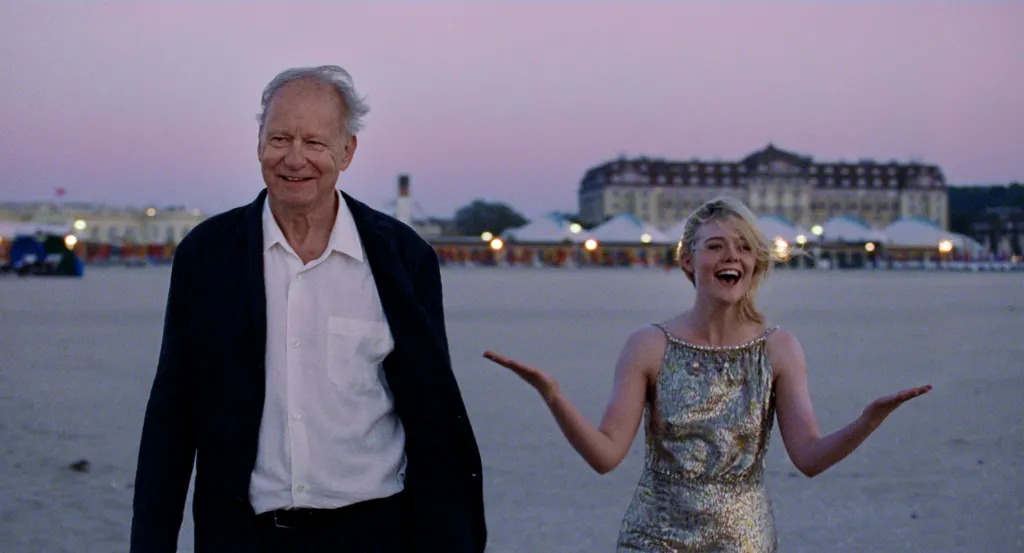
While the picture might potentially be seen as somewhat overlong, the director manages to capably cover considerable ground without belaboring his material or incorporating a plethora of extraneous elements. Moreover, the deftly penned screenplay effectively keeps the picture from becoming too heavy-handed through the inclusion of strategically placed comic relief, including several delightfully witty nudges at a well-known Scandinavian furniture retailer. These assets are further enhanced by this release’s gorgeous, creative cinematography and the superb performances of its fine cast, particularly Reinsve, Skarsgård and Fanning, all of whom turn in decidedly award-worthy portrayals representing some of the best work of their respective careers.
As the winner of the Grand Prize of the 2025 Cannes Film Festival and a nominee for the event’s Palme d’Or (the festival’s highest honor), “Sentimental Value” is yet another standout effort from this gifted Norwegian filmmaker, one very much in the same vein as – if not, arguably, even better than – his eminently praiseworthy previous offering, “The Worst Person in the World” (“Verdens verste menneske”) (2021). And, for the filmmaker’s efforts, his project has been richly rewarded with seven Critics Choice Award nominations, eight Golden Globe Award nods, two National Board of Review honors, and numerous accolades from various film festivals and critics’ organizations, largely in the highly coveted acting, writing, directing and best picture categories. The film is nearing the end of its theatrical run in many markets, but it may still be screening in some moviehouses, so check your local listings. It’s also available for streaming online.
During this holiday season, a time of year when the promotion of goodwill toward others is (or at least should be) on many of our minds, “Sentimental Value” makes a particularly good viewing choice for those looking to put these ideas into practice, especially those who can relate to the experiences of the characters depicted here. Indeed, it’s often been said that the act of forgiveness is ultimately something more beneficial to the forgiver than to those being forgiven. And, based on some of my own experiences, I can concur with the wisdom of such thinking. Yes, it can be challenging to take the first step toward doing so, but, in the end, the effort is well worth it. If this is a step that you’re considering taking toward individuals who are in (or once were in) your life, give the idea some thought. Be kind to others, but be kind to yourself as well.
Copyright © 2025, by Brent Marchant. All rights reserved.