



Wrapping Up the 2026 Chicago Latino Film Festival
The 42nd annual edition of the Chicago Latino Film Festival – the longest continuously running event of its kind in the US – is now in the books, having featured an array of narrative, documentary and short films. Sponsored by the International Latino Cultural Center in Chicago, the event was held at the Landmark Century Centre Cinemas in the city’s Lincoln Park/Lakeview neighborhood.
In all, I screened 10 features and 4 shorts during the festival’s 11-day run, and, for the most part, I was pleased with what I watched. My congratulations to the event’s programmers and organizers.
So, with that said, here’s my take on what I watched and what I thought. Enjoy!
FEATURE FILMS
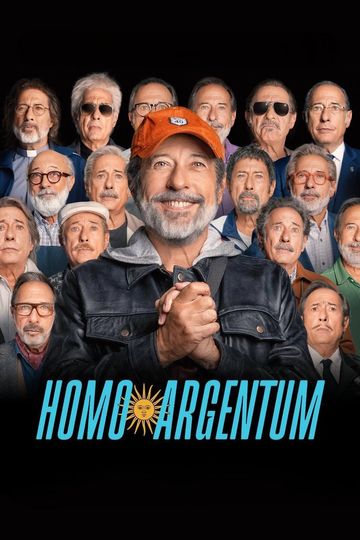
“Homo Sapiens?” (“Homo Argentum”) (Argentina) (4/5) Chicago Premiere; Letterboxd (4.5/5), Imdb.com (9/10), TMDB.com (9/10), Imdb critics review
#BrentMarchant #clff42 #ChicagoLatinoFilmFestival #HomoSapiens? #HomoArgentum #Argentina #16shortfilms #comedy #satire #modernman #machismo #GuillermoFrancella
It’s funny how things can turn out in life’s everyday scenarios. And, in this anthology of 16 short films from directors Mariano Cohn and Gastón Duplat, this inspired collection of comic vignettes reveals just how funny those funny situations can be. All of the offerings in this compilation feature performances by actor/comedian Guillermo Francella, who deftly brings distinctly different personas to each of his roles, demonstrating a broad range of characterizations that are wholly appropriate for the various stories of which they’re a part. The nature of the narratives in question also varies widely, featuring characters and storylines that explore an array of aspects of contemporary Argentine life (primarily from a male perspective), including scenarios that are ridiculous, sublime, cynical, clever, satirical, pompous, vain, well-meaning and everything in between. Admittedly, not all results are created equal here, but, except for one overly serious sequence that seems significantly out of place, the remaining 15 pieces all deliver the goods, serving up laughs in different measure, both big and small and always enjoyable. Most are comedy sketch length, although a few are little more than extended punchlines (and they, ironically, are among the best bits in the finished product). In that sense, then, this release plays like much like another Argentinian compilation of this type, the Oscar-nominated foreign language feature, “Wild Tales” (“Relatos salvajes”) (2014), only in smaller bites and with a kinder, gentler edge to its stories. In the interest of full disclosure, I had some genuine reservations about “Homo Sapiens?” when I first viewed its somewhat unimpressive trailer, which, quite frankly, doesn’t do justice to its material, making many of its segments look like bad sketches from The Benny Hill Show (1969-1989). Thankfully, though, that impression was more than adequately dispelled in the final cut. It may not be outrageously raucous, but it’s certainly a lot of fun, and who doesn’t like that?
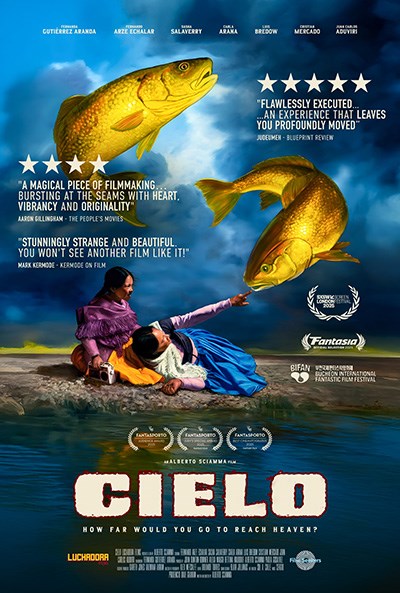
“Cielo” (“Heaven”) (Bolivia/UK) (4/5) Chicago Premiere; Letterboxd (4/5), Imdb.com (8/10), TMDB.com (8/10), Imdb critics review
#BrentMarchant #clff42 #ChicagoLatinoFilmFestival #Cielo #Heaven #Bolivia #UK #fairytale #fish #ladywrestler #magicalpowers #miracle #policechief #terrestrialplane
What does it take to get to heaven? What’s more, what can/should we expect if we’re able to get there? Will it live up to the beliefs we hold about it, especially the promises and expectations attributed to it? Those questions are important ones that many of us ask ourselves, but the answers are especially relevant to those who have experienced difficult lives here on the terrestrial plane. And, in this fairytale-like fable from writer-director Alberto Sciamma, that’s precisely what a hopeful young indigenous girl named Santa (Fer Monserrat) hopes to find out for herself. The enigmatic youngster from Bolivia’s desolate altiplano (high plateau) and her long-suffering mother, Paz (Carla Arana), have endured their share of trials and tribulations, especially at the hand of their abusive, uncaring, self-absorbed father/husband, Julio (Juan Carlos Aduviri). But, after eight years of this ongoing ordeal, Santa finally takes matters into her own hands and kills him with a blow to the head using, ironically, a heart-shaped rock. And, somewhat shockingly, she subsequently slays her mother (seemingly with Paz’s consent) while the two engage in an apparently joyful dance to celebrate Julio’s demise. But there’s a method to this seeming carnage (after tall, this is a fairytale, and we all know how grotesque their storylines can be): Santa believes there’s a better place for her and Paz – cielo (heaven) – and she plans to take herself and her mom’s salt-preserved corpse there. And, given Santa’s apparent mastery of certain kinds of magical powers (thanks to a fish that supposedly lives inside her belly), she’s determined to make this dream a reality. She thus sets off on an odyssey across the altiplano with the facilitation of a kindly priest (Luis Bredow), the help of a troupe of lady wrestlers led by the fierce but compassionate La Reina (Mariela Salaverry) and the backing of an initially befuddled (but later empathetically helpful) small town police chief (Fernando Arze Echalar) who’s “converted” once he becomes convinced of the authenticity of Santa’s miraculous capabilities. This magical and mystical journey is full of adventure and more than its share of twists and turns, some of them obviously corporeal and others surreal and symbolic, drawing from various aspects of native South American folklore. Admittedly, the elements in this tale don’t always hold together as well as they might have, and some narrative tangents seem out of place or inadequately explained. But, for what it’s worth, “Cielo” is always colorful (literally and figuratively), never dull, innately charming and gorgeously filmed, beautifully showcasing its native Bolivian landscape locations. What’s more, despite the sometimes-troubling nature of some of its story elements, there’s an undeniable optimistic and hopeful undercurrent that runs throughout the picture, reinforcing one’s belief in the concept of heaven, even if it doesn’t necessarily conform to preconceived notions of what it might be like, and the promise it holds out for those determined – and destined – to find it.
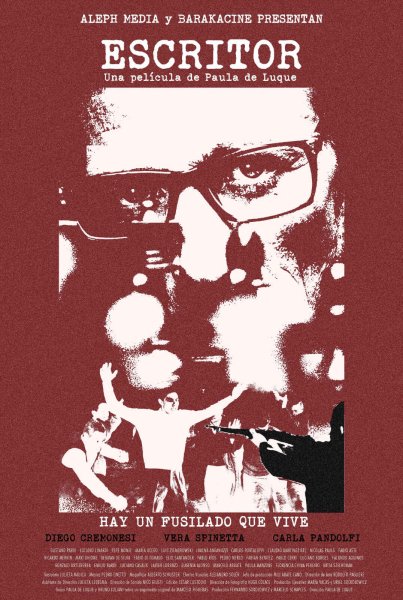
“Escritor” (“Writer”) (Argentina) (4/5) US Premiere; Letterboxd (4/5), Imdb.com (8/10), TMDB.com (8/10), Imdb critics review
#BrentMarchant #Escritor #Writer #clff42 #ChicagoLatinoFilmFestival #Argentina #attempted1956coup #nonfictionnovel #journalist #PedroAramburu #JuanPerón #RodolfoWalsh #OperationMassacre #TrumanCapote #InColdBlood #Watergate #BobWoodward #CarlBernstein #AllthePresidentsMen
Argentina in the 1950s was a hotbed of internal political turmoil. After the overthrow of President Juan Perón by a military coup in 1955, the country was taken over by Gen. Pedro Arumburu, who was himself the target of an attempted counter-coup less than a year later, one that included members of his own armed forces. However, when some of those military leaders had a last-minute change of heart, they needed to cover their tracks to preserve their reputations and positions of power, an effort that led to the cold-blooded killing of a group of alleged insurgents. There was just one problem: those victims had no connection to Arumburu’s attempted ouster. And, when word of these murders leaked out through a handful of survivors, it eventually made its way to author/journalist Rodolfo Walsh (Diego Cremonesi), an outcome that prompted the wheels of justice to begin turning. Granted, given the volatile political climate of the time, Walsh faced an uphill battle to gather evidence and to find a publication that was willing to publish the story. Eventually, though, the gruesome tale was chronicled in a book titled Operación Masacre (Operation Massacre) published in 1957. Walsh’s work has since come to be considered the first-ever nonfiction novel, released nine years before Truman Capote’s In Cold Blood, long seen as the first published entry in this genre. Director Paula de Luque’s account of Walsh’s investigation follows the treacherous path he traversed in collecting evidence about this incident, an effort that was met with frequent setbacks from witnesses/survivors and publishing outlets that were reluctant to commit to such a potentially explosive project, not to mention threats against his own life. However, with the assistance of his wife (Carla Pandolfi) and a young research associate (Vera Spinetta), Walsh forged ahead, meticulously compiling the details of the shootings and how the plan for the coup and coverup went awry. “Escritor” tells its story with stylistic flourish, beautifully shot in black and white with scrupulous attention to period piece production values and a perfectly suited score that’s ideal for the time frame and subject matter. In addition, the picture follows Walsh’s investigation with the same kind of painstaking detail exhibited by journalists Bob Woodward and Carl Bernstein in exposing the Watergate scandal in “All the President’s Men” (1976). However, the storytelling itself is unfortunately somewhat muddled at times as the narrative and screenplay frequently backtrack on themselves to show the process of how Walsh assembled the information he needed to properly outline the details of the story and its background. The film also incorporates some material about Walsh’s personal life (most notably his relationship with his research associate) that feels underdeveloped and incomplete, leading viewers to wonder why any of this information was included at all. Nevertheless, this release provides an intriguing look at a period and incident from Argentina’s past that’s likely not well known outside the country but that played an important role in helping to shape the nation’s stormy history that followed over the next 30 years, one that became both legendary and infamous across the Latin American continent.
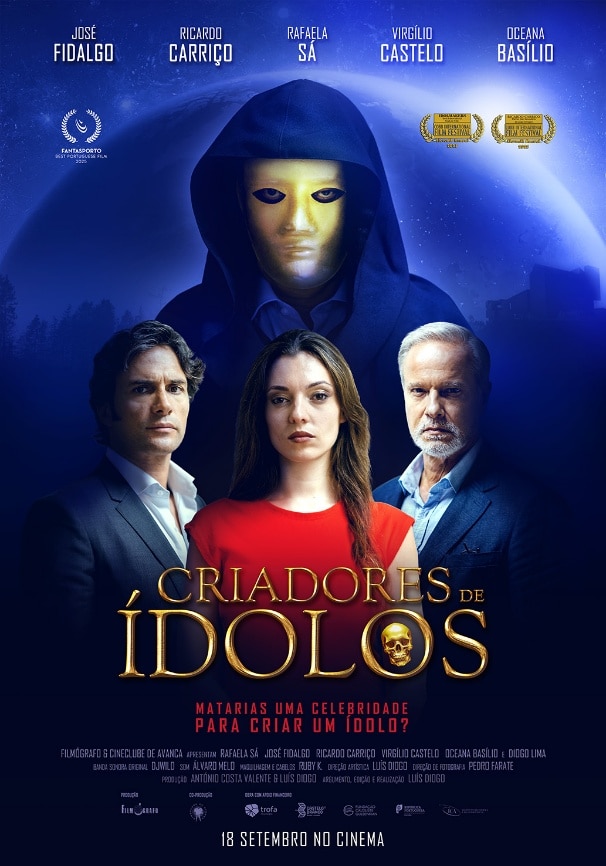
“Idolmakers” (“Criadores de Ídolos”) (Portugal) (4/5) Chicago Premiere; Letterboxd (3.5/5), Imdb.com (7/10), TMDB.com (7/10), Imdb critics review
#BrentMarchant #clff42 #ChicagoLatinoFilmFestival #Idolmakers #CriadoresdeÍdolos #Portugal #rockstar #secretsociety #assassin #JohnFKennedy #MarilynMonroe #JamesDean #ElvisPresley #icon #conspiratorialthriller
Most of us likely have individuals to whom we look up to for guidance and inspiration, but how do they attain that exalted status? Is it because of their expertise and accomplishments? Is it for their fame and notoriety? Or is it because they leave a lasting legacy after their deaths that we find impressive, impressionable and awe-inspiring? While all of these considerations factor into the result, it’s actually quite amazing how often the third reason – their legacy – has the greatest impact. In many cases, the “what might they have done if they had only lived longer” element comes into play, elevating such individuals to an iconic level of respect and admiration that they may not have achieved otherwise. They truly become “idols” in their own right. But are they alone responsible for this outcome, or are other considerations involved? That’s the question addressed in writer-director Luís Diogo’s latest offering about a secret society that helps to create idols in a singularly unique way – by assassination. Through clandestine and less-than-subtle means, the Order of Idolmakers quietly facilitates the deaths of legendary figures. Some of their targets are said to have included such individuals as John F. Kennedy, Marilyn Monroe, James Dean, Elvis Presley and many others. The purpose? In part, it’s to give members of the public the icons they need to be inspired to their own greatness, a noble ambition, even if it’s accomplished in a questionable manner. More importantly, however, it’s a means to ensure that these figures live on in the collective consciousness of society, an undeniable awareness that invariably leads to multiple money-making opportunities through memorabilia merchandising, re-releases of their beloved creative works, visitations to relevant tourist destinations such as Graceland and so forth, the self-serving counterpart to the aforementioned noble intent. Historically, this secret society of killers has been an all-boys club, but, as the film opens, the organization debates adding its first female operative, Sofia (Rafaela Sa), whose father (José Fidalgo) and grandfather (Ricardo Carriço) are influential members. But does she have what it takes to assume such a role? After she accepts an invitation to join the group, she’s assigned her first target: rockstar Sergio Guerra (Diogo Lima), whose skyrocketing popularity alone would ensure his fame and fortune but whose untimely death would guarantee a phenomenal legacy (not to mention a hefty income stream for the society and its affiliates). However, when Sofia sees all of the good Sergio does, such as significant charity work, and when she inadvertently becomes romantically involved with his brother, Filipe (Diogo Tomaz), she becomes conflicted and has second thoughts that subsequently place her mission – and her life – in jeopardy. This conspiratorial thriller thus raises intriguing questions about the nature of fame and fortune, how “we” decide whom we consider our icons and the cost that comes with such notoriety. It also explores issues related to female empowerment in a traditional man’s world. But, at the same time, it also asks, is this an aspiration that women really want to pursue? These are thought-provoking premises, to be sure, though the motivations that drive the characters’ beliefs and actions (especially those of Sofia) are, at times, seemingly implausible and surprisingly naïve, qualities that give viewers pause to wonder why she would be considered a suitable candidate for society membership in the first place. Those shortcomings aside, however, this makes for a provocative watch that should give us all pause for reflection on its core subject matter. It also features a kickass soundtrack, one of the best I’ve seen in a film in quite some time. “Idolmakers” may not represent a work of groundbreaking cinema, but it gives us things to think about when it comes to whom we’re willing and ready to place on a pedestal.
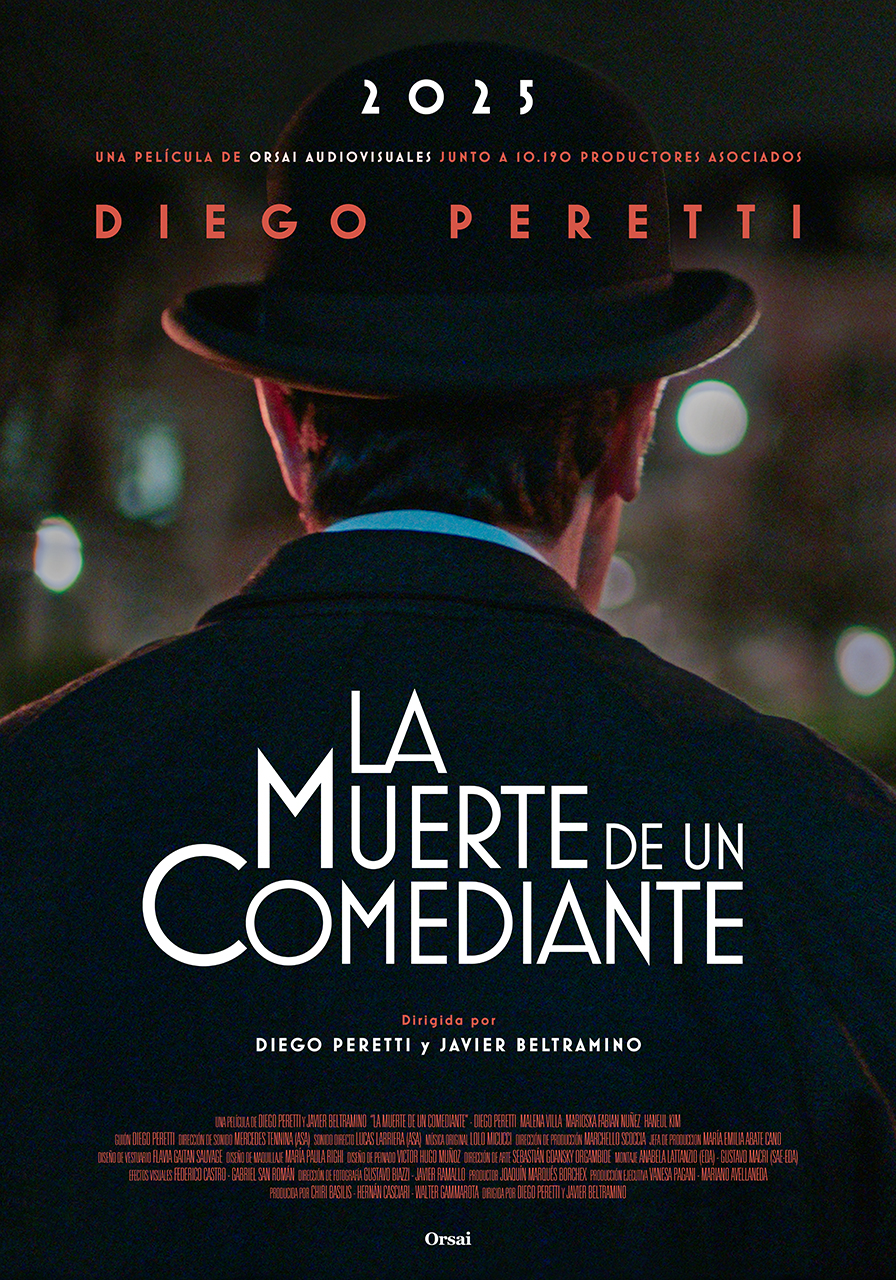
“Death of a Comedian” (“La Muerte de un Comediante”) (Argentina/Belgium) (3/5) US Premiere; Letterboxd (3.5/5), Imdb.com (7/10), TMDB.com (7/10), Imdb critics review
#BrentMarchant #clff42 #ChicagoLatinoFilmFestival #DeathofaComedian #LaMuertedeunComediante #Argentina #Belgium #Brussels #graphicnovelhero #transition #DiegoPeretti #PeterSellers #RenéMagritte #Bombín #ScorpionofJustice #crowdfunding #microinvestor #TravisBickel #televisionactor #terminalillness #CharlieChaplin #destiny
When the ends of our lives approach, many of us may feel that we have tasks to complete before we pass on, undertakings that frequently carry some kind of highly personal meaning. These ventures are also often accompanied by a measure of relevant significance, one that marks a crowning achievement of our lives and serves as a basis for transitioning to whatever comes next. And these endeavors usually come with challenges to surmount, ordeals that require tremendous effort in their fulfillment at a time when such exertion may be hard to muster. Such is the case for Juan Debré (Diego Peretti), the middle-aged longtime star of an Argentine TV superhero show called Scorpion of Justice who has just learned that he’s terminally ill. He’s initially despondent and withdrawn, not knowing what his uncertaimn future holds. But, with time running out, he feels compelled to make a pilgrimage to Brussels, Belgium, the home of a fictional graphic novel hero, M. Bombín, a well-manicured supersleuth investigator who’s a cross of Hercule Poirot, Peter Sellers and Charlie Chaplin and who was the inspiration for Debré to become an actor. Little does he know, however, that, once he’s across the Pond, he’ll become caught up in a Bombín-esque adventure in which he gradually transforms into his childhood idol. So, as Debré prepares to transition from this life to the next, the actor simultaneously transforms into the embodiment of Bombín, corporeally becoming who he was ultimately meant to be. He thus fulfills a destiny he had been unwittingly preparing for all throughout his professional career, moving from playing a role to filling one with real-world purpose. The result is a thoughtful, fun, whimsical tale with a surprising degree of depth for a film that’s essentially a graphic novel brought to the big screen (and whose story is essentially told in the same manner as one of those works). This project was obviously a labor of love for directors Peretti and Javier Beltramino, along with the 10,000+ microinvestors who were part of the crowdfunding process that financed it. This approach also represents something of a democratized filmmaking project, one where even small donors were allowed to provide input into the production and its narrative. Of course, that also proved to be something of a dual-edged sword here, given that it’s apparent a little too much accommodation may have been allowed for in the storytelling itself, which comes across as somewhat disjointed at times (especially in the opening act). However, once the picture settles down and finds its footing, it flows smoothly and engagingly in the second half. And, despite these modest shortcomings, this is a charming offering, not only in telling Debré’s story, but also in creating an entire mythology surrounding the character of Bombín, someone truly worthy of his own film at some point (though with a little more tightening up in the script the next time around). “Death of a Comedian” is a delightful time at the movies, and it comes at a time when we can all use a little more of this kind of escapist fare in our lives.
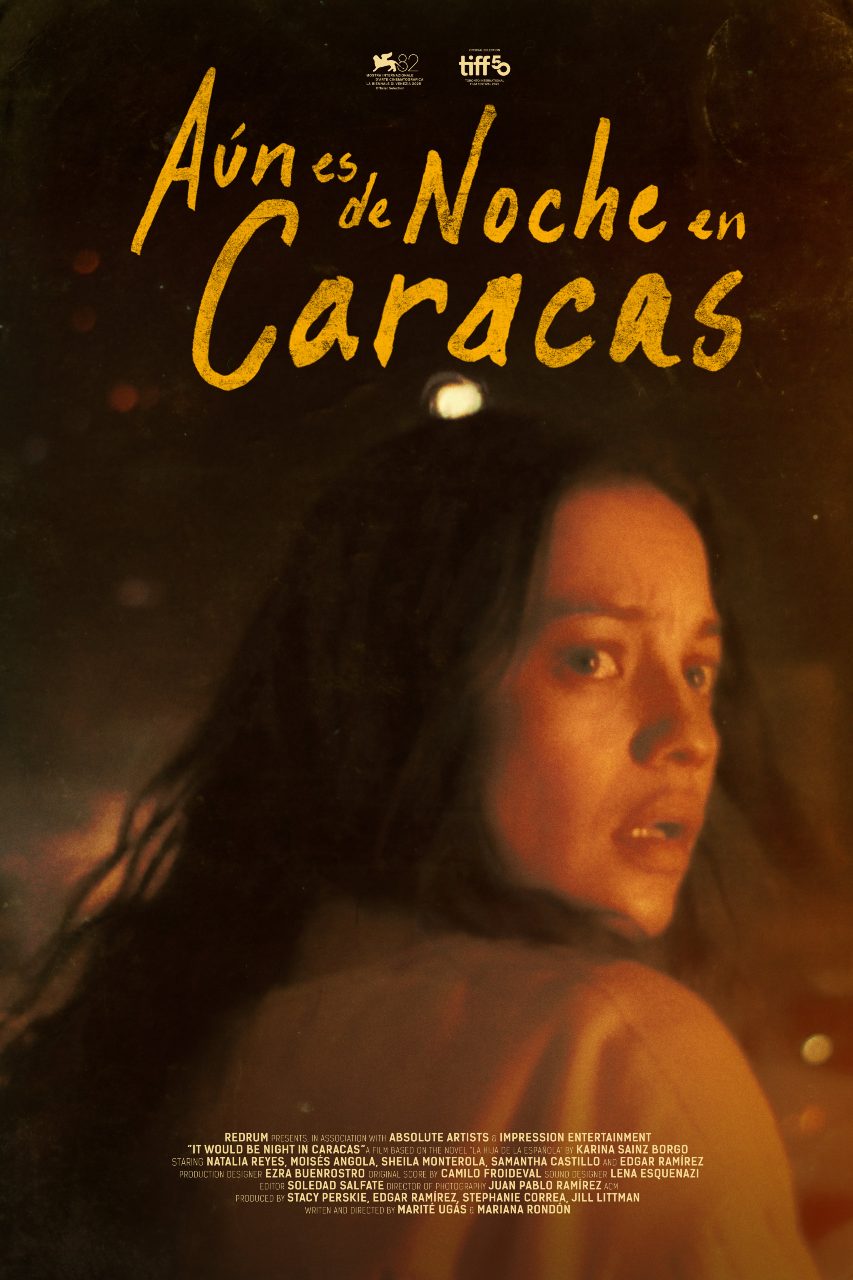
“It Would Be Night in Caracas” (“Aún es de noche en Caracas”) (Venezuela/Mexico) (3/5) Chicago Premiere; Letterboxd (3/5), Imdb.com (6/10), TMDB.com (6/10), Imdb critics review
#BrentMarchant #ItWouldBeNightinCaracas #Venezuela #Mexico #2017protests #streetfighting #paramilitarygroup #escapeplan #Caracas #Spain #NicolásMaduro
When society begins breaking down, the chaos unleashed often affects all aspects of everyday life, including everything from the availability of food and medicine to the collapse of basic law and order to the disappearance of common decency and civility. Under conditions like this, it truly feels like the world is falling apart, transforming into a quintessential hell on earth. So it was in Venezuela in 2017, when the government of President Nicolás Maduro began clashing with opposition groups in a series of violent protests across the country, especially in the streets of its capital and largest city, Caracas. The general public quickly got caught in the crossfire of this madness, the kind of fate that befalls 28-year-old writer-editor Adelaida (Natalia Reyes), for whom every day becomes a struggle to survive. Having just lost her mother to cancer and her apartment in a brazen takeover by a radical militia group, Adelaida’s essentially left homeless. And, when she inadvertently becomes caught in the middle of a nighttime street fight between rival factions, she’s brusquely whisked away (ironically to safety) by a seemingly masked thug, Santiago (Moisés Angola), the militant (and believed-missing) brother of one of her friends. Together they take refuge in the apartment of Adelaida’s neighbor, Aurora (Blanca Vanessa Núñez), who recently succumbed to the effects of a chronic health condition. However, as tragic as Aurora’s death might have been, it may also turn out to be Adelaida’s salvation: As a Spanish national living in Caracas, Aurora had been planning to return home to escape the escalating violence in Venezuela, with a plane ticket and travel papers already in hand – items that Adelaida now seeks to use to facilitate her own exit by assuming her deceased friend’s identity. It’s an ambitious undertaking filled with challenges despite having the apparent means to make it happen. Adelaida’s story is thus reminiscent of the experience of Australian journalist Guy Hamilton (Mel Gibson) in “The Year of Living Dangerously” (1982), a depiction of the reporter’s frantic attempt to flee Indonesia during a violent 1965 coup attempt under conditions similar to what’s depicted here. Unfortunately, while ‘It Would Be Night in Caracas” might sound like a nailbiter comparable to the aforementioned title, it struggles to stay on point in maintaining viewer interest. To a great degree, the film provides little in the way of context for explaining how these circumstances arose, apparently assuming that audiences are as intimately familiar with their back story as most Venezuelans likely are. This offering also tends to meander significantly in the opening act, briefly exploring (but never fully developing) an array of story threads (such as a blossoming romance between Santiago and Adelaida) before finally settling on the protagonist’s impersonation escape plan as the principal thrust of the picture’s core narrative. That, regrettably, can make for a very frustrating and unsatisfying watch. Even though the film somewhat redeems itself in the second half, there’s a good chance filmmakers Mariana Rondón and Marité Ugás may have lost their audience by that point. And that’s unfortunate: given how much Venezuela has been in the news of late, I’m sure that there are many would-be viewers out there who would like to know more about this country and how it has come to dominate current headlines. But, considering how this release plays, it’s unlikely that the curious will be able to get much along those lines from this unfocused effort.

“The Dog, My Father and Us” (“Nosotros, mi papá y el perro”) (Ecuador) (3/5) Chicago Premiere; Letterboxd (3/5), Imdb.com (6/10), TMDB.com (6/10), Imdb critics review
#BrentMarchant #clff42 #ChicagoLatinoFilmFestival #TheDogMyFatherandUs #Nosotrosmipapáyelperro #Ecuador #YouTubeprogrammer #architectureprofessor #porn #estrangedbrother #Quito #LittleMissSunshine #AlanArkin #familydog #videogamefanatic #Russiangirlfriend
Middle age is often a time of great change – new opportunities, the disappearance of what no longer serves us and plenty of life-altering transitions. It can be both rewarding and disorienting as the card decks of our lives are drastically shuffled in ways that are simultaneously disappointing and uplifting. But going through that process can be challenging, as explored in this comedy-drama from director Pablo Arturo Suárez. Forty-five-year-old Sebastian (Alejandro Fajardo) lives a somewhat nondescript middle class life as an architecture professor in Ecuador’s capital city, Quito. Despite this sense of seeming normality, however, he struggles to manage a plethora of frustrating scenarios, unaware that they’re just the tip of an approaching iceberg that he doesn’t see coming. For starters, his career takes a major hit when he’s fired from his job after being caught (on camera no less) having sex with one of his students, Camila (Carolina Perez), in a university classroom. Then there’s trouble at home with his cantankerous, uncooperative, health-challenged father, Rodrigo (José Ignacio Donoso), who doesn’t take care of himself and is obsessed with watching porn (a character somewhat reminiscent of Grandpa Edwin (Alan Arkin) from “Little Miss Sunshine” (2006)). Sebastian also attempts to correct what he sees as the wayward behavior of his 17-year-old son, Tomás (Esteban González), a videogame fanatic who routinely skips school, refuses to take responsibility for himself and dreams of becoming a YouTube programmer. But, if all that weren’t enough, Sebastian’s long-estranged brother, Pedro (Stefano Bajak), shows up unannounced with his Russian girlfriend, Masha (Masha Telishevskaia), stirring the pot in ways that he and the rest of the household can’t begin to imagine. Through all this, Sebastian likes to believe he can at least take comfort in the support of his loving wife, Marinés (Monserrath Astudillo), but, when she announces revelations of her own, even that source of solace is thrown into doubt. Oh, and as the film’s title notes, there’s a family dog that’s part of the mix, an adorable but aging pooch who just might be the most stable member of the family. The film follows these characters (especially Sebastian) as they attempt to sort out their lives through a generally inoffensive though patently lightweight narrative whose modest twists and turns ultimately end up unfolding with a fair number of gentle chuckles and an ample degree of heart-tugging, warm fuzzy predictability. There’s nothing especially awful about this highly formulaic offering, but it also provides little in the way of surprises or revelatory insights, the kind of film that one might best describe as a slightly off-color entry of something typically found on The Hallmark Channel. “The Dog, My Father and Us” is the kind of movie to switch on when there’s nothing else to watch, but don’t expect a lot more than that.
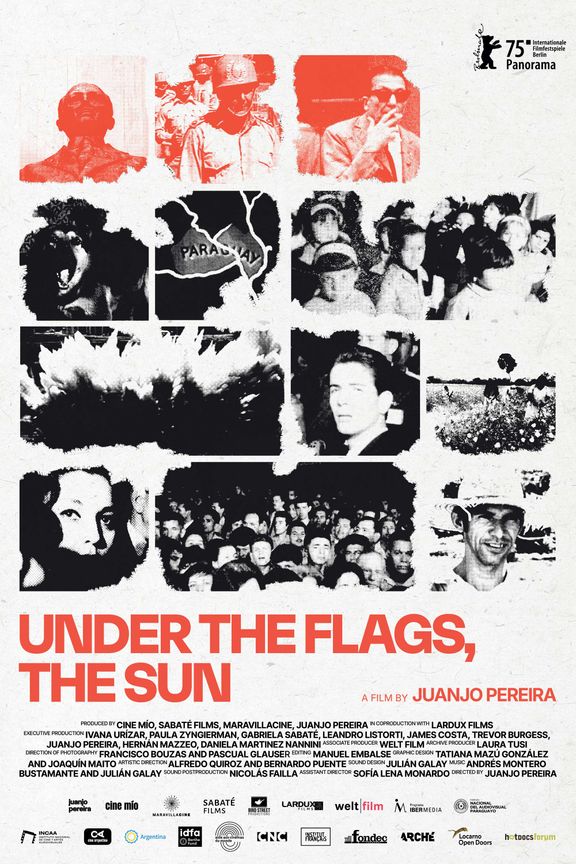
“Under the Flags, the Sun” (“Bajo las banderas, el sol”)* (Paraguay/Argentina/Germany/USA/France) (3/5) Chicago Premiere; Letterboxd (3/5), Imdb.com (6/10), TMDB.com (6/10), Imdb critics review
#BrentMarchant #clff42 #ChicagoLatinoFilmFestival #Paraguay #DonAlfredoStroessner #dictatorship #ColoradoParty #religionist #antiCommunist #AugustoPinochet #JosefMengele #selfglorification #documentary #UndertheFlagstheSun
For 35 years, Gen. Don Alfredo Stroessner led the land-locked Latin American nation of Paraguay, heading up one of the planet’s longest-lasting authoritarian dictatorships, holding power from 1954 until his ouster by a supposedly trusted political colleague in 1989. Like many comparable autocrats of his day, he built and oversaw a carefully crafted cult of personality characterized by unrelenting right-wing policies and ideology and backed by a solid core of staunch religionist, anti-Communist, anti-trade union followers in his all-powerful Colorado Party (the dominant political organization still in charge in Paraguay to this day). And, while in power, he faithfully conformed to the mold of many of his despotic peers, systematically marginalizing, torturing or exiling minorities and opponents (usually without trials), striking up alliances with the likes of Chilean strongman Augusto Pinochet, and even providing sanctuary to heinous war criminals, such as former Nazi Dr. Josef Mengele, all the while engaging in unapologetically insincere acts of self-glorification. Surprisingly, however, the Stroessner regime is one that many outside of Paraguay know little about, a result due in large part to a lack of documentation of his abuses during his years in charge. And that fact in itself is what has made the production of this documentary something of a miracle, given that the bulk of its content has been drawn almost exclusively from what little archive footage of that period still remains, culled from sources far and wide all over the globe. Writer-director Juanjo Pereira is to be highly commended for sourcing the scarce materials still available that have been used in compiling this film. However, with that said, there are times when Stroessner’s story feels somewhat lacking in detail, particularly early on in the film. Yes, it’s obvious that the Paraguayan dictator followed in the footsteps of many political oligarchs of the era, and his scurrilous actions while in office likely come as little surprise to many observers, at least when examined superficially. However, throughout much of this documentary, the many allusions to his reprehensible deeds often go without substantive elaboration until well on into the film. In light of that, then, this production would have benefitted tremendously from the inclusion of a more explicit back story about Stroessner, his exploits and how he successfully managed to fly below the radar for so long. Interviews with experts providing perspective about this release’s subject would have no doubt bolstered the narrative, too. But, as it stands now, “Under the Flags, the Sun” feels like a work that has a strong but nevertheless underdeveloped foundation underlying it that could have used some significant expansion to strengthen the credibility of its story, especially for viewers unfamiliar with a historical figure whose atrocities deserve wider attention than they have typically received – and deserve to be called out. (* Previously included in “The Best and Worst Documentaries of 2025”)

“Borealis” (Puerto Rico) (1/5) US Premiere; Letterboxd (0.5/5), TMDB.com (1/10), Imdb critics review
#BrentMarchant #clff42 #ChicagoLatinoFilmFestival #Borealis #solarflare #CarringtonEvent #massinsanity #memoryloss #gratuitousviolence #zombieapocalypse
I’ll come straight to the point about this one: It is, without a doubt, one of the worst films I have seen in ages (and that’s being kind). Director Heixan Robles’ debut feature about the chaotic fallout from a massive solar flare (known as a Carrington Event) has so much wrong with it that it’s difficult to know where to begin. For starters, while the solar storm is the seminal event of this story, it ultimately has little to do with the narrative of the picture other than serving as an unexplained catalyst for the rampant carnage that follows. Instead, the picture is more akin to a zombie apocalypse flick in which nearly everyone goes utterly berserk, engaging in wild, antisocial behavior due to their collective memory loss and resulting in a related disappearance of civility (how a solar flare is responsible for either of those developments is never adequately explained). This essentially opens the door to an outbreak of unbridled mayhem (to put it mildly) that leads to much of the population inexplicably devolving into “savages,” beings who relentlessly assault innocents in reprehensibly brutal (and graphically depicted) ways. Then there are those who attempt (theoretically speaking) to restore a semblance of order by ironically employing the same tactics as their foes. Such is the case with Pagán (Néstor Rodulfo), a trigger-happy, out-of-control cop who essentially ends up shooting at anything that moves, regardless of their savagery status. His authority is frequently challenged by Cano (Jorge Alberti), a seemingly compassionate protector of the victimized who has what appears to be a submerged sinister side. In turn, these two head-butting adversaries vie to control Thalía (Greta Merced Cruz), a drug-addicted young woman who suspects she’s the mother of an abandoned daughter and the frequent target of the unbridled sexual advances of oversexed thugs. In the meantime, Pagán and Cano also have to contend with the perverted and bizarre activities of a charismatic but darkly delusional social services employee, Raymond (aka “Cisco”) (Omar Torres Molina), who many lost souls see as a savior for their dilemma. However, most of the narrative serves as little more than an excuse for senseless, gratuitous violence of an often-questionable nature, very much like a violent videogame on steroids that incorporates directionless story elements that make little sense, especially in its implausible, baffling transition sequences. What’s more, viewers can’t rely on the film’s trailer for elucidation or explanation, either, as it includes material that doesn’t even appear in the picture’s theatrical cut. In short, “Borealis” is a positively awful offering that contains precious little redeeming value and serves primarily as a vehicle for what’s wrong with many of the movies being made these days. This one is easily skipped, especially among viewers who are easily repulsed by grotesque imagery lacking in purpose, substance or direction.

“Enough, Mom!” (“¡Basta Mamá!”) (Colombia) (1/5) North American Premiere; Letterboxd (0.5/5), Imdb.com (1/10), TMDB.com (1/10), Imdb critics review
#BrentMarchant #clff42 #ChicagoLatinoFilmFestival #EnoughMom #BastaMamá #romanticcomedy #Colombia #mamasboy #overbearingmother #SCTV #TheCarolBurnettShow
Overbearing mothers, including such stereotypes from vile mothers-in-law to controlling, overprotective coddlers of mama’s boys, have long been a comedy staple. It’s well-worn turf that, arguably, may have significantly overstayed its welcome. Thankfully, though, every so often, sketches, movies and TV shows come along that successfully find a way to breathe new life into this idiom. Unfortunately, this isn’t one of them. This sophomore (or is it sophomoric?) feature from director Flora Martínez is about as lame as they come when it comes to efforts of this stripe. The blame here probably isn’t so much the fault of the filmmaker as it is of the trio of writers who penned its positively dreadful screenplay, one virtually devoid of laughs from start to finish. In fact, it’s the kind of picture that reminds me of the source material behind the brilliantly inspired skits that parodied failed sitcoms for programs like SCTV and The Carol Burnett Show. But, regrettably, that’s not the case here. As 45-year-old Fernando (Raphael Zea) anxiously prepares to attend a birthday dinner in the home where he still lives with his domineering mother, Victoria (Marcela Benjumea), he worries about what kind of impression the event will leave on his fiancée, Leticia (Martínez), who doesn’t know he still resides with mama. And Fernando’s concerns are justified once the two women meet for the first time, a standoff in which they vie for control of the affections of the guest of honor, a conflict that soon turns into an awkward and bitter war of wits. The problem here, however, is that there’s almost no wit involved. The jokes are trite, fall flat and completely lack the zinging nature that makes such showdowns work effectively. In many regards, this is like watching an attempt at a comedy routine that’s about 60 years out of date. To their credit, the obviously talented trio of performers do their level best to try and make something out of this anachronistic mess, but it’s obvious a bigger chore than they’re capable of handling. To make matters worse, the film’s attempt at incorporating a measure of warm, fuzzy sentimentality in the final act only slows things down, delaying the hasty exit from the theater that many viewers are no doubt eagerly looking forward to by this point in spite of its scant 1:17:00 runtime. As material that has already been done so many times before (and better), it’s hard to fathom how this production ever got a green light. At the very least, the script should have gone through a number of extensive rewrites to add some tongue-searing bite to its dialogue and genuine inventiveness to its more-than-familiar narrative before being committed to film. In the end, however, as it stands now, the picture might well have also considered a title change from “Enough, Mom!” to “Enough Already!”
SHORTS
“Desaparecidos” (“The Disappeared”) (Bolivia) (5/5) World Premiere; Imdb.com (10/10), Imdb critics review
#BrentMarchant #clff42 #ChicagoLatinoFilmFestival #Desaparecidos #TheDisappeared #politicalprisoner #paramilitaryassassin #AndesMountains #kidnapping #unmarkedgravesite #payback
In the second half of the 20th Century, Latin America became almost synonymous with the rule of authoritarian dictatorships across multiple countries and regimes. This film short from actor-director Fernando Arze Echalar tells the story of the gruesome fallout that came from that era, particularly the destinies of political prisoners who simply vanished and became known as desaparecidos (“the disappeared”). Set in 1999, this tale follows what happens when Dario (Echalar), a ruthless former Bolivian paramilitary assassin in service to the nation’s dictatorship, kidnaps the adult children (Daniela Moscoso, Jairo Buchmann) of one of the victims he killed in 1982. The now-grown survivors of that grisly murder wonder why they’ve been inexplicably captured, given that the authoritarian government has been out of power for years and that they’re not politically active in any capacity, living their lives as ordinary, everyday working class members of society. Dario blindfolds them and ties their hands, driving them to a remote location in the Andes Mountains, presumably to kill them, in the vicinity of what’s believed to be the unmarked gravesite of their late father. But, when the trio arrives at their destination, events take a radically unexpected turn in which the exploiter suddenly finds himself on the receiving end of the kind of punishment he once routinely doled out. In telling this compelling story, the film thus makes clear how justice can truly be a dual-edged sword, one that’s rewarding but that can also be just as cruel as what prompted the need for it in the first place. Indeed, it’s true what they say about the nature of payback.
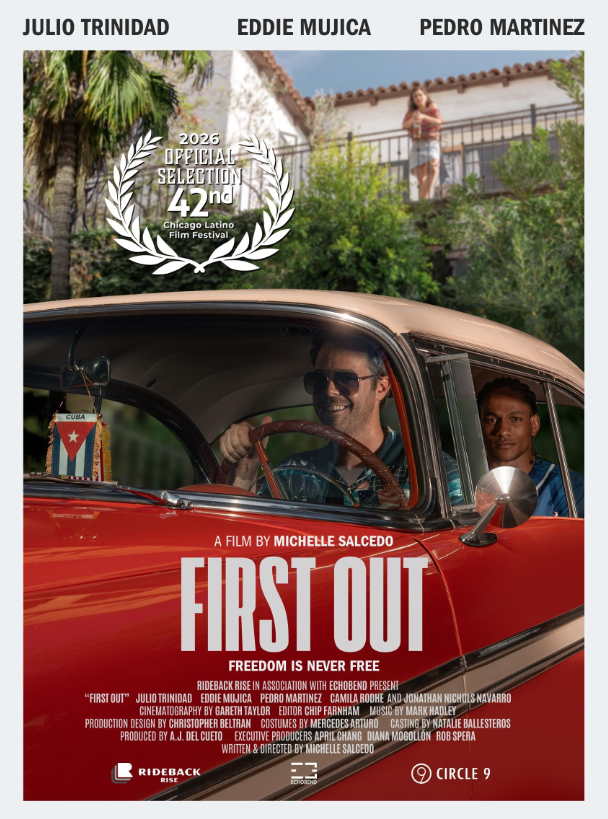
“First Out” (Cuba/USA) (3/5) World Premiere; Letterboxd (3/5), Imdb.com (6/10), TMDB.com (6/10), Imdb critics review
#BrentMarchant #clff42 #ChicagoLatinoFilmFestival #FirstOut #filmshort #baseballphenom #Cuba #defection #USA
Making it big in the big leagues is something that talented individuals in many fields of endeavor regularly dream about. But is it something for everyone possessing such attributes, especially if it means making a big sacrifice to fulfill that goal? That’s what writer-director Michelle Salcedo examines in her latest film short, the story of two brothers (Pedro Martinez, Julio Trinidad), Cuban baseball phenoms that a hustling scout (Eddie Mujica) wants to recruit to play in the US. However, that would essentially call for defecting, leaving behind their homeland and their family, most notably their sister (Camila Rodhe), who doesn’t always function well on her own. So what will they do? Such is the dilemma faced by the duo in this fact-based tale, one that’s an engaging watch but that would have worked better as a full-length feature. As a short, there’s a lot missing from this story that easily could have been expanded into something more substantial. Since many features get their starts as shorts, I’d like to hope that ultimately happens with this film, as it’s something I’d definitely go see (and I’m not an especially avid baseball fan). Here’s hoping that eventuality comes to pass.

“La Ambición de Marie” (“Marie’s Ambition”) (Spain) (3/5) US Premiere; Letterboxd (3/5), Imdb.com (6/10), TMDB.com (6/10), Imdb critics review
#BrentMarchant #clff42 #ChicagoLatinoFilmFestival #MariesAmbition #LaAmbiciondeMarie #filmshort #Spain #chesschampion #tattoo #antidopinginquiry
When Marie (Sarah Lafaurie), an aspiring French chess master who has met with mixed career success, is approached by a mysterious stranger (Eugenio Barona) with a dubious proposal to up her game, she’s simultaneously intrigued and perplexed. The shadowy figure, who claims to represent an antidoping organization that investigates the use of illicit substances, practices and techniques in the world of sports, says he’s anxious to determine if it’s possible to employ a clandestine enhancement method for significantly improving one’s chess skills, and he wants to know if Marie wants to give it a try to see if it works. Given that chess is one sport in which doping has not been an issue (largely because it’s believed it wouldn’t have any appreciable impact), Marie wonders about the value of such a dubious undertaking. At the same time, though, given her ambition to rise to prominence in the sport, she agrees to the idea. But little does she – or the mystery man – know what’s about to unfold. To be honest, though, it’s not hard to figure out what’s actually transpiring in director Manu Fernández’s Faustian tale, although the particulars of how its plot developments come to pass seem a bit … odd … and somewhat underexplained. In light of that, then, this project probably would have worked better as either a longer short or even a feature-length piece with greater elaboration. As it stands now, however, “La Ambición de Marie” feels somewhat undercooked and in need of further detail to make its moves clearer and more engaging.
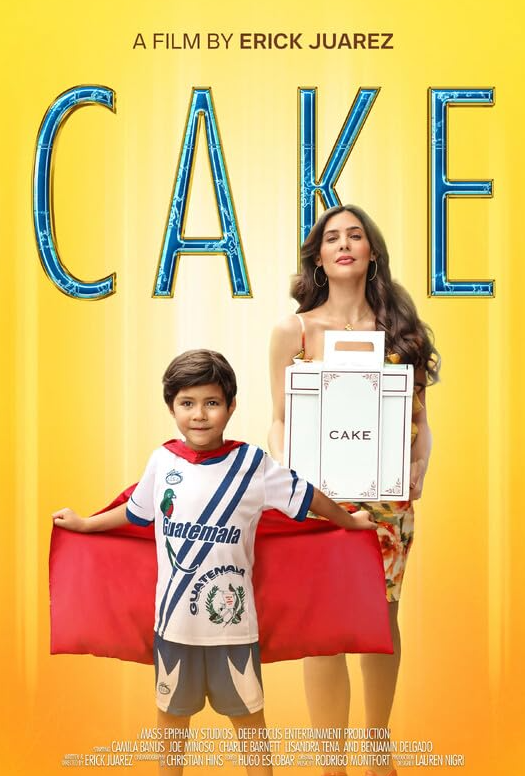
“Cake” (USA) (2/5) Chicago Premiere; Imdb critics review
#BrentMarchant #clff42 #ChicagoLatinoFilmFestival #Cake #Chicago #filmshort #birthdaycake #comedy #Bittersweet #highendbakery
Birthdays are special occasions for most of us, particularly children, for whom it often seems like an eternity passes between such anticipated celebrations. So it’s easy to understand how these festivities can leave an enduring impact on youngsters, endearing memories that last a lifetime. Such was apparently the case for writer-director Erick Juárez when he came up with the idea for this film short about an especially memorable birthday from his own past. As the birthday boy (Benjamin Delgado) looks forward to his party, his adoring mom, Rosy (Camila Banus), wants to make her son’s day a special one, including baking him a special cake. Unfortunately, Rosy’s track record in the kitchen is a trainwreck, so she improvises and orders a cake from Bittersweet, one of Chicago’s high-end (and pricey) bakeries. Of course, Rosy’s success in obtaining the cake is as eventful as her past efforts at coming up with something homemade, an odyssey characterized by a wealth of alleged ample hilarity. I use the word “alleged” here, however, since there’s nothing especially funny or original in this eminently unsurprising tale. To be sure, it’s easy how to see this might be looked upon as a fond, sweet memory, and it clearly means a lot to the filmmaker. But that doesn’t necessarily translate into something engaging (or even interesting) on the big screen. Had there been a greater degree of originality (and definitely far less predictability), this might have worked. But, in its current form, it plays more like a polished home movie or something that one might find as part of an after-school PBS lineup for youthful viewers but certainly not as a captivating big screen production. Indeed, cake is something to be savored, but this cinematic namesake unfortunately fails the taste test.
Copyright © 2025-2026, by Brent Marchant. All rights reserved.