



‘I Swear’ eloquently depicts the fruits of confidence and self-worth
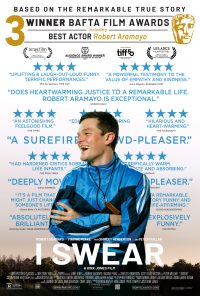
“I Swear” (2025 production, 2026 release) (UK). Cast: Robert Aramayo, Maxine Peake, Peter Mullan, Scott Ellis Watson, Shirley Henderson, Steven Cree, Francesco Piacentini-Smith, Christina Ashford, David Carlyle, Ron Donachie, Adam McNamara, John Davidson (archive footage). Director: Kirk Jones. Screenplay: Kirk Jones. Web site. Trailer.
They say “you shouldn’t judge a book by its cover,” because you just might be surprised by what’s inside. The content may readily defy observations and expectations in unanticipated ways. And the same, of course, can be said for people, especially those who exhibit traits or behavior that’s outside the mainstream. That’s precisely the point driven home by the excellent new award-winning, fact-based comedy-drama-biography, “I Swear.”
John Davidson (Robert Aramayo) has lived a life that few have understood for many years (including himself). Born in 1971 in Galachiels, Scotland, he grew up in a middle class household with his parents, David (Steven Cree) and Heather (Shirley Henderson), and three younger siblings. All seemed fine until his teenage self (Scott Ellis Watson) entered high school, when he unexpectedly began exhibiting uncontrolled forms of unusual behavior, including a variety of tics; sudden and violent body movements; outbursts of foul language, racial slurs, and homophobic and misogynistic insults; and extreme expressions of obsessive-compulsive disorder. Since these actions came from seemingly out of nowhere, many were at a loss to explain or understand them. In fact, because they seemed so out of character, many observers, such as his father and the school’s rigid headmaster (Ron Donachie), believed that John was faking his behavior, essentially engaging in them simply as an attention-getting tactic. However, as the severity and frequency of these symptoms grew, he was increasingly unable to continue with his schooling.
John’s behavior also took a toll on those around him, most notably his family. In fact, the strain of coping with his condition became so great that his father abandoned the household, leaving Heather to care for the children by herself, most notably the excessive demands of attending to John’s considerable needs. But the key question that remained was, what was behind John’s condition?
As it turns out, John was diagnosed with the rare condition known as Tourette Syndrome. While it has become somewhat better known and understood today, it was not widely known or accepted by many in the general public (especially among those in official capacities and in more conservative segments of society) during the 1980s and ʼ90s. As a consequence, John was often marginalized and ridiculed, with medication being the only accepted form of treatment (and not a very effective one at that). John struggled to cope, but it was a constant battle, both for him and his mother, who was increasingly reaching the end of her rope.
Circumstances took a drastic change in 1996, when John had a chance encounter with an old friend from school, Murray Achenbach (Francesco Piacentini-Smith). Murray had been living in Australia but returned home when he learned that his mother, Dottie (Maxine Peake), had been diagnosed with terminal liver cancer and only had months to live. Murray explained the situation to John and asked him if he would like to meet her. Self-conscious of his behavior, John was reluctant but relented, only to soon find himself engaging in the very acts typical of his condition, a source of deep personal embarrassment.
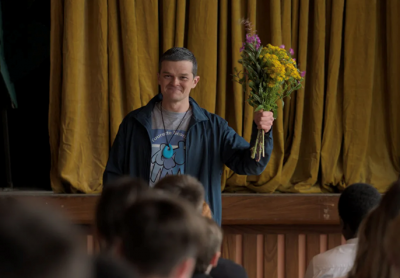
Much to John’s surprise, however, Dottie was not the least bit offended. That’s because she had years of experience as a mental health nurse and understood what he was going through. Her compassion touched John in a way that had never happened before, even among his own blood relatives. John and Dottie took a liking to one another, and she became a sort of highly supportive surrogate mother, even inviting him to move into her home.
That was quite an undertaking for Dottie at the time given the state of her own health. But another drastic change arose in that vein soon thereafter when she learned that her condition had been misdiagnosed. She indeed had a growth on her liver, but it was benign, not malignant. And, as she nursed herself back to health, her bond with John grew ever stronger, with a commensurate improvement in his circumstances.
This is not to suggest that John was without challenges. He still had to contend with the prejudices, ignorance and unfair circumstances that often made his condition worse, and he heavily depended on Dottie and her family for getting through his days. But she saw something in John – and firmly believed in it – that others didn’t: he was innately a kind, caring, helpful soul who possessed none of the seeming ill will that accompanied his condition and were in no way reflective of the nature of his true character.
Dottie worked intensely and patiently with John to help bring out the best in him, to help him reach his personal potential. For example, she helped him get a job as an assistant caretaker at a local community center, working with an aging but equally patient and understanding boss, Tommy Trotter (Peter Mullan), who also took John under his wing at a time when he conceivably didn’t have to. The job bolstered John’s confidence and provided a big boost to his sense of self-worth. And, in turn, he became an ardent advocate to foster awareness and education about Tourette Syndrome. He has since worked with those affected by the condition to help them appreciate the fact that there is nothing inherently “wrong” with them. He has also helped to enlighten those in positions of authority about the uncontrollable aspects of the condition and how to recognize and deal with patients who are affected by it. What’s more, he has aided researchers in investigating experimental technology to help individuals better deal with the effects of Tourette. And, for his efforts, he was recognized by Queen Elizabeth II (Christina Ashford) as an MBE, a member of the Most Excellent Order of the British Empire, a chivalrous order that honors individuals for outstanding service to the empire in various forms of endeavor. That’s quite a step up for someone who was once severely and unfairly chastised for uncontrolled but fundamentally misunderstood behavioral outbursts over which he had no discernible say in the matter.
“I Swear” eloquently brings John’s odyssey to life on the big screen in an impressive and inspirational way. But what’s most extraordinary about this story is its depiction of the incredible transformation that John went through, especially when others came to believe in him (and he began to understand how he could follow suit for himself). That’s important, especially in light of the role that our beliefs play in the manifestation of our existence, a product of the conscious creation process, the philosophy that makes such outcomes possible. It’s not known if John or any of his most devoted supporters have ever heard of this school of thought, but it’s obvious that its impact was undeniable in the metamorphosis on display here. The journey from supposedly antisocial misfit to celebrated national hero is a long one, but the contributions to society that came out of it are immeasurable.

So how did John’s transformation come about? As the film shows, beliefs played a huge role in his metamorphosis, both on his part and those of others, despite the enduring presence of his condition. When John was an adolescent, when the manifestations of Tourette Syndrome first began becoming apparent, for example, he had difficulty believing how and why they were surfacing, given that he had never experienced them before. He didn’t know what to believe. At the same time, though, there were others who were convinced that they knew what was going on, despite a lack of awareness about and knowledge of the nature of his condition. Their beliefs that he was faking it or merely seeking attention were thus unfairly thrust upon him, no matter how erroneous they were, and, unfortunately for John, they stuck, even leading him to believe that they might somehow be correct.
Over time, as his condition intensified, the impact of those misplaced beliefs unconsciously galvanized his behavior, and there was apparently no concerted effort to fundamentally change his beliefs and how they played out. John was quietly troubled by this, though, as he knew – just as when he was a teen – that his actions and comments were not accurate reflections of who he was deep down inside, yet he felt unable to change his circumstances and the prevailing opinions about him.
But that all changed when Dottie entered his life. She understood him and his condition, and her beliefs in those areas began to turn things around for John when she shared her insights (and her home) to begin working with him. Her efforts to bring forth “the real John” made a huge difference. Even though he still experienced the manifestations of his condition, his kind, compassionate nature started to emerge. His personal confidence and self-worth soared, too, as evidenced through his job, his willingness to live on his own and his eventual work as a Tourette Syndrome educator and advocate. His desire and ability to become an activist for those affected by his condition demonstrated the growth in his beliefs and self-esteem, gains that helped him reshape the uninformed opinions of others who once berated him when not knowing any better.
Of course, this scenario raises the question of why anyone would want to create circumstances like these. Indeed, who would seek to bring such seemingly unnecessary difficulties upon themselves? And that’s an argument with genuine merit. Ultimately, though, our reasons are our own when we create any existence characterized by particular traits, and it may be virtually impossible for anyone (ourselves included) to determine why they surface as they do. So it may well have been for John.
However, when we consider what he has accomplished, it could be that it was an effort aimed at developing the singular kind of advocacy he has come to be known for. On some level, perhaps he may have come to believe that the only way he could effectively advocate for those with his condition was to experience it firsthand, to know directly what it’s like to live with Tourette Syndrome. That knowledge, combined with the qualities that shaped his innate persona, was the mix of traits that needed to be forged to make such an outcome possible.
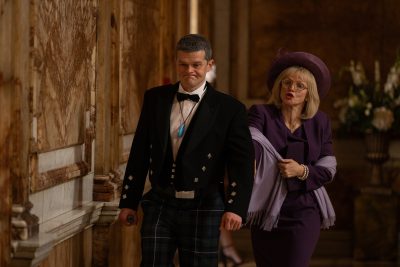
In that sense, this might be viewed as his destiny, an example of the principle known as value fulfillment, being our best, truest selves for the benefit and betterment of ourselves and those similarly situated. And, given his story, it’s apparent that John made the most of the opportunity to bring this about. After all, if he managed to get the attention of the Queen, he must be doing something right, foul language notwithstanding.
Those familiar with Tourette Syndrome are well aware of what it’s like. But, for those who aren’t acquainted with it, the condition can be quite startling, especially the potentially offensive and/or violent behavior that unexpectedly emerges in the midst of what seems like otherwise-“normal” activity. Quite literally, someone might appear to be carrying on a normal conversation one moment only to spontaneously and uncontrollably break into highly vocal outbursts of antisocial, misogynistic and/or racially prejudicial language. Such incidents are also sometimes accompanied by physical tics that can lead to punching, slapping and other wild gyrations. And the odd part about all this is that those who experience these manifestations are aware that they’re happening but can’t stop them, no matter how much they try or would like to. In many cases, these individuals are fundamentally friendly, kind-hearted souls who, try as they might, are simply incapable of controlling these misleading impulses, a source of tremendous personal frustration for them. However, onlookers frequently don’t understand the condition and often react with outrage, offense and indignation at these occurrences. And, for those affected, this usually leads to alienation socially, vocationally and even in relations with family members, despite a strong desire to fit in with regular aspects of everyday life. What’s worse, Tourette Syndrome is difficult to treat, largely because the cause is unknown (in fact, for a long time, some mental health professionals even doubted whether it was a “real” condition).
Accurately and effectively capturing those circumstances both visually and narratively is difficult indeed. It would be all too easy to depict them in ways that mislead others, making those affected appear mean-spirited or patently ridiculous. However, writer-director Kirk Jones’s outstanding portrayal of this condition and a protagonist affected by it can’t be praised enough. John’s story has been masterfully brought to life in this truly superb offering, one that’s highly instructive without becoming preachy thanks in large part to its BAFTA Award-nominated screenplay. The picture meticulously balances its heartfelt and dramatic tale with perfectly coordinated, genuinely hilarious comic relief, perhaps best illustrated through the protagonist’s often-unexpected outbursts, which often have the same effect here as a perfectly timed, expertly executed jump cut in a horror film. The humor is skillfully handled, simultaneously evoking well-earned, outrageously colorful laughs, very much in the same vein as those seen in the raucous historic comedy “Wicked Little Letters” (2023), frequently delivered with a humble, self-deprecating vibe and never coming across as insensitive.
But perhaps the film’s greatest strength is its performances, portrayals that earned the picture the BAFTA Award for best casting (successfully besting such heavy-hitter nominees as eventual Oscar winner “One Battle After Another”, “Sinners” and “Sentimental Value” (“Affeksjonsverdi”)). That’s most notably evidenced in the portrayals turned in by Peake, newcomer Watson, BAFTA nominee Mullan and BAFTA winner Aramayo, who positively nails the part and vanquished a field of heavily favored 2026 Academy Award nominees, making him a truly deserving candidate for 2027 Oscar consideration.
As a five-time BAFTA Award nominee, including for best British Film of 2025, this release merits every bit of praise it has earned, both as an informational outlet and as an engaging entertainment vehicle. Nevertheless, those who are easily troubled by coarse language (the film’s title truly is appropriately fitting) and occasional troubling acts of violence (no matter how genuinely unintended they might be) may want to give serious thought to whether they wish to see this release. But, for those for whom these issues are not a problem, please put this one on your watch list. You’re likely to relish what you see between the covers of this most captivating book.
Copyright © 2026, by Brent Marchant. All rights reserved.