



Wrapping Up Reeling 2026

The 44th annual edition of Chicago’s Reeling International LGBTQ+ Film Festival is now in the books, having featured an array of narrative, documentary and short films. The festival’s lineup was a big improvement over 2025, bringing in a slate of better programing compared to last year. In all, I managed to catch 13 films during the festival’s 11-day run, nine of which I rated good to excellent. So, with that said, here’s my take on what I watched and what I thought. Enjoy!

“Montreal, My Beautiful” (“Montréal, ma belle”) (Canada) (5/5); Letterboxd (4.5/5), Imdb.com (9/10), TMDB.com (9/10), Imdb.com critics review; Web site, Trailer
Being trapped in a bad marriage or relationship is one of the worst scenarios that anyone can endure, no matter what one’s sexual orientation might be. Just ask Feng Xia (a.k.a. Ping) (Joan Chen), a middle-aged immigrant from China who resettled with her overbearing, inconsiderate husband, Wang Jun (John Xu), in Montreal 14 years earlier. As a prototypical subservient housewife, she tends to the household, cares for their two children and helps run her husband’s convenience store. She also struggles to cope with Wang Jun’s career dissatisfaction, having once served as a road construction engineer back in the homeland, a level of prestige that he misses in Quebec and has prompted him to seriously consider repatriation. Needless to say, through it all, Feng Xia is decidedly unhappy, despite her best efforts to conceal her feelings. But, on top of all that, she also carries around a deep dark secret – her attraction to women, a stigma she hasn’t dared previously reveal. Thanks to several unexpected synchronicities, though, she decides to at last clandestinely act on those long-hidden impulses, seeking new companionship on a same-sex dating app for women, where she meets Camille (a.k.a. Lisa) (Charlotte Aubin), with whom she enters into an on-again/off-again romance, one that provides a tremendous sense of liberation and fulfillment, both emotionally and physically. But can their relationship survive all of the protagonist’s stresses, expectations and cultural taboos, not to mention a few family challenges dogging the emotional well-being of her partner? Those are the issues impacting the couple in this deeply moving, profoundly affecting lesbian love story, handily one of the best such offerings in this genre and in the filmdom of LGBTQ+ cinema overall that I have ever seen. Much of the credit for this belongs to writer-director Xiaodan He, whose third feature effort is truly impressive on many fronts. And much of the credit for that goes to the portrayals of the picture’s two leads, especially the outstanding, award-worthy performance of Joan Chen, who’s definitely at the top of her game here. The film also does a highly commendable job of its depiction of Montreal, a gorgeous city that never seems to get enough exposure, particularly to the degree captured in this release. Admittedly, the picture begins running out of steam somewhat in the final act, but that’s more than made up for by what precedes it. Prospective viewers should also take note that this release is rather sexually explicit at times, so those sensitive to such content should take heed. Nevertheless, “Montreal, My Beautiful” is quite an accomplishment in this cinematic milieu, one well worth a watch for anyone who can relate to the dynamics of a troubled relationship, as well as the triumphant rebirth that can come out of it.

“A Man Walks Down the Street” (Israel/USA) (4/5); Letterboxd (4/5), Imdb.com (8/10), TMDB.com (8/10), Imdb.com critics review; Web site, Trailer
It’s truly astounding how many individuals don’t know themselves and consequently end up making wrong-headed choices in their lives. Regrettably, that’s often the case for many in the LGBTQ+ community, who place concerns about social ostracism above personal happiness and fulfillment, giving in to the notion of “what would people think?” So it is for Ranaan (Angel Bonanni), a 52-year-old closeted gay man who fled his native Tel Aviv 30 years earlier to escape the possible ramifications of his true sexuality being discovered. His younger self (Gili Blum) emigrated to Holland after completing his Israeli military service, where he settled into a quiet life as an architecture teacher. He wisely left behind an unsuitable cover relationship with his girlfriend, Michal (Ashley Zimberg Tao). But, sadly, he also gave up a loving on-the-side partnership with an older gentleman, Itzik (Uri Banai), who was arguably the best thing to ever happen to him, largely because he was unwilling to come out and live his life in the open. However, ultimately, there’s no escaping the impact of such decisions, as Ranaan discovers when he returns to Israel three decades later to clear out his deceased mother’s apartment. This journey brings him face to face with his past when he spots an elder Itzik (Itzik Saydof) walking down the street, reviving memories of his youth through a series of flashbacks. Ranaan is also reminded of that earlier time in his life when he becomes involved with a free-spirited young man, Adir (Yotam Rotschtain), who bears a striking resemblance to a younger Itzik and reflects everything that the protagonist could have been in his youth if only he had given himself permission to listen to his heart. What’s more, this understanding extends beyond his romantic life and into his vocational calling, having rejected prospects of becoming a gifted illustrator and settling for a career in architecture for fear that his true passion would readily identify him as a gay man instead of being someone who followed a more “masculine” course in life. So now that he can’t help but confront what came before, what is he to do? This compelling second feature from writer-director Yuval Hadadi is a gripping drama about the choices we make in life and the fallout that comes from them when we don’t listen to what we’re denying ourselves and ignore the validity of that intuitive wisdom and self-awareness. That scenario is aptly explored through the picture’s superbly penned screenplay, brought to life by the filmmaker’s skillful direction, specifically through its no-nonsense pacing and just the right mix of present-day action and appropriately timed flashbacks. The production’s excellent ensemble gives the characters a remarkable sense of realism across the board, too, making viewers aware that they’re not watching anything inauthentic or forced. The result is a film that never disappoints, effectively yanking at the heartstrings with poignant examples of “what if” scattered throughout and never turning schmaltzy or overly sentimental. Living life in the closet is obviously a personal choice that no one has any right to deny anybody, but, considering what one might pass up by doing so is something that merits serious, thoughtful attention, especially now that society has become more accepting and tolerant of alternative lifestyles and career paths. Indeed, is what one might miss out on due to concern for the reactions of others really worth it? While the film’s title might sound like the opening line of a joke, “A Man Walks Down the Street” draws this question into sharp focus, reminding us of what we stand to lose by failing to come out and acknowledge our true feelings, regardless of what one’s sexuality or vocational inclinations might be – and, one would hope, before it’s too late to change our fates.

“Before I Do” (USA) (4/5); Letterboxd (4/5), Imdb.com (8/10), TMDB.com (8/10), Imdb.com critics review; Web site, Trailer
An engagement celebration is supposed to be a joyous, fun-filled occasion with family (however you define that) and friends. But what if the event is unwittingly based on less-than-truthful considerations, namely, the commemoration of an impending wedding to the wrong person? Indeed, how can the intended smile through lingering doubts that are hard to conceal? Such are the circumstances in play in this debut feature from writer-director Gary Jaffe, the tale of a weekend gathering to celebrate the upcoming same-sex marriage of John Michael (Cole Doman) to his fiancé, David (who’s not in attendance). The festivities take place at an idyllic lakeside cabin hosted by Alex (Michael Hsu Rosen), who just happens to be the groom’s former partner and who has himself only recently exited a bad engagement of his own. Also present are two of the former couple’s college friends, Luís (Robin de Jesús) and Simon (Jared Reinfeldt), and John Michael’s newly out bisexual childhood friend, Kit (Nico Greetham), who’s largely unknown to the other attendees. What makes this gathering less than festive, however, is the resurgence of old feelings between John Michael and Alex, a largely open secret that all the guests struggle to politely dance around while the former partners own up to their true emotions. The result is a charming, realistic romantic comedy that offers up plenty of great laughs, as well as an honest depiction of the complexities often found in relationships involving gay male couples. It frankly explores many of the cultural dynamics of the LGBTQ+ community and how they impact (or, more precisely, how they should unapologetically impact) such partnerships. And that’s what sets this offering apart from many other releases in this genre. Credit the smart, insightful writing, fine performances and superb chemistry among the ensemble for successfully bringing this to life. In fact, in many regards, the audacious honesty permeating this effort reminds me very much of the excellent Canadian release “Lakeview” (2025), which featured a similar narrative in a similar setting but with an all-female cast. It’s indeed heartening to see films like these capture such qualities so authentically as they do, especially when it comes to illustrating universal scenarios that aren’t strictly limited by attributes like sexual orientation. Admittedly, this offering has a look somewhat typical of releases like those shown on The Hallmark Channel, but don’t let the visuals fool you. “Before I Do” has much to say, and it says it so well, especially when someone feels trapped in an unsatisfying relationship and may not know how to move on from it until it’s too late.
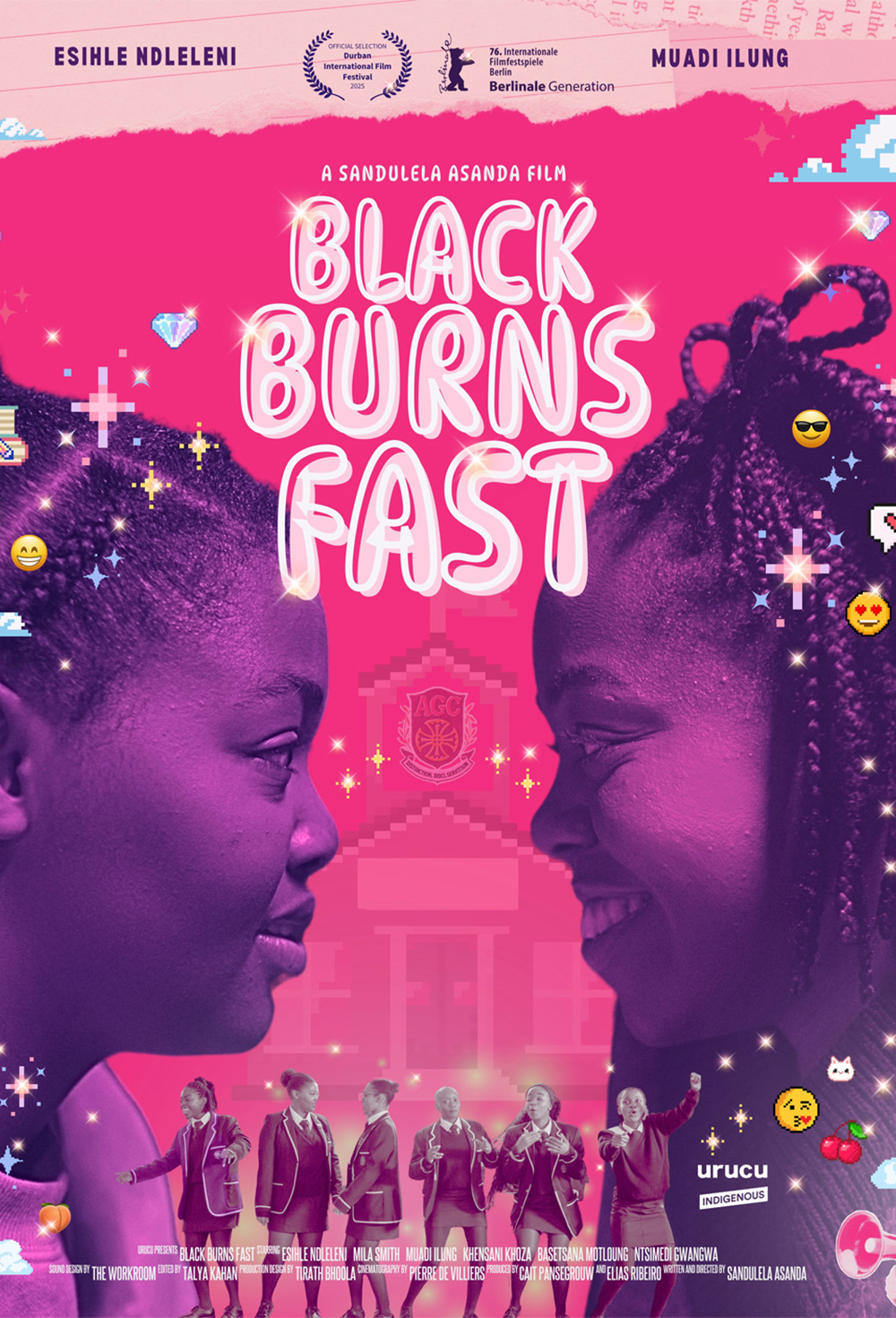
“Black Burns Fast” (South Africa) (3/5); Letterboxd (3.5/5), Imdb.com (7/10), TMDB.com (7/10), Imdb.com critics review; Web site, Trailer
As most teens will concur, the process of coming of age can be tricky to maneuver through. So imagine what it must be like to add the process of coming out on top of that, an undertaking that can become that much more difficult when it takes place in a less-than-accepting environment. Such is the challenge posed to 17-year-old Luthando (Esihle Ndleleni), a brainy but somewhat geeky student at a prestigious South African all-girls boarding school. She’s a perpetually studious type who doesn’t have much of a social life, let alone dating prospects, opting to spend whatever free time she has with her kindred spirit, Jodie (Mila Smith). But that begins to change when “the new girl” arrives at school – Ayanda (Muadi Ilung), a “transfer” student who exudes a self-assured, charismatic attitude, unfazed by most of what’s going on around her or what others think. In many respects, Ayanda is everything that Luthando isn’t yet wishes she could be. But that includes more than what Luthando initially had in mind: She soon discovers that Ayanda has begun to awaken emotional and sexual urges in her, too – and that the feeling, much to her surprise, is mutual. Thus marks the beginning of a budding same-sex adolescent romance that flies in the face of many of the expectations of the school’s conservative culture. Their relationship nudges Luthando to loosen up, have fun and enjoy life more than ever before. But her changing, increasingly “rebellious” behavior carries consequences, such as snubbing by peers, declining grades, the threatened loss of her hard-won scholarship, and strained relations with Jodie and Luthando’s traditionalist single mother. While the narrative of “Black Burns Fast” may echo that of many other girls’ school movies (its lesbian aspect notwithstanding), the inclusion of its refreshingly delightful production design, inventive cinematography and amusing fantasy sequences gives the film a distinctive, lively vibe, one with broad appeal to viewers of all ages and backgrounds. The picture also eloquently depicts the protagonist’s emergence into the world as a fully fledged individual, not just the surfacing of her hitherto-unexplored sexuality, giving this story an even-handed sense of overall balance. And it’s not all frivolity, pop songs and bubble gum, either, as evidenced by its examination of some of the darker and more serious themes that accompany coming of age and coming out. This charming mix of diverse story threads, colorful characters and delicious visuals from writer-director Sandulela Asanda makes for a fun-filled, engaging watch unlike most other offerings in the genre of LGBTQ+ cinema. So load up your pink backpack, grab your glittered cell, secretly swipe a pack of your folks’ smokes and round up your besties for an evening of throwing caution to the wind and spending a fun night at the movies.
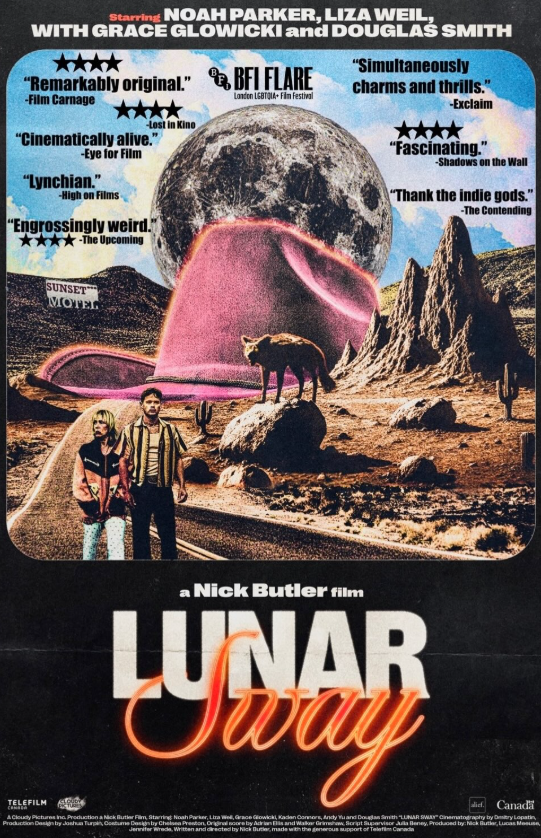
“Lunar Sway” (Canada) (3/5); Letterboxd (3.5/5), Imdb.com (7/10), TMDB.com (7/10), Imdb.com critics review; Web site, Trailer
The search for one’s true self can be an exasperating process, especially if one doesn’t know what to look for or how to respond to what one finds. It can be intrinsically overwhelming physically, emotionally and psychologically, leaving one not knowing what to believe. And that’s the exploration writer-director Nick Butler takes on in this amusing, delightfully offbeat character study of Cliff (Noah Parker), a twenty-something lost and confused bisexual neon artist who lives with his adoptive parents (Irina Dubova, Michael Dyson) in Mooncrest, a small desert town in southern British Columbia (yes, such an improbable locale does indeed exist). Given that the qualities that make up the protagonist’s nature often cause him to feel like a stranger in his own hometown, he’s a bona fide seeker, engaging in an array of cultural, vocational, artistic, sexual and alternative spiritual experiences in hopes that they will provide the senses of purpose, connection and direction that have long eluded him. In pursuing this path, though, Cliff ends up unwittingly drifting from one bizarre situation to another, interacting with a range of diverse and colorful characters, such as Marg (Liza Weil), a woman who claims to be his birth mother but hardly seems like the maternal type given the wealth of secrets she carries around with her; Bailey (Grace Glowicki), a gonzo, sarcastic bounty hunter seeking revenge against a con artist who allegedly wronged her; Neal (Andy Yu), Cliff’s evasive, often-indifferent therapist and a source of frequent witty but antagonistic exchanges; and a pair of romantic interests, Jovi (Kaden Connors), a painter who creates provocative portraits of his subject, and Stew (Douglas Smith), who professes to be a cosmetic dentist, a claim that seems dubious in a town as small and remote as Mooncrest. While Cliff’s story might thus come across as episodic and meandering, it’s never dull, especially for viewers, who are treated to a steady, evenly paced stream of truly original, consistently quirky humor that characterizes and connects the picture’s various segments. In many ways, the film feels like it was inspired by the works of filmmaker David Lynch, ever surprising the audience with its unique narrative and nicely complemented by its clever writing, snappy editing, a whimsical production design and a vivid color palette that gives the story an inherent sense of vibrancy as Cliff comes to discover himself and what he needs out of life. The off-the-wall nature of “Lunar Sway” probably won’t appeal to everyone, but, for those seeking something different out of their cinematic experiences, this one will indeed take you to the moon and back.
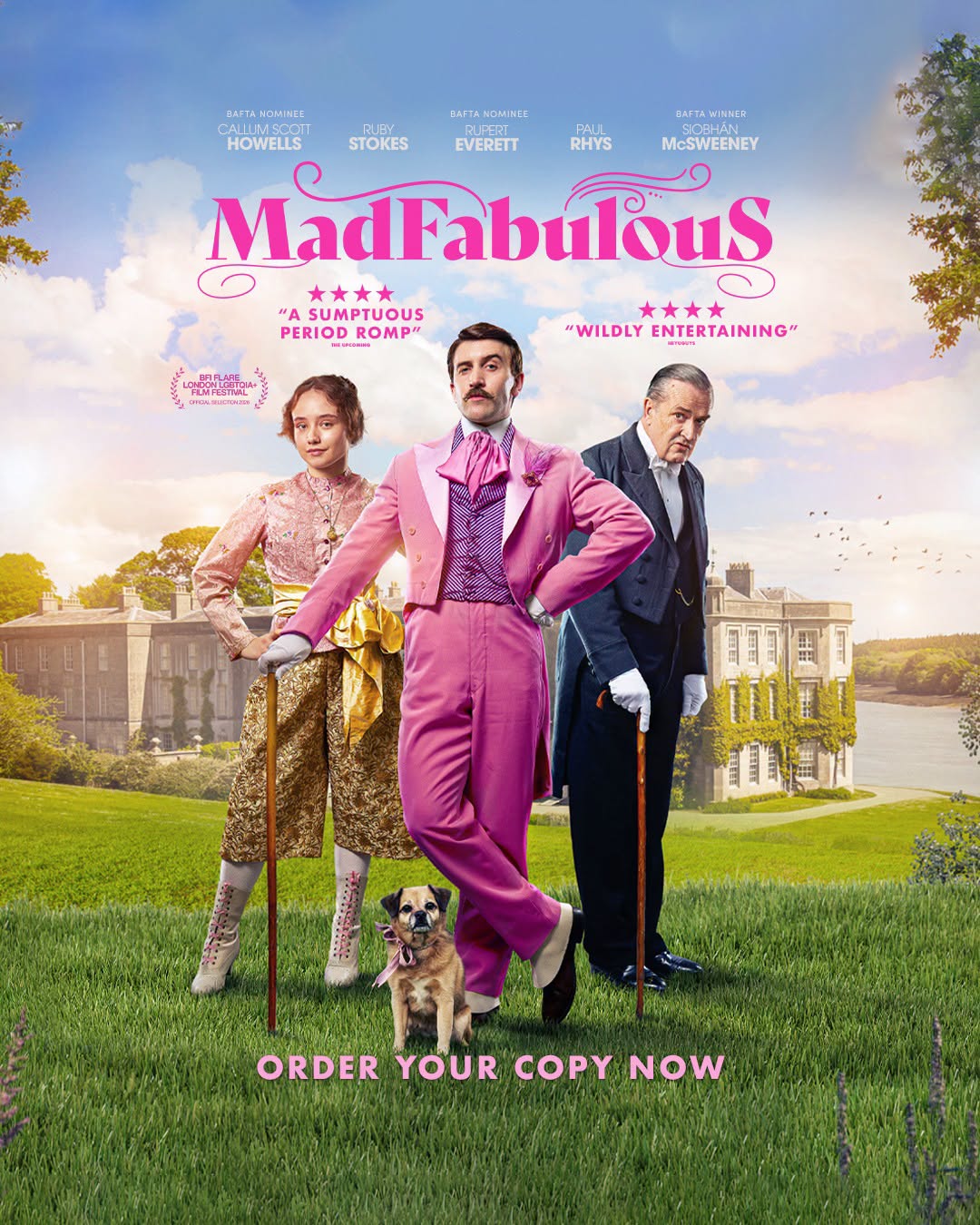
“Madfabulous” (UK) (3/5); Letterboxd (3.5/5), Imdb.com (7/10), TMDB.com (7/10), Imdb.com critics review; Web site, Trailer
Those who have trouble fitting in are often advised to simply “Be themselves.” Simple as it sounds, many find this hard to do, either out of shyness, fear of social ostracism or other considerations. Yet those who truly seem happiest in life take to it naturally, throwing caution to the wind, not caring a whit about what others may think, even if it doesn’t always suit the onlookers. One such individual was eccentric aristocrat Lord Henry Paget (Callum Scott Howells), a flamboyant 19th Century British nobleman who was raised in France, where he became immersed in its rich heritage of arts, culture and fashion. He unapologetically relished these trappings, even if his preoccupation with them sometimes cost him dearly, such as his virtually lifelong estrangement from his conventional aristocratic father. Nevertheless, when Henry (a.k.a. “Toppy”) came into his inheritance, he gleefully took possession of an island estate in northern Wales, where he freely indulged his senses of unabashed free-spiritedness and unbridled extravagance. He threw lavish parties, spent a fortune on elegant, colorful clothing and extravagant jewelry, and became the impresario of and performer for his own theater company. He was also generous toward others, caring for the needs of the local working class and becoming a magnanimous orphanage patron. And, while he was often looked upon as a scandalous, unhinged eccentric among his moneyed peers, he was popular with many of the islanders, as well as several allies in his own household, including his devoted man servant, Gelert (Rupert Everett), his fiercely loyal housemaid, Ffion (Greta Jones), and his fun-loving kindred spirit first cousin, Lily (Ruby Stokes), with whom he entered into a cover marriage of convenience. However, over time, not everything in his privileged life went well. His health began to fail due to consumption, and his spending got so out of control that the family estate was facing bankruptcy. What’s more, relatives with vested financial interests began ganging up on him, seeking to have him committed to an asylum, and even those who once supported him, like Lily, began backing away from him. Through it all, though, Henry remained true to himself and his outlook, no matter what might come his way. In doing so, he set a valuable example for others, embodying the notion of joie de vivre, even in the face of adversity and opposition, a true inspiration for those genuinely seeking to be themselves. And this is why director Celyn Jones’s second production is a featured screening at an event like Reeling, showing how Paget courageously pursued this way of life at a time, in a place and among people who were far less accepting than what are in place today. His fact-based story is told with a robust sense of liberation, joy and fulfillment, featuring fine performances from the ensemble, an impeccable period piece production design and gorgeous costuming. Admittedly, the film has a little trouble finding its footing in the opening act, but, once it settles down, it becomes progressively more compelling as the picture plays out. “Madfabulous” is probably best characterized as a bittersweet historical feel good film, one that has both its moments of ennui and brilliant flashes of triumph, sometimes simultaneously. That may sound like an unusual combination of attributes, but, then, that’s perhaps best chalked up to the movie just being itself.

“Julian” (Belgium/Netherlands) (3/5); Metacritic (6/10), Letterboxd (3/5), Imdb.com (6/10), TMDB.com (6/10), Imdb.com critics review; Web site, Trailer
As increasingly common as same-sex marriage has been becoming in recent years, there was time not all that long ago when it was more the exception than the trend. In 2017, there were only 22 countries where it was permitted, and, even though the number has significantly increased (and continues to do so) since then, it was still generally considered anomalous when the concept was first emerging. So, to help raise awareness of this new institution, Belgian artist-LGBTQ+ activist Fleur Pierets (Nina Meurisse) and her fiancé, hydrographer Julian Boom (Laurence Roothooft), decided to celebrate their engagement by launching Project 22, a plan to promote the concept of gay marriage by participating in ceremonies validating their betrothal in each of the 22 nations where the practice was legal at the time. They made their marriage official in their native Belgium and then symbolically renewed their vows in The Netherlands, France and the US. But, after only four such weddings, a medical emergency arose, derailing their plans, despite having made preliminary arrangements in other countries where ceremonies were planned. This crisis not only placed a serious damper on carrying out their objective, but it also threw into doubt the viability of their future together, all the while ironically deepening their love for one another. Based on Pierets’ fact-based 2023 account of the couple’s experience, writer-director Cato Kusters’ debut feature tells the tender, heartfelt and agonizing fact-based story of Fleur and Julian’s relationship and their commitment to carrying out their plan to raise visibility about the validity of same-sex marriage. On the romantic side, the picture profoundly conveys the love they held for one another, in sickness and in health, and the heartache that the conditions that such a relationship can also unwittingly induce. In addition, this offering illustrates their dedication to their goal, including addressing such challenges as financing, logistics and other arrangements, such as security in locales like Brazil, where the notion was still often looked at askance. Viewers are truly immersed in the depth of feelings and frustrations that the couple faced in these regards, quite an accomplishment for a first-time filmmaker. Where the picture drops the ball, however, is in the area of film editing. This release’s nonlinear timeline and frequent insertion of home video-style footage (a nice but overused touch that is sometimes clearly superfluous) seriously bog down the narrative flow at times, making the storyline challenging to follow. In some ways, this approach appears to have been employed to avoid playing spoiler too early on in the film, but it truly could have been handled more effectively without producing the needless confusion it does now. It’s unfortunate that this aspect of the production didn’t live up to the same quality as its other attributes, for, if it had, that would have made this a truly outstanding picture rather than one that only gets things right part of the time. Nevertheless, perhaps the most important takeaway that viewers can glean from this effort is an appreciation of the love the two women held for one another and their commitment to making its legitimacy known to a world that was still getting used to the idea of the affirmation of such relationships, something for which anyone who believes in the notion that “love is love” should be thankful.

“Loves Company” (USA) (3/5); Letterboxd (3/5), Imdb.com (6/10), TMDB.com (6/10), Imdb.com critics review; Web site, Trailer
When done right, dark comedy can make for entertaining fare. But, when mishandled, it can be a real chore to sit through. And, as for this latest offering from writer-director Jason Laurits, the finished product falls somewhere in the middle, starting out strong but losing steam the further it progresses. The film is at its best when viewers meet washed-up television celebrity Blake de Troy (Jack Plotnick), a onetime staple of campy 1970s game shows cut from the same cloth as the likes of Paul Lynde, Rip Taylor and Charles Nelson Reilly. Since the heyday of his career, however, Blake has struggled to find work except for the occasional made-for-TV movie and supporting appearances on two seasons of a cheesy sitcom. And, of late, the pickings have been even slimmer, no matter how much his handler and long-suffering partner, Jimmy (Bryan Batt), has tried to bolster Blake’s sagging marketability, a sad but funny effort loaded with some hearty laughs. Blake still tries to put his name out there, convinced that something will eventually click, but about the only interest he garners comes through occasional fan letters from diehard followers, most of which he summarily dismisses out of hand. However, when Blake is suddenly and unexpectedly widowed, he’s lost. So, while on a trip to scatter Jimmy’s ashes, he impulsively decides to look up one of his snail mail contacts, his supposed number one fan, Antoinette Funk (Rachel Dratch). Antoinette is lonely, having recently lost the elderly father she was caring for in her rundown home in the Florida Everglades. But Blake soon comes to regret his decision to satisfy his curiosity, especially when he’s injured in a car accident on his way there. Upon regaining consciousness, he quickly discovers that she’s the second coming of Annie Wilkes, the unhinged number one fan from Stephen King’s “Misery” (1990). He becomes embroiled in a scenario not unlike that of the protagonist in that wickedly dark comedy, a plot development that gets old rather fast. It also marks the beginning of an ongoing game of cat and mouse while Blake recovers and he and his host each use one another to get what they want out of their bizarre association. And that, unfortunately, is where this release loses traction. The bits involving the duo just aren’t particularly funny, often feeling as if they’re forced, reaching for laughs the picture doesn’t do enough to earn. What’s more, the humor turns more sinister, bypassing the feel of a macabre Saturday matinee, an approach that would have worked well here, in favor of attempts at jokes that are often too far over the top. It’s truly unfortunate that “Loves Company” loses its way after such a promising start, but, then, it’s probably ironically fitting, given the nature of Blake’s character and the state of his circumstances (although it’s definitely not my cup of tea). I had high hopes going into this one, but I came away from it only modestly amused considering what I had to sit through.

“Trial of Hein” (“Der Heimatlose”) (Germany) (3/5); Letterboxd (3/5), Imdb.com (6/10), TMDB.com (6/10), Imdb.com critics review; Web site, Trailer
Most of us would likely agree that we seek acceptance by society. But what does it take for that to happen? That’s the principal question posed in this debut feature from writer-director Kai Stänicke. This ambitious cinematic fable combines elements of Greek tragedy, themes similar to those explored in the works of Norwegian playwright Henrik Ibsen, a narrative that echoes such classics as novelist Janet Lewis’s The Return of Martin Guerre (1941) and Homer’s The Odyssey, and a filming style reminiscent of Icelandic director Hylnur Pálmason, quite an audacious undertaking. When Hein (Paul Boche) returns to the remote German fishing village where he grew up after a 14-year absence, he doesn’t get the reception he expected: no one recognizes him, including his sister, Heide (Stephanie Amarell), his aging mother, Mechthild (Irene Kleinschmidt), and his best friend from childhood, Friedemann (Philip Froissant). The skeptical tight-knit community, located on a North Sea island that’s apparently lost to time and populated by residents who don’t trust “mainlanders” (the place where Hein went all those years ago to learn how to become a teacher), decides to conduct a three-day trial to determine the new arrival’s identity. During the proceeding, witnesses offer testimony about significant events from Hein’s youth (Emil Hauss) (many depicted in flashbacks), the accounts of which don’t match the recollections of the protagonist. Some paint him in a different light for the better, while others characterize him unflatteringly. Given those circumstances, then, how is he to defend himself and live up to the claims of who he says he is? Moreover, is he willing to pay the price for what it takes to obtain his sought-after acceptance and avoid the ostracism that otherwise awaits him? The filmmaker takes on an intriguing challenge in telling this tale of a homecoming potentially gone awry, one that casts the narrative in a symbolic, metaphorical context and that is universally reflective of the quest for acknowledgment and approval from peers, no matter what milieu may be involved (though that’s not especially hard to guess in a case like this with the picture’s screening at an LGBTQ+ film festival). The director seeks to depict this notion in kind with a symbolic production design that resembles a stage set and metaphorically attempts to tangibly peer into the minds of village residents by portraying their homes (widely regarded as “symbols of the self”) as structures with missing walls, revealing their true selves. In tandem with this, this offering incorporates some intriguing cinematography, particularly its frequent employment of camera angles shot from above, as if one is looking down from an almost celestial perspective for the Divine Mind to verify the truthfulness of their contentions. As inventive as some of these storytelling devices are, however, one might view them as perhaps a little too contrived for their own good. What’s more, as agonizing as Hein’s trial (and tribulations) are, the meticulously slow pacing employed in telling his story feels overdone at times, suggesting that this release could have easily been trimmed by about 15-20 minutes without losing anything. Nevertheless, “Trial of Hein” certainly presents audiences with a compelling morality play that effectively showcases the promising potential of a first-time feature filmmaker, even if the finished product could stand some tweaking to bring it up to the caliber the story genuinely merits, one truly worthy of the acceptance it deserves.

“An Island Away From You” (“A una isla de ti”) (Spain) (2/5); Letterboxd (2.5/5), Imdb.com (5/10), TMDB.com (5/10), Imdb.com critics review; Website, Trailer
Few movie genres are lower on my watch list than romcoms that try too hard to be funny and fail. Such is the fate that befalls this latest release from director Alexis Morante, an episodic, often-lame tale that struggles to generate little more than a few modest laughs while mostly trying viewer patience. When Harry (Freddie Dennis), a stressed-out London chef, is unceremoniously jilted by his handsome but self-absorbed fiancé and business partner, Javi (Horacio Colomé), he and his best friend, Yaiza (Julia Martínez), take off on vacation to her picturesque homeland, the Canary Islands. But what is supposed to be a fun-filled getaway soon turns into a series of misadventures that, sadly, are riddled with clichés and more misunderstandings than an episode of Three’s Company. Despite all the confusion, though, Harry nevertheless falls in love with the locale, its food, its people and a new romantic interest who, ironically, just happens to be Yaiza’s bisexual father, Iván (Jaime Zatarain). However, can their relationship survive all the chaos surrounding them? This primary story thread is supplemented by a number of subplots, such as Harry’s agreement to serve as chef for the island wedding reception of a lesbian couple (Leticia Etala, Aïda Ballman); the madcap operations of the bed and breakfast run by Yaiza’s ditzy, New Age mother, Famara (Toni Acosta); and the zany relationship of Yaiza’s longtime wacky friends Pichi (Carlos González) and Guiomar (Alba Goya), both of whom are walking LGBTQ+ stereotypes. Unfortunately, these ancillary story elements feel like little more than padding to help fill out an otherwise-thin (and not especially interesting) principal narrative arc. Taken together, then, these elements make for a release that feels haphazardly thrown together, unsure of where it eventually wants to go, ultimately an eminently forgettable release except for some gorgeous cinematography showcasing the locale’s stunning scenery. With so many other, better LGBTQ+ romcoms out there these days, “An Island Away From You” is a sorry alternative to those far superior offerings.

“Body Blow” (Australia) (2/5); Letterboxd (2/5), Imdb.com (4/10), TMDB.com (4/10), Imdb.com critics review; Web site, Trailer
Fusing two distinctly disparate movie genres into a single offering can be a risky proposition for any filmmaker. If handled skillfully, the finished product can turn out to be a bona fide masterpiece. But, if the opposite is true, it can prove to be anything from a moderate disappointment to an undeniable embarrassment. When combining the elements of a crime saga/thriller with an LGBTQ+ romance, results at both ends of the spectrum can be found in releases like the cinematic classic “The Crying Game” (1992) and the underwhelming undercover cop romance “Plainclothes” (2025). And, sadly, another entry can now be added to the far end of that list of fusion projects, the latest work from writer-director Dean Francis. This ambitious but often-awkwardly handled would-be LGBTQ+ thriller from Down Under follows the exploits of closeted, long-celibate Police Officer Aiden Hardwick (Tim Pocock), who’s recruited to be an undercover cop working an investigation centered in a Sydney gay bar. He soon finds that the club’s owner, Fat Frankie (Paul Capsis), a drag queen who comes across like an Aussie version of Harvey Fierstein, is the kingpin behind a major drug-dealing operation whose crimes have long been covered up by dirty cops. Those circumstances are further complicated by Frankie’s blackmail campaign against his police protectors, including an extensive library of compromising videos of them shown engaging in even dirtier behavior with victimized bar patrons and employees. And, if that weren’t enough, Aiden’s job becomes even more difficult when he becomes seriously distracted by falling for one of Frankie’s bartenders, Cody (Tom Rodgers), who recklessly plays both sides of an array of danger-filled fences, including the one involving his admirer’s heart and self-acceptance as a gay man. While this may sound like an intriguing setup for an edgy romance/crime caper, its execution is often scattered, taking off on multiple tangents whose connections to one another aren’t always especially clear. What’s more, the back story behind Aiden’s celibacy and closeted status (and his efforts at dealing with both) are somewhat hazy, making one wonder how they arose and why he would have subsequently volunteered for the undercover assignment in the first place. In essence, there’s far too much going on here to keep track of everything that’s transpiring, the significance that should be accorded to all of the narrative’s various developments and where it’s all ultimately headed in the long run. Indeed, a tighter story and script, better defined character development, and fewer gay and crime drama clichés would have gone a long way toward making “Body Blow” a better picture and not one that’s all too easily forgotten.
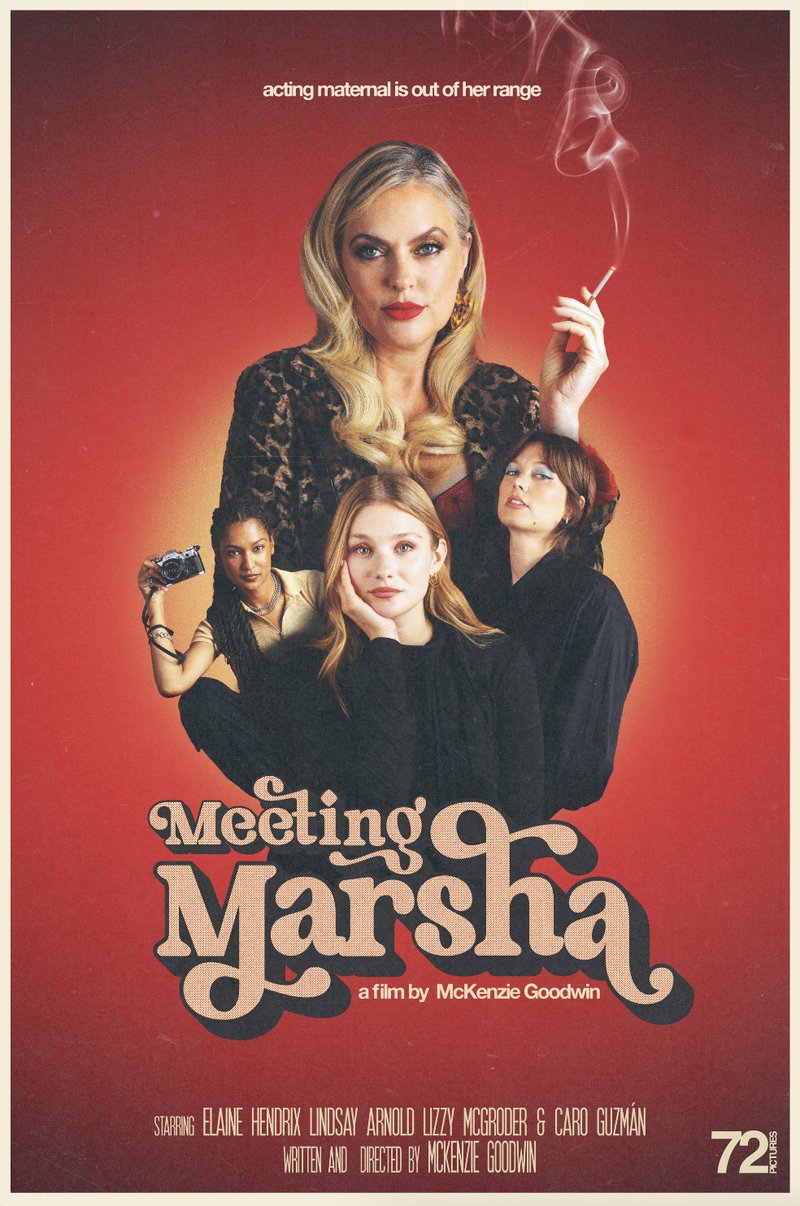
“Meeting Marsha” (USA) (1/5); Letterboxd (1/5), Imdb.com (2/10), TMDB.com (2/10), Imdb.com critics review; Web site, Trailer
At the risk of sounding like a broken record, comedies that try too hard are a real chore to endure. And such is the case with this debut feature from writer-director McKenzie Goodwin, a farce that falls far short of the mark. When aspiring actress-writer Lily Deering (Lindsay Arnold) is asked to house-sit the residence of a friend, a high-powered Hollywood mover and shaker, she plans to turn the weekend getaway into a romantic escape for her and her girlfriend, Jordan (Lizzy McGroder), a hyper-ambitious stand-up comedian/performance artist. In fact, Lily secretly wants to avail herself of this opportunity to spring a surprise marriage proposal on her partner. But, just as she’s about to pour out her heart, she’s interrupted by an unexpected phone call from her birth mother, Marsha Davis (Elaine Hendrix), who Lily, as an adopted child, has never met. Marsha, a former sitcom star, says she’s in town for a funeral and suggests getting together with her for a long-overdue face-to-face. Lily is somewhat frustrated that such a meeting would delay her romantic agenda, but she’s also thrilled about finally fulfilling a long-held dream. Jordan, meanwhile, is also excited when she learns that her girlfriend’s mom is one of her professional idols, hoping that perhaps Marsha can help her to boost her career. But what starts out as a seemingly civil, reasonable social gathering quickly goes south when a series of supposedly zany events unfold, developments that reveal everything is not what it appears to be, both with Marsha and the ostensibly devoted couple. The surfacing of deep dark secrets by all concerned throws circumstances into chaos as the alleged wackiness ensues. The problem here, however, is that these supposedly humorous faux pas aren’t the least bit funny, a bona fide death knell for a comedy (if I laughed once during the film, it would have been a lot). Blame the anemic narrative, issue-ridden screenplay and overwrought character development for this, as they all leave much to be desired. Indeed, the premise here could have made for a truly sidesplitting romp, but viewers are instead left with a string of lame bits that simply overexert themselves in an attempt to generate forced chuckles. Thankfully, the picture’s saving grace is its mercifully short 1:24.00 runtime (though there are moments when it genuinely seems longer than that). Regrettably, “Meeting Marsha” is a definite letdown, a get-together that never should have happened in the first place.
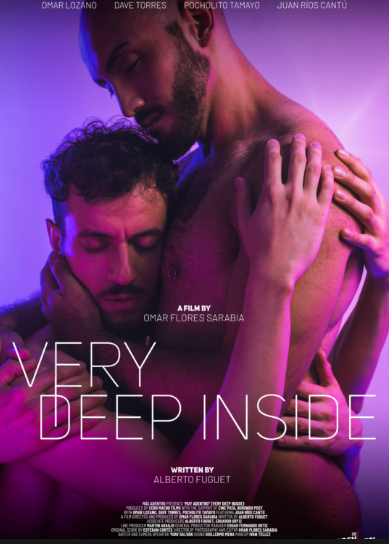
“Very Deep Inside” (“Muy adentro”) (Mexico) (1/5); Letterboxd (1/5), Imdb.com (2/10), TMDB.com (2/10), Imdb.com critics review; Web site, Trailer
Eroticism in film has always been a problematic subject. While the depiction of sexuality on screen has become more accepted over the years, the question of “how much is too much” has lingered in the background as filmmakers have increasingly sought to push boundaries. At what point, however, does a movie cross the line between what’s legitimate cinema and what’s pornography? Is the difference defined by the degree of explicitness, the depiction of certain types of sexual acts, the nature of the individuals involved or some combination of all of these elements? Is there any redeeming social value involved when the camera records some of the foregoing potentially taboo elements (and what might those be)? Does eroticism innately enhance or detract from a picture’s narrative qualities, or is it merely an excuse for incorporating titillation? And, in the end, does this all boil down to a free speech question that renders all of these considerations fundamentally moot? Moreover, if that final concern ultimately proves irrelevant, does that mean porn should be looked upon as a bona fide genre in its own right, despite years of being seen as something that merely appeals to our baser instincts? Those are all legitimate questions, and this release from director Omar Flores Sarabia brings them squarely front and center. This offering follows the adventures of Horacio (Omar Lozano) and Franco (Dave Torres), a longtime couple from a small town in Mexico who make a weekend trip to Mexico City to celebrate Horacio’s 33rd birthday. They’ve been together for years, though they’ve steadily grown apart sexually, given that they each approach the matter differently. Franco is perpetually thirsty and favors an open relationship, while Horacio is oriented toward monogamy and would never think of stepping out on his partner. Their weekend in the big city brings this issue to a head as they each search for their own answers. But what will those answers be? While the film honestly and courageously examines many of the diverse erotic dynamics involved in gay male relationships, there’s little else to the narrative other than explicit depictions of sexuality. In many regards, it recalls a formula similar to the one used in the “Emmanuelle” series of films (1974-2024) in their exploration of cutting-edge heterosexual relationships (only far more graphic here), so sensitive viewers please take heed. Needless to say, viewers’ opinions on this offering are likely to diverge widely, depending on what they get out of it. Because “Very Deep Inside” (an undeniably cheeky title in itself) is unquestionably light on story, it will most likely appeal – strongly, to be sure – to those looking for a “well-orchestrated” gay male erotic romp. However, those seeking substantive LGBTQ+ cinema that just happens to include ample bedroom adventures will probably be disappointed, seeing it as porn with a few window-dressing narrative elements and questionable character development (such as why are these two men even together in the first place if their sexual outlooks are as diametrically opposed as they are?). While I certainly commend the filmmaker for audaciously pushing the envelope with what he’s created here, I can’t help but wonder whether this kind of sexually explicit cinema is ready for mainstream theatrical distribution or film festival programming. I’m certainly no prude, and maybe I’ll change my mind one day if the Academy adds an award category for movies like this. But, until these offerings gain more widespread mainstream acceptance (i.e., society significantly lightens up about the subject of sex), I can’t say that most moviegoers – or even the most avid, open-minded cinephiles – are ready for that just yet, at least in public.
Copyright © 2026, by Brent Marchant. All rights reserved.