



Wrapping Up the 2026 Chicago Film Festival
With this year’s 62nd edition of the Chicago International Film Festival in the books, I’ve completed my screenings for 2026, my second year as a member of Chicago Indie Critics and the press corps covering the event. I viewed 17 films in all, and my thoughts on those pictures appear below. They are ranked in descending order from what I liked best to what I liked least. Films with equal festival-based rating scores are listed in alphabetical order. It should also be noted that my festival-based scores may not identically match my scores on the movie ratings web sites to which I regularly post (Metacritic, Letterboxd, Imdb.com, TMDB.com). In addition to the titles, ratings and countries of origin for the various films I watched, I have also included information (where available) on the pictures’ web sites, trailers, film clips, relevant festival competition categories and awards, festival premiere status, and related hashtags. Three films were also included in audio versions on my Cinema Scribe segment the web site of Bring Me 2 Life radio.
Given the volume of films shown at the festival, I obviously was unable to screen all of the presentations or even everything that I would have liked to have seen. However, in the upcoming weeks, I plan to review a number of the movies on which I missed out at the festival, so be sure to check back for my thoughts on those other pictures, both on my web site’s Quick Cuts Page and/or Welcome or Blog Pages. With movie awards season just beginning to heat up, there will be a lot to see in the coming weeks, and I plan to be on top of it!
With that said, then, here’s what I screened at the festival and what I thought of those films:

“A Bit of Light” (“Kami nour”) (Iran/Switzerland/Italy/Canada/Turkey) (4+/5); Web site, Trailer, Audio review
Letterboxd (4.5/5), Imdb.com (9/10), TMDB.com (9/10), Imdb.com critics review
When life seemingly stacks the deck against us, the thought may cross our mind to surrender and make a discreet exit through suicide. But is that a truly viable option? Consider, for example, the part we play in the world’s unfolding. What’s more, what about the significance we hold in the lives of others, most notably those who care dearly about us? That being the case, then, is suicide really the answer or a potentially self-serving act, one that might even be characterized, albeit unfairly, as cowardly? Such is the dilemma faced by an Iranian doctor who has grown tired of the intolerable circumstances inflicted upon him, not to mention the increasingly difficult daily living conditions he faces in his homeland. As the US-Iran War began and demonstrations commenced at home, Arash (Missagh Zareh), a compassionate Tehran physician, took in injured protestors to attend to their wounds, a gesture that got his practice seized, his assistant arrested, his medical license revoked and the kindly doctor thrown in prison. Convinced that such measures were far too extreme and now facing an uncertain future, he deliberately decides to kill himself. But, before taking his life, he systematically goes about getting his affairs in order. However, he quickly discovers that this checklist approach to these matters is not as simple and straightforward as he thought it would be. In meetings with his brother (Ramtin Daghigh), sisters (Sadaf Asgari, Forouzan Jamshidnejad) and mother (Mina Rahimzadeh), as well as impromptu encounters with relatives of two of his ailing patients, Arash finds that intentionally cutting himself off from those who care for and depend on him is not as easy as originally envisioned. Even bidding goodbye to the stray cat he took in and gave a good home proves to be more emotionally painful than thought. So what is he supposed to do now? Can he live with his initial decision, or must he embrace the uncertainty, a prospect made all the more difficult with a war still hanging over him and his countrymen? Those are the questions that writer-director Ali Asgari asks in this riveting human drama, one that’s fundamentally quiet but simultaneously gripping as it plays out. The picture’s brilliant, incisive, tautly written script, with its nuanced parallels between Arash’s circumstances and unexpected developments that pop up and echo the foregoing key questions (and force him to reassess his plan), holds viewer attention remarkably well, despite most of the narrative consisting of a series of conversations and little other action. But, most of all, this offering pushes us to examine considerations that we likely take for granted and to which we typically devote precious little attention, both from a practical standpoint and on a mystical/spiritual level. “A Bit of Light” might not offer the kind of premise that would make for a mesmerizing release, but it indeed does, serving as a prime example of the need to think twice before inflicting consequences on ourselves and others that we can’t take back once it’s too late.

“Bunker” (France/Spain) (4+/5); Web site, Trailer, Film Clip
Letterboxd (4.5/5), Imdb.com (9/10), TMDB.com (9/10), Imdb.com critics review
In a world where danger is perceived to be lurking around every corner, it’s indeed possible to become preoccupied about our safety and well-being, especially if we’ve got much to lose and feel that we must resort to extraordinary measures to protect ourselves. But, while it’s true that there are hazards to be aware of, is this paranoic obsession healthy? And what impact might such an attitude have on our lives, particularly the enjoyment and fulfillment of our existence? Those are questions posed to award-winning architect Miguel Moreno (Javier Bardem) and his wife, book editor Sofia (Penélope Cruz), in this psychological and metaphorical thriller from writer-director Florian Zeller. Originally from Madrid, the couple and their two daughters now live in a luxurious home in a London neighborhood undergoing ongoing but incomplete gentrification, conditions that prompt them to be cautious about security. But, as becomes apparent, for Miguel, this mindset is about more than just protecting his family and property. He quietly worries about many things, and this outlook even becomes ironically reflected in his work when he’s offered a lucrative opportunity to design a luxury bunker for an enigmatic billionaire, Andrew (Paul Dano), in Hawaii. It’s a project that would take Miguel away from his home and family for a lengthy absence, one of the considerations that’s left him on the fence about accepting the contract, but he won’t summarily turn it down, either. This prospect troubles Sofia, both in principle and practically speaking, given that it would add to their growing marital problems, such as Miguel’s suspicion that his wife is having an affair with one of her authors (Patrick Schwarzenegger). Can their relationship survive these pressures philosophically and logistically, or are they headed for separation? But what’s even more concerning is how would they respond to their circumstances if Miguel’s fears actually come true? What would they do then? Would any amount of willful seclusion be of any legitimate help? Indeed, can life itself become a form of self-imposed bunker as a result of overblown, even erroneously imagined mistrust of virtually everything? Those are serious concerns for getting on in the world these days with its threats from environmental decline, geopolitical conflicts, financial collapse, social upheaval and personal turmoil. But is living in constant fear of them a workable answer by locking ourselves away or installing ultrasensitive security systems? “Bunker” addresses this matter from a variety of angles, including personally, professionally and hypothetically, giving each of us much to think about. As the narrative plays out, the picture starts down an array of different paths that may lead viewers to wonder where the story is headed, but all of these threads fundamentally carry the same underlying themes, and they all ultimately connect, even if that’s not readily apparent as the picture unfolds. This enables the emergence of an extremely smart, meticulously coherent whole, one of the more insightful releases of the year. Add to that the fine performances and remarkable onscreen chemistry of real life husband and wife Bardem and Cruz, as well as some extremely clever strategically placed comic relief (showing how this is a scenario that may at times be best laughed off), and viewers have got a very complete cinematic package in which to become immersed. Some viewers have been highly critical of this offering, but I would suspect that such an assessment comes from insufficient attention. Given the nature of this release, “Bunker” is not the kind of film that can be viewed casually (you’ll miss out on a lot if you look at it that way). Even though this offering is not slated for general release until later this year or early 2027, audiences looking for thoughtful substance from their viewing fare should sincerely give this one a serious look, especially if one believes that withdrawing and locking oneself away from everyday life is the answer.
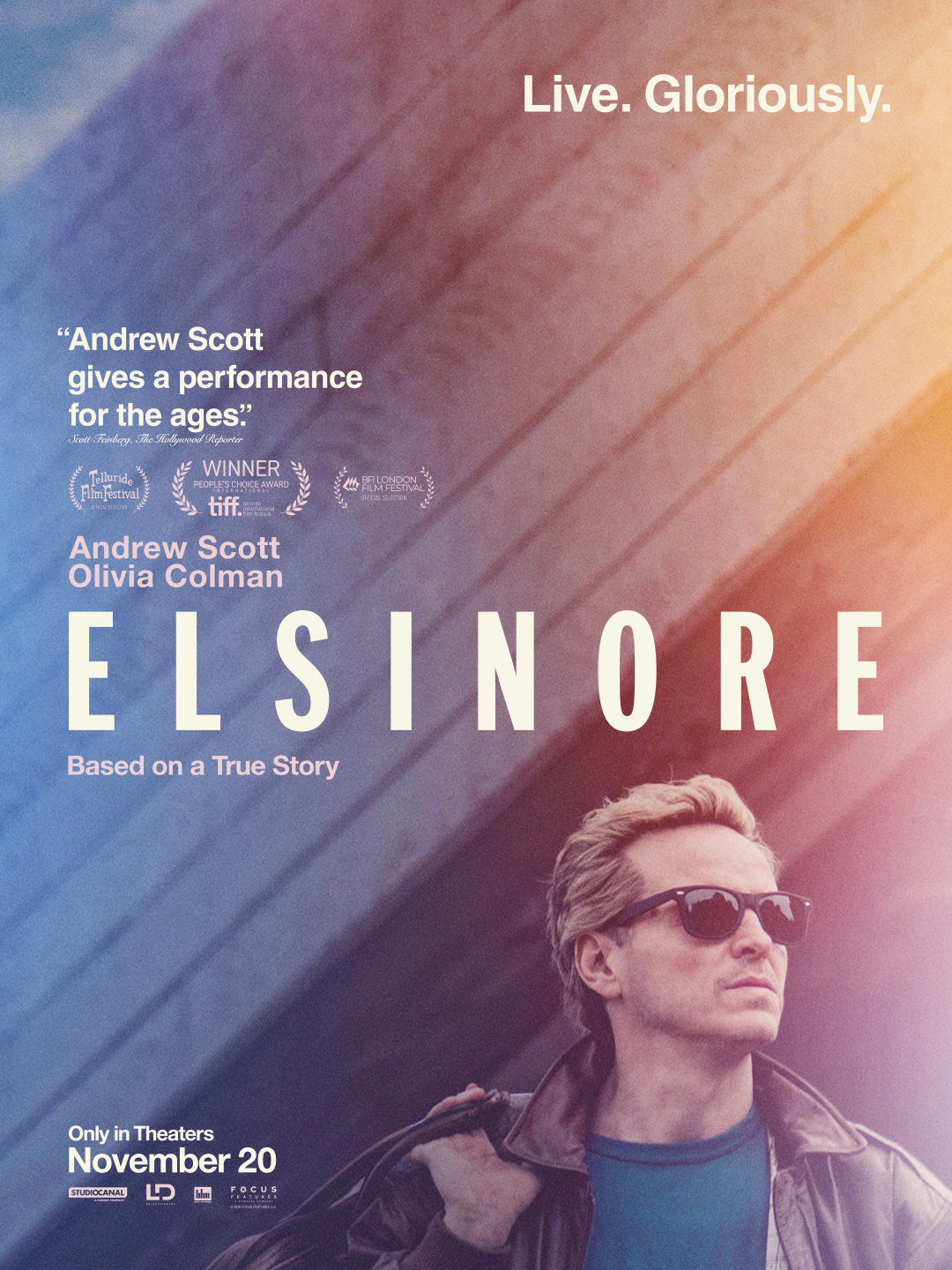
“Elsinore” (UK/Italy/USA/France) (4/5); OutLook Competition; Web site, Trailer, Audio review
Letterboxd (4/5), Imdb.com (8/10), TMDB.com (8/10), Imdb.com critics review
When it comes to fulfilling a particularly grand, arduous goal, it’s often been said that “When there’s a will, there’s a way.” But, when faced with such conditions, how realistic is it that the objective will be reached, especially if the odds are stacked against us? Much depends on the determination of the individual involved, as becomes apparent in this new LGBTQ+ biopic from director Simon Stone. In 1981, London-based actor Ian Charleson (Andrew Scott) launched what appeared to be a promising career as Olympian Eric Liddell in the Academy Award-winning sports drama, “Chariots of Fire.” However, much to his disappointment, few opportunities came his way in subsequent years. So, naturally, events took a pleasant turn in 1989, when he was cast to replace Daniel Day-Lewis as the lead in a production of William Shakespeare’s Hamlet at the National Theatre. There was just one hitch – Charleson had been diagnosed with AIDS. And, because of his health, questions arose about whether he could handle playing one of the most demanding roles in all of acting, particularly when it became apparent that his well-being was fading quickly. For his part, however, Charleson was determined to carry on, despite serious cautions from his physician, Dr. Margaret Johnson (Olivia Colman). Thus began Charleson’s campaign to take on two challenges simultaneously: his efforts to mount a role that he dreamed about but had reservations about whether he was up to it (especially when following in the footsteps of a fellow performer as renowned as Daniel Day-Lewis) and his battle against his own health, a race against time that was beginning to run out. While AIDS-related films were at one time a staple of LGBTQ+ cinema, they had largely disappeared in recent years, most likely due to oversaturation in the early days of this emerging genre. However, this offering marks a return to this material, in part because of its alternative take on the subject, one that’s rooted in fact, another element of differentiation. And, aside from some occasional pacing issues in the middle, it carries off the story brilliantly. The film’s strongest asset undoubtedly rests with its magnificent award-worthy performance by Scott, who not only masterfully pulls off the multifaceted aspects of the part, but who also bears an incredibly uncanny resemblance to Charleson. Credit Colman for a fine supporting turn as well, strong as ever, even if she’s somewhat underused in the role. Moreover, viewers will want to be sure to bring hankies with them to this release, too, especially for the picture’s positively stirring closing act. “Elsinore” is one of those releases that has largely flown below the radar thus far, but here’s hoping it gains the following it truly deserves as awards season progresses – and that Charleson posthumously merits in recognition of his talents, not to mention his courage.
“Fatherland” (“Ojczyzna”) (Poland/Germany/Italy/France) (4/5); Web site, Trailer
Metacritic (8/10), Letterboxd (4/5), Imdb.com (8/10), TMDB.com (8/10), Imdb.com critics review
Imagine the disillusionment of being honored for your accomplishments only to find out that those accolades are intrinsically insincere, an attempt to tap into your recognition as a means to win over your tacit support in a battle of wills between two powerful forces. Are your achievements being praised for their merits, or are they being exploited simply to help fulfill another’s agenda? And would you rightly feel that your reputation had somehow been cheapened or tarnished in the process? If you can appreciate the sadness, frustration and disappointment such circumstances would engender, then you should be able to appreciate the feelings they evoked in acclaimed novelist Thomas Mann (1875-1955) (Hanns Zischler) upon what was supposed to be his triumphant return to Germany after World War II, the subject of this latest offering from award-winning writer-director Pawel Pawlikowski. In 1949, 16 years after fleeing his native Germany with the rise of fascism, Mann returned to his homeland as part of the 200th birthday celebration of Johann Wolfgang von Goethe, considered by many to be the country’s most influential author. Goethe believed in the transcendent nature of Germanic culture, a notion that arose at a time when the future unified nation was still fractured into an array of independent states. Mann adhered dearly to the vision Goethe espoused and that eventually came true, a concept he believed to be critical after the war, when Germany was carved in two – West Germany, under the control of the US, Britain and France, and East Germany under the control of the Soviet Union. This division thus placed the new Germany at the forefront of the emerging Cold War, a political and ideological battle for the hearts and minds of two opposing viewpoints, the democracy of the West and the Communism of the East. Mann’s trip was scheduled to take in two stops, Frankfurt am Main in the West, Goethe’s birthplace, and Weimar in the East, where he spent much of his life. He was slated to make a speech at each stop, where the ruling forces sought to play off his distinguished repute in courting his support for their respective visions of the new Germany, a prospect that flew in the face of Mann’s belief in Goethe’s dream of a transcendently unified nation. In fact, as one of Mann’s hosts cynically put it upon his arrival in Europe, he was now being backed into a position of having to choose between “Mickey Mouse or Stalin.” Accompanying Mann on his trip was his daughter and aide, Erika (Sandra Hüller), who diligently looked after his professional and personal needs. This was not an easy task given her father’s advanced age, the pain of a tragedy involving his son Klaus (August Diehl) and the pressures being put upon him to make him a pawn in this geopolitical game. He believed that he could fly above these ordeals by taking the high road intellectually and practically, but he was in denial of the agony of his losses and how he was being manipulated by others, truths to which Erika desperately tried to enlighten him. Their trip together, then, was one of reconciliation and acceptance of these conditions. But, considering the stakes involved professionally and personally, would Mann be up to the challenges they posed? This fact-based version of Mann’s odyssey is a quietly moving exploration of how to reconcile one’s feelings and beliefs about circumstances over which one has little control, to earnestly (albeit painstakingly) fly above the fray when being tugged at from forces below. There’s an innate sadness hanging over the duo’s journey, one associated with feelings of loss over what’s gone and never likely to return. At a time when there should have been celebration over the end of the war and the hopeful start of rebuilding, there were instead new sources of sorrow, regrets that almost made one wonder whether ending the conflict only created new problems to be solved – with all of this coming on top of personal anguish as well. While the film probably could have used a little more back story to supplement its scant 1:22:00 runtime and to enlighten viewers unfamiliar with the material, “Fatherland” is otherwise one of this year’s best releases, featuring outstanding performances by Zischler and Hüller, as well as its gorgeous and fittingly metaphorical black-and-white cinematography, one of the filmmaker’s signature aesthetic hallmarks. And, for its efforts, the picture earned three nominations at the 2026 Cannes Film Festival, including a win for Pawlikowski as best director. Cinephiles should look for this release to be a strong contender as this year’s awards season unfolds – and deservedly so.
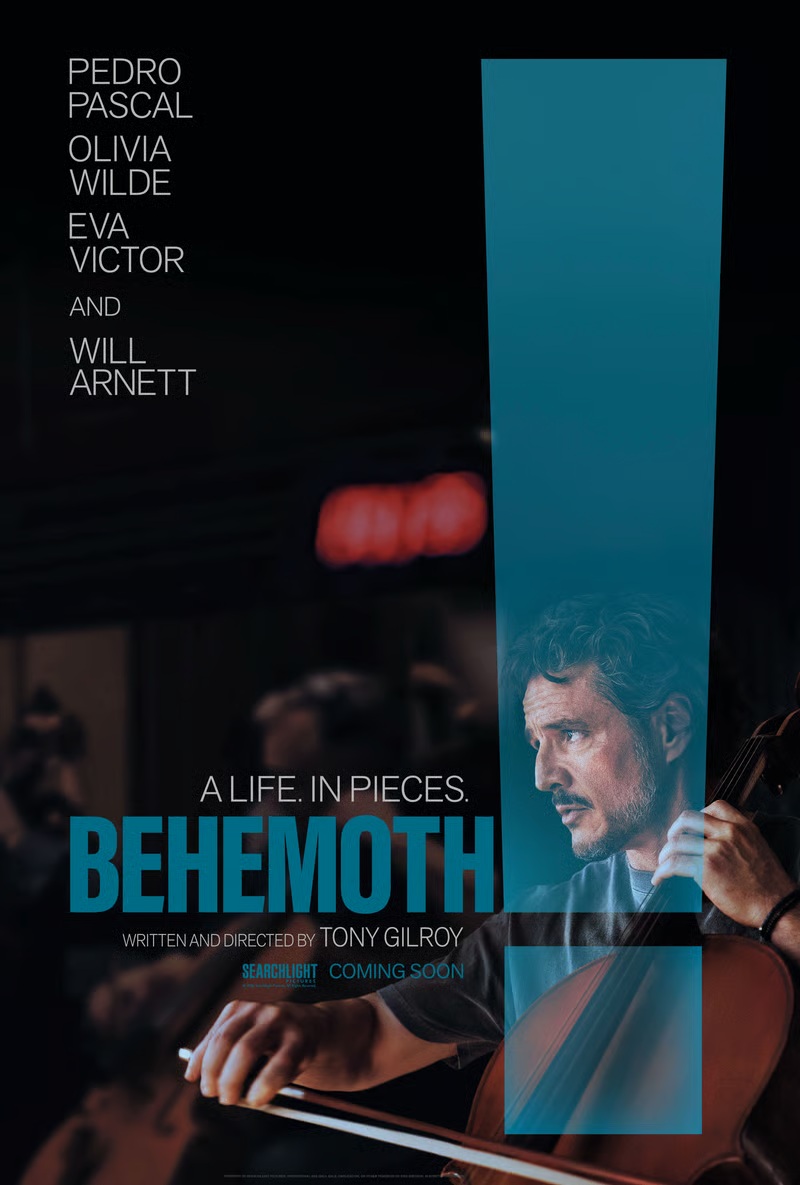
“Behemoth! (USA) (3+/5); Web site, Trailer
Letterboxd (3.5/5), Imdb.com (7/10), TMDB.com (7/10), Imdb.com critics review
Finding the happiness we seek in life can be elusive and challenging. Just ask Alex Serian (Pedro Pascal). The native Angelino – an acclaimed cellist who was once a child prodigy – has recently moved back to Los Angeles to care for his ailing mother, Ginnie (JoBeth Williams), after orchestral stints in Chicago, Boston and Dallas. To support himself in this new venture, he’s taken a job as a member of an orchestra that records background scores for movies. But this stop on his odyssey is about more than just that: It provides him an opportunity to reflect on his past experiences, to reconnect with family members like his gregarious but untrustworthy brother, Andy (Will Arnett), and to attempt to reconcile feelings about his late, demanding father, Peter (Hank Azaria). In making these assessments, though (told through flashbacks), Alex finds that much of his life has been inherently disappointing – unsatisfying relations with relatives, failed relationships with three previous love interests (Olivia Wilde, Eva Victor, Margarita Levieva), physical injuries to person and property, and generally unhappy memories. These ongoing setbacks have consequently left him with a chronic case of decision paralysis, a condition that prevents him from making any deliberate moves except when backed against the wall, with most of his subsequent choices leading to only more disappointment. So is there anything that gives him fulfillment and enjoyment? Well, there’s his music, which is a great source of joy and has enabled him to become a mentor to a talented young fellow cellist, Bronte (Kaya Ralls), and his inexplicable fascination with the works of a prodigal teenage composer, Viviana (Alexa Swinton), with whom he shares a mysterious but undeniable connection. But are those ties enough for Alex to usher true satisfaction into his life? This latest offering from writer-director Tony Gilroy follows the protagonist on his journey as he searches for meaning and contentment, and each episode he experiences – in present time and through the flashbacks – is arguably engaging enough to make for a full-fledged movie in itself. What’s disappointing, however, is Alex’s reaction to them: It’s difficult to distinguish when he’s disillusioned and when he’s mesmerized by what’s transpiring, almost as if he’s a somewhat indifferent observer and not fully engaged in the actions going on around him. This is not to fault Pascal’s performance, as it seems this is more likely attributable to the way his character was written (one of several issues associated with the script) or how the actor was directed to play the part. In fact, comparatively speaking, the supporting players generally have more complete and clearer character development behind their personas than that of the protagonist, especially as seen in the portrayals by Wilde, Victor, Arnett and Azaria. High praise also goes to the picture’s score, particularly in the orchestral recording sessions, where the music uncannily parallels the events in the fictitious movie for which it’s been written and the events that are playing out in Alex’s life, a nifty accomplishment indeed. While “Behemoth!” presents viewers with a unique, fresh story concept, it’s unfortunate that it only partly gets things right. Perhaps further revisions in the screenplay, editing and character development would have helped to make a better finished product, though, given the nature of this project, that might have ironically made for a monstrous undertaking in itself. In the end, maybe the most important takeaway we should get out of the movie is to look for what truly makes us happy and run with it before life escapes us.
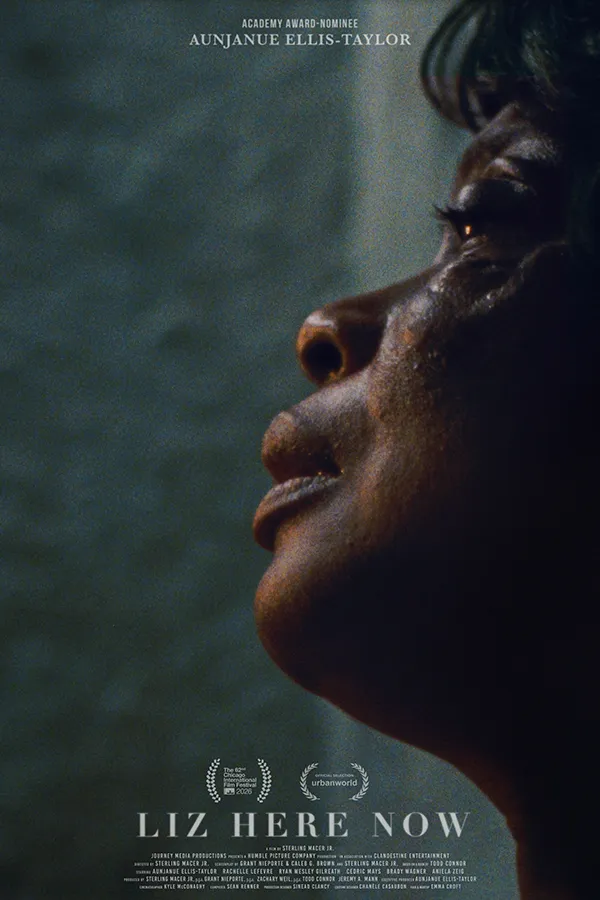
“Liz Here Now” (USA) (3+/5) World Premiere; Web site, Trailer, Audio review
Letterboxd (3+/5), Imdb.com (7/10), TMDB.com (7/10), Imdb.com critics review
It’s been said that no good deed goes unpunished, and that insightful aphorism would appear to be multiplied many times over in this new fact-based domestic drama from director Sterling Macer Jr. In 1967 Oakland, hard-working housekeeper and child care provider Elizabeth “Liz” Baxter (Aunjanue Ellis-Taylor) underwent more than her share of tragedies and challenges. First, she lost her son-in-law to a shooting incident, and then she and her neighbors faced the threat of gentrification, along with the prospect of forced displacement. Moreover, at the same time, the civil rights movement was headed toward a boiling point, and nowhere was this more apparent than in her own backyard, where the Black Panther movement was rising to prominence and targeted as a violent threat by FBI Director J. Edgar Hoover. But Liz tried to make the best of these circumstances by dutifully doing her job at the home of a wealthy family, Frank and Jane Connor (Ryan Wesley Gilreath, Rachelle Lefevre), a well-connected physician with political aspirations and his demanding socialite wife. As Liz came to discover, however, there was serious trouble in the household, most notably child endangerment issues inflicted against the couple’s two youngsters, Chrissy (Aniela Zeig) and Todd (Brady Wagner), at the hand of their mother, as well as an attempted cover-up of the matter by their politically motivated father seeking to avoid a scandal. As a fierce protector of the children in her charge, Liz sought to report the matter to authorities, but she was rebuffed by the police. And, as she became more aggressive in attending to the children’s welfare, circumstances quickly spiraled out of control, raising false accusations of a conspiracy against the Connors involving the Black Panthers and with Liz squarely caught in the middle. This thus begged the question, could she survive this ever-widening maelstrom with her reputation and well-being intact? In today’s comparably more progressive climate, it may be unfathomable for many of us to believe that the kinds of conditions depicted here could be allowed to get so out of hand, but “Liz Here Now” holds little back in telling the story of this deeply incendiary time. Some of it may appear somewhat overblown (especially in several of the more pivotal performances), but the picture effectively illustrates how conditions can be manipulated all too easily to achieve dubious ends – and how well-intentioned Samaritans can readily be disparaged by their altruistic actions. While much of the overall approach employed here follows the standard biopic formula, it’s nevertheless made convincing and compelling by the portrayals of Ellis-Taylor and the child actors, as well as those of Cedric Mays, Patrick Newson Jr. and Caisy Cole as members of the Baxter family. Admittedly, it’s somewhat disappointing that the narrative didn’t devote more attention to the role of the Panthers in this scenario and to the outcome of the gentrification issue, but the main thrust of this story is indeed capably handled and tells an inspiring tale from an era gone by. This offering also shows how one person can make a difference and that the “punishment” inflicted for doing a good deed might even be commuted.

“The Beloved” (“El ser querido”) (Spain/France) (3+/5) US Premiere; Web site, Trailer
Letterboxd (3+/5), Imdb.com (7/10), TMDB.com (7/10), Imdb.com critics review
Making amends for past transgressions is an obviously noble pursuit, even if the forgiveness one might seek isn’t necessarily guaranteed or accepted to the degree expected. So it is for acclaimed film director Esteban Martínez (Javier Bardem), a renowned two-time Oscar winner who seeks to reconcile with his estranged daughter, Emilia (Victoria Luengo), a twenty-something aspiring actress whom he hasn’t seen in 13 years. He looks to build bridges with her personally, making up for all the pain he caused her in her youth when he let his problem drinking and perfectionist and hothead tendencies get the better of him. At the same time, Esteban also wants to help bolster her career by offering her a plum role in “Desert,” his newest production, a period piece historical drama set in the Spanish colony of Western Sahara in 1932. Emilia is stunned by his generosity on both fronts, but, given her history with him, can she truly trust his intentions? This becomes particularly relevant when, during filming, she witnesses echoes of his past behavior, causing old wounds to resurface. This is further complicated when she begins to see that she may be more like the old man than she’d like to admit. And, if all that weren’t enough, other cast and crew members wonder whether Emilia’s up to the rigors of the part, that she might be the beneficiary of nepotism and a father who’s overcompensating in trying to overcome his guilt. Those conditions make for quite a set of dynamics in the narrative, much of which was supposedly improvised, a quality that curiously comes across as both brilliantly executed and painfully apparent at different times. Moreover, the overall story here bears a remarkable similarity to that of the Academy Award-winning “Sentimental Value” (“Affeksjonsverdi”) (2025), calling matters of originality into question. The result is a production that, strangely and simultaneously, can feel both quite engaging and tediously drawn out. Several sequences, such as the film’s overlong opening segment, for example, drag on mercilessly, loaded with throw-away dialogue that tries viewer patience. At the same time, others, like the protracted filming of a problem-ridden mealtime sequence from Esteban’s new production, are both utterly riveting and surprisingly humorous. How these vastly divergent qualities emerge (and are left unreconciled) in the same film is somewhat puzzling, suggesting editing issues and clarity of intentions on the part of writer-director Rodrigo Sorogoyen. This is not to suggest that “The Beloved” is a bad picture (as evidenced in the performances of both Bardem and Luengo), but it’s clearly one that needs work elsewhere, not unlike the protagonist’s efforts to make up for his checkered past. That kind of frustration and contradiction might well come with the territory when one seeks redemption, but it doesn’t necessarily make for the best filmmaking.
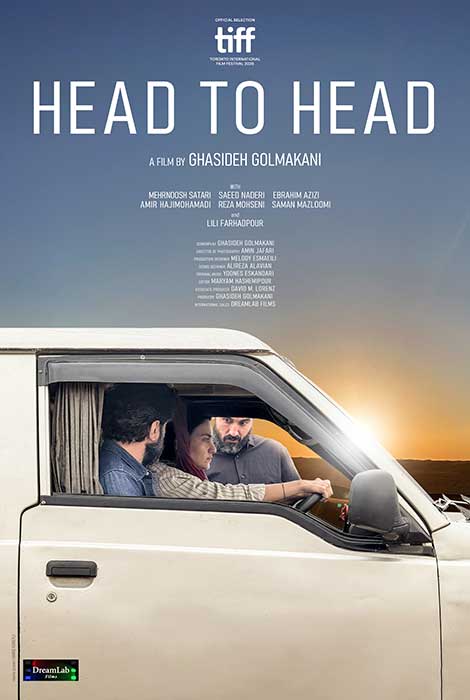
“Head to Head” (“Sar beh Sar”) (Iran/Germany) (3/5); US Premiere, New Directors Competition; Web site, Trailer
Letterboxd (3/5), Imdb.com (6/10), TMDB.com (6/10), Imdb.com critics review
When is a comedy not a comedy? When its genre is obviously mislabeled. And such is the case with this latest offering from writer-director Ghasideh Golmakani. While this release is by no means a bad film, it definitely does not live up to its erroneously bestowed billing. Indeed, rather than playing like the comedy that it’s supposed to be, “Head to Head” is more of a social commentary about women’s rights in Iran, a patriarchal society in which the opposite sex is summarily subject to a wide range of legal restrictions about how they must dress and conduct themselves in public. The country’s so-called morality laws – written by men for women and that dictate the stringent clothing and behavioral requirements imposed on them – carry severe sanctions for even the smallest of violations. They’re enforced by teams of secret police to ensure compliance, without regard to any of the associated hardships, and to which men are not subject. Hardly seems fair, right? That’s where this release comes into play, seeking to openly address the inherent inequality of this issue. To make a point about this gender-based disparity, internationally acclaimed activist/underground filmmaker Bahar (Mehrnoosh Sattari) begins production on a movie in which she casts men to dress like women, with head scarves (the traditional hijab) and skirts. The fictional director also instructs her all-male ensemble how to behave, chiding them for engaging in any “provocative” acts that might otherwise land them in prison. Through these role-switching measures, Bahar and her cameraman (Ebrahim Azizi) look to capture footage of these men as they experience firsthand what it’s like to be subjected to these kinds of restrictions. It’s a scenario that could be potentially rife with humorous possibilities, and, to its credit, a few modest laughs surface along the way. However, given that she’s seeking to use her film to make a sociopolitical statement – one that, in itself, could lead to Bahar and her cast being arrested if caught in the act by authorities – the humor factor is seriously watered down. Perhaps that was an intention of the filmmaker behind this production, given that too much comedy might appear flippant in conveying its message, and that’s certainly understandable. But, if so, why bill this picture as a comedy in the first place? If it’s meant to be social commentary, then, by all means, say so. To be sure, “Head to Head” actually does a fairly commendable job in delivering on its message, but that’s not what I expected going in, a reaction that might well be true for other viewers as well. For what it’s worth, when I was growing up, I was routinely admonished to “say what you mean, not what you don’t” – advice that seems more than appropriate here.
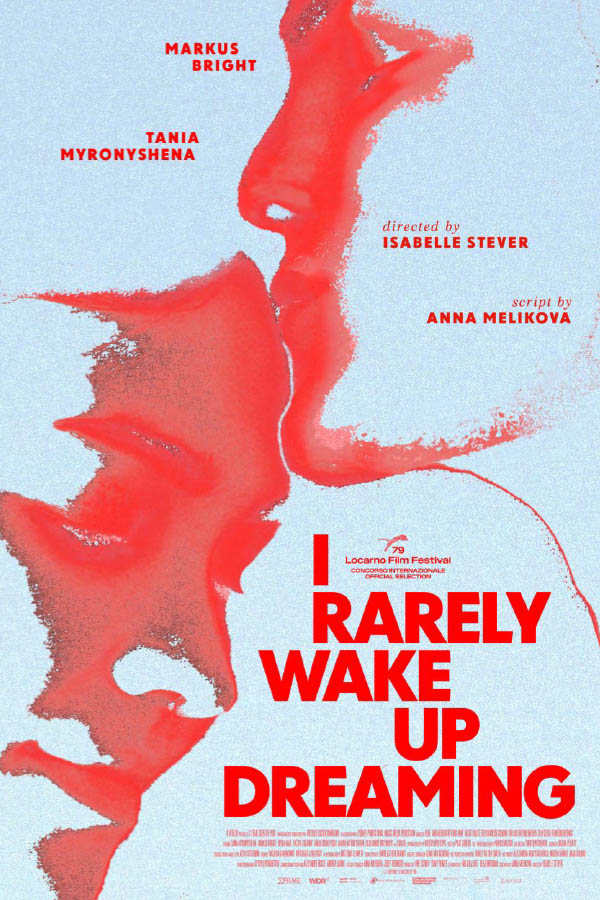
“I Rarely Wake Up Dreaming” (Germany/Ukraine) (3/5); OutLook Competition; Web site, Film Clip
Letterboxd (3/5), Imdb.com (6/10), TMDB.com (6/10), Imdb.com critics review
Life during wartime can be quite an ordeal. But, under such circumstances, life itself goes on, too, despite whatever else might be transpiring in one’s environment. Nevertheless, no matter how seemingly ordinary, mundane or even exceptional those everyday activities might be, there’s a good chance they’ll somehow be affected by the ambient conflict. And that’s the novel approach employed in this latest effort from director Isabelle Stever, a wartime drama examining how daily life changed in Ukraine at the outset of its conflict with Russia. As 2022 dawns, Olya (Tania Myronyshena) and Oleh (Markus Bright), a recently engaged couple, look forward to starting a new life together in Kyiv. Olya, who has a long history of dating women, is embarking on a different kind of relationship with Oleh, a transgender male. But no sooner do they launch into this new venture when Russia invades, changing the ballgame for everyone in Ukraine. Civilians eager to flee the conflict head west to Poland and Germany to seek shelter and safety. However, all men aged 18 to 60 are forbidden from leaving the homeland, their names having been added to conscription rolls. For his part, Oleh is supposedly exempt, having been granted a waiver from the draft department for gender dysphoria. But, when he, Olya and her parents (Irina Mak, Viktor Zhdanov) seek to cross the border into Poland, Oleh is not allowed to leave because his passport still lists his gender as male, despite presenting evidence documenting his waiver. Answering the question of his “true” gender identity is thus raised, an ongoing inquiry that he, Olya and his in-laws must grapple with as he awaits a definitive ruling on his draftability status. And, as the war rages on around them, not only must the family contend with waiting for an answer on this issue, but also challenges posed by supply shortages, power outages, air raids, and the traumas faced by Olya’s pregnant sister, Dasha (Maria Myronyshena), and her missing enlisted husband, Pasha (Oleksandr Rudynskyi). In addition, questions centered on homophobic prejudices and racial tensions between native Ukrainians and resident ethnic Russians boil over, making difficult conditions even worse. This results in quite a full plate for all concerned, and, conceivably speaking, all of these issues could each probably merit a complete film all their own. But, by incorporating all of these story threads in one cinematic vehicle, the filmmaker and screenwriter have overstuffed the narrative, creating a picture that sometimes feels meandering and underdeveloped for a 1:40:00 runtime. Too many protracted shots of comparatively routine, everyday images don’t help, either, needlessly slowing the pacing. And, consequently, the film’s effort to come up with a suitable ending seems somewhat elusive, introducing material late in the story that feels a little forced and somewhat out of place. The director’s intent to fuse a war story with a romantic tale is indeed ambitious, commendable and different, but “I Rarely Wake Up Dreaming” doesn’t quite manage to get the right mix of elements down pat, a result that’s ultimately almost as regrettable as the war itself.

“I See Buildings Fall Like Lightning” (UK/USA/France) (3/5); International Competition; Web site, Trailer
Letterboxd (3/5), Imdb.com (6/10), TMDB.com (6/10), Imdb.com critics review
For many of us (especially those under 30), the expectation of being able to afford a reasonably comfortable life is slipping away, ironically, and all too regrettably, becoming little more than a dream in a very real sense. It’s a change that seems to be occurring worldwide, too, as economic disparity continues to take root around the globe. And one locale in which that trend has been occurring is Birmingham, the second largest city in the UK. This development has affected working class residents particularly hard, especially as large swaths of affordable housing complexes have been demolished in favor of pricey new upscale residences in an area where wages have not kept pace. Those are among the circumstances explored in this latest effort from director Clio Barnard, the story of five longtime blue collar friends as they struggle to get by as they approach 30. In addition to their fiscal challenges, they also wrestle with various personal ordeals that only seem to grow worse as they get closer to middle age – and further away from their dreams. In many ways, this plays like a latter-day Brat Pack film (a la “St. Elmo’s Fire” (1985)) infused with a hefty dose of Gen Z angst and lots of talk about personal finances (though none of them are living in their parents’ basements, at least not yet). Their individual challenges are all fairly formula in nature – substance abuse, career frustration, relationship issues – as well as one who suffers from financial guilt after striking it rich through inheritance. While these story threads aren’t totally predictable, they’re certainly familiar and not terribly original, despite the generational aspects that help to characterize and define them here. What’s more, the narrative takes an overlong time to get down to business, spending too long at the outset on images of socializing and idle chitchat (but at least set to a catchy soundtrack). The connections between the characters sometimes feel a little strained as well, occasionally placing them in situations that seem somewhat improbable. The overall result, then, is largely a modestly engaging tale that offers some eloquent observations about fading hopes, dashed dreams and the unfairness of life but that is otherwise fairly standard fare when it comes to learning about the challenges of contemporary living, particularly in matters of adulting. Given that, “I See Buildings Fall Like Lightning” can probably best be described as a B-side streaming option but not something one should rush out and pay premium theater prices to watch.
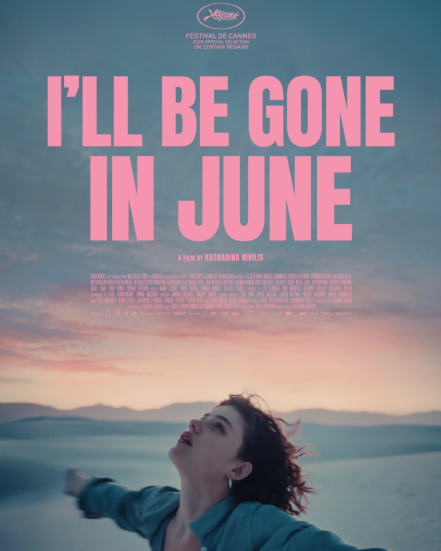
“I’ll Be Gone in June” (Germany/Switzerland/USA) (3/5); US Premiere, New Directors Competition; Web site, Trailer
Letterboxd (3/5), Imdb.com (6/10), TMDB.com (6/10), Imdb.com critics review
Being a stranger in a strange land can be both puzzling and wondrous. So it is when a German high school exchange student spends a school year with a family in Las Cruces, New Mexico, a story chronicled in the debut feature from writer-director Katharina Rivilis. Life in this sleepy desert town is quite a change for Franny (Naomi Cosma), both in terms of the environment and her hosts, the Garcia family, parents Tony (William Lujan) and Eve (Consuelo Flores), daughter Robin (Jazmin Olague), and foster daughter Patty (Kendall Myers). But it quickly becomes apparent that Franny is not particularly happy with her circumstances, even though she attempts to mask her feelings (albeit not especially convincingly). If that weren’t strange enough, however, things get even stranger not long after her arrival when the 9/11 attacks occur, changing the tenor of her life in America even more. So, as she attempts to navigate her way through what should be a typical, fun-filled year in high school, she ends up seeing a very different side of the host country from what she had been led to expect. To make matters worse, Franny often seems lonely, given the disapproving reactions to her different artistic and cultural sensibilities and the fact that she has few confidantes other than a fellow exchange student, Ida (Rebecca Schulz), and a bad boy musician who others strongly advise her to avoid, Elliott (David Flores). But not all is morbidly depressing; there are high points to be enjoyed, too, such as the experience of first love, fun hangout sessions with friends and explorations of the spectacular desert landscape. For what it’s worth, the overall combination of these positive and negative occurrences could be said to constitute a bona fide adolescent coming of age experience, even if a bit more extreme and perplexing than what many of us might typically undergo. However, such authenticity aside, there are also some extreme twists and turns in the narrative that are unanticipated and left largely unexplained, coming across as implausible, unexpected and out of the ordinary. Moreover, some incidental material is so mundane that it could have easily been cut without losing anything meaningful. And then there’s the debut portrayal of Cosma, which, frankly, is more like a sleepwalk than a compelling lead performance. Considering these drawbacks, it’s difficult to fathom how this offering managed to capture two award nominations at the 2026 Cannes Film Festival and selection as an entry in this event’s New Directors’ Competition. Curiously, it’s often been suggested that our high school years are supposed to be the best of our lives, but one might not guess that from this chronicle of Franny’s experience, especially in a state that proudly boasts itself as the Land of Enchantment. Indeed, in light of that, for some viewers, June may not come soon enough.

“Mouse” (USA) (3/5); Web site, Trailer
Letterboxd (3/5), Imdb.com (6/10), TMDB.com (6/10), Imdb.com critics review
Grief is undeniably an emotion that’s difficult to depict well cinematically. The feelings run so deep that they’re hard to capture authentically and sensitively. And, because of this, movies dealing with this subject often get a pass when they’re being assessed. Indeed, no one wants to be disrespectful toward vehicles attempting to get a handle on these feelings, and that’s truly understandable. But what if a picture seeking to accomplish this comes up short on its mission? Are those offerings genuinely fair game for evaluation on their artistic merits? That would seem to be a fair question and a legitimate undertaking as long as it’s done sincerely and without callousness. I raise that matter, because, in my estimation, it would seem to apply to this latest release from the directing duo of Kelly O’Sullivan and Alex Thompson. While the tragedy and sadness depicted in this drama of coming to terms with grief are indeed palpable at times, the film overall doesn’t do the kind of justice to its core subject that it truly deserves. In 2002, high school students and besties Minnie Dunn (Katherine Mallen Kupferer) and Callie Bell (Chloe Coleman) look forward to starting their senior year at North Little Rock High School. Minnie is shy and somewhat geeky, coming from a dysfunctional blue collar home headed by her single mother, Barbara (Tara Mallen). By contrast, Callie is bubbly, effervescent, charismatic and talented, looking forward to a future as an actress, in an upscale home headed by her parents Mark (Christopher R. Ellis) and Helen (Sophie Okonedo), her tough but loving mentor. Callie constantly tries to bolster the confidence and self-esteem of her more reserved friend, especially in the acting class in which they’re enrolled under their caring teacher, Mr. Murdaugh (David Hyde Pierce). It’s a task at which Callie achieves mixed success, but the bond between the two pals is certainly unmistakable. However, that connection is shattered when Callie dies in a traffic accident, leaving Minnie adrift on her own. The same can be said for Helen, who is suddenly left without her only child. Together, the two try to pick up the pieces and carry on without the lynchpin who brought them together in the first place. But what roles will they assume in one another’s lives now that they enter uncharted territory? That’s what this film seeks to explore. However, while the intention here is undoubtedly a noble one, the execution doesn’t seem to be up to the task at hand. The narrative is loaded with a great deal of underdeveloped story threads and uninteresting incidental material, both of which often feel like their incorporation has been included to either help fill out the runtime or simply because the film doesn’t have a clear idea where it wants to go. Granted, that kind of uncertainty is often present in grief-related scenarios, but, without a more definitive sense of direction, these elements don’t add much to the overall story flow. And attempts at explaining away this underwhelming material as “nuance” is not a satisfying justification for a lack of more engaging, heartfelt, meaningful material. To its credit, the film features a stellar performance by Okonedo (especially in a particularly moving scene between the two mothers), but she’s clearly a better actress than the material for which she has been given. “Mouse” is ultimately a disappointment when it comes to addressing its subject matter, especially for viewers in comparable circumstances who might have benefitted from the kind of wisdom a picture like this should impart. And, in a time of loss, that’s knowledge that could help provide the healing balm that’s needed most but that is noticeably lacking here.

“The Riverbank” (“A Margem do Rio”) (Brazil/Germany/France) (3/5); North American Premiere, New Directors Competition, OutLook Competition; Web site, Trailer
Letterboxd (3/5), Imdb.com (6/10), TMDB.com (6/10), Imdb.com critics review
It might seem unlikely that one can appreciate a film but simultaneously have troubling issues with it. So it is for the debut feature from the writer-director duo of Enock Carvalho and Matheus Farias, a tension-filled LGBTQ+ thriller that also sports narrative content with an array of dubious themes. In the Brazilian city of Recife, known for its rivers and mangroves, the thick, lush woodlands on its waterfront are a prime spot for gay men to seek late night anonymous sexual encounters, despite the inherent dangers and sordid conditions involved. Yet, those circumstances aside, this cruising spot is one of the favorites of Izaquiel (Caique Copque), a janitor by day and serial erotic tracker by night. On one of his visits, he encounters Jeremias (Ítalos Martins), an enigmatic, chiseled fisherman, sparking an intense mutual attraction between them. But their meeting is suddenly interrupted by the sound of gunfire, an incident that results in the death of one of the area’s frequent visitors. As a result, Izaquiel and Jeremias soon part company, but that’s far from the end of their subsequent encounters, one of which yields a decidedly uncomfortable mystical episode for Izaquiel. Meanwhile, additional unnerving spiritual influences enter Izaquiel’s life when he starts a new job at an evangelist church led by a charismatic but sternly controlling pastor (Robério Diógenes) who carries his share of secrets – and regularly engages in unusual treatment of the new hire. To say more would reveal too much, but suffice it to say that these diverse story threads gradually become intertwined, leading to troubling developments for all concerned on various fronts. While the noir-esque unfolding of these plotlines is often captivating, it’s also the source of the aforementioned dubious themes. And, even though arguments could be made that the messages associated with these notions are ostensibly understandable depending on one’s viewpoint, they nevertheless all carry implications that are notably unsettling, and that’s the principal downfall of this production, disturbingly undermining the picture’s elements that do succeed. The film also incorporates a modicum of extraneous material that could have easily been cut, along with some ancillary story threads that aren’t as fully developed as they could have been. In addition, sensitive viewers should be aware that this release is frequently sexually explicit and occasionally graphically violent, potentially adding to the troubling material already noted. To its credit, though, this offering’s chilling slowburn pacing and atmospheric cinematography do much to aesthetically frame the story, qualities very much in its favor. While “The Riverbank” could be viewed as an impressive first feature for the filmmakers, they clearly need to hone their craft for future efforts, drawing on what they’ve already mastered but also taking affirmative steps to address what still needs work.
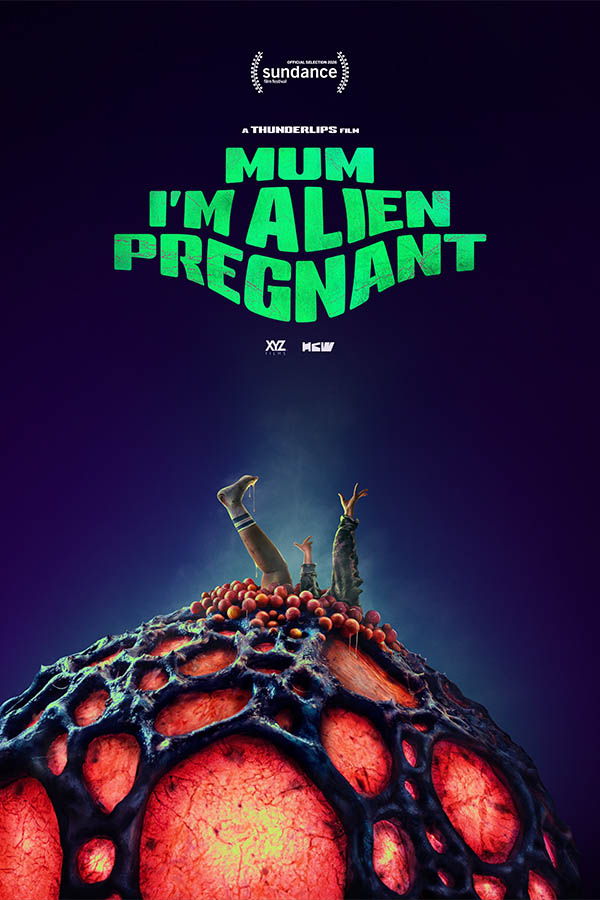
“Mum, I’m Alien Pregnant” (New Zealand) (2+/5); Web site, Trailer
Letterboxd (2.5/5), Imdb.com (5/10), TMDB.com (5/10), Imdb.com critics review
Is a funny premise enough to make a feature film work? Well, that depends on the potential for full development and whether or not that’s apparent in the final cut. Unfortunately, however, that’s what’s missing from this sci-fi comedy from the directing duo of Sean Wallace and Jordan Mark Windsor. The filmmakers’ debut effort tells the tale of 30-year-old Mary (Hannah Lynch), a New Zealander who still lives at home with her well-meaning but overbearing mother, Cynthia (Yvette Parsons). Mom would love nothing more than to see her baby girl find an eligible suitor and settle down, especially since Mary has a supercharged libido that she tries to conceal (but at which she often fails thanks to Cynthia’s intrusive demeanor). Mary’s sex drive gets her in trouble, though, when she has an unplanned encounter in the laundry room of her apartment complex with Boo (Arlo Green), the shy, insecure son of her new neighbor, Ann (Jackie van Beek). Ordinarily, such a tryst might not be a big deal, but, in this case, it raises an unexpected prospect – pregnancy – and with a father who just happens to be part alien. In what is undoubtedly one of cinema’s most hilarious depictions of interspecies conception, Mary suddenly finds herself with child (sort of), and thus begins a gestation process where nothing goes as anticipated. On the surface, this would seem to be a premise pregnant with comedic possibilities, and there indeed are some truly hilarious moments that surface as the story unfolds. However, there’s not enough of them to sustain the narrative, with long lapses between bits that just don’t land. In addition, a number of sequences rely on repetitive incidents of shock, shlock and bewildered deer-in-the-headlights reactions, many of which are needlessly stretched out, especially in the final act. What’s more, the script frequently falls back on coarse language and graphic sexual allusions to get through its underwritten scenes, devices that begin to lose their punch after a while. It’s a shame that this offering couldn’t find ways to be more inventive in telling its story. It’s also surprising that an intergalactic blessed event like this doesn’t attract more scrutiny from authorities involved with super-secret government bodies like intelligence agencies or even the Men in Black. To its credit, “Mum, I’m Alien Pregnant” makes some subtle but effective statements about the rights of pregnant women (such as those associated with abortion and other birth-related health care procedures), but those insights aren’t enough to help elevate the overall content of the finished product. Indeed, when a picture doesn’t have enough material to work with as a full-fledged feature, that may be the time to turn the project into a film short, which may have been a more viable option here in light of the filmmakers’ broader experience with such releases. Making something wild and wacky out of a comparable premise might sound like a good idea at first, but turning one’s baby into something that lives up to its potential may prove to be far more challenging in the long run – not unlike having a kid itself.

“The Man I Love” (USA/France) (2/5); OutLook Competition, Silver Q-Hugo Award winner; Web site, Film Clip
Letterboxd (2/5), Imdb.com (4/10), TMDB.com (4/10), Imdb.com critics review
Ordinarily speaking, consistency in filmmaking is viewed as admirable. However, it’s possible to turn that notion around, too, where a director produces works that are consistently underwhelming. And, regrettably, when it comes to that idea, the name that most readily surfaces for me is filmmaker Ira Sachs, an auteur known for his productions in the genre of LGBTQ+ cinema. While I admit to having enjoyed “Passages” (2023), over the years, I have been roundly disappointed by such other undercooked efforts as “Keep the Lights On” (2012), “Love Is Strange” (2014) and “Peter Hujar’s Day” (2025). And now the writer-director’s latest can be added to that list. “The Man I Love” examines the life of actor/performance artist Jimmy George (Rami Malek) in late 1980s New York during the explosion of the AIDS crisis. Jimmy suffers from the disease – and nearly died from it – but managed to stabilize his health thanks to the kind but unappreciated care and support of his partner, Dennis (Tom Sturridge), and the love but largely absent presence of his sister, Brenda (Rebecca Hall). With his condition seemingly under control, he resumes pursuing his art and his capricious promiscuous ways, engaging in an affair with an obsessed new neighbor, Vincent (Luther Ford), leaving Dennis callously out in the cold. Jimmy also struggles with anger and resentment toward his parents, who apparently treated him badly for his lifestyle during his upbringing, feelings he’s held back for years. However, as captivating as all of these story threads are, they deserve far greater development than they’re given here. It’s as if the film skims the surface of these themes, never exploring them with any particular depth, a trait that runs through the narratives of most of Sachs’s titles. Instead, viewers are presented with snapshots of these tangents, strung together with incidental material that adds little to the overall story or Jimmy’s character development. Motivations are shallow and scant, and some characters (like Brenda) are given little to do. Audiences are thus left knowing comparatively little about the protagonist and his entourage or what makes his story particularly compelling, again, not unlike the characters seen in many of the filmmaker’s other projects. To the picture’s credit, it treats the AIDS-related material with deft sensitivity and nuance, and Malek makes the most of the material he’s been given to work with (although that isn’t saying much). And, for its part, this offering captured this event’s Silver Q-Hugo Award and earned two nominations at the 2026 Cannes Film Festival. Sadly, however, in “The Man I Love,” viewers once again get hints that the director may well be on to something significant and meaningful, but these nuggets of brilliance and insight never coalesce into a coherent or engaging whole. Indeed, I keep waiting for Sachs to come up with a picture that lives up to the simmering potential that seems to underlie all of his efforts – but that we have yet to see.

“Summer Drift” (“Virages”) (Switzerland/France) (2/5); North American Premiere, Gold Q-Hugo Award winner, OutLook Competition; Web site
Letterboxd (2/5), Imdb.com (4/10), TMDB.com (4/10), Imdb.com critics review
Reinventing oneself can be a truly rewarding experience, especially when we finally get to be the person we always wanted to be. However, the transitioning process can be fraught with perils, as those in the transexual community can attest. Such was the experience of Johanna Schopfer, a trans female who at one time faced violent, abusive behavior at the hands of others simply because of her change of gender (her adoptive home of Switzerland being more innately conservative than many outsiders believe). Over time, though, she managed to find her new footing that helped her gain a sense of stability as a watch assembler at a company based in Geneva. And this docudrama from directors Céline Carridroit and Aline Suter examines her new life after the ordeals of her past – her relationship with a loving partner, her friendships with others and her passion for a lifelong hobby, auto mechanics. In fact, the film places considerable emphasis on her efforts to restore a dilapidated 1970 Volkswagen Beetle, both for transportation purposes and amateur drag racing competitions, a project that’s a metaphor for her own reinvention. While there’s certainly a laudable sentiment involved in this venture and its documentation, it doesn’t make for especially engaging storytelling unless one is really into cars (and a highly niche segment of this subject at that). The film is fittingly labeled a docudrama given that it’s based on Johanna’s own experience but with fictionalized elements incorporated in the finished product. But this naturally begs the question, how much of it is factual and how much is made up? That lingering uncertainty, in my view, undermines how seriously audiences should take this production. What’s more, given the unclear nature of “her story” and its meandering assemblage of material, it’s hard to get interested in or enthused about how it plays out. In the end, it comes across like a home movie (and not a terribly compelling one either). In addition, the praise that has been heaped upon it truly mystifies me, including two Cannes Film Festival award nominations and this event’s Gold Q-Hugo Award win, top prize in the festival’s OutLook Competition. I’m truly happy for Johanna that she has been able to find herself and put her life on track, but that doesn’t necessarily translate into enthralling material that makes for an engaging work of cinema, especially in a competition in which there were other far better offerings deserving of the accolades that have been bestowed on this work. Here’s hoping that Johanna and the filmmakers enjoy the honors and praise of the moment. But now go on and live your lives, and please don’t commit any more of this material to film unless you truly come up with something more interesting to say.
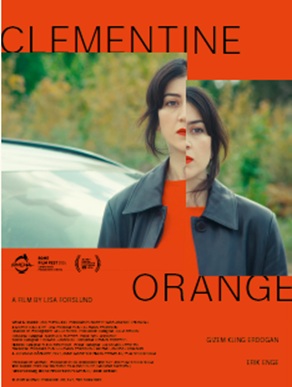
“Clementine Orange” (Sweden) (1/5); North American Premiere, New Directors Competition; Web site, Trailer
Letterboxd (1/5), Imdb.com (1/10), TMDB.com (1/10), Imdb.com critics review
When a film doesn’t live up to its supposed intentions, prospective viewers should be skeptical about virtually all of the characterizations attributed to it. And that’s clearly the case where this debut feature from writer-director Lisa Forslund is concerned. The reason? What’s billed as a romantic drama is so far off the mark that it’s difficult to fathom how such a label could have been applied. In actuality, “Clementine Orange” is more of a comedy – and an utterly preposterous one at that, a film that’s likely destined for my 10 Worst list of 2026. When Angelica (Gizem Erdogan) begins regularly corresponding with John (Erik Enge), an inmate at one Sweden’s correctional facilities, she falls hard for the dear, sweet, misunderstood man who sends her tender love letters, whispers sweet nothings in her ear during provocative phone calls and shares photos of his strapping, handsome self. So she’s naturally over the moon when he’s granted a 24-hour parole to visit her. There’s just one hitch: rather than meeting the dreamy hunk she’s expecting, she’s confronted with (and confounded by) a sheepish, visually disappointing nerd who looks like he’s barely old enough to mow her lawn, an impersonator who has clearly been misrepresenting himself all along. Angelica is naturally deflated by the revelation, but, rather than wisely turning tails and fleeing, she inexplicably takes him under her wing – albeit reluctantly initially – and proceeds to spend the day with him, gradually warming up to his charms (if one could even call them that). From my perspective, however, I didn’t buy any of this for a minute. To begin with, I have considerable difficulty believing that someone so supposedly sharp and sophisticated as Angelica would be so lacking in street smarts that she would naively involve herself in a scenario like this in the first place, let alone fall for it and then continue to go along with it once the truth is revealed (maybe I gave her too much credit for possessing simple common sense). Secondly, the film is full of clichés, underdeveloped and underexplained sequences, trite dialogue and cinematography, implausible situations, and a score that sounds like it was plucked from a 1970s made-for-TV movie. Had these attributes been handled with a more tongue in cheek approach, they could have made for a sidesplitting comedy instead of such a laughable one, a truly inventive missed opportunity. In any event, perhaps the only saving grace here is this offering’s mercifully short 1:10:00 runtime (but, from my perspective, even that’s a lot more to devote than I would recommend). Romance is a subject that can make for great cinema – either dramatically or comically – when handled skillfully, but “Clementine Orange” is a clinic about how not to do so, regardless of which approach is employed.
Copyright © 2026, by Brent Marchant. All rights reserved.