



Second Chances Explored on The Cinema Scribe
Tune in for the latest Cinema Scribe segment on Bring Me 2 Life Radio, beginning Tuesday August 25, 2 pm ET.
Tune in for the latest Cinema Scribe segment on Bring Me 2 Life Radio, beginning Tuesday August 25, 2 pm ET.

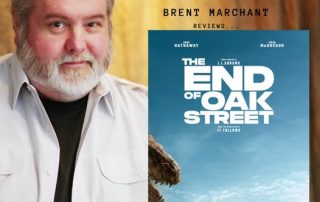
Movies about second chances are fairly common fare in the world of cinema. They provide opportunities to explore the value of themes like redemption and forgiveness. And these notions are usually examined within the context of interpersonal dramas or gentle comedies. So it’s truly unusual to find them as thematic underpinnings in as unlikely a context as science fiction. Nevertheless, such is the case in the new Spielbergian summertime blockbuster, “The End of Oak Street.”

The 43rd annual edition of Chicago’s Reeling International LGBTQ+ Film Festival is now in the books. I managed to catch 10 films during the festival’s 10-day run. Here’s my take on what I watched and what I thought.

When one lives in a small town, it’s not uncommon for everyone to seemingly know everybody else’s business, a circumstance that can be inconvenient, frustrating or annoying. But, worse than that, if one is somehow associated with an incident that’s tragic, scandalous or unspeakable, dealing with the fallout of such conditions (and the associated consequences) can be wholly intolerable. So how does one cope in scenarios like this?

When answers are elusive, we often become frustrated that we can’t find them. That can be especially aggravating when the sought-after solutions are meant to address particularly difficult questions. We’re thus left wondering what to do. However, at times like these, we often resort to embarking on physical or spiritual journeys to tangible or metaphorical destinations that are believed to possess special qualities that serve as sources of inspiration and enlightenment.

In the wake of the recent 50th anniversary of the 1973 Chilean coup d’etat that resulted in the overthrow of democratically elected President Salvador Allende, an effort led by the country’s military and backed by the US government, a number of film projects (both documentary and narrative features) have been released looking back on this event. These projects have taken a variety of forms, and one of the most unusual (and creative) among them has been a production that takes a metaphorical and wickedly satirical look at the life of Allende’s successor, dictator Augusto Pinochet (1915-2006), portraying him in a surreal but fitting milieu, as seen in the hilarious but insightful allegorical biography, “El Conde” (“The Count”).

Talking about the subject of Near Death Experiences (NDEs) was once about as taboo as speaking about UFOs or seeing a psychiatrist – sure signs that someone was probably psychologically unstable, even if he or she merely believed in these things, let alone having had experiences with them. Thankfully, however, those days are largely behind us now, and speaking about them openly and honestly has become much more rational and commonplace. But what exactly are they all about?

It’s truly astounding how mankind is capable of both tremendous greatness and despicable savagery. How can one species lay claim to both? What’s more, how can both traits be found within a single individual? Yet, in a surprisingly large number of instances, that ends up being the case.

Getting back on one’s feet after a hard fall can be unbearably difficult. In addition to the strength and stamina required to stand back up, there are those poised to keep the downtrodden on the ground, their boots firmly and mercilessly planted on those making the valiant effort to lift themselves up. But recovery and redemption are possible

Sometimes, no matter how sincere we may appear in taking on a cherished task, we might easily come across looking like buffoons – and not even realize it. Yet somehow we saunter on, striving to reach our goals, despite the obstacles and the odds being innately stacked against us. So what will become of such fool’s pursuits?