



Rediscovery on The Cinema Scribe
Tune in for the latest Cinema Scribe segment on Bring Me 2 Life Radio, beginning Tuesday September 8, 2 pm ET.
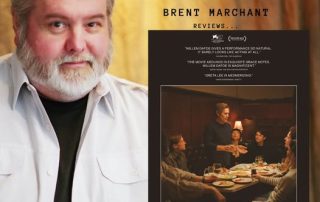
Tune in for the latest Cinema Scribe segment on Bring Me 2 Life Radio, beginning Tuesday September 8, 2 pm ET.

Well-meaning optimists often nudge us to believe that it’s never too late to discover (or rediscover) our respective callings in life (and sometimes they’re right). At a time when many of us may have given up on our dreams or settled for a less complicated way of life, there are those who may nevertheless eagerly follow such inspirational advice and find the experience refreshingly rejuvenating. But, even with the best of hopes and intentions, what’s the guarantee, if any, of success at such undertakings? Those are among the themes explored in the new dramatic character study, “Late Fame.”

“Disclosure” can be an awfully loaded word, one that carries connotations on multiple levels, both big and small, but nearly always with personally meaningful ramifications. However, sometimes those implications may be so subtle that they’re not easy to spot, grasp or understand, even though that does not diminish their importance. It’s also interesting to note how they’re frequently revealed simultaneously, heightening their impact, especially if they’re considered in tandem with one another, a circumstance that may be hard to ignore. Such are the dynamics at work in the latest offering from iconic filmmaker Steven Spielberg, “Disclosure Day,” handily the director’s best picture in years.

They say “you shouldn’t judge a book by its cover,” because you just might be surprised by what’s inside. The content may readily defy observations and expectations in unanticipated ways. And the same, of course, can be said for people, especially those who exhibit traits or behavior that’s outside the mainstream.

In an age where distinguishing what seems genuine from something that’s clandestinely veiled, it may be difficult to know what to believe. As a result, we might abandon any attempt to identify inherent (and potentially significant) differences. Or, by contrast, we may become so obsessed with reconciling the truth behind such discrepancies that we descend into a sea of paranoia and conspiracy theories, potentially seeing shadows at every turn and placing ourselves on the sidelines of reality with virtually no credibility to our names. In actuality, the “truth” probably resides somewhere in between, but where and how do we draw the lines of accurate and meaningful distinction?
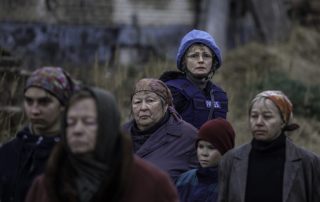
As much as one would like to believe that humanity is capable of great things, we’ve also seen many instances where the opposite, unfortunately, is true. And, to make matters worse, many of those unsettling developments remain out of view, hidden in the shadows – that is, until someone comes along to courageously expose them. Those revelations often come at tremendous personal cost, too, but, when the world becomes aware of such horrors, opportunities for change, justice and healing begin to emerge. Such are the hopes offered up the gripping new fact-based historical drama, “Words of War.”

There are things in life more important than money, but sometimes we lose sight of that, unwittingly allowing our perspectives to become seriously skewed. Unfortunately, this usually happens most often when family-related considerations are involved. And those flawed perceptions, in turn, can become even further distorted when money is tied up with those familial matters, particularly when inheritance concerns loom. Such is the case for a Chinese-Thai family facing the prospects of what will happen to the assets of its terminally ill matriarch.

In a throw-away age like the one in which we live, virtually everything is vulnerable. We can become so accustomed to this way of thinking that it becomes an ingrained mindset, one in which we come to believe that anything perceived as not being expediently useful is potentially disposable. But how far are we willing to go with this? Indeed, aren’t there inherent dangers that we might take this notion a little too far, perhaps even to a point of no return?

Sometimes the simplest yet most profound messages come to us from the unlikeliest of sources. In many cases, those messengers deliver their insights metaphorically and unwittingly, with an almost “innocent” nature, as if to give license to the notion of “out of the mouths of babes.” So imagine how valuable that information can be when its impact is significant and inspired and comes at a time when the stakes are at their highest.

Choice is arguably the most precious personal resource that we possess. It makes so much possible, and it provides us with so many opportunities to seek the fulfillment of what we hold most dear. Because of that, however, there may well be times when what we choose to embrace and invoke won’t be agreeable to others. But, then, the choices in question are ours and fundamentally not subject to the approval of others, save for cases where their well-being might be placed in jeopardy. That even includes choices involving the direction that our own personal fate ultimately takes, again, no matter what others may have to say about it. Such is the question that’s called for a terminally ill woman in making her decision on whether or not to willfully continue her existence.