



The Worst of 2025
With 2025 now in the books, it’s time to look back on the year in movies. In this second of three blogs, I spotlight my Bottom 10 Films of 2025, followed by 10 Dishonorable Mentions and an open-ended list (in alphabetical order) of other releases that I found disappointing or worth skipping. As much as possible, I’ve included web site and trailer links, as well as those for a few film clips. In separate blog posts, I examine my Best Films of 2025 and my Best and Worst Documentaries of 2025.
In any given year, for as many good or great movies as there may be, there are also invariably a crop of cinematic disappointments, and 2025 was no exception. These include both films that haven’t lived up to expectations, as well as those that never should have gotten out of the development phase. And, in 2025, there were more than a few examples of both.
As much as I enjoy celebrating good films, I also feel it’s my responsibility to call out those that end up failing in their missions, no matter what the cause might be. And, as someone who has never been bashful about making my feelings known in that regard, this is clearly reflected in my writings about those releases (and my selections here). This includes not only offerings that most viewers find disappointing, but also releases that, in my view, simply don’t pass muster despite what others may say about them. Indeed, I never hesitate to point out when the Emperor is naked, no matter how unpopular my opinion might be.
In the interest of full disclosure, there are certain cinematic genres that don’t hold particularly great appeal for me, and I’m not afraid to say so, a point that I generally make clear in my assessments. This includes horror flicks (though not “smart” horror flicks), Westerns, musicals, and, to a certain degree, animation. However, I do my level best to keep an open mind, and, on more than a few occasions (including from this past year), I have been proven wrong by pleasant surprises in these categories, admissions that I never hesitate to freely acknowledge. In those instances, I welcome being proven wrong, especially when the accolades are merited.

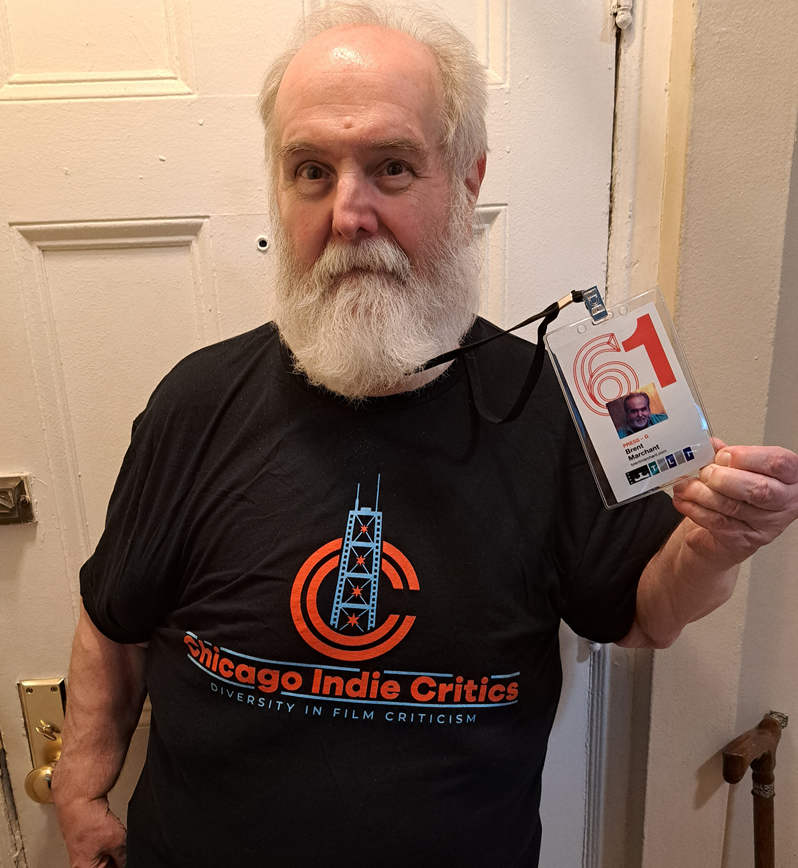
As I noted in my Best of 2025 blog, the past year also marked my initial participation in the programs of Chicago Indie Critics. It has been a thoroughly enjoyable experience, and I look forward to continuing and expanding my involvement in the years ahead. Last year was also my first time as a member of the press corps for the Chicago International Film Festival, an interesting variation on my attendance at an event that I’ve participated in many times since 1979. I look forward to a repeat of this coverage in 2026. And, as in many other past years, I was pleased to attend the Reeling Chicago International LGBTQ+ Film Festival, the Chicago Latino Film Festival and the Gene Siskel Film Center Chicago European Union Film Festival, along with my first-time attendance at the Gene Siskel Film Center Asian American Showcase. Some of the films that I screened at those events made it into my 2025 best list, while others have ended up in this blog. As they say, “All’s fair in love and war” and, for me, movies.
So, with all that said, check out what I thought about 2025’s class of disappointments. You may not agree with me, and I respect your opinions, regardless of whether our views align. I hope you’ll respectfully grant me the same. And your feedback, as always, is welcome. Here goes!
The Bottom 10 Countdown
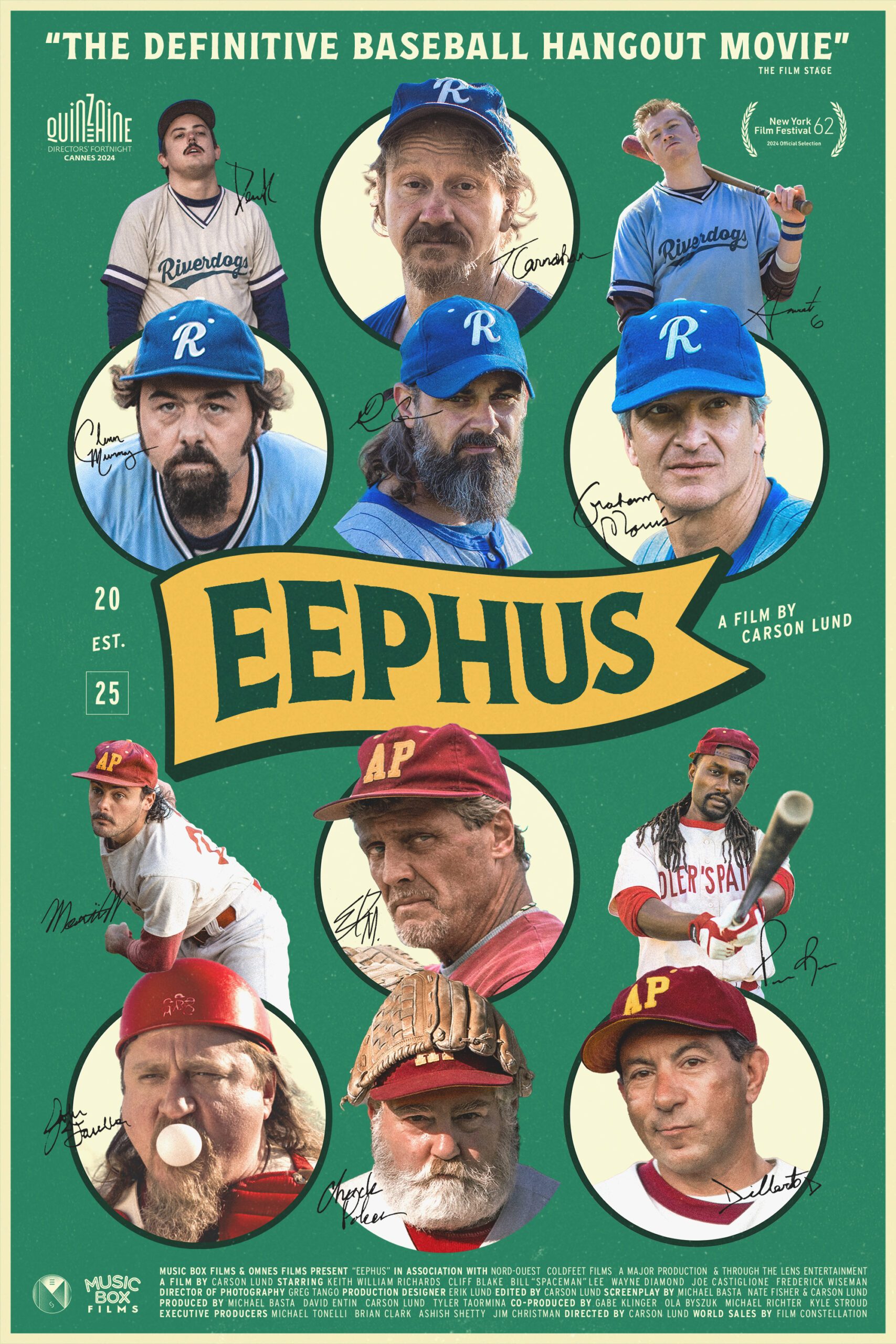
10. “Eephus” (USA/France)
This is bound to be an unpopular opinion, but, to me, fewer things in life are more boring than baseball – except perhaps for movies about baseball (with a few exceptions like “The Natural” (1984), “A League of Their Own” (1992) and “42” (2013)). And that foregoing assessment, in my view, is more than applicable to this positively dreadful debut feature from writer-director Carson Lund. This alleged comedy tells the story of two men’s recreational baseball teams in a small Massachusetts town who embark on playing the last-ever game to be held at a local ballpark that’s about to be torn down to make room for construction of a new school. The implausibly overlong matchup, brought about by a series of completely unfunny incidents that stretch out the length of the game, goes on from midday through the afternoon and into the crisp, chilly fall evening wherein the players try to continue competing in the dark (gee, now there’s a load of laughs for you). There are also numerous talky, uninteresting conversations among the players in the dugout, along with views from the sidelines, where a handful of passing spectators offer their observations about what’s transpiring on the field. These sequences do little to add to the film and serve only to pad an already-tedious narrative. The sad part in all this is that the premise truly had the potential to make for a fun and heartwarming picture. Unfortunately, though, the absolutely flat dialogue, lame plot elements and undercooked character development prevent that from materializing. How it managed to score two Cannes Film Festival and two Independent Spirit Award nominations is as perplexing as how this movie managed to get bankrolled in the first place. While this offering admittedly features some impressive cinematography (the source of one of the Cannes nominations) and a well-conceived production design, there’s not much else to commend here. That is, of course, unless one compliments the creators on their fitting choice of title for the film: An “eephus,” for those who aren’t aware of what it is, is the name for an obscure form of curveball, one that’s thrown deceptively slowly, almost to the point where it lulls the batter into a sense of mesmerized complacency, as if to put the hitter to sleep. And, on that score, the filmmaker has truly succeeded in crafting a picture that lives up to its namesake where audiences are concerned. All I can say is that I’m truly glad that I didn’t pay box office ticket prices to see this one.
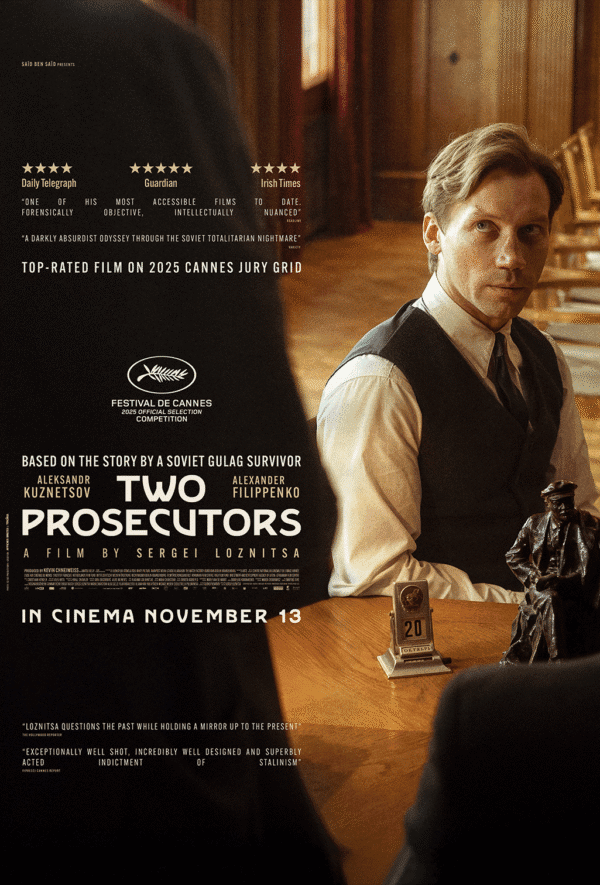
9. “Two Prosecutors” (“Zwei Staatsanwälte”) (France/Germany/Netherlands/Latvia/Romania/Lithuania/Ukraine)
Screened at the 61st Chicago International Film Festival
Trust and idealism are certainly noble qualities, but, when taken too far, they can easily morph into naivete and gullibility. And those qualities, in turn, can carry seriously devastating consequences. But what I have difficulty understanding is why anyone would legitimately want to make a film showcasing such an unengaging, uninspired outcome. Is it supposed to be taken as a cautionary tale? A tragedy of epic proportions? A case study of the consequences that come with not waking up in time to smell the coffee? What’s more, circumstances like this are made even worse when the victim in such a scenario can clearly foresee what lies ahead but still falls prey to it anyway. Is this supposed to enlighten us somehow? That’s hard to fathom when we as viewers can’t help but see what’s coming far in advance (even if the protagonist is inexplicably unable or unwilling to do so). If you can imagine that, then you have a pretty good idea of what’s behind this patently obvious historical drama from writer-director Sergey Loznitsa. Set in the USSR in 1937 at the height of Josef Stalin’s political tyranny, the picture tells the story of an idealistic young prosecutor (Alexander Kuznetsov) responsible for investigating the complaints of everyday comrades whose “rights” (if they can even be called that) have been violated by the state, particularly operatives of the NKVD, the nefarious Soviet secret police of the era. When the advocate learns that unspeakable abuses have been rampantly doled out against longtime loyal Communist Party members – many of them older, diehard Bolsheviks who truly believed in and fought for the promises of Vladimir Lenin’s revolutionary ideology – he courageously takes up their cause, it being one that he, as a devoted Party member himself, firmly supports. And, given the scope of what has been unfolding, he’s well aware of the perilous risk to his own well-being but forges ahead anyway, only to be surprised by the fate that awaits him. But how seriously can this be taken in light of the spot-on suspicions he harbors about what could lie ahead? Frankly, this is where the picture turns wholly implausible; it’s devoid of virtually all meaningful credibility and does little to foster genuine sympathy for its woefully naïve protagonist. Moreover, if this weren’t bad enough, the story plays out primarily through a series of long-winded, belabored conversations, dialogues connected by a series of mundane, exceedingly dull transitionary scenes that unfold in tedious, painstaking, slow-motion detail. Even a Cannes Film Festival nomination for the Palme d’Or, the event’s highest honor, can’t save this effort from itself. In short, there are no surprises here, and what takes place on screen makes watching paint dry look captivating by comparison. Sadly, whatever honorable heroics are meant to be celebrated here are buried under a morass of boredom, predictability and an utter lack of common sense, leaving one wonder what the filmmaker was going for in the first place.

8. “Emi” (Argentina/Uruguay)
Screened at the 61st Chicago International Film Festival
As I have stated on numerous previous occasions, predictability is, in my view, the cardinal sin of effective moviemaking. If one can discern what will happen in advance, what’s the point in watching the film? Unfortunately, such is the case in the latest offering from director Ezequiel Erriquez Mena, a story so easy to figure out that its narrative can be foreseen within the first few minutes of the picture. In fact, its plot is so patently obvious that it’s almost impossible to discuss this release without giving away what’s going to occur, despite all sincere efforts at refraining from playing spoiler. Which naturally once again raises the question, if that’s the case, what’s the point of giving it a look (or, even more fundamentally, wondering why it was made in the first place)? For what it’s worth, 18-year-old Emi (Benicio Mutti Spineta), the adopted son of two loving parents (Mara Bestelli, Luis Ziembrowski), has begun having questions about his birth family, inquiries that his folks (particularly his mother) treat evasively. Yet, despite this, Emi’s questions persist, especially when clues continue to emerge, making him wonder if his suspicions will ultimately prove to be correct. In the meantime, he spends his days working as an apprentice motorcycle mechanic and hanging out with his boyfriend, Claudio (Lucas Tresca). But, when an (allegedly) unexpected event arises, long-hidden secrets threaten to surface (that is, if one somehow hasn’t already figured them out by this point). Wholesale predictability aside, though, there are several other issues that seriously burden this film. For instance, while it’s certainly gratifying to see Emi’s sexuality so readily and matter-of-factly accepted, this aspect of his story goes almost completely undeveloped (not under-developed but wholly un-developed), prompting one to wonder why it was included to begin with. Then there’s the protagonist’s woeful lack of character development, making Emi appear as one of the most uninteresting 18-year-olds anyone has ever met. In fact, the development level of the film’s supporting players outstrips that of the lead by a wide margin, exposing just how boring an individual he really is. And, because so little of anything meaningful or engaging occurs in this anemically constructed tale, the picture is heavily padded just to get it to its 1:32:00 runtime. This is accomplished with protracted montages of nighttime motorcycle rides set to a passable original score, as well as mentoring sessions on the intricacies of bike repair (showing viewers much more about this subject than they probably ever wanted to know). When all of these shortcomings are considered collectively, it’s hard to fathom how this project was green-lighted. It could have readily been pared down to a film short, but, even at that, it still would have required the incorporation of material eminently more involving – and unexpected – than what’s depicted here. Don’t waste your time on this one.

7. “The Girl in the Snow” (“L’Engloutie”) (France)
Screened at the 61st Chicago International Film Festival
When a filmmaker tackles a project that has a personal connection to the story, there’s always a risk that the director could be too close to the material to do it justice. And that would seem to be the case with the debut narrative feature from filmmaker Louise Hémon, who’s best known for her documentary work. However, that shift in genre does not seem to be the primary issue with this offering. The problem here is more contextual; indeed, it would appear that the director could be so acquainted with the subject matter that she assumes her audience may have the same degree of familiarity with it as she does and that her cinematic interpretations of the material would be comparably understood accordingly. As a French filmmaker dealing with French material, that might be true for audiences of French viewers. But those from outside France or unfamiliar with late 19th Century French history and culture may easily find themselves lost (note my raised hand here). Set in the winter of 1899, the picture tells the story of a teacher (Galatéa Bellugi) from an apparently cosmopolitan background who arrives in a small Alpine hamlet populated by largely uneducated, homespun residents who jealously cling to their traditional folk beliefs and assorted superstitions. She attempts to broaden the horizons of her students and their families, only to find resistance to her radical ideas from the outside modern world. And, when the community begins experiencing a series of avalanches and mysterious disappearances, residents begin to suspect that she and her newfangled ways might somehow be the cause, one that must be stopped. It’s a scenario reportedly similar to the experiences of the filmmaker’s ancestors, who themselves once served in similar teaching capacities. It also creates a narrative that feels like a loose cross between “Midsommar” (2019) (or would that be “Midwinter”?) and “Vermiglio” (2024). But the specific events in this story never make any of this especially clear. The result is a seemingly random, glacially paced, visually meandering tale that feels somewhat like an exceptionally slow-burning horror film but that never quite feels confident enough in itself to make the leap necessary for enthusiastically embracing such a definitive approach. To make matters worse, the film is often too dark – literally – excessively drawing upon dim lighting with candles, torches and fireplaces that’s so subdued that it’s frequently difficult to identify the action unfolding on screen (ambiance is one thing, but indiscernibility is something else entirely, especially since the camera work helped earn the film one of its two Cannes Film Festival award nominations). Given the foregoing, “The Girl in the Snow” regularly comes across as not being up to the task of carrying out what it’s allegedly attempting to achieve. Indeed, in light of that, it would seem that it might truly be best for the filmmaker here to stick with what one does best than to stray far afield into new and uncharted territory.
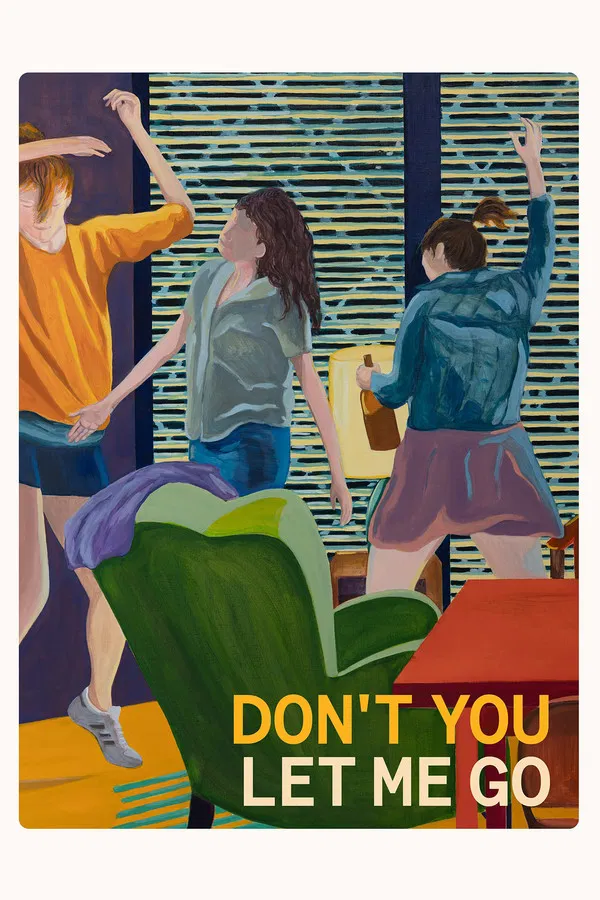
6. “Don’t You Let Me Go” (“Agarrame fuerte”) (Uruguay)
Losing a loved one can be a highly traumatic experience, and, consequently, letting go can be an exceedingly difficult task, something to which many of us can probably relate. So it is for Adela (Chiara Hourcade) when her longtime friend, Elena (Victoria Jorge), passes away at an untimely young age. She puts up a good front at Elena’s wake, but, once the event is over, she loses it, crying profusely in the privacy of her car. However, in a moment of seemingly divine intervention, she spots a bus with a lighted destination sign that literally feels like a “sign” in itself, prompting her to willingly exit her vehicle and board the bus. Subsequently, the bus transports her back in time to an autumn weekend getaway in the country, where she and her friend, along with a third colleague, Luci (Eve Dans), relive the good times they shared together, a quasi-surrealistic experience tinged with passing supernatural overtones. Adela is overjoyed to be in Elena’s company once again, but what’s to happen when the weekend comes to an end? Can she let go now that she’s had this experience, or is the loss still too painful to separate and go her own way (and, if so, what then)? As intriguing as this premise might sound, however, the narrative is all over the map. The significance underlying the two friends’ relationship is never adequately explained, hinting at times that there may be more going on between them than is made clear. And, as for the weekend’s happenings, they feel as though they’re a collection of unrelated random events strung together, implying a relevance that is never made particularly apparent. What’s more, if this is supposed to be about the bond between Adela and Elena, what is Luci’s presence for? Moreover, the occasional inclusion of a voiceover narration to provide background comes across like a feeble attempt at trying to “explain” things, given that the onscreen developments never seem to adequately do this in themselves. As a result, this film feels more like a haphazard sisterhood gathering, a sorority party than a story with any real direction or meaning. That’s a shame, especially since the picture’s opening segment at the wake introduces an array of colorful supporting characters who tell a variety of “Elena stories” that evoke myriad emotions, from laughter to sadness to joy for having known her, and that, with a little more elaboration, might have added considerably more interest and depth to the story. Unfortunately, nothing is done with this material once Adela ventures into her time travel journey (an experience that, in itself, is also never made especially clear or how it’s brought about). Thus this latest offering from the writing-directing duo of Ana Guevara and Leticia Jorge plays more like a confounding enigma than anything else, a picture that seems to assume viewers are in on the back story of these characters without ever really explaining itself. Since those insights are never relayed, the effect of the story here is more mystifying and bewildering than cogently conveyed, in large part due to the film’s scant, underdeveloped 1:11:00 runtime. It’s even more baffling how this release ended up being named Uruguay’s official selection in the best international film category at the upcoming Academy Awards (I can only assume the field of eligible Uruguayan candidates must have been rather slim in 2025). Dealing with grief is too important a subject to receive the kind of casual, unfocused, lazy treatment it has been accorded here, Regrettably, though, that’s what “Don’t You Let Me Go” serves up, and it’s clearly not up to the task. Elena and Adela deserve better than this – not to mention audience members as well.
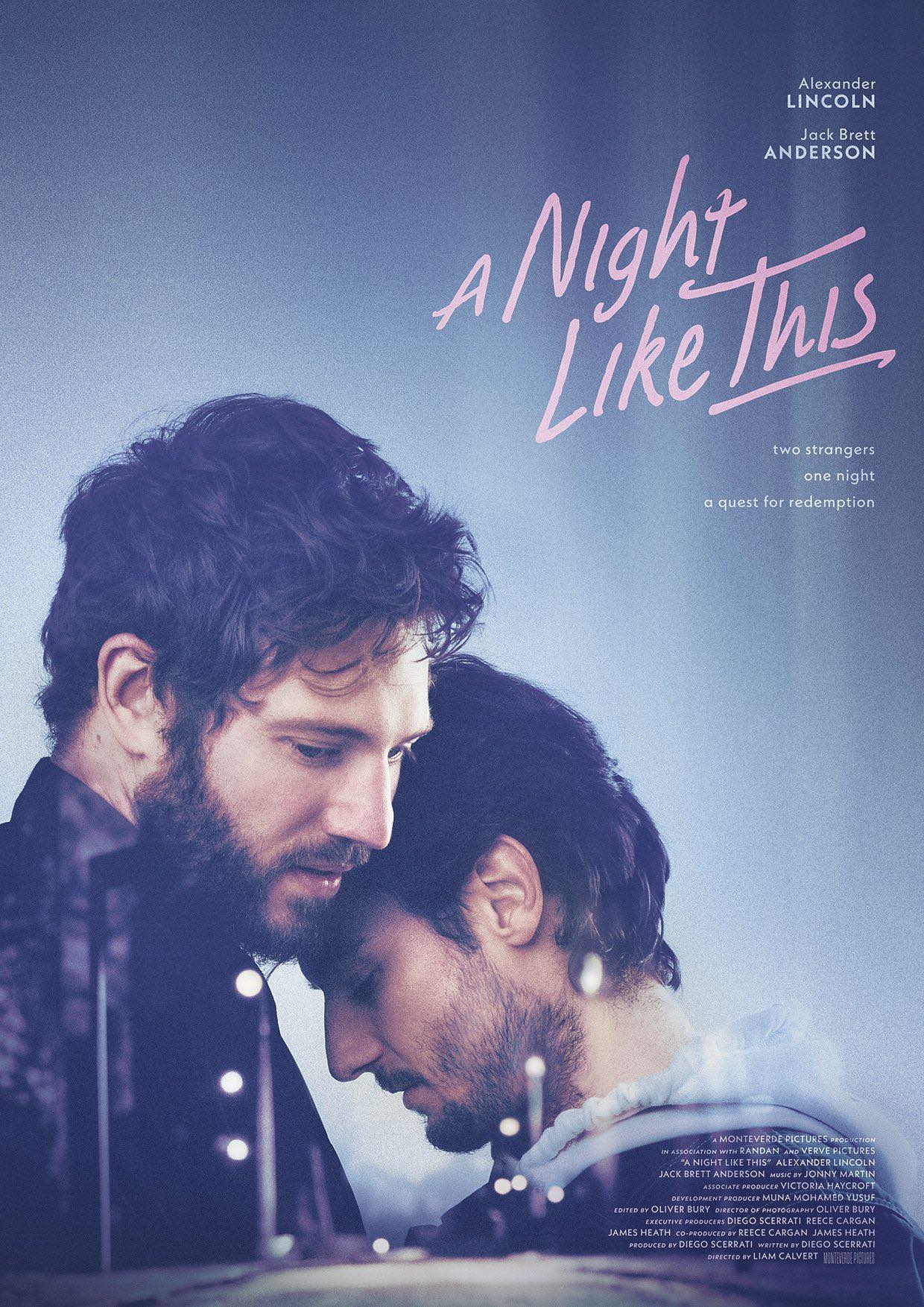
Screened at the 43rd Reeling Chicago International LGBTQ+ Film Festival
I’ll come right to the point about this one: “A Night Like This” is, without a doubt, one of the worst films I have seen in quite some time. Director Liam Calvert’s debut feature follows an overnight tour of London when two lost, discouraged twentysomethings – a gay out-of-work actor (Jack Brett Anderson) and a wealthy but bumbling, sexually ambiguous entrepreneur with big plans that never seem to materialize (Alexander Lincoln) – have a chance (though, for all practical purposes, seemingly implausible) encounter in a corner pub. Their ill-conceived, difficult-to-fathom meeting inexplicably leads them into a series of extended monologues and heavily overwritten conversations about virtually everything but the kitchen sink as they explore the city on a cold winter’s night. Together they talk…and talk…and talk, barely ever stopping to take a breath or to reflect on anything they’ve just said. Simply put, it’s confounding, boring, and, above all, annoying. To be sure, crafting an engaging dialogue-driven narrative like this is indeed possible, as seen in examples like “Mindwalk” (1990) and, to a lesser degree, “My Dinner with Andre” (1981), but doing so calls for having something interesting and meaningful to say to begin with. In this case, the protagonists spend nearly two hours spewing volumes of incoherent, self-indulgent, pretentious, stream of consciousness nonsense, set against a variety of backdrops that bear little connection to the subjects being discussed, making one wonder what might have prompted these dialogues to arise in the first place. Even passing encounters with an array of colorful strangers in the course of their odyssey do little to break the stifling tedium of this overlong exercise in overblown self-loathing, whiny ennui, and rambling, half-baked philosophical prattle. To make matters worse, I never bought the faux chemistry between the two leads, probably because I never bought into the improbable character development ascribed to them, no matter how much the director desperately tries to convince viewers otherwise. And, as the picture played out, I discovered that I wasn’t alone in my impressions about this release: I witnessed viewers getting up and walking out after as little as 20 minutes (often wishing I could have joined them). In addition, as the movie unfolded, there was a noticeable drop-off in vocalized audience responses to the script’s alleged attempts at humor and high drama, and, unlike what typically followed other Reeling Film Festival screenings, there was absolutely no applause at film’s end. While this effort admittedly tries somewhat commendably to express the existential disillusionment with life that younger generations are experiencing these days, nothing is even remotely close to being resolved as a result of this protracted discourse, leaving one essentially wondering about the intended point of all this. By all means, do yourself a favor and skip this one (unless you need the sleep).
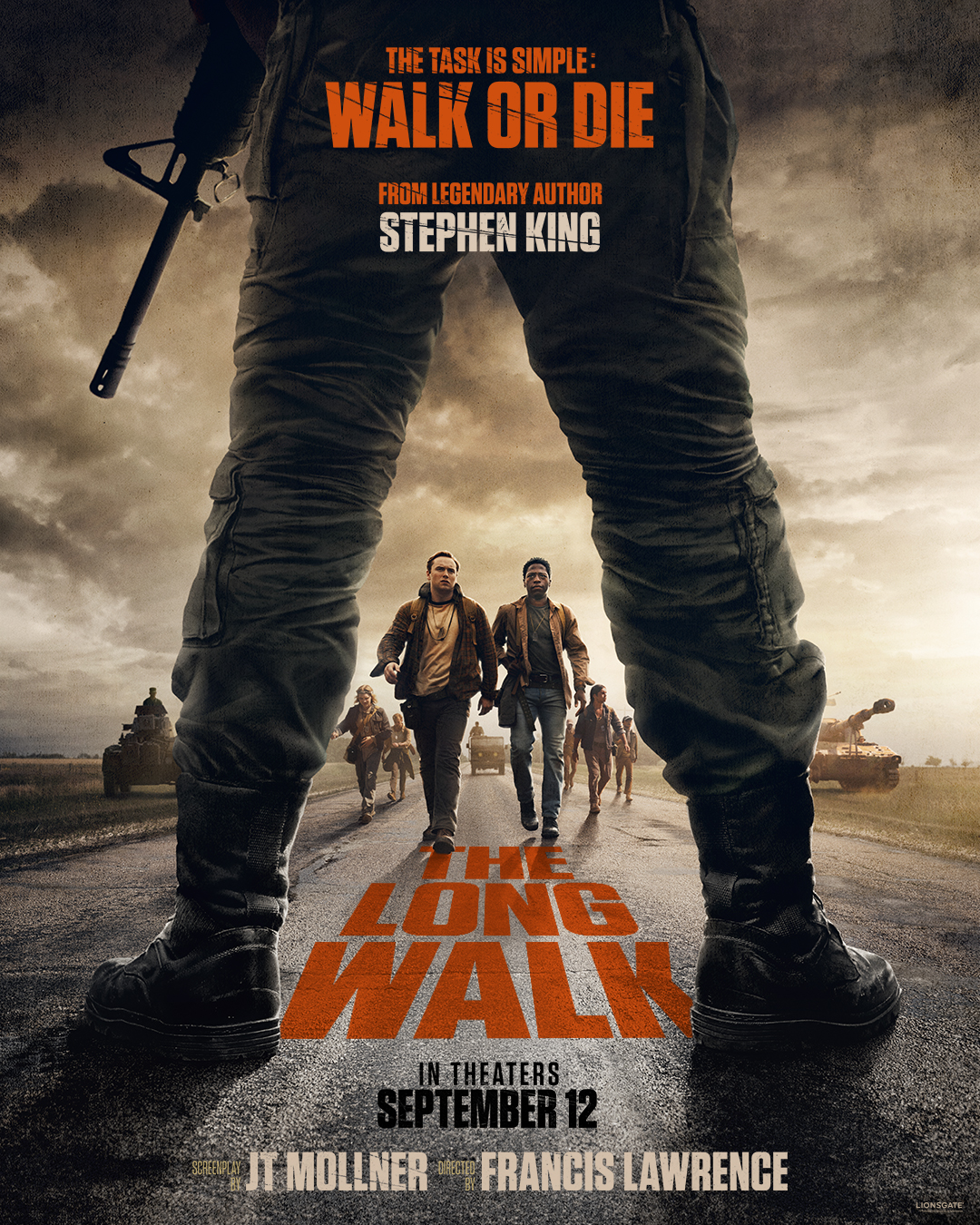
4. “The Long Walk” (USA)
Director Francis Lawrence’s screen adaptation of Stephen King’s novel by the same name is one of those pictures that makes me want to stand up in the theater and exclaim that the Emperor is indeed naked (though I’d probably be quickly escorted from the moviehouse if I did so). The source material for this production, originally written at the time of the Vietnam War, was an allegory about the draft and its impact on young American men at the time, a mandate that often led to their deaths in an unpopular and largely unexplained conflict. And it’s a statement that’s admittedly still valid (albeit perhaps not as relevant) all these many years later. However, the story’s translation from book to screen in the present day leaves much to be desired, in part because its message isn’t as timely as when the book was written and in part because of the film’s stunningly poor execution. “The Long Walk” tells the tale of a feebly justified (and even more poorly explained) grim ritual in which 50 young men selected from a nationwide lottery embark on a nonstop march in which they must maintain a minimum 3 mph walking speed. Their determined efforts in this symbolic venture are supposedly intended to inspire a demoralized population to become more enterprising, productive citizens in a dystopian version of America as it struggles to recover from a great war. But marchers who fail to sustain their pace are mercilessly gunned down after three warnings (and who said cold-blooded killing isn’t motivational?). The last man standing in this open-ended competition is named the “winner,” an accomplishment that entitles him to whatever he wishes as a reward. Symbolism and literary surrealism aside, however, the premise behind this work is utterly absurd, especially since participation in the march is voluntary, a betrayal of one of the principal thematic elements of the source material, an allegory critical of the inherently inhumane real world mandate of conscription. Given that, then, who in their right mind would sign up for something like this? But, beyond the innate lunacy of this story’s premise (not to mention its contradictory and countless illogical plot elements), the picture fails as a well-crafted work of cinema. To begin with, it commits the cardinal moviemaking sin of predictability, its narrative events and ultimate outcome largely visible from miles away. Next, its storyline quickly becomes tiresomely repetitive with only minor deviations in plot devices along the way. Its billing as a horror flick is seriously misplaced, as it’s not particularly scary – just gratuitously gross, whose shock value impact and multiple disgusting references to bodily functions fade rapidly by going to the same overused well far too many times. And, on top of all that, it’s often terribly boring, loaded with protracted conversations among bland, monodimensional characters that just aren’t especially compelling or profound (how this release managed to capture the Robert Altman Independent Spirit Award for best ensemble cast is beyond me). The screenplay driving all this appears to have drawn its inspiration from the narratives in pictures like “Platoon” (1986) and any number of classic World War II buddy films but with less articulate and attention-holding writing. To its credit, the film valiantly attempts to infuse the story with insights related to contemporary social and political issues, though these efforts sadly remain largely underdeveloped. What’s more, there are missed opportunities here, too, such as the picture’s failure to make a definitive statement about the bloodsport nature of the event given its popularity with a reverential transfixed public that’s able to watch the entire spectacle via a live video feed. When all of these elements (or should I say shortcomings?) are combined, you’ve got one ridiculously hot cinematic mess, one that probably would have been more aptly titled “Roadkill.” I find it puzzling that this offering from the director of four of the five “Hunger Games” releases was unable to work his magic once again in this release in light of the similar nature of this project. However, in my view, this production misses the mark by such a wide margin that, if the sharp-shooters in this story had an aim comparable to that of the director, no one would have died by the time the closing credits roll. But, then, maybe we would have been better off with a picture that produced such an outcome, given that there’s little redeeming entertainment, enlightenment or educational value in this cinematic debacle. And, no matter what anyone might say, in the end, the Emperor is still naked.
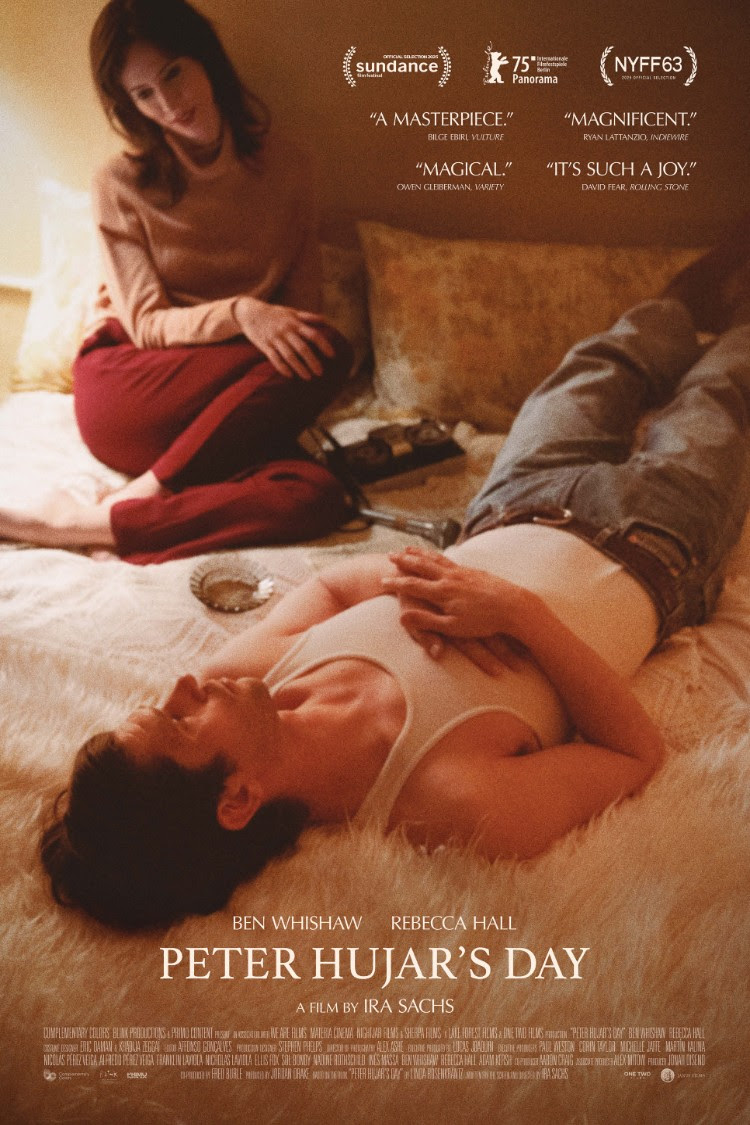
3. “Peter Hujar’s Day” (USA/Germany/UK/Spain)
This is likely to be another unpopular opinion, especially among arthouse aficionados, particularly as a recipient of five mind-boggling Independent Spirit Award nominations. However, this latest offering from writer-director Ira Sachs easily has to be one of the most overrated releases of 2025 for a variety of reasons. The film is based on a book of the same name written by author Linda Rosenkrantz, a good friend of the title character, Peter Hujar, a New York art photographer who attained a modest level of success during his lifetime (1934-1987) but who has since been the subject of greater notoriety and a number of retrospective gallery shows. In 1974, Rosenkrantz (Rebecca Hall) launched a book project in which she asked a number of her artist friends to write down all of the events in a day of their lives, after which she planned to interview them about their accounts, with Hujar (Ben Whishaw) being one of her subjects. The book project as originally planned never came to fruition, but, many years later, a transcript of her interview with Hujar surfaced, providing the basis for the scaled-back book that would later inspire this film. In essence, this release is a filmed chronicle of that interview, a day-long conversation between the two friends. Understandably, cinematic experiments like this are not everyone’s cup of tea (mine included), but I strive to keep an open mind, an undeniable chore where this production is concerned. The conversation and its chronicle of it is vapid, unfocused, unengaging, and, above all, tediously dull (underline and Italicize that sentence, please). The content consists of a strung-together collection of stream of consciousness nonsense, incidental drivel, superficial gossip and shameless name dropping of the duo’s friends in the New York arts community, including the likes of Alan Ginsberg, William S. Burroughs, Fran Lebowitz and Susan Sontag, to name a few. And, unless one is familiar with any of these individuals, the passing references to them are likely to mean absolutely nothing. The same goes for the topics that Rosenkrantz and Hujar banter back and forth about. From the foregoing, it would seem that the backers behind this vanity project have a personal interest in and admiration for its subject, and that’s fine, except that it doesn’t make for particularly captivating viewing, its content being too “inside” to be meaningful to casual viewers. Those “in the know” will probably find this utterly fascinating, but, in all likelihood, they likely represent a microscopic portion of the moviegoing public. For the rest of us, thankfully, the film comes in at a merciful 1:16:00 runtime (though it seems a lot longer), and that is perhaps its only saving grace. Regrettably, Sachs is usually a fairly reliable filmmaker, but he’s clearly missed the boat on this one, and you’d be wise to stay ashore, too.
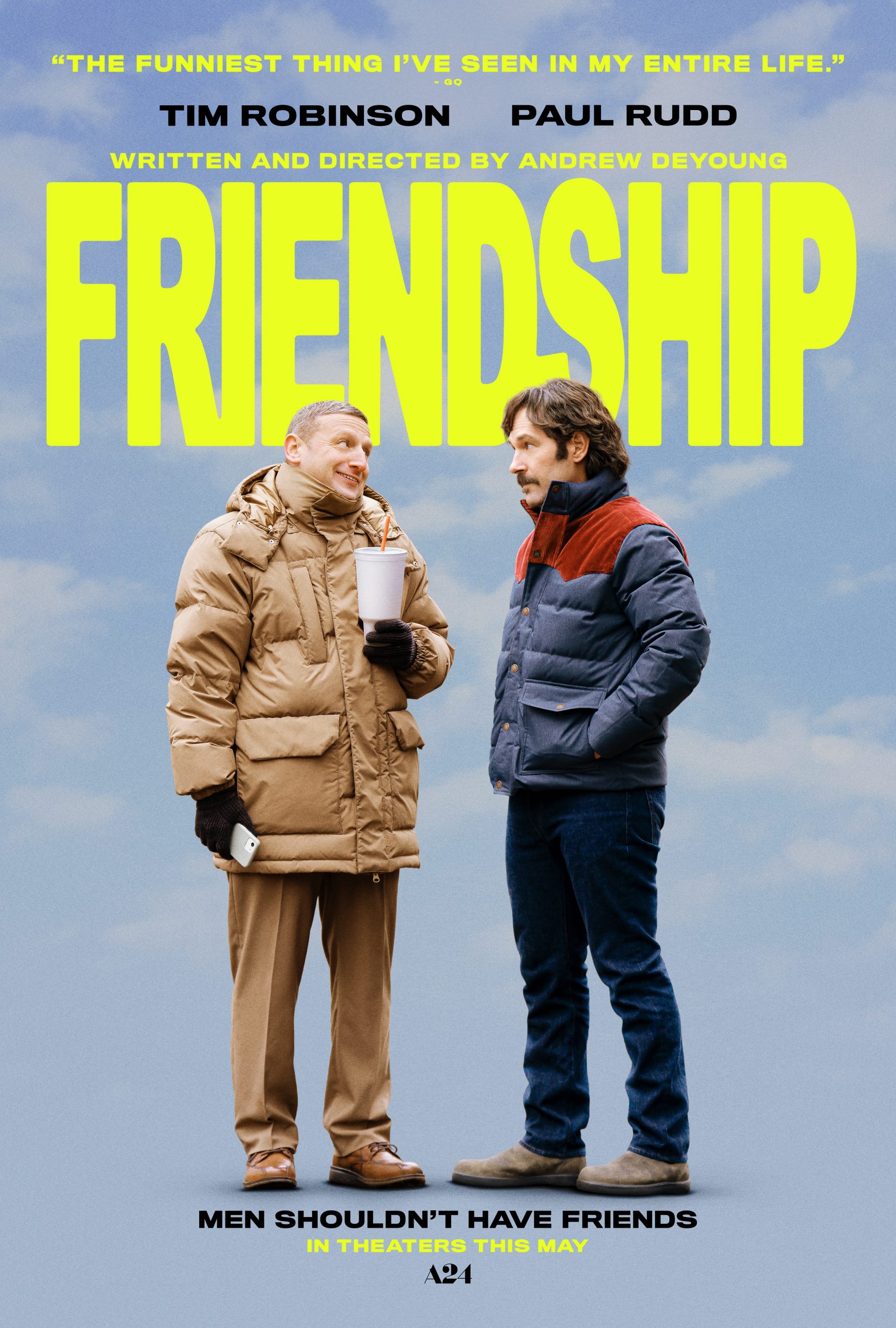
2. “Friendship” (USA)
I truly admire the offbeat and outrageous when it comes to movie comedies. At the same time, though, I’m also the first one to take pictures to task that ostensibly aspire to these qualities and utterly fail horrendously. Such is the case with this debut feature from writer-director Andrew DeYoung, a supposedly subversive, allegedly hilarious look at the subject of male bonding that falls positively flat at every juncture. “Friendship” follows the ridiculously implausible adventures of neighbors Austin (Paul Rudd) and Craig (Tim Robinson), whose juvenile, irresponsible antics are so completely unfathomable that any viewer with even the smallest modicum of intelligence can’t possibly begin to take any of this nonsense seriously. Their episodic story plays like a live action version of Family Guy or Beavis and Butthead, vehicles that may be fine for animation but that can’t cut it in a legitimate cinematic format. I honestly could not wait for the closing credits to roll on this one, checking my watch constantly as I struggled to sit through this painfully misguided attempt at poking fun at bromances, making seemingly well-balanced men look like brain-dead morons. Given that, it’s astounding how this project ever got approved and even more baffling at the plethora of undeserved gushing love letters that have been sent its way. In addition, the honors it has received genuinely stretch credibility beyond all reasonable limits, including a Critics Choice Award nomination for best comedy (ironic considering that its inherent stupidity is not the least bit funny), an Independent Spirit Award nod for best first screenplay (easily the picture’s weakest attribute) and a National Board of Review designation as one of 2025’s Top 10 Independent Films. Indeed, if this celluloid trainwreck is any indication of the current state of movie comedies (particularly those made in the US), the industry is in bigger trouble than any of us can possibly imagine.

1. “Star Trek: Section 31” (USA)
As a lifelong diehard “Star Trek” fan, I find it almost unfathomable to think that I would end up writing something negative about a franchise with which I have long been so deeply enamored – until now. The Paramount+ network’s first effort at creating a standalone “Trek” feature film is, to be honest, absolutely dreadful. “Section 31” is a picture with so many problems that it’s hard to know where to begin. For starters, the narrative is so convoluted that it’s difficult to follow without taking notes or constantly hitting the rewind button. In large part, that’s probably because the creators of this mess don’t appear to know what story – or what kind of story – they want to tell. There are allusions to so many different contributing influences that it’s hard to keep track of them all. The film is peppered with references to such properties as “Guardians of the Galaxy,” “Mission: Impossible” and “The Fifth Element,” among others, with precious little actually having to do with “Star Trek” (unless, of course, you count the rampant, utterly annoying silliness of the Lower Decks animated series), almost as if the finished product were designed by committee. Perhaps the most egregious sin here, however, is the picture’s drastic change in the nature of what the Section 31 storyline is all about. As introduced in Star Trek: Deep Space Nine and reintroduced in Star Trek: Discovery, Section 31 has traditionally been portrayed as an enigmatic, exceedingly dark, eminently sinister presence in the world of this franchise, far different from the significantly more visible, almost goofy depiction presented here. This is such a radical departure that, realistically speaking, it can hardly carry the “Section 31” moniker (or, some might even say, the “Star Trek” label itself). That’s regrettable, given that this storyline is one that, if it had been handled differently, could have been developed into a more fully fleshed out vehicle than it has been up to this point in its legacy (including as a springboard for a series of its own). As it stands now, though, if this production is any indication of where it might be headed (if anywhere), it would seem that its creators are determined to take Section 31 in an entirely different direction from where it began (and not in a good way at that). To its credit, director Olatunde Osunsanmi’s fourth feature film incorporates some fine work yet again from its protagonist, smarmy, uber-sarcastic camp queen Michelle Yeoh, as well as some genuinely impressive, visually dazzling special effects. But, as a vehicle capable of maintaining viewer interest and giving Section 31 a viable future, I don’t see it. In all truthfulness, I’m not one of those nitpicking Trekkers who mercilessly dumps on new properties or criticizes every little detail that supposedly deviates from the mythology’s elusive canon (how annoying), but this offering represents such a marked, wrong-headed divergence from where Section 31 originated that I can barely recognize it. If Section 31 is to have any kind of life going forward, it truly needs to get back to where it came from and forget that this monstrosity was ever created.
Dishonorable Mentions
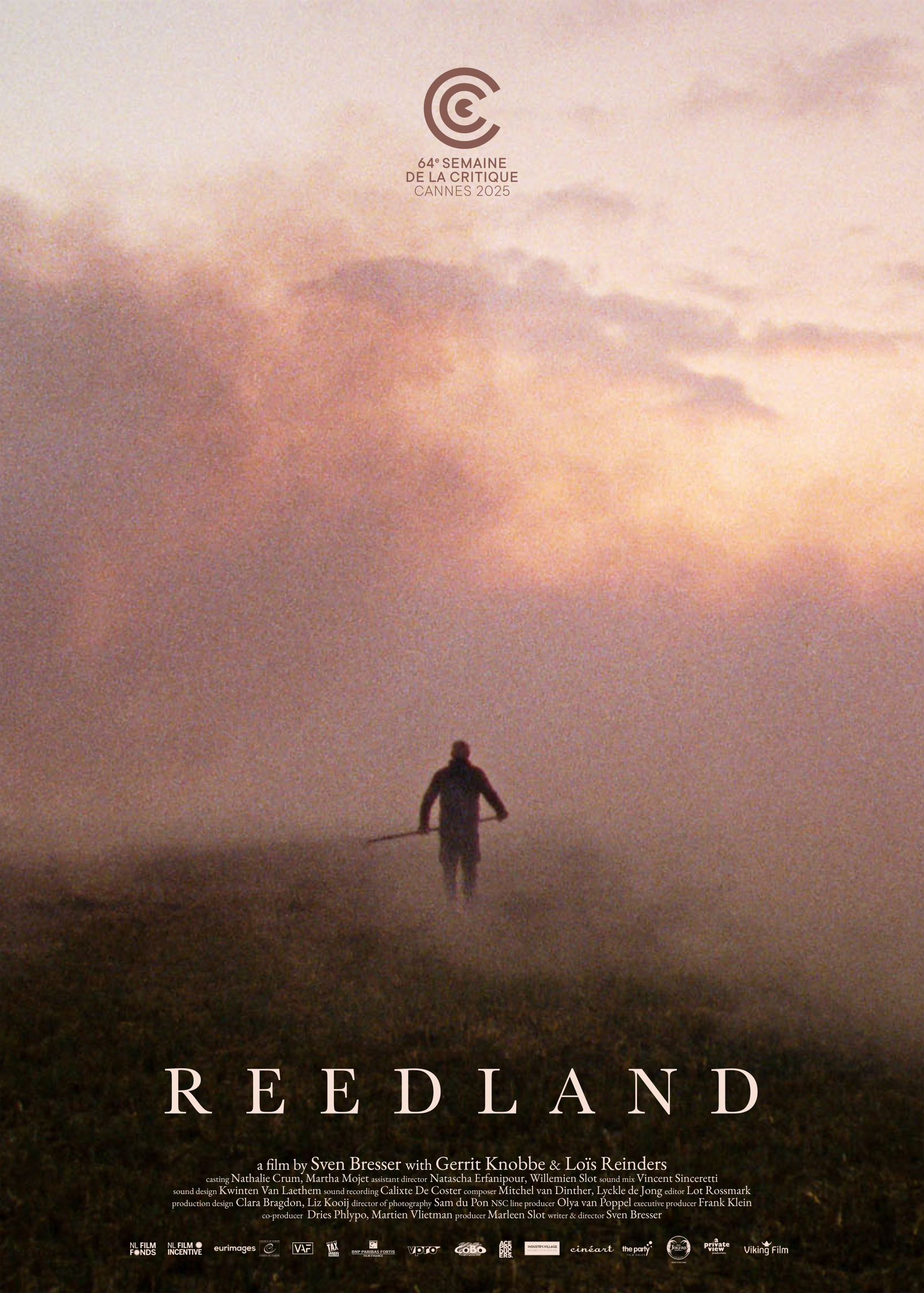
11. “Reedland” (“Rietland”) (Netherlands/Belgium)
Well-made arthouse films are, without a doubt, the cinematic genre that I enjoy most. Which is why movies that unsuccessfully attempt to pass themselves off as such annoy me to no end, particularly when they give the genre itself an undeserved unflattering reputation. Regrettably, that’s very much the case with writer-director Sven Bresser’s debut feature outing, “Reedland.” When widowed Dutch reed cutter Johan (Gerrit Knobbe) stumbles upon the corpse of a young woman in one of his fields, he’s troubled at what he finds. It’s suggested (though never made especially clear) that he feels guilty about this disturbing finding on his property, so he subsequently launches into an impromptu investigation of his own to discover the truth behind this unsettling incident, despite warnings from authorities advising against this. That, in itself, should make for an engaging premise, but, disappointingly, the filmmaker fails on this point. He loses control of the story, dressing it up with a wealth of visually stunning cinematography in an attempt to cover this offering’s many shortcomings. However, no amount of admittedly gorgeous imagery can make up for a lack of a coherent, comprehensible narrative, the primary undermining culprit in this production. For starters, what should be the core story element is largely (and inexplicably) forgotten once introduced. Even though passing references to it are scattered throughout the picture, they’re bafflingly underplayed, intercut with long, lingering images of reed fields blowing in the wind, frequent protracted sequences of Johan walking or driving, segments of a loving grandfather doting on his young granddaughter (Loïs Reinders), and countless extended closeups of the protagonist silently emoting (but never really cluing us in on what he’s pondering). Complicating matters further are the inclusion of several largely mishandled illusory sequences and a number of oddly conceived scenes involving a noisy malfunctioning washing machine, a graphic equine insemination procedure and Johan engaging in “self-gratification” while staring at a computer screen featuring what appears to be an AI-generated sex worker. But what does any of this have to do with a grisly murder investigation? Delightful ambiguity is one thing, but cryptic obfuscation is something else entirely. These elements are not inspired innovation or creative cinematic license at work; they’re depictions of unfocused pretention trying to make themselves out to be something more profound than they are. In light of that, then, it’s truly mystifying how this release managed to earn the distinction of being named the Netherlands’ official entry in the International Film category at this year’s Academy Awards and the recipient of two Cannes Film Festival award nominations. Curiously, as the closing credits roll, a graphic dedication appears on screen in which the filmmaker pays tribute to his mother for helping him “to see the reeds” (whatever that means). Obviously, the director is attempting to portray something of a meaningful and highly personal nature through this work, and that’s certainly laudable. Sadly, though, it’s unfortunate that he didn’t let the rest of us in on what that was. Instead, we have been left lost to roam the reed field aimlessly on our own.
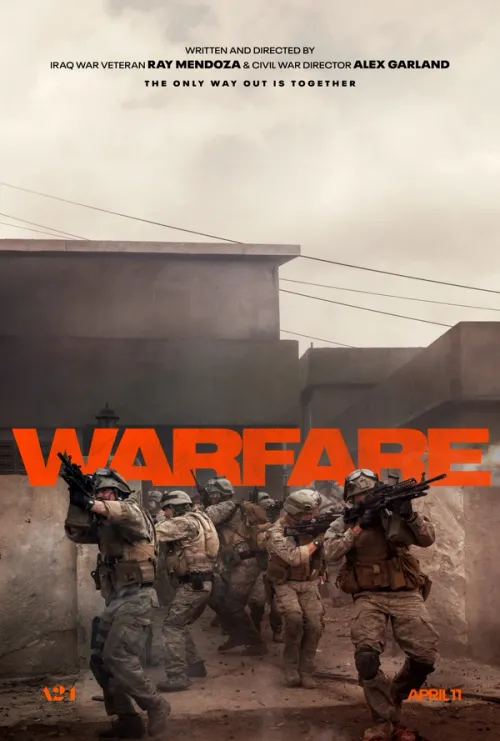
12. “Warfare” (USA/UK)
They say “War is hell,” and, without a doubt, there’s plenty of evidence to back up that contention. But rarely, if ever, does anyone say that “War is boring,” although that can certainly be said about its depiction in this latest offering from writer-directors Alex Garland and Ray Mendoza. This fact-based account tells the story of a Navy SEAL unit charged with providing support for a US Marine operation in Ramadi during the Iraq War in 2006. Filmed in real time, the picture seeks to take viewers onto the front lines of this urban warfare setting, one that results in an ambush by insurgents armed with grenades, guns and IEDs, leading to fatalities and multiple life-threatening injuries. The attack, in turn, necessitates calls for evacuation that place the rescuers in extreme peril as street fighting intensifies around them, portraying this hazardous battlefield scenario in an authentically choreographed re-creation of on-the-ground events. But, in depicting this conflict, the filmmakers ponderously commit the grave error of making it mind-numbingly dull; it’s so “clinical” and by the book that it’s devoid of any sense of viewer engagement, with no character development, no emotional involvement and virtually no background about why any of this is transpiring. In fact, the narrative so anonymizes the circumstances surrounding this incident that the film ends up coming across like little more than a big screen version of a video game. Frankly, that raises the question, what’s the point of this, and why should the audience care? We get the core message, but do we really have to sit through 90 minutes’ worth of it for it to sink in? To compound matters, the picture’s protracted opening sequence, which chronicles the preparation and intelligence-gathering setup for the main event, goes on forever, leaving viewers wondering if anything is ever going to happen. And, when it at last does (and quite predictably at that, a quality that characterizes the film overall), the story becomes little more than an endless stream of gunshots, explosions and grotesquely wounded soldiers screaming in agony. Is this supposed to be “entertainment”? Indeed, by that point, “Warfare” becomes more of an endurance test than an estimable work of cinema. To its credit, the picture’s accomplishments in sound, cinematography and stunt work have earned it award nominations from the BAFTA, Critics Choice, Independent Spirit and Windie Awards, but those technical achievements are hardly enough to make the movie work, prompting one to wonder about the purpose behind this production. If the intent is the misguided glorification of combat, it doesn’t do much to favorably make its case. And, if it’s meant to declare an anti-war statement, it seems strangely proud and self-congratulatory of its achievements in capturing the authentic look and feel of conflict, qualities that would appear to undercut such a message. Even setting aside these philosophical issues, the film’s lack of focus beyond the battlefield footage causes it to fail even as a prototypical war picture in purely conventional terms when compared to countless other predecessors, including any number of World War II and Vietnam Era offerings, as well as more contemporary releases like “Black Hawk Down” (2001), “The Hurt Locker” (2008), “Good Kill” (2014) and “Eye in the Sky” (2015). When all of these considerations are taken collectively, this release has little going for it on so many fronts that it’s difficult to fathom the rationale for its existence – or a reason why anyone would realistically want to see it.

13. “The Business Women’s Club” (“O Clube das Mulheres de Negócios”) (Brazil)
Screened at the 41st Annual Chicago Latino Film Festival
When a film tries to cover too much territory, it’s often doomed to failure. And such is the case with writer-director Anna Muylaert’s latest feature offering, a picture with an intriguing premise that ultimately doesn’t know where it’s trying to go or what it’s trying to say. This wildly meandering, supremely unfocused dark comedy tells the tale of an exclusive São Paulo country club run by women that has fallen on hard times. To prop up the facility’s reputation, the club’s president (Cristina Pereira) arranges to have what she believes to be a puff piece written about it by a neophyte journalist (Rafael Vitti) (who just happens to be her grandson), accompanied by the images of a renowned photographer (Luis Miranda). On the day of the interviews for the article, the organization’s board members assemble at the club, where viewers soon learn that virtually all of them are polished but greedy, unsavory, unprincipled individuals who try to do whatever it takes to protect their assets and reputations – and to stay out of jail. But, in the midst of all this intrigue and subterfuge, all hell breaks loose when three of the president’s pet jaguars escape from their confines at the club and begin running rampant throughout the property. This is where the film falls apart, turning silly, directionless, inconsistent and gratuitous as everyone scrambles to protect their own hides from creatures depicted with some of the worst CGI effects I’ve seen since the overhyped Bollywood spectacle “RRR” (2022). What’s more, unexplained (and ultimately unresolved) story threads emerge from this narrative chaos. In many respects, the film tries to employ a metaphorically satirical approach in a less-than-successful attempt at making statements about Brazilian politics, government, business and society, with scathing though obvious criticisms about its hypocritical religious practices and inept environmental policies. And then there are this offering’s strangely handled gender aspects. This is most notable in its ubiquitous presentation of inexplicably androgynous, weak-willed males and women who have made misogyny an artform, elements that send questionably disempowering (some might even say woefully inappropriate) messages to viewers, despite the comeuppance experienced by those associated with such dubious behavior. From this, it’s thus easy to see how this is an unduly overstuffed production that comes across as more muddle than riddle and undermines what could have been an engaging premise if better handled. Put simply, this one is a cinematic mess that’s easily passed over.
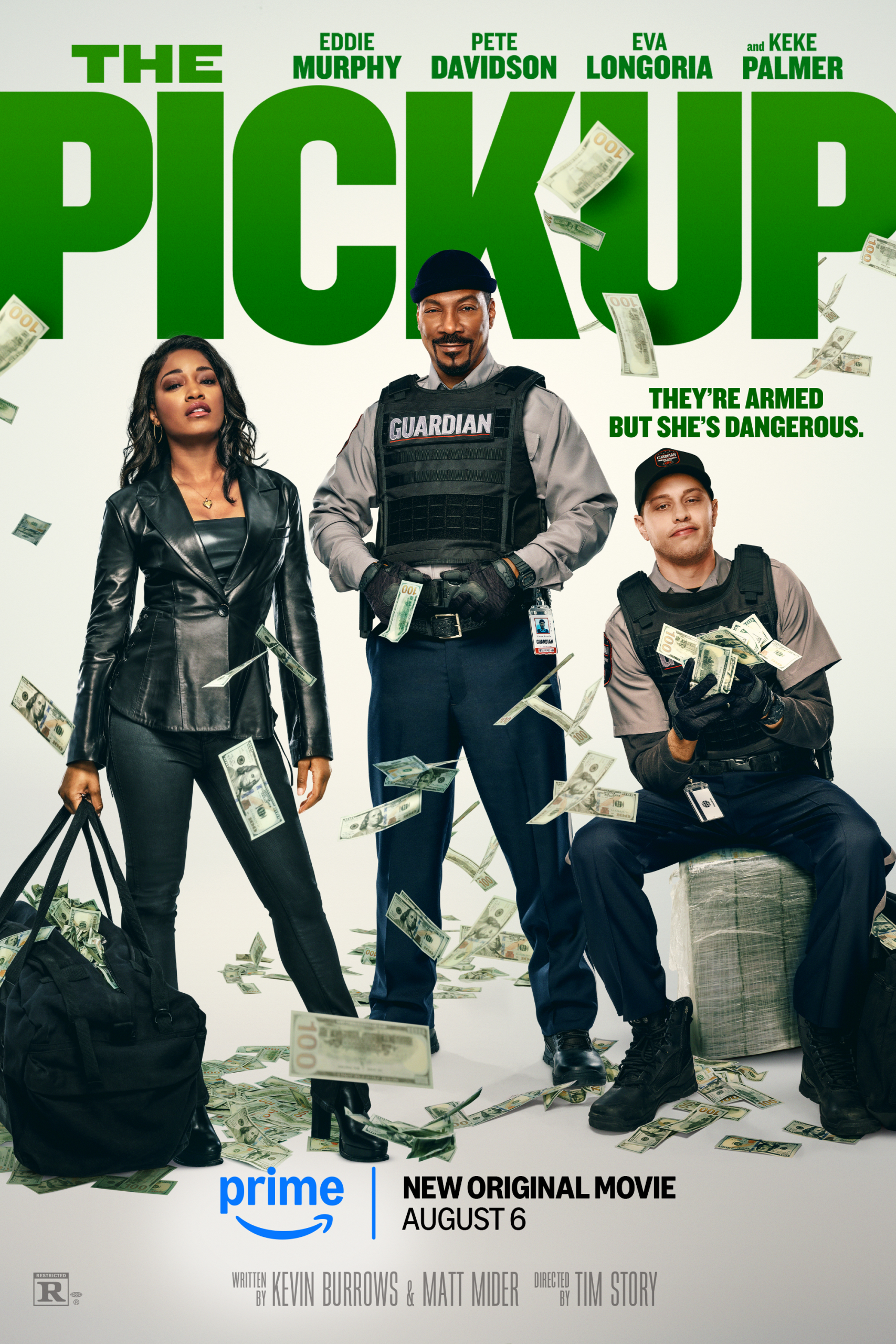
14. “The Pickup” (USA)
Heist movies – particularly those with a finely honed comic edge – have become one of the most popular and enjoyable genres in today’s cinematic marketplace. And, when they’re done right, they can be a lot of fun, too. However, to succeed as solid entertainment vehicles (not to mention works of good filmmaking), their creators need to combine their pictures’ various elements with smart, savvy, razor-sharp precision, something that director Tim Story’s latest offering only gets down pat about half the time. When Zoe (Keke Palmer), a shrewd, scheming, seductive thief, hatches an elaborate plan to hijack an armored car for use in stealing the weekend receipts from an Atlantic City casino, she taps a variety of resources to make it work, including gathering inside information from a bumbling security guard/armored car driver, Travis (Pete Davidson), during a convincingly staged romantic encounter that he believes is genuine and not the cleverly disguised ruse that it is. His ineptitude and naivete, in turn, lead to a daring, high-speed highway chase that results in the theft of the vehicle and ends up embroiling Travis and his seasoned partner, Russell (Eddie Murphy), in a high-stakes caper to swipe $60 million in cash. And, to ensure the duo’s assistance, Zoe reveals that she has Russell’s wife, Natalie (Eva Longoria), under surveillance – and under the threat of violence – if he and Travis don’t cooperate in carrying out her scheme. By all rights, this might sound like a solid premise for a film of this stripe, and that would have likely proved true with better execution in several key areas. However, “The Pickup,” unfortunately, is a stunningly mediocre offering. To its credit, the film sports a modest number of thrill-filled moments, a fair amount of genuinely funny bits and some truly kick-ass chase scenes. It also features a standout performance by Palmer (who really deserves to get better roles than this), as well as capable turns by Longoria and by Andrew Dice Clay as Travis and Russell’s surly, foul-mouthed boss. But the script needs some serious work, given its many plot holes, implausible story elements and generous helpings of predictability, many of which represent missed opportunities that could have been drawn upon to make the narrative more inventive, unexpected and engaging. Then there are the performances of Davidson, who hands viewers yet another cloying, obnoxious portrayal, and Murphy, whose deadpan delivery often makes him look like he’s sleepwalking through the picture save for a few over-the-top comic outbursts that seem incongruent and largely out of character. Admittedly, this offering generally improves the further one gets into the story, but it still comes up disappointingly short overall. And, as it stands now, it’s not only the casino that’s getting ripped off.
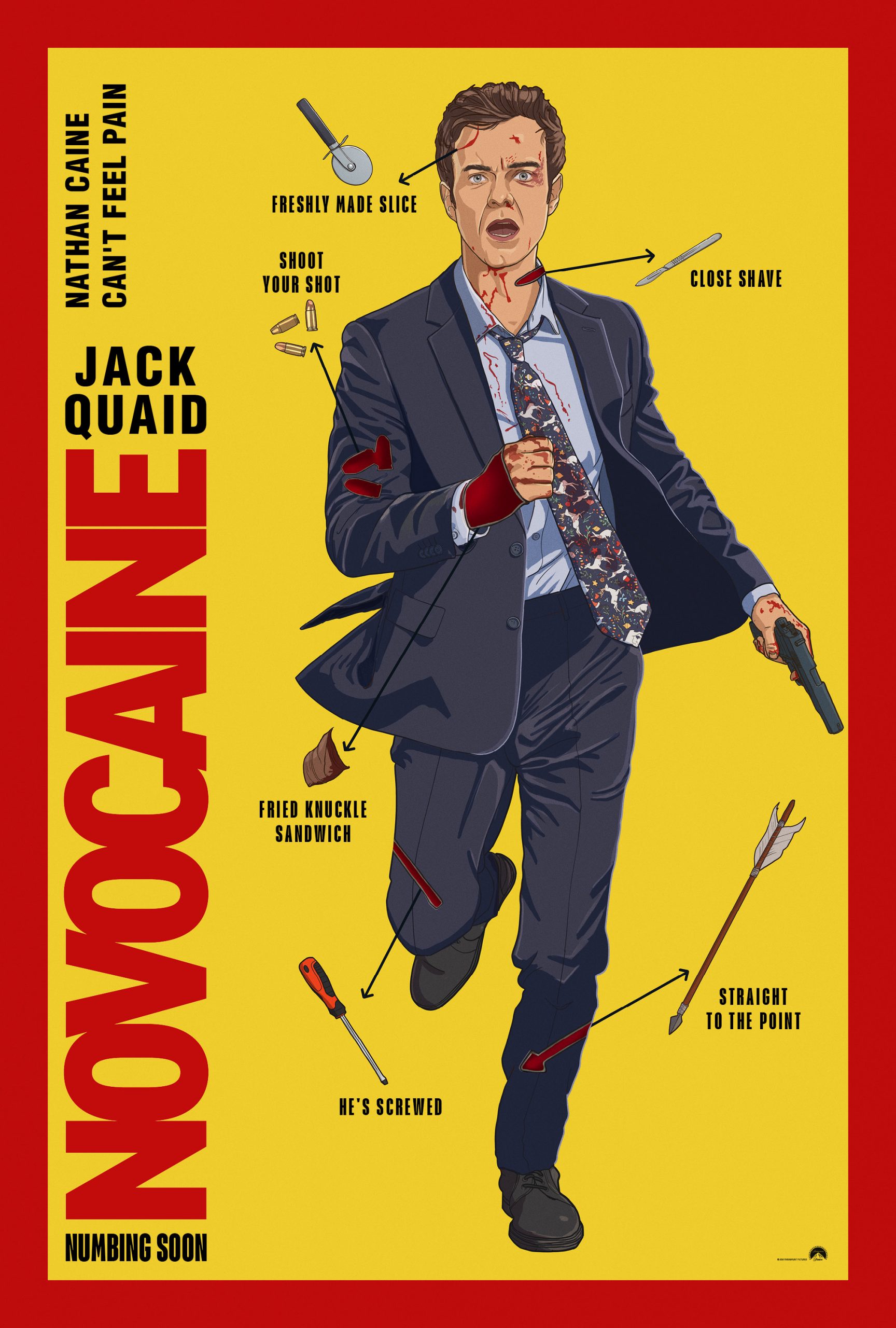
15. “Novocaine” (USA)
It genuinely pains me when I have to say that a movie has absolutely nothing going for it, but, in the case of this celluloid trainwreck, I can come up with no other way to describe it. This overlong, frequently improbable, gratuitously violent, truly stupid offering from directors Dan Berk and Robert Olsen is one of the worst excuses for a film that I have ever seen, and I’m not exaggerating when I say that. The film tells the story of Nick Caine (a.k.a. “Novocaine”) (Jack Quaid), a 30-something credit union assistant manager who suffers from a rare genetic disorder that shields him from experiencing any kind of pain or discomfort when injured, even though the physical damage to his body is real enough. He’s something of a sheltered, geeky milquetoast, having lived much of his life isolated from many of its everyday experiences as a means to protect him from potential undue harm. So it’s highly inconceivable that he somehow knows how to skillfully handle himself when caught up in a robbery of his workplace and his subsequent one-man amateur pursuit of the bad guys when they escape with a hostage, one of the facility’s tellers (Amber Midthunder), who also happens to be his new girlfriend. However, as this scenario plays out, the narrative grows progressively more preposterous with every passing frame, much of it designed to show how many times he can be shot, beat up and brutally hacked apart without ever feeling anything and yet still be able to keep going with his mission. Because of this, the sequence of events becomes increasingly repetitive, ever-more farfetched and just plain dumb, with ridiculous, over-the-top plot developments that fail to engage and frequently feature incongruous and unoriginal dialogue. But, to add real insult to injury, this release bills itself as a comedy yet is virtually devoid of humor except for a smattering of one-liners that mostly fall flat. This offering is so ineptly executed that it makes productions like “Joker 2” and the “John Wick” movies look like masterpieces by comparison. Indeed, if you’ve watched the trailer for this one, you’ve seen all you really need to see. “Novocaine” is a sorry excuse for contemporary filmmaking and a prime example of everything that’s wrong with the domestic motion picture industry these days, a cinematic cautionary tale for film school students on how not to make a movie. Indeed, this one really is a pain to watch.
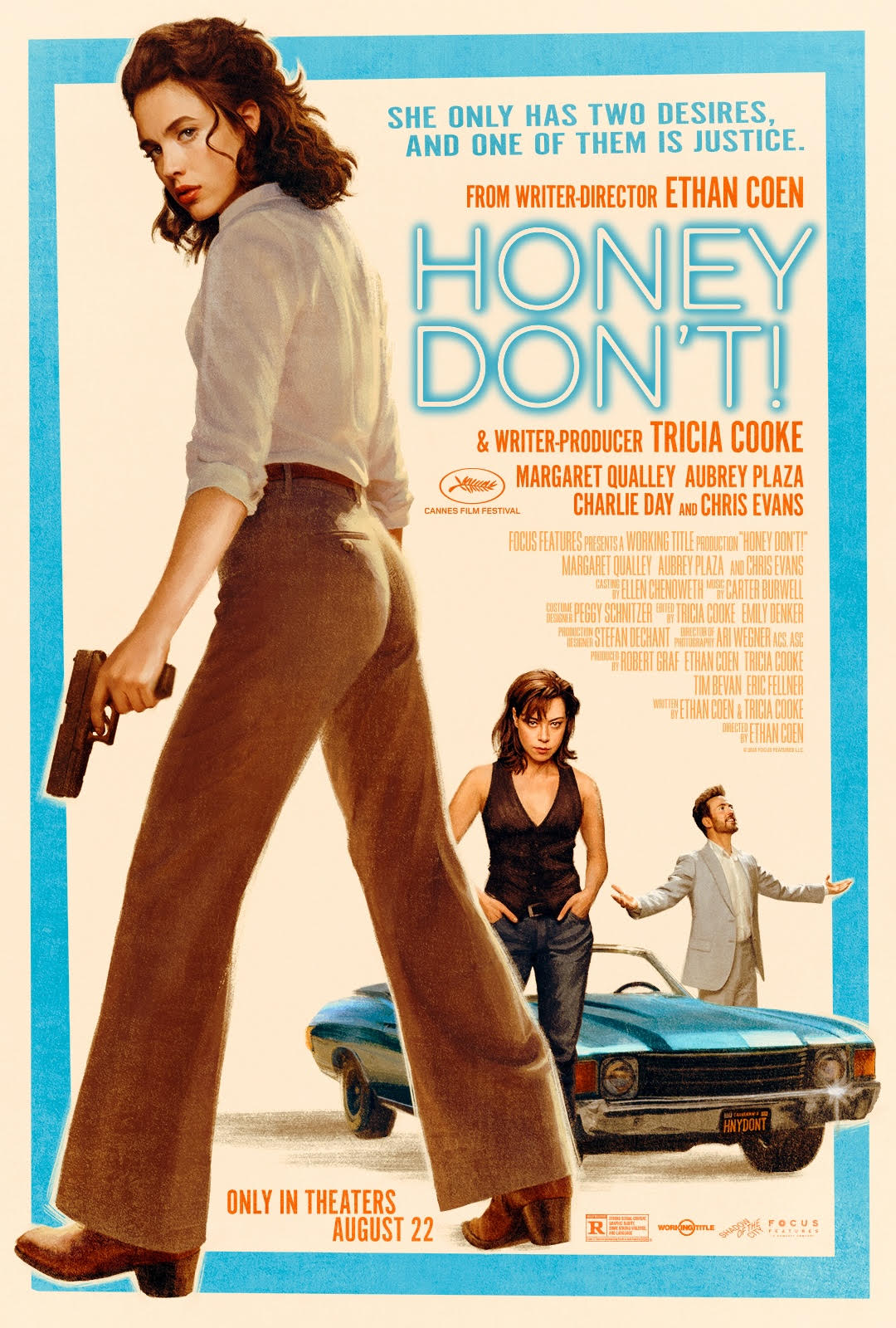
16. “Honey Don’t!” (UK/USA)
No matter how many elements a filmmaker may get right in creating a movie, none of them means anything if they’re not set within a coherent cinematic context, either thematically or in terms of the picture’s central narrative. And, regrettably, that’s the problem that plagues the second solo feature outing from writer-director Ethan Coen. This pulpy comedy-drama-crime thriller, which follows the exploits of flamboyant, perpetually “thirsty” small town private detective Honey O’Donahue (Margaret Qualley) in her investigation of a series of unsolved murders apparently tied to mysterious church, successfully incorporates an array of truly captivating qualities – colorful character development, fine performances (particularly by Qualley and in the supporting portrayals of Aubrey Plaza, Chris Evans and Charlie Day), a well-crafted production design and a collection of knock-it-out-of-the-park one-liners. In fact, about the only thing that’s missing here is a solid, comprehensible story. The picture’s disjointed jumble of plot threads – many of them underdeveloped and/or extraneous – meanders along for roughly 90 minutes without ever really going anywhere or saying anything relevant or meaningful. To be sure, “Honey Don’t!” has its share of genuinely enjoyable moments, but a handful of modestly memorable instances does not a movie make. And that’s unfortunate, given that it seems the picture has many of the ingredients for what could have potentially been an outlandishly funny, wickedly engaging tale. Instead, viewers are left with a plot that aimlessly roams from tangent to tangent and never seems to coalesce into something substantial or integrated, no matter how visually appealing it might be or how effective it is in tickling one’s funny bone. And, when the film comes up lacking in this regard, it often falls back on titillating sequences driven by graphic sexuality or edgy violence to shore up its obvious deficiencies, a rather cheap and cheesy way to try and revive sagging audience interest. In that sense, then, this production reminds me very much of the films of Quentin Tarantino, whose releases, in my view, are often long on style and woefully short on substance. I find all of this rather disappointing, especially in light of Coen’s filmography over the years, particularly his many successful productions with his brother Joel. But perhaps that’s the key ingredient that’s missing here – the collaboration of the two siblings working together to produce truly outstanding works of cinema (thankfully, a reunion of the two is said to be in development). Whatever the case, though, it appears the filmmaker’s sophomore attempt at working on his own has not yet yielded cinema of the caliber that he’s capable of. Let’s hope that changes with his next project.
17. “The Rule of Jenny Pen” (New Zealand)
Fewer moviegoing experiences are more frustrating than watching a film in which the creators have no clear vision for what they’re trying to say. Regrettably, such is the case with this second feature offering from writer-director James Ashcroft. When a revered judge (Geoffrey Rush) suffers a stroke, he’s moved to what has to be the most ineptly run convalescent home in New Zealand to undergo rehabilitation. While there, however, he – like many of the facility’s other residents – becomes the target of taunting and abuse by another patient (John Lithgow), a manic dementia case who menaces them with a macabre hand-held puppet he calls Jenny Pen, the one who he contends rules over everyone housed at the home. When the judge protests, though, he’s summarily ignored and called delusional by the utterly clueless staff, an aspect of the narrative that’s wholly implausible and undermines the credibility of whatever the story is supposed to represent. That’s made worse by a meandering story that seems to vacillate between presenting a straightforward tale of elder abuse and floating the possibility that the judge may indeed be suffering from his own internal delusions now that he’s trapped in his own stroke-afflicted body. That kind of purposeful ambiguity might have worked better if it had been employed more skillfully, but, as it stands, that uncertainty is never properly developed. And, as the film plays out, it grows progressively more unbelievable and disjointed, leaving viewers wondering what’s truly supposed to be going on. What’s more, this offering is laughingly billed as a horror flick, but there’s virtually nothing the least bit scary about it; it instead languishes in the realm of a modest (though largely unfocused and unengaging) psychological thriller. To its credit, the film incorporates some searing comic relief in the form of witty, pointed one-liners (mostly delivered by Rush), and the two leads struggle mightily to elevate this cinematic mess into something more respectable. But even their considerable talents – no doubt a casting choice aimed at providing a touch of class to a production unworthy of it – are not enough to salvage this woefully undercooked project. Don’t waste your time or money on this one.
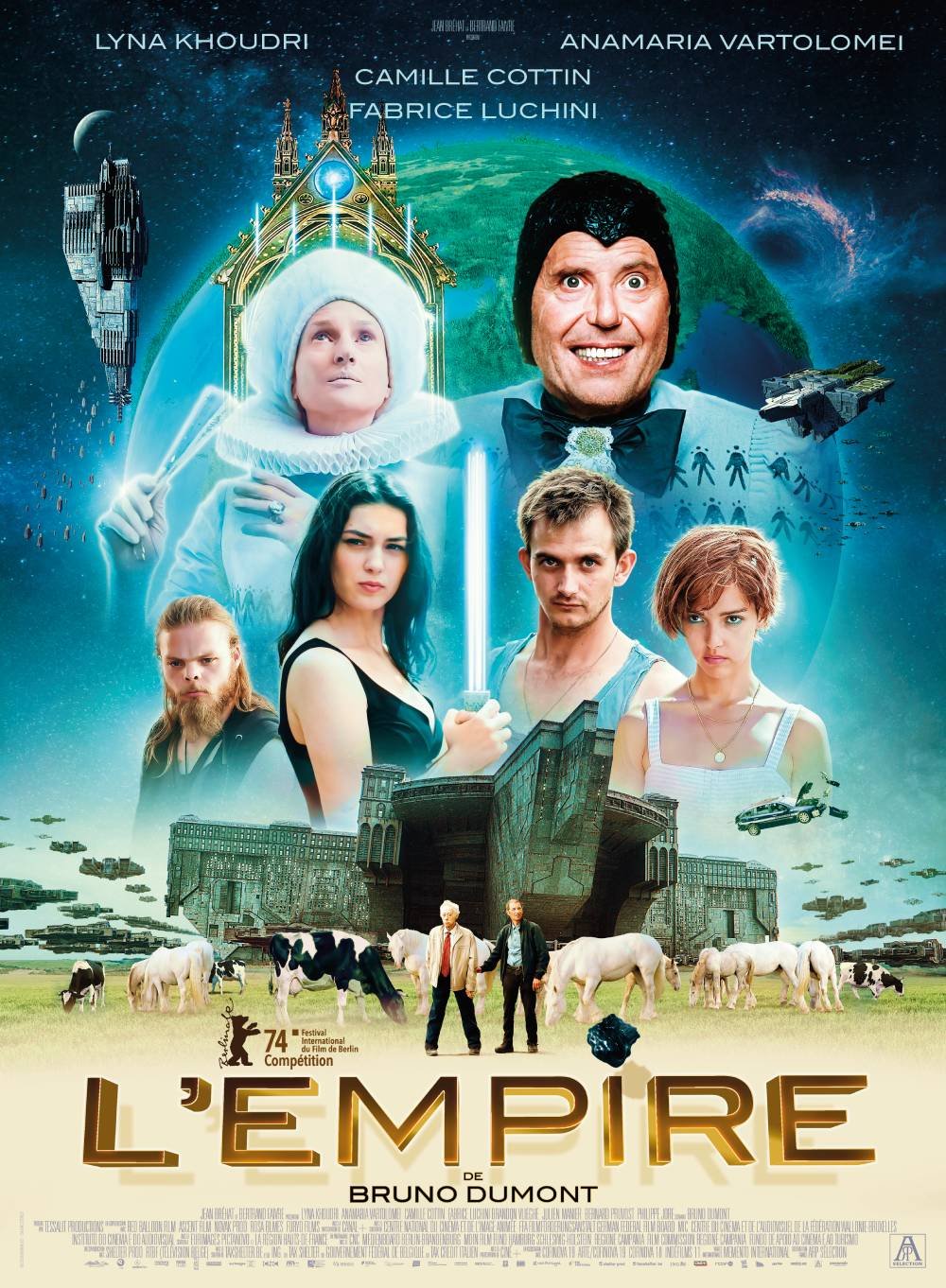
18. “The Empire” (“L’Empire”) (France/Italy/Germany/Belgium/Portugal)
When a film seeks to tackle such distinctive comedic forms as parody, satire or slapstick, the creators first need to make sure that what they’re hatching truly works. But, in the case of this latest offering from storied auteur Bruno Dumont, the mark is missed by a wide margin. This alleged take-off on classic space operas like the original “Star Wars” trilogy or “Spaceballs” (1987) simply doesn’t cut it, primarily because it just isn’t funny. Perhaps that’s due to the fact that the filmmaker doesn’t seem to be clear on the direction he wants the story to take or the tone with which it’s presented. In a nutshell, two alien species – the Ones (champions of good) and Zeroes (disciples of evil) – have been exiled to Earth (why and by whom is never made clear), where they’re battling one another to win over the control of humanity through their ground zero strongholds in a small French fishing village. But, in telling this tale, Dumont’s paper-thin narrative wanders aimlessly, blending a bland mixture of lame humor (most of which falls positively flat), bombastic but innately shallow soliloquies on the nature of good and evil, unexplained Monty Python-esque absurdist imagery, and gratuitous sexual encounters that appear to be thrown in for little more than titillating filler. To its credit, the picture effectively employs some truly impressive special effects, an eclectic background score based largely on reworked neo-classical arrangements of the compositions of J.S. Bach and Henry Purcell, and a production design that incorporates set designs drawn from Gothic and Renaissance European architecture. It also features a wealth of stunningly gorgeous cinematography, although a number of overlong shots (particularly many inexplicably filmed from too great a distance) could benefit from judicious pruning. So what exactly is the director going for here? Damned if I know. If it’s satire, its symbolism is seriously underplayed. If it’s a campy romp, it’s too understated. If it’s screwball comedy, the pacing is too sluggish. And if it’s insightful social commentary, it’s too superficial and doesn’t take itself seriously enough. In essence, “The Empire” may offer some segments that are nice to look at, but that’s about all, considering that the bulk of this release, in the end, really has nothing interesting, meaningful or piquant to say about anything.

19. “Under the Volcano” (“Pod wulkanem”) (Poland)
Screened at the 28th Annual Gene Siskel Film Center Chicago European Union Film Festival
Irony can provide both spice and substance to a story when blended with skill and dexterity. But, if that mix is off, the narrative can fall apart quickly, as happens, unfortunately, in this offering that draws from headlines of the recent past. Writer-director Damian Kocur’s second feature outing focuses on the experiences of a Ukrainian family of four on vacation in the Canary Islands. But, just as they’re preparing to board their flight back to Kyiv, they learn of the invasion of their homeland by marauding Russian forces, and, with the breakout of hostilities, they’re left stranded on Tenerife. The irony in this is that, while things are falling apart in Ukraine, they’re not only safe, but also in a beautiful island paradise. They’re even extended free meals and accommodations by their resort hotel for as long as needed until they’re able to make arrangements to return home or find sanctuary in a secure location. But how can they realistically enjoy themselves, even under conditions as pleasant as these, with so much uncertainty hanging over them? Indeed, what does their future hold? The stress of this situation soon leads to all manner of conflict among family members, not to mention tense relations with other guests (particularly in encounters with vacationers from Russia), as their lives take on a metaphorical warzone quality of their own. On the surface, this might sound like an intriguing foundation for a film, especially in light of its contemporary relevance. And, for a while, it works. However, the picture steadily runs out of steam – and material. About 45 minutes into the film, the story begins to lose its way, meandering aimlessly with no apparent direction and unable to effectively hold viewer interest. In essence, the filmmaker loses control of the room as his production limps along toward its unceremonious conclusion. Over the remainder of the film, an array of domestic conflicts and redundant footage of ocean waves crashing onto the island’s shoreline come to dominate the visuals, symbolism that becomes a little too obvious and redundant after a while. The irony that provided the premise for the picture fades away, as little is done to make effective use of it, replaced with trite, recurring imagery and an utter lack of focus. It’s truly a shame that this release couldn’t find the means to sustain itself throughout its runtime. Had it done so, this might have been one of the more engaging and insightful productions to have come out of late. Instead, the result is a vehicle that’s ultimately as deflating as the circumstances surrounding it.
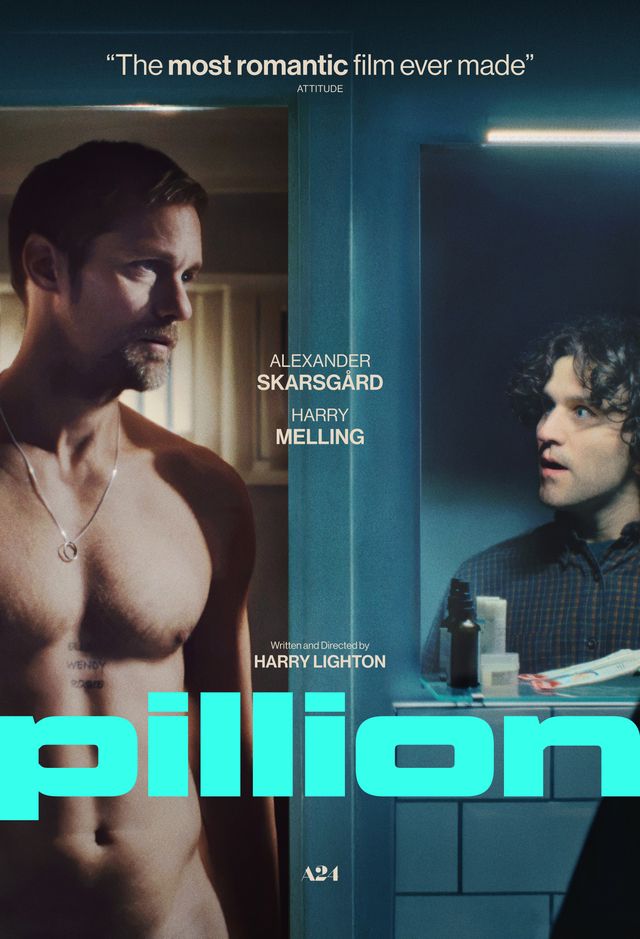
20. “Pillion” (UK/Ireland)
There’s a big difference between celebrating an alternative lifestyle and giving license to an abusive relationship, but, sadly, the debut feature from writer-director Harry Lighton doesn’t seem to know the difference. This sexually explicit “romance” (a term I use with measured reservation) follows the experience of Colin (Harry Melling), a shy gay adult who still lives with his parents and has trouble getting dates, after he meets Ray (Alexander Skarsgård), an enigmatic, uber-masculine biker/leatherman with a chiseled physique who looks like he’s just stepped out of the hottest gay porno imaginable. But their relationship comes with many strings: specifically, Ray is a “dom” who rigidly dictates every aspect of the life of his new “sub.” Now, there’s nothing inherently wrong with dynamics like this in a gay male relationship (or any other type of relationship, for that matter), as we all have our own particular proclivities. However, when relations between partners cross certain lines, matters can become decidedly and disturbingly questionable. Ray treats Colin like his slave (again, not an unheard-of dynamic in relationships like this), but, as circumstances turn emotionally and then physically abusive, that’s when this partnership takes a troubling turn in the wrong direction. And what’s most distressing about this film is that it tacitly conveys the impression that such behavior is perfectly acceptable in dominant/submissive relationships, that it simply (and unapologetically) comes with the territory. However, as a member of the LGBTQ+ community myself, this stance takes things a step too far for me, even if Colin is willing to go along with such potentially damaging and humiliating treatment. Such behavior would never be condoned in other relationships, so why should it be considered acceptable here (especially since the film seems to regard it as “normal,” even celebrated)? This sends the wrong message in my opinion, especially since so many individuals in the LGBTQ+ community already have issues with low self-esteem stemming from repeated ridicule and demeaning abuse from others (often just by virtue of being gay), let alone at the hands of someone from our own “family.” The attitude taken here is thus tantamount to pouring gasoline onto an already-raging fire, and I find that wholly inappropriate, not to mention self-defeating in a community where bolstering our self-worth should be a priority. The effect of this, regrettably, is the reinforcement and perpetuation of negative gay stereotypes coming at a time when the community is already under heightened scrutiny and undue criticism, an outcome that’s being fostered here by those who can least afford to see such treatment championed (even if allegedly unwittingly). While there is admittedly some merit to the story’s message about the value of self-acceptance (i.e., Colin’s willingness to be himself in recognizing and accepting his avowed preference for being a submissive), there’s a difference between that and encouraging someone to embrace anything that might go along with it, including allowing oneself to be freely and willingly subjected to acts of abuse. Despite these glaring faults, the film has somehow managed to secure its fair share of advocates, as evidenced, for example, by its three BAFTA Award nominations and five Cannes Film Festival nods (including two wins). Nevertheless, “Pillion,” in my view, carries these notions to an extreme and sends the wrong message, particularly toward those who might be too naïve, inexperienced or impressionable to realize what they could be getting themselves into until it’s too late. To me, that’s just plain wrong, and it’s prompted my extreme dislike of this release, despite what some of my LGBTQ+ community peers might believe. Indeed, harmless role playing and free-wheeling kinkiness are one thing, but hurtful, damaging, psychologically manipulative abuse is something else entirely. And, unfortunately, this film doesn’t make enough of a distinction between the two.
Disappointing
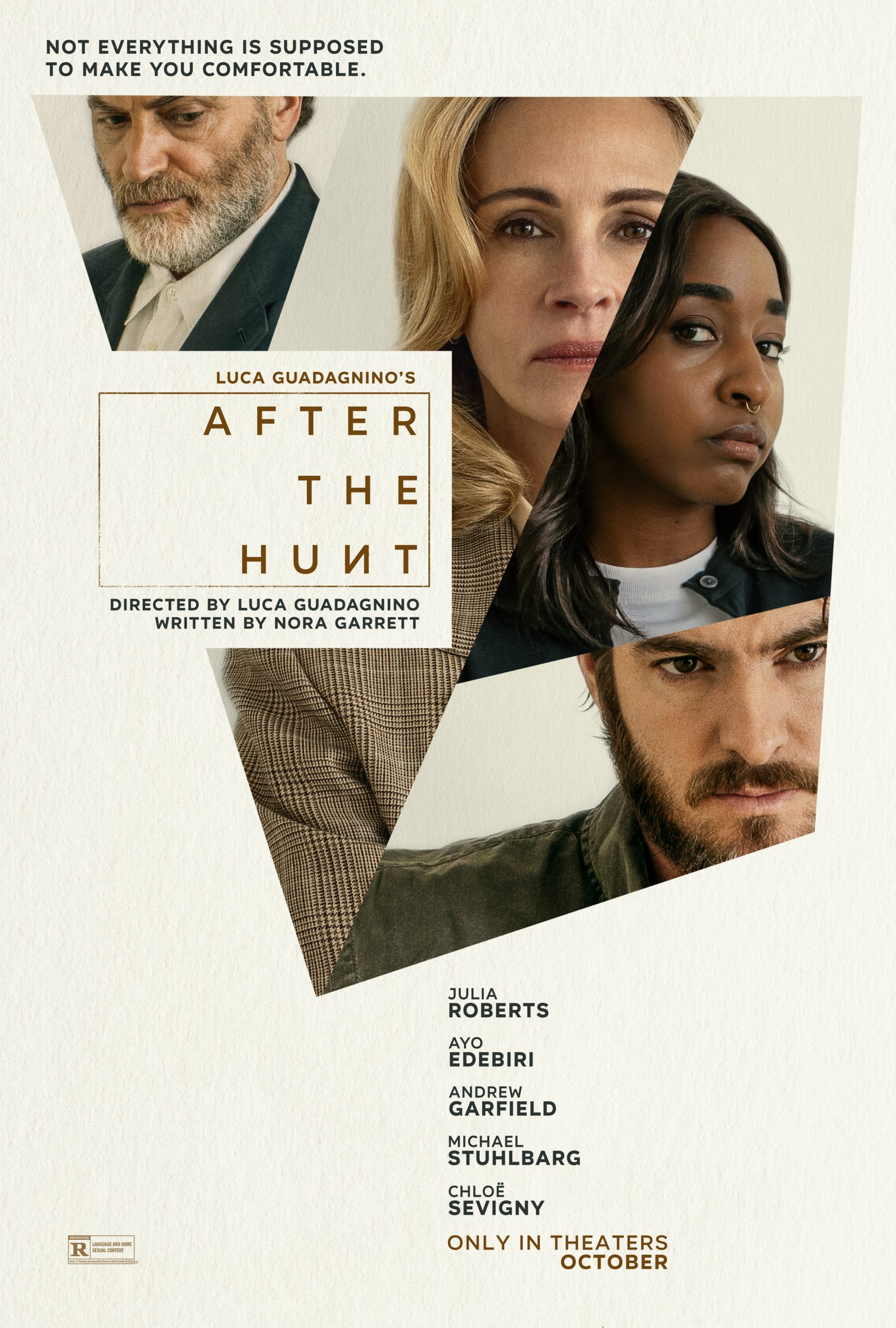
“After the Hunt” (USA/Italy)
In a movie with a title like “After the Hunt,” one would assume that the characters are indeed hunting for something, either literally or metaphorically. However, after watching this latest offering from filmmaker Luca Guadagnino, as near as I could tell, that missing element would most likely be the plot, something the director obviously must have been hunting for himself while shooting this picture. Given the overwritten, overintellectualized, unfocused nature of its narrative, with its many meandering, disjointed story threads, it’s hard to say exactly what the director and screenwriter Nora Garrett were going for here. The story essentially centers around Yale University philosophy professor Alma Imhoff (Golden Globe Award nominee Julia Roberts), an acclaimed voice in her field and eager tenure candidate who learns about an alleged sexual misconduct accusation leveled by one of her top grad students, Maggie (Ayo Edibiri), against one of her closest longtime professional colleagues, Hank (Andrew Garfield). She’s consequently caught in the middle, a scenario that seriously tests her loyalties, not to mention the impact that her “involvement” might have on her chances of securing tenure. But, in the process of trying to sort out her feelings on these matters, Alma also comes face to face with aspects of her own character that she has long buried, revelations that expose her own contemptible nature, a trait that has been carefully concealed but thar turns out to be on par with that of both Maggie and Hank. Add to that story threads involving a mysterious health issue, a dark secret from her past, and Alma’s constantly shifting relationship with her husband, Frederik (Michael Stuhlbarg), a demonstrably (and inexplicably) flamboyant therapist, and you’ve got a boatload of content packed into a picture in need of direction. And, because the story is set in the philosophy department of an academic environment, the film incorporates plenty of lengthy scholarly discussions (many of them decidedly belabored) that, frankly, amount to little more than high-minded intellectual masturbation. Admittedly, several of the intergenerational exchanges are scathingly witty and spot on in their critical poignancy, but they’re too few and far between compared to the many other overwrought dialogues that dominate a screenplay that clearly takes itself too seriously. To its credit, the film’s fine performances (especially Garfield and Edibiri) are its strongest suit, though Roberts’s glowingly praised lead portrayal is, in my opinion, somewhat overrated compared to some of her past performances. What’s more, this release is occasionally hampered by some odd camera work and an original score and soundtrack that often intrude too much on certain scenes, drawing more attention to the music than to the action it’s supposed to be supporting. Overall, “After the Hunt” feels like a knock-off of one of Woody Allen’s dramatic productions (right down to copying the signature credits style used in that filmmaker’s movies) though without the same level of eloquence and relevance found in those films. In the interest of full disclosure, I must confess that Guadagnino is not one of my favorite filmmakers, but, in the case of this pretentious cinematic mess with its wholly unlikable characters, I believe he’s reached a low point in his filmography. So, with that said, do yourself a favor and hunt for something better to watch instead.
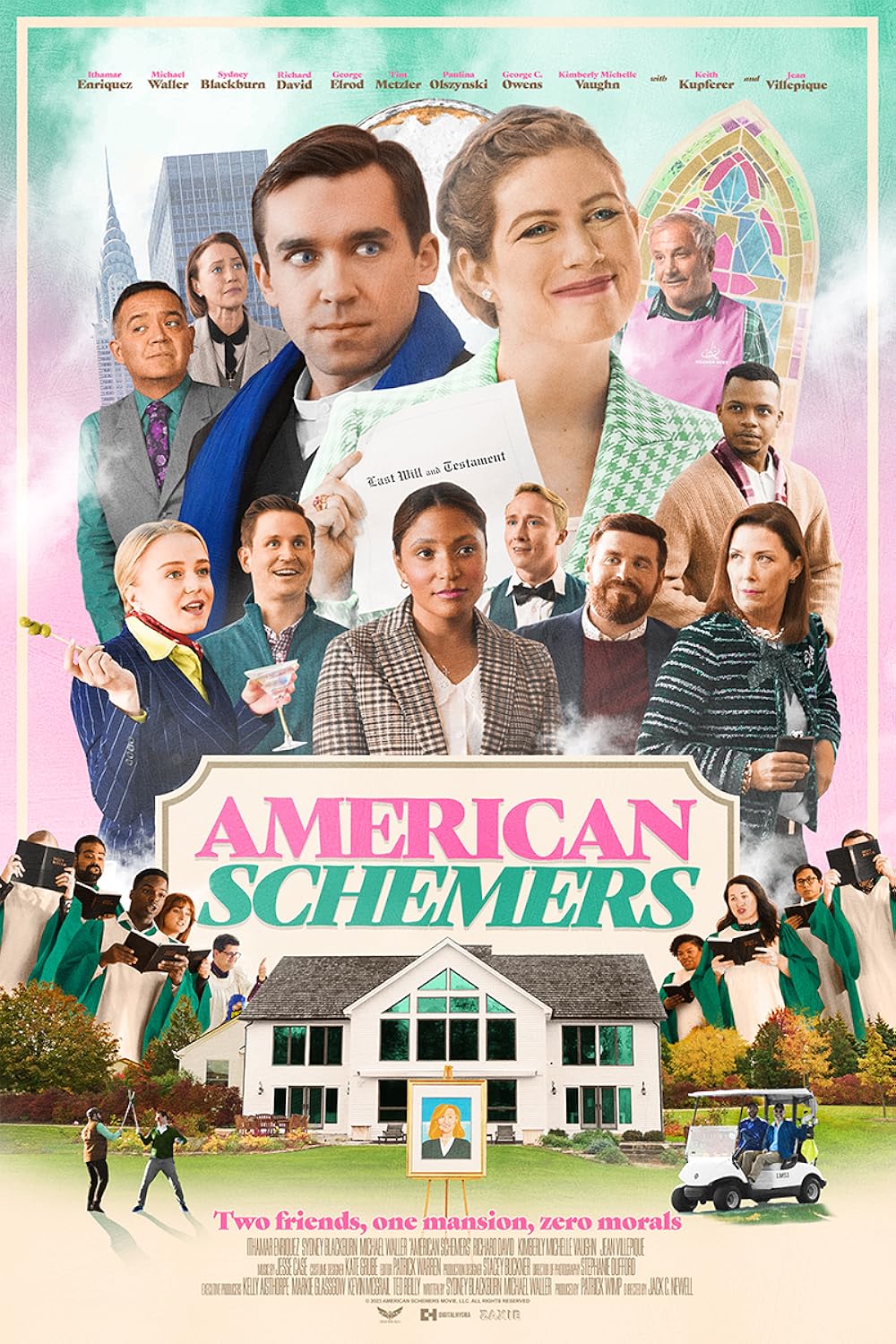
“American Schemers” (USA)
Screened at the 43rd Reeling Chicago International LGBTQ+ Film Festival
When it comes to comedy, I’ll gladly stand up and applaud filmmakers who create works that knock it out of the park. But, to earn such praise, there’s a catch – their work has got to be good. To me, fewer things are worse than a big screen offering that pathetically struggles to be funny and ends up falling flat on its behind, sadly transforming itself into a bad punchline or witless pratfall. Regrettably, that’s precisely what torpedoes this latest feature outing from director Jack C. Newell, a humorless, unoriginal attempt at a comedic romp that starts out modestly entertaining but that rapidly slides into an embarrassing exercise in relentless tedium. Big Apple con artists Oly (Michael Waller) and Kara (Sydney Blackburn) operate a housecleaning company that specializes in emptying out the residences of recently deceased wealthy socialites, a scam through which they hope to discreetly pilfer valuables out from under the noses of the departeds’ unsuspecting families. Unfortunately, though, Oly and Kara never manage to pull off the big scores that they so desperately long for, and the disappointment of these underwhelming hauls is exacerbated when their former clients begin to discover that the duo was responsible for the theft of the few precious trinkets that were available. These disheartening results eventually lead them to consider giving up their scheme altogether. But, just as they’re ready to walk away, they stumble upon an opportunity for a potentially big payday when they discover that Oly is the spitting image of a disappeared heir, one who stands to inherit a lucrative estate and mansion from his late father. Given the unknown whereabouts of the missing beneficiary, all Oly needs to do is show up and pull off a convincing impersonation of the mystery man long enough to claim the inheritance and walk away a rich man. But, as Oly and Kara begin working their plan, they learn that the family and associates of the deceased are even more crooked than they are. So now what? On the surface, the picture’s premise would seem to be rife with delicious comedic possibilities. Unfortunately, however, the pair’s efforts at absconding with the ill-gotten fortune is where the film starts quickly going downhill. To put it simply, unlike the picture’s modestly entertaining prologue, the main event simply isn’t funny. The film degenerates into a silly, almost juvenile slapstick affair riddled with redundant uninspired bits that start out lame and grow progressively more annoying as the story unfolds, coming across like a bad episode of Three’s Company. It reaches for laughs, even falling back on stunningly trite plot devices like a pie fight (now there’s an original idea) to try and generate chuckles. By the time I reached this point in the film, I couldn’t wait for it to end (or, should I say, for it to be put out of its misery). What’s more, I have difficulty understanding why this picture was slated for a featured screening at an LGBTQ+ film festival, given that the tangential gay connection to this story is virtually nonexistent, coming across more like a last-minute afterthought than anything else. I’ve probably been more generous with my rating for this release than I should have been, thanks primarily to the strength of the opening act. But, if I had to grade it purely on what followed, I wouldn’t have been nearly so charitable. The real shame here is that this probably could have been a raucous tale if it had a better screenplay and narrative. As it stands now, though, it’s a victim of lazy, uninspired writing featuring stale elements many of us have already seen before. And that, unfortunately, is not comedy but tragedy.
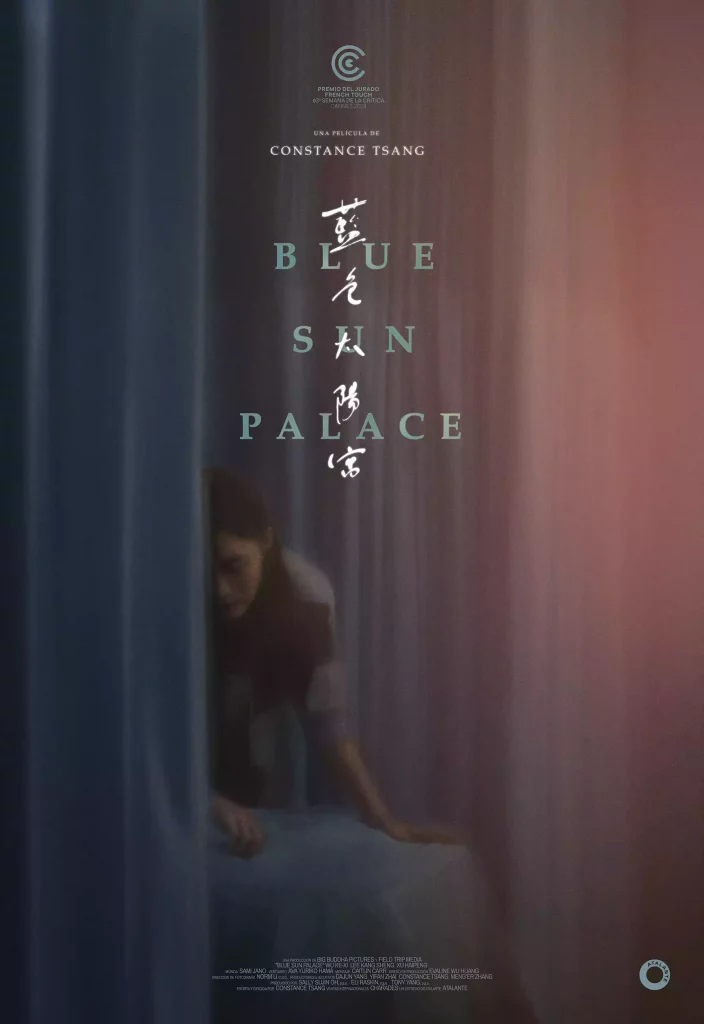
“Blue Sun Palace” (USA)
I can’t begin to count how many times I’ve seen movie reviews use high-minded words like “understated” and “nuanced” as euphemisms to describe pictures that are more aptly characterized as “unfocused” and “meandering.” But those words, unflattering though they may be, would certainly make better choices when it comes to capturing the nature of this debut feature from writer-director Constance Tsang, a tedious, glacially paced slog that aspires to be something that’s quite apparently beyond its grasp. When Didi (Haipeng Xu), a Taiwanese immigrant who works in a massage parlor in the Chinese community of New York’s Flushing Queens neighborhood, falls victim to a tragedy during the Lunar New Year, two of her closest kindreds (and fellow immigrants) subsequently form an impromptu bond as they attempt to work through their grief. Amy (Ke-Xi Wu), Didi’s friend and co-worker, and Cheung (Kang-sheng Lee), Didi’s budding romantic interest, are devastated by their loss but end up seeking comfort in one another’s company. But what does their extemporaneous connection mean, and where is it ultimately headed? Are they sympathetic touchstones for one another, or are they destined to become potential romantic partners? This situation is further complicated by the fact that Cheung is trapped in an unhappy marriage to a shrewish, demanding wife back in Taiwan, one of the reasons that prompted his immigration to the US (and lack of desire to return home). In addition to overcoming their loss, Amy and Cheung also search for meaning in their lives as they grapple with the loneliness that comes from being strangers in a strange land, feelings that drew them to Didi and their association with her in the first place. On the surface, this scenario probably sounds like the foundation of an engaging character study, but, unfortunately, this “understated” and “nuanced” offering more fittingly embodies the “unfocused” and “meandering” labels noted above. The problem here is a fundamentally thin narrative whose screenplay is unable to effectively bring the story to life. The picture limps along from unrelated incident to unrelated incident, yielding a seriously disjointed tale packed with an abundance of uninteresting filler, overlong sequences desperately in need of editing and a wealth of pregnant pauses that add nothing. And, because of this, I’m genuinely at a loss to understand how this release captured three Cannes Film Festival nods (including one win), along with four Independent Spirit Award nominations, none of which, in my view, were deserving. Hypothetically, with a better story and script, “Blue Sun Palace” probably could have been a moving, heartfelt drama and insightful essay on loss. But, as it stands now, this is a film futilely in search of something to say and an intriguing way of saying it.
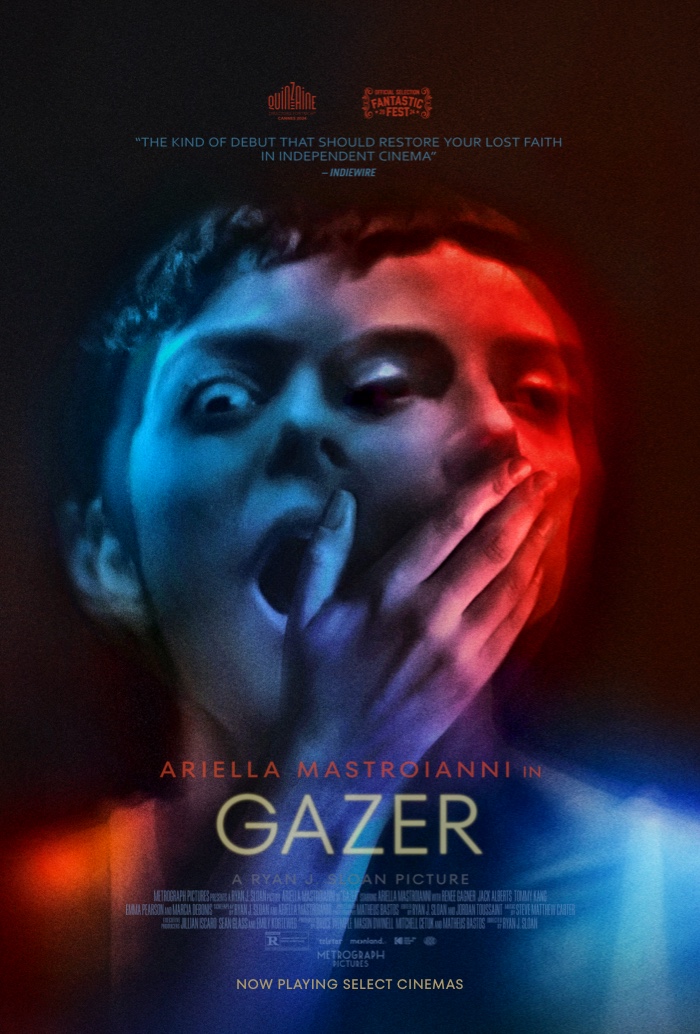
“Gazer” (USA)
One of the cardinal sins in making a captivating thriller is overstuffing the picture with too many story elements, making what should be something intriguing into something muddled, difficult to follow and unfulfilling. That can be made all the worse by incorporating extraneous filler that amounts to little more than padding or useless red herrings while unsuccessfully trying to pass off these elements as something allegedly poignant and meaningful to the overall story. And, if the filmmaker throws in some poor, at times unintelligible sound quality for good measure, you’ve got a recipe for a production that seriously comes up short. That, unfortunately, is the case with writer-director Ryan J. Sloan’s debut feature, an overlong slog that starts out well but overstays its welcome for all of the foregoing reasons. Frankie Rhodes (Ariela Mastroianni), a widowed single mother struggling with financial difficulties, custody issues involving her young daughter and a terminal illness that’s causing declining cognitive impairment, struggles to cope with these challenges but often to no avail. However, when she meets a mysterious woman (Renee Gagner) who promises her a financial windfall to help her out of a bind, Frankie jumps at the chance, only to find herself unwittingly caught up in a web of deceit and criminality in which she becomes the suspected culprit. If the story were left at that, it might well have made for an absorbing noir mystery. Instead, however, the plot is infused with an array of seemingly unnecessary (and often underdeveloped and/or inadequately explained) story threads that only bog down the picture’s flow. This includes several supernatural, surreal and arguably bizarre sequences that appear to occur in the dream state (even if not fully recognized as such by the protagonist or sufficiently explained for viewers). The result is a run-on story that runs out of gas about midway through, becoming a progressively tedious watch that fails to maintain audience attention. In its favor, the film’s stylistic qualities are somewhat engaging and show some promise – at least at the outset – but they’re far from enough to sustain viewer interest as the saga haphazardly plays out toward what I ultimately found to be an unsatisfying conclusion. From this project, it would seem the filmmaker has potential to create works that are visually involving (the picture earned two Cannes Film Festival award nominations after all), but, based on this effort, those projects would need more solid narrative foundations to make them work as fully fleshed-out finished products, something that’s sorely lacking here. Perhaps “Gazer” represents a shakedown vehicle for the director to work out the bugs and prepare for better developed future releases (and, if so, then this may not be an entirely wasted effort). However, the next time out, the filmmaker needs to show improvement if there’s to be a next time after that.
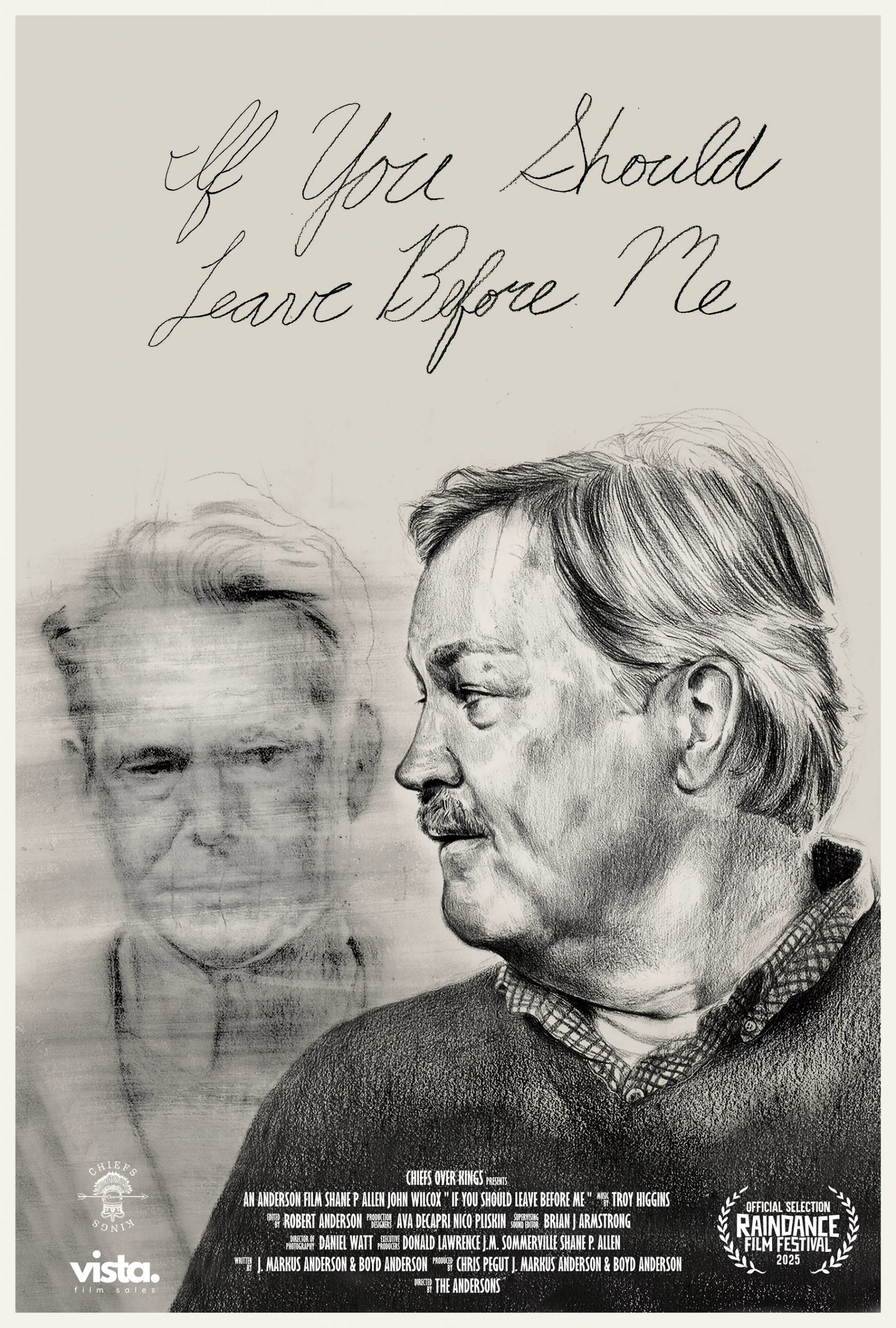
“If You Should Leave Before Me” (USA)
Screened at the 43rd Reeling Chicago International LGBTQ+ Film Festival
How utterly disappointing it is to watch a film implode as it plays out, declining in quality with each passing frame the further one gets into it. Unfortunately, that’s the case with the debut feature from writer-directors B. Robert and J. Markus Anderson, a picture that admittedly starts out strong and engaging but that seriously goes off the rails as it unfolds, despite a few modestly successful attempts at redemption along the way. Mark (Shane P. Allen) and Joshua (John Wilcox) are a gay male couple who serve as case workers for the recently deceased, particularly when it comes to helping them dispense with unresolved baggage from the lives they just departed that is holding them back from successfully moving on to the next stage of their spirits’ evolution. Mark and Joshua accomplish this by crossing through portals that magically appear within their home, taking them to alternate realities where their clients are stuck. The premise is an intriguing one, to be sure, and the hindrances preventing forward progress that are explored early on in the film do a fine job of examining the kinds of issues that the newly dead may well face as they seek to transition. However, as this release progresses, it becomes bogged down by its own narrative, going off on overlong, arguably less relevant tangents that lack the crisp, insightful dialogue and sharp narrative arcs present at the outset. Shockingly, it even veers into territory that I found patently offensive, making me wonder what the filmmakers were thinking. Besides the picture’s case worker plotline, it also delves into the emotionally charged relationship challenges of its two leads. But, regrettably, those side trips into their personal lives tend to become overly talky, uninvolving, redundant and unfocused. It’s almost as if the creators of this work loaded a huge pile of concepts into a hopper and threw it against the wall to see what would stick but then didn’t make the effort to eliminate anything that doesn’t work. Such a failing is frequently indicative of the work of first-time filmmakers who lack the experience and wisdom of recognizing the value (and need) of “killing one’s darlings,” no matter how much in love they might be with these cherished but clearly superfluous cinematic elements. (Sadly, this even became apparent in a post-screening Q&A, when the directors as much as admitted there were ambivalencies in this offering whose existence and inclusion they couldn’t even explain themselves.) While I realize that there is a learning curve associated with the progression of a filmmaking career, it’s essential that new writer-directors recognize this and learn from it when they move on to subsequent projects. But, based on what’s in place here, it’s apparent this filmmaking duo has its work cut out for themselves going forward, particularly when it comes to incisively recognizing what’s important and what isn’t. To be blunt, my assessment here is undeniably generous, as I was fully prepared to give it a lower rating while watching it unfold. However, for all of its faults, I must give kudos to this effort’s clever production design (effectively created on a virtually nonexistent budget), its inventive cinematography, a well-intentioned (if somewhat bungled) core premise, its snappy, moderately amusing dialogue (at least at the film’s beginning), and several heart-tugging sequences that help to rescue this release from its own misbegotten ways. But, when one factors in all of the material that should have been removed and that keep the film from otherwise succeeding, the result is a cinematic experience that’s thoroughly exhausting by picture’s end, a quality that nearly prompted me to leave before the credits rolled.
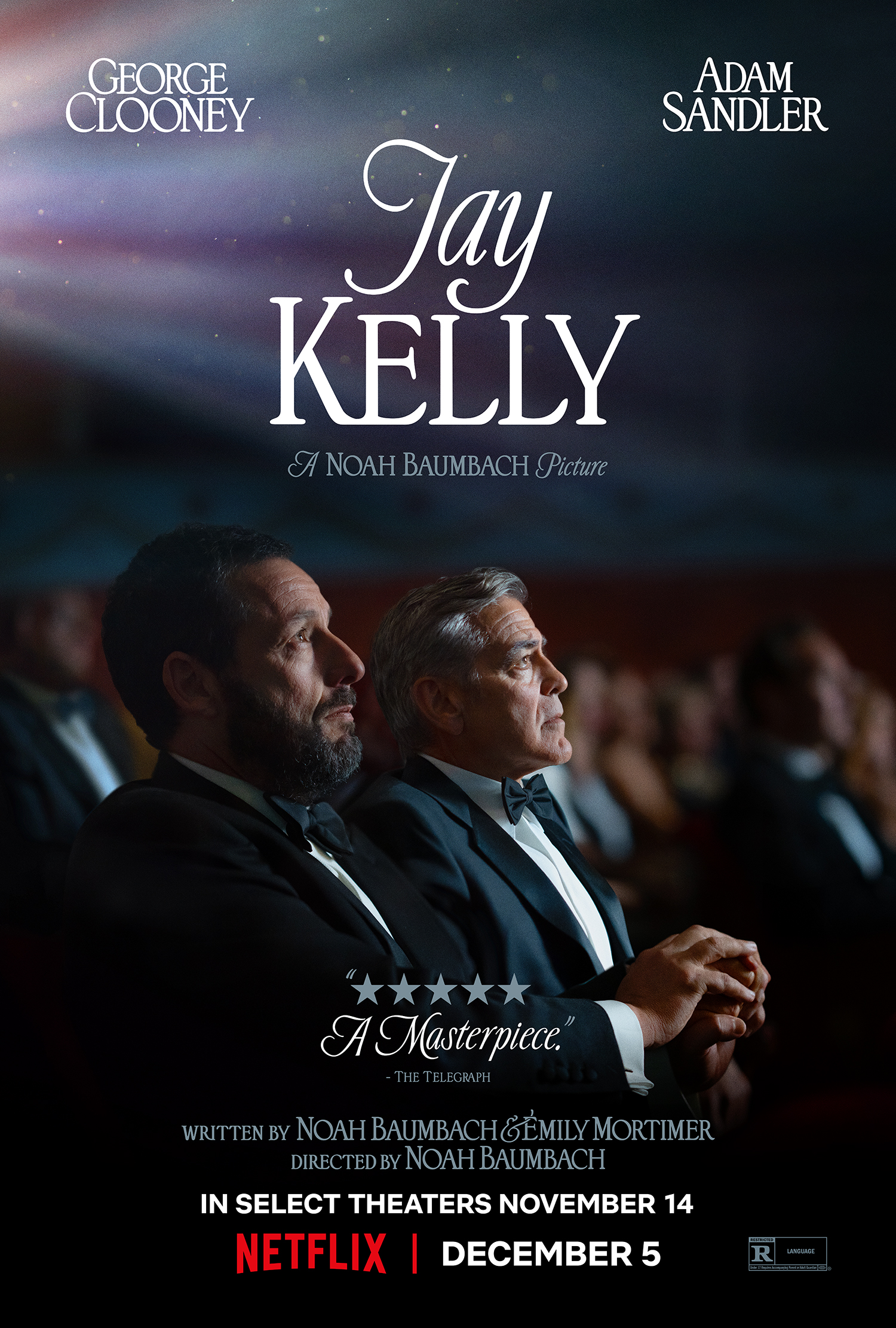
“Jay Kelly” (USA/UK/Italy)
Those familiar with my writing are likely well aware that I have often said the cardinal sin in moviemaking is predictability. On the heels of that belief, my second biggest transgression is a lack of originality (to a great degree because predictability often walks hand in hand with this shortcoming). And, unfortunately, those are the problems that sink this latest effort from writer-director Noah Baumbach. In a nutshell, this offering tells the story of its self-important title character (George Clooney), a successful but aging movie star who’s beginning to realize that his life has slipped away from him, leaving him with a pile of professional and personal regrets, many of which involved burning some significant bridges. Through a series of flashbacks (and a whole lot of vacuous hand wringing that’s quickly and easily dismissed), he sees – perhaps for the first time – how he’s squandered much of his time and alienated many kindreds, leaving him feeling fundamentally empty. (Now there’s a novel idea for a story – a pampered, self-absorbed LA celebrity who experiences a midlife (or, in this case, a late life) crisis and goes into meltdown mode to haplessly search for “meaning.”) But haven’t we already seen this storyline play out countless times before in other releases, such as “All That Jazz” (1979), “Stardust Memories” (1980) (and the film it’s based on, “8½” (1963)), “Bardo” (2022) and “Birdman” (2014), to name only a few. So what does “Jay Kelly” offer that’s new to this narrative? Frankly, nothing. And, to make matters worse, it doesn’t even traverse this well-worn ground very effectively (all of the aforementioned predecessors having done a much better job at this). There’s little to like about – or even empathize with – any of the characters in this story, leaving viewers to sigh a big “So what?” Even the protagonist is unengaging, coming across as an amalgamation of his (i.e., in essence, Clooney’s) on-screen personas. The effect of this is shamelessly self-congratulatory that essentially plays like a reel of the actor’s greatest hits, set against a backdrop of superficiality and relentlessly obtrusive product placement (again, so what?). In fact, the most interesting players in this production are the supporting characters, such as an old acting school colleague (Billy Crudup) and the director who gave Kelly his start (Jim Broadbent). Regrettably, though, these characters are relegated to comparatively small roles with little screen time. The supporting character who receives the lion’s share of such attention is Kelly’s manager (Adam Sandler), a wholly uninteresting, inconsequential cast member who could have been easily eliminated without losing a thing. In short, this whole affair is so shallow and so LA-clichéd that it’s difficult to care about any of it in the slightest, all the while trying to pass itself off as something sublimely profound. (Yawn.) I’m not surprised that it was shut out of Oscar contention and several other awards competitions, despite picking up Golden Globe and Critics Choice nominations and recognition from the National Board of Review. Sadly, this vehicle is a waste of Clooney’s and Baumbach’s considerable talents. Both are better at what they do than what they’ve produced here. Indeed, if there’s genuine tragedy to be had in this effort, their derivative, uninspired creative output on this project would undoubtedly be it.
“The Love That Remains” (“Ástin sem eftir er”) (Iceland/Denmark/Sweden/France)
Screened at the 61st Chicago International Film Festival
Divorce can have a very strange effect on a family, both for the separating partners and for anyone in their household, especially children. The rules of engagement are in flux, with some events feeling uncannily familiar and others being radically different ‒ and all simultaneously. There may also be instances of unintended but undeniable backsliding, making circumstances messy, uncomfortable and confusing. Navigating the shifting sands of these conditions can thus be challenging, baffling and upsetting for everyone and in myriad ways. So, given these fluctuating parameters, how is everyone supposed to cope with these unfamiliar scenarios? That’s the turf that writer-director Hlynur Pálmason seeks to explore in his fourth – and perhaps most unusual ‒ feature offering, a series of diverse vignettes that unfold over the course of a year after parents Anna (Saga Garðarsdóttir) and Magnús (Sverrir Gudnason) divorce and seek to build new lives for themselves and their three children. But are they as ready for this kind of change as they think they are? How will it impact their work lives (Anna as a would-be but long-unsuccessful artist and Magnús as an often-absent deep sea fisherman), their relationships with the kids and their interactions with one another, both emotionally and with regard to lingering and obviously conflicted physical temptations? However, in telling their story, the filmmaker frequently seems almost as perplexed as his characters, as evidenced by an uneven, meandering narrative that seldom results in resolution of the various scenarios that arise. This becomes especially apparent in a number of bizarre surreal sequences that seem almost always out of place and do more to bewilder the audience than provide any sort of meaningful clarity. In the meantime, the director struggles to cover these shortcomings by routinely falling back on the inclusion of an array of admittedly gorgeous but largely inexplicably superfluous nature photography segments that look like they’ve been culled from a “Visit Iceland” travelogue, along with numerous shots from Magnús’s working life that feel excerpted from Chamber of Commerce industrial films. Whatever the filmmaker was going for here, though, it feels like he’s often reaching for something that he never quite grasps, making for a visually appealing but ultimately muddled watch for viewers. Pálmason is a genuinely gifted auteur, but, regrettably, this is not one of his better efforts, despite its recognition from the National Board of Review and Cannes Film Festival. Invest your time in Pálmason’s other works, “A White, White Day” (“Hvítur, hvítur dagur”) (2019) or “Godland” (“Vanskabte Land”/“Volada Land”) (2022), instead.
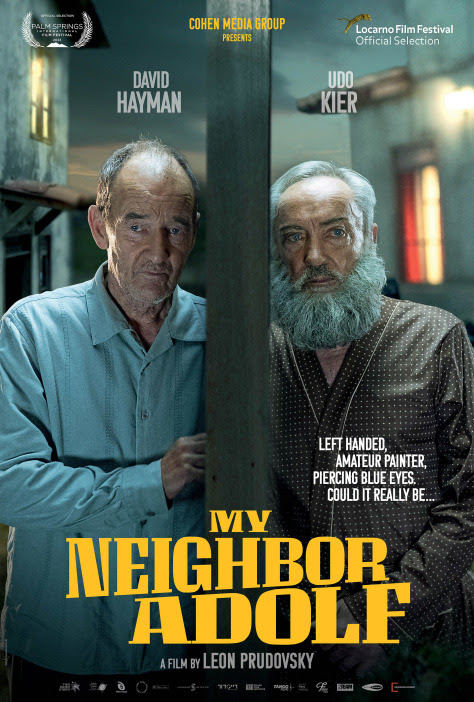
“My Neighbor Adolf” (Poland/Israel/Colombia)
Filming a dark comedy about an inherently controversial subject is an exceedingly risky moviemaking proposition. If it works, the payoff can be huge. But, if it falls flat, the project not only fails financially and artistically, but it can devastate a filmmaker’s reputation, leaving a bad taste in the mouths of viewers, critics and possible prospective backers of future productions. And that fate could very well befall the creative team behind this questionable attempt at making an edgy farce about a topic that, frankly, is unlikely to be seen as intrinsically funny. Writer-director Leonid Prudovsky’s second feature offering – a 2022 production just now getting a general release – tells the story of Holocaust survivor Marek Polsky (David Hayman), who relocates from Europe to rural Colombia after losing his entire family during World War II. He lives a quiet, reclusive existence, but that changes in 1960, when a mysterious new neighbor, Hermann Herzog (Udo Kier), moves into an adjacent property. No sooner does Mr. Herzog arrive when Marek begins having serious suspicions about him, namely, that he may, in fact, be former German Chancellor Adolf Hitler, who, despite his supposed 1945 suicide, may have successfully managed to clandestinely escape to Latin America and go into hiding. Based on a boatload of circumstantial evidence, Marek shares his observations with Israeli intelligence officials, but the chief investigator (Kineret Peled) is convinced his contentions are false, that they’re overblown claims driven by the recent capture of former Nazi Adolf Eichmann in Argentina. Undeterred, however, Polsky continues his impromptu inquiry, a scenario couched in a narrative that falls back on the tired comedic tropes found in any number of feuding neighbor stories (particularly, given the age of the cantankerous protagonists, “Grumpy Old Men” (1993) and its 1995 sequel), with a few buddy movie elements thrown in for allegedly good measure. But, considering the premise of this picture, what’s funny about any of it? That problem is further exacerbated by the film’s uneven tone, slapstickish humor, puzzling subplots and subpar writing, not to mention its lack of back stories about the two leads. Hayman and recently deceased German character actor Kier do their level best to make this material look better than it actually is, but, to be honest, they’re fighting a losing battle. And, even though the picture tries to redeem itself with some surprisingly touching moments in the final act, this is still a bona fide case of too little too late to make up for all of the shortcomings that preceded them. However, the fundamental problem with “My Neighbor Adolf” rests with the shaky foundation underlying the project. A comedy whose roots are tied to the Third Reich is dubious to begin with, and it would take the skills of a masterful writing and directing crew to make it work, neither of which is present here. Indeed, if that were really assumed to be the case, then why did it take almost four years for the picture to be released? Certain story proposals clearly need to be left on the shelf, and this, undoubtedly, is one that should have been allowed to continue collecting dust.

“No Other Choice” (“Eojjeolsuga eobsda”) (South Korea)
They say that “Imitation is the highest form of flattery,” and, arguably, that might be true – but only when the imitation works. When it doesn’t, the result is more of a pale wannabe clone, and that’s precisely the problem with this latest release from writer-director Park Chan-wook. This dark comedy essentially seeks to be this year’s equivalent to the Oscar-winning South Korean offering “Parasite” (“Gisaengchung”) (2019) from filmmaker Bong Joon-ho. But, try as it might, “No Other Choice” is no “Parasite” – not by a long shot. The edgy humor that made this film’s predecessor successful was grounded in its skillful handling, knowing just how far to push the bounds of propriety and absurdity without going overboard while still being able to evoke nervous but genuinely earned laughs from viewers. This picture, however, tries way too hard to produce those chuckles, sometimes crossing the line of appropriateness and landing in territory that fails, becomes excessive and sometimes even verges on being of questionable taste. These results emerge from a storyline in which Man-su (Lee Byung-hun), a South Korean paper mill manager who genuinely believes he’s attained all of the material, domestic and career satisfaction he could ever want, unexpectedly loses his job as a result of an American company buyout. Upset but undeterred, he vows to land a new job within a few months, but, much to his dismay, he’s still out of work long thereafter. He and his family reluctantly begin economizing, but Man-su is dissatisfied with the direction in which his life is heading. He thus decides to try a different approach to winning a managerial job that’s opened up at another paper company – by eliminating his competitors before they can be hired. On the surface, this deliciously wicked premise might seem like a viable plot for a sinister dark comedy, but that’s not the issue here – rather, it’s a question of (ahem) execution. To move the narrative forward, the picture relies on heavy-handed storytelling tactics that result in overwrought slapstick, dubious comedy bits (some of which aren’t even laughing matters) or material that just flat-out bombs. In addition, the story is woefully bogged down by extraneous subplots involving erroneously suspected infidelity, youthful antisocial behavior and alcohol-induced lapses in sobriety (what’s funny about any of that?). As a consequence, these ancillary story threads needlessly lengthen an already-overlong film, prompting viewers to want to yell at the screen to get on with it already. What’s perhaps most puzzling, however, is the protagonist’s single-mindedness about the need to land another job in paper manufacturing, regularly proclaiming that he has “no other choice.” Why? It’s an argument that’s made repeatedly but never adequately explained, a plot device that, in turn, causes the film to become repetitive, making this production seem even longer than it actually is (I can’t begin to say how often I looked at my watch while screening this one). These attributes also make me wonder how this release was able to earn two Critics Choice Award nominations, three Golden Globe Award nods, and accolades from numerous film festivals and critics’ organizations, given that this is one of the biggest disappointments of the 2025 movie awards season. Indeed, I find it amusing that the protagonist routinely insists that he has no other choice about the options open to him, but, thankfully, we as viewers do have a choice when it comes to this film – by simply choosing to turn it off, a temptation I had to resist many times and almost wish I had.
“Preparation for the Next Life” (USA)
An essential element of any love story is chemistry between the lead characters, even if it takes an unconventional form. Regrettably, however, that’s exactly what’s missing in director Bing Liu’s debut narrative feature, based on the novel by Atticus Lish. Told in the form of a narrated letter/journal entry to her late film, the film chronicles the unlikely love story of Aishe (Sebiye Behtiyar), an ambitious, sharp-witted twentysomething Uyghur woman who illegally immigrates to the US, and Skinner (Fred Hechinger), a troubled young American soldier who just returned stateside after three tours of duty in the Middle East and is now apparently unsuccessfully battling PTSD. They meet by chance in New York, where Aishe toils to make ends meet working long hours in a Chinatown restaurant and Skinner tries to sort out his life and his mental state. Together they embark on a rollercoaster romance with a series of breakups and reconciliations as Aishe tries to decide on marriage or a life of solitude, peace of mind and independence, all the while staying ahead of immigration authorities, and Skinner seeks to find a stable existence that may or may not involve the love of his life, depending on his mood, focus and ever-changing inclinations for a steady, traditional relationship. To be honest, the basic premise behind this release is inherently something of a stretch, made worse by a narrative that becomes meandering and redundant after a time. But the bigger issue here is that I never bought the sincerity of the connection between the protagonists, right from the moment they met and at virtually every turn during the course of their on-again/off-again partnership. The reason? Despite her inexperience with romance, Aishe seems far too smart and determined to chart the course of her life to put up with Skinner’s unpredictability and capriciousness. In fact, after their first emotionally tense confrontation, I was astounded by their subsequent reconciliation, given that she seems like the type who would have walked away and not looked back without a second thought. Granted, an immigration-driven marriage might resolve some of the issues of her legal status in the US, but with Skinner? It’s true that she has an apparently deep sense of compassion for his condition, but, being the fiercely headstrong individual that she is, I can’t see that empathy being enough in itself to make her want to stay with him on a long-term basis. What’s more, Aishe’s back story often feels incomplete, and Skinner’s is even more nonexistent, an aspect of the story that makes their actions and responses all the more perplexing at times. In all, this offering is half-baked and implausible across the board, making for a screen romance that’s unengaging and unrealistic, one not worth the time, especially on date night.
“Presence” (USA)
Diehard fans of horror films have often complained that releases in this genre don’t get the kind of respect they deserve, almost as if they’re the Rodney Dangerfield of moviemaking. Unfortunately, it’s a reputation that’s frequently deserved given that many of these offerings are formulaic, predictable, tedious and needlessly gratuitous. The emergence of “smart” horror films has helped to offset this somewhat, imbuing these pictures with a degree of maturity and respectability that has long been sought but lacking. But, if these films truly want to earn the kind of esteem that their followers crave, these productions have to get better at doing what they do, yet the efforts that go into yielding such results all too often come up short, as is the case in this project from acclaimed director Steven Soderbergh. In all honesty, this attempt at creating an elevated version of a prototypical haunted house story leaves much to be desired. When a family of four moves into their new suburban New Jersey home, strange happenings begin to occur, nearly all of which affect Chloe (Callina Liang), a troubled teen who recently lost her best friend under mysterious circumstances. But she’s not alone in her troubles – her parents, Rebekah (Lucy Liu) and Chris (Chris Sullivan), are having marital problems and her older brother, Tyler (Eddy Maday), is wrestling with behavioral and attitude issues. It’s unclear what’s really going on with everybody, but then that’s where the problem lies with this largely unfocused snooze, one that does little justice to its label as a horror film. For starters, much of it is boring and slow, especially at the outset, taking its own sweet time to get off the ground (almost half of the movie in fact). Then there’s the lame and often-cryptic dialogue, which fails miserably at encouraging viewer engagement or moving the narrative along. And, perhaps most egregiously, the picture drops the ball when it comes to what movies in this genre are supposed to do – provide the audience with good frights. In fact, there’s precious little in this film that can be considered “scary”; it’s more suspenseful, if anything, but even that is significantly watered down. Finally, when “the big reveal” comes, it’s not so much frightful as it is implausible and of questionable taste – wholly inappropriate for and not particularly in the spirit of what should constitute a good haunted house story. The result is a huge cinematic disappointment, a minimalist effort that’s so narratively thin that it’s hardly worth caring about. Admittedly, the film features some intriguing camera work, but it ultimately does little to shed meaningful light on the core scenario, particularly in “depicting” the mysterious presence responsible for all of the supernatural goings-on and its relevance to the characters or the intents behind this story. I must confess to being somewhat baffled by the filmmaker’s involvement in this project as its quality is a far cry from that of most of his previous efforts. Even more so, though, “Presence” does little to move the needle in bolstering the reputation of a genre looking to make a better name for itself. I’ve seen scarier and more compelling TV commercials than this woefully anemic offering, doing little to change my opinion about movies of this ilk.
“Together” (Australia/USA)
Despite the ever-growing popularity of horror films, I can honestly say I’ve really tired of half-baked releases that just don’t cut it, and that’s very much the case with this debut feature from writer-director Michael Shanks. By “half-baked,” I’m referring to pictures that aren’t especially scary, fall into patterns of predictable plot developments, routinely incorporate vague, unexplained elements, and fail woefully in their attempts at trying to offer audiences “something more” in terms of meaningful content, themes or insights. Regrettably, this combination of underwhelming qualities often results in wandering narratives that make little sense and don’t deliver on their hoped-for entertainment and visionary promises. It’s particularly disappointing with offerings that aspire to the commendable “smart horror” moniker yet still manage to come up short, as is so here. For what it’s worth, “Together” follows the cryptic, unsettling experiences of Tim (Dave Franco) and Millie (Alison Brie), a tale in which these real-life off-screen spouses portray a long-term unmarried couple whose relationship has hit troubled waters, resulting in a gap between them wider than what most of us saw during the days of social distancing. This becomes further aggravated when the long-term city duo relocates to the country, where Millie takes a new teaching job while Tim tries to sort out his future as a wannabe rock star. They genuinely seem to love one another, but is that enough to sustain their partnership? And, when they fall prey to a series of odd paranormal experiences that simultaneously drive them emotionally further apart while bringing them physically closer together (literally) than they ever could have imagined, their lives and world are turned upside down. In telling their story, the filmmaker seeks to make a statement about the challenges and joys that can accompany long-term romances, using a horror context as the backdrop for the exploration of these notions. And, while this approach may have some laudable merits on paper, the execution of this idea nevertheless leaves much to be desired, leading viewers through a series of underdeveloped and unrelated episodes that collectively fail to gel. Sadly, whatever connections were being sought after here are often scattered, employing a variety of tropes that just don’t mesh well. The film is at times romantic, at times modestly frightening and at times comedically campy, but it never settles on a consistent path as the story plays out. What’s more, the chemistry between the two leads is never truly convincing, making one wonder why these two partners are together in the first place and how they’ve managed to stay together as long as they have. In short, this offering ironically never really hangs “together” in my estimation, a major letdown for what was supposed to be one of the most anticipated releases of the 2025 summer movie season. Unfortunately, though, this typifies what has happened with so many of today’s horror flicks, including many of the more ambitious projects that have sought to raise the bar for this genre. Indeed, there’s not much to see here, folks, so my recommendation is to simply move along.
“Urchin” (UK/USA)
Homelessness and drug addiction are serious social and public health issues that have no easy answers, especially for those experiencing them. Moreover, despite compassion-based government and charitable programs aimed at addressing these problems, many in society at large are unsympathetic to those seeking to overcome these circumstances, making their recovery doubly difficult. Winning over supporters to these causes can thus be an uphill battle, but one way of generating sympathy is by depicting the harrowing challenges that the afflicted undergo on a daily basis. And this is where the directorial debut from actor Harris Dickinson could have made an impact, but, sadly, it doesn’t live up to the task. The film tells the story of Mike (Frank Dillane), a recovering addict who did time for assaulting and robbing a would-be Samaritan, chronicling his journey to rebuild his life after being released from prison. However, the unfocused narrative meanders wildly, coming across like a series of disjointed, randomly strung together events lacking any discernible sense of direction. What’s more, there’s virtually no back story, and the protagonist’s character development is nearly nonexistent. In fact, one could contend that it’s hard to see exactly how Mike’s persona is a bona fide reflection of this offering’s title. Consequently, because viewers have little awareness of who they’re dealing with, it’s almost impossible for audience members to care much about what ultimately happens to this character, thereby defeating the aim of generating support for his redemption or the cause of his peers. On top of that, several surreal, impressionistic sequences muddy the waters even further, providing no additional clarity from either a literal or symbolic standpoint. Given the stunning lack of coherence or any meaningful attempt at making a case for these causes, I’m truly amazed at the overwhelmingly positive response the picture has received, including a surprising number of accolades from film festivals and critics’ organizations. “Urchin” has been named one of the Top 10 Independent Films of 2025 by the National Board of Review, and it captured two wins on four nominations at the 2025 Cannes Film Festival, including a somewhat baffling best actor award for Dillane (it’s a good performance, but one worthy of top honors?). Every year it seems there are a handful of releases that undeservingly receive mind-boggling degrees of praise, and, in my view, this is definitely one of them for 2025. It’s equally disappointing that the film has failed to do more for spotlighting the issues at the core of its central premise. It never hurts to lend a helping hand, but it can be difficult to do so when one doesn’t have a clearer picture of how to proceed on that front.
Skip It
“Die My Love” (UK/Canada/USA)
Postpartum depression is a subject that, arguably, doesn’t receive enough attention, especially outside of a clinical context. That’s why it’s surprising to see it addressed in an entertainment vehicle. It’s unfortunate, however, that it hasn’t been examined as tactfully or as effectively as it could or should have been in this disappointing release from director Lynne Ramsay. When Jackson (Robert Pattinson) and his girlfriend, Grace (Jennifer Lawrence), move into a home left to them by his deceased uncle in rural Montana, the couple enjoys their blissful new idyllic lifestyle. And, not long thereafter, they become the parents of a baby boy, a theoretically happy event that, regrettably, also marks the beginning of growing troubles in their relationship. Even though Grace appears to adore her son, she simultaneously becomes dissatisfied with her life as a stay-at-home mom, particularly in the decline of the duo’s once-robust and prolific sex life. Her behavior becomes erratic, unpredictable and even hostile toward Jackson and others, including acts of self-harm against herself. But what’s behind these changes? It’s as if a form of madness has begun overtaking her. And what, if anything, can be done about it? Such conditions are sometimes associated with mood changes that can occur after childbirth, but, in the case of this story, their expression goes so far off the rails that the picture becomes difficult to follow or fathom, flailing wildly and losing credibility with each passing sequence. In addition, the inclusion of bizarre, ancillary, seemingly unrelated developments, coupled with unrelenting overacting by the protagonists, makes for an utterly exhausting watch, one in which its core subject seems to become lost and treated almost as an afterthought. Moreover, this is a project that represents a phenomenal waste of its cast; besides Pattinson and Golden Globe Award nominee Lawrence, the film recklessly squanders the talents of supporting players Sissy Spacek, Lakeith Stanfield and Nick Nolte. Despite its BAFTA and Cannes nominations, it’s genuinely unclear what the filmmaker was going for here, prompting viewers to wonder if they’re watching actual events or fabrications in the minds of the characters (or some indistinguishable combination of both). In that respect, this film readily calls to mind the narrative incoherence found in another of Lawrence’s efforts, “mother!” (2017) (one would like to think that she should have learned her lesson from that cinematic debacle – what should have served as a wake-up call to make better script selection decisions). What’s more, this offering features more than its fair share of gratuitous nudity, something I’m typically not prudish about but that truly starts to get out of hand in this release, particularly in its frequent and somewhat graphic depictions of self-pleasuring. Without a doubt, “Die My Love” is a serious letdown, one that should leave almost anyone associated with this production suitably depressed.
“Hamnet” (USA/UK)
William Shakespeare is widely regarded as the greatest writer in the English language, though there’s some disagreement about whether he actually wrote the materials attributed to him. Even sketchier than this are some of the details about his personal life, aspects of his character that have been the subject of much conjecture, especially where they may have influenced his literary undertakings. And an examination of that nexus is where this latest offering from writer-director Chloé Zhao makes its appearance on the stage (or, in this case, the screen). Based on the best-selling speculative novel Hamnet by Maggie O’Farrell (who co-wrote the screenplay with Zhao), the film presents a fictional take on how the Bard’s most noteworthy work, the quintessential theatrical tragedy, Hamlet, came into being. Essentially, the narrative maintains that the stage play (which, in everyday use in Shakespeare’s time, used the names “Hamlet” and “Hamnet” interchangeably) came about as a grief/coping response after the author (Paul Mescal) and his wife, Agnes (Jessie Buckley), lost their young son, Hamnet (Jacobi Jupe), to “the pestilence” (assumed to be bubonic plague). It’s presumed that the tragic but heroic Hamlet is a fictional homage to Shakespeare’s courageous, honorable but ill-fated real life progeny (though, admittedly, it’s something of a stretch to understand what connection an 11-year-old boy from rural England might have to a prince of the Danish royal family). Bringing the play to life led to frequent marital discord between Will and Agnes, given that he was working on the production in London while she maintained the family household in Stratford-on-Avon. And, all the while, the couple struggled to come to terms with their feelings of loss, something that Shakespeare hoped to resolve by creating this latest work. As noble as this sentiment might be (and as truly effectively as it’s addressed in the picture’s closing 15 minutes), the overall execution of this story otherwise leaves much to be desired. To its credit, “Hamnet” features superb performances (particularly by Buckley and Noah Jupe as Hamlet, though Mescal comes across as a bit hammy at times), along with a fine score, stunning visuals and an excellent period piece production design. But, even with all these assets in its favor, this release is sorely in need of editing and a better script, one with fewer repetitious and incongruent elements (most notably the clumsy integration of original Shakespearean on-stage dialog with contemporary off-stage exchanges). These shortcomings, regrettably, make for an often-dull tale, one that prompted a number of viewers at the screening I attended to start nodding off – literally. What’s more, the screenplay would appear to assume that most audience members have an intimate familiarity with both the minutiae of the play and the details of Shakespeare’s biography, inferences that ask an awful lot of viewers upon entering the theater. Indeed, when all is said and done, “Hamnet” truly is a major disappointment, an unapologetic example of Oscar bait (one that successfully garnered eight nominations for the picture, along with countless accolades in other awards competitions). It’s a picture that holds itself in bloated esteem simply because of its lofty attributes and subject matter. But, except for the well-deserved recognition bestowed on Buckley for her superb lead portrayal, the film’s unrepentant cinematic preening grows tiresome over the course of its unfolding, even though it’s a formula that this filmmaker never shies away from employing in her productions – and this offering, unfortunately, is once again no exception.
“Hedda” (USA)
Reinterpreting a classic work of art – no matter what medium it might initially be grounded in – can be a tricky task. This is true when jumping from one milieu to another, such as stage to screen, as well when altering the nature or elements of the work, such as its setting, time frame and characters. And, if more than one of these qualities undergoes transformation simultaneously, the metamorphosis can become considerably challenging, if not problematic, to make the project work. Such is the task undertaken by writer-director Nia DaCosta in this reimagining of the time-honored stage play Hedda Gabler by Norwegian playwright Henrik Ibsen. When Ibsen penned this work in 1890, it represented a continuation of his examination of strong-willed women, an undertaking that some contend ironically made him a pioneer of feminist thinking. That initiative began with A Doll’s House in 1879, a play in which he chronicled the life of a subservient wife and mother who courageously rose up to challenge her controlling husband. In Gabler, however, Ibsen wrote about a darker figure, an ambitious, manipulative trophy wife who sought a life of wealth and comfort and willfully did whatever it took to achieve it, no matter how questionable or menacing. In this current adaptation, the filmmaker advances themes launched in Ibsen’s original production but with some adjustments to make it more contemporary – and more sinister. For starters, this version is set in the 1950s rather than the late 19th Century, complete with technology, musical styles and other aspects of everyday life that weren’t in existence in Ibsen’s time. Hedda (Golden Globe and Independent Spirit Award nominee Tessa Thompson) has changed somewhat, too; she’s still the insincere, conniving schemer she was in the original, though she’s now Black, bisexual and more compellingly driven than ever. As before, she’s married to an adoring but somewhat dull, overly cerebral university academic, George (Tom Bateman), who’s bucking for a professorship that will compensate him handsomely, enabling him to dotingly support his beloved in the lap of luxury she craves, an effort she doesn’t always appreciate. However, George’s hopes for being promoted aren’t guaranteed given the challenge posed by a rival peer, Eileen (Independent Spirit Award nominee Nina Hoss), who recently wrote a successful, high-profile best seller – and who also just happens to be Hedda’s former romantic interest. These story threads all come together at a lavish soiree hosted by George and Hedda to help bolster his chances for promotion. And the evening initially seems to proceed well until Eileen makes an appearance, along with her literary collaborator and fawning would-be lover, Thea (Imogen Poots), a certified milquetoast who just happens to be a childhood friend of Hedda. As the party unfolds, Hedda deftly spins her little schemes to turn events to her favor but with consequences that turn out to be even more unexpected than she had anticipated. This web of intrigue is set against an uninhibited backdrop that echoes the unbridled celebratory self-indulgence seen in movies like “The Great Gatsby” (2013) and “Babylon” (2022), with dashes of “Eyes Wide Shut” (1999) thrown in for erotic good measure. And it all unfolds in an environment featuring an impressive production design and elegant, award-nominated costuming. In many ways, though, the narrative in this interpretation plays largely like a catty, vengeful, quasi-campy 1980s prime time soap (albeit one that fortunately manages to become more compelling as it progresses into its later chapters). However, despite the film’s efforts to convey a meaningful message about the virtues of pursuing what truly matters most in life, the story nevertheless gets bogged down by deplorable characters who possess few, if any, redeeming qualities. In addition, most of the filmmaker’s tweaks from Ibsen’s original may be provocative in nature but are ultimately mostly cosmetic in terms of their contributions. Perhaps the most significant saving grace here are the performances, particularly among supporting cast members like Hoss and Poots. As for Thompson, though, as valiantly as she tries to capture the essence of one of the most demanding female roles in all of acting, she doesn’t quite give Hedda the due that her character calls for, making it often appear as though the actress is struggling to tackle a portrayal that’s still beyond her grasp. And that sentiment, for what it’s worth, sums up how I see this offering overall – a commendable attempt at imbuing a true classic with a new vision, one definitely worthy of applause but not the acclaim it so earnestly seems to seek.
“Rental Family” (Japan/USA)
Screened at the 61st Chicago International Film Festival
Forging personal connections can be difficult enough these days, even in casual circumstances. But what happens when we require someone to play a vital role for a pressing need and no one is available to stand in? That’s when it may be time to place a call to Rental Family, a Tokyo-based company that provides individuals to step in and fill the missing link. It’s also a perfect opportunity to provide work for unemployed actors, giving them a chance to ply their trade and gain experience at broadening the range of their craft while helping out others in times of need. Such is the case for Phillip Vandarploeg (Brendan Fraser), a largely unsuccessful American actor who moved to Japan years ago to make a cheesy toothpaste commercial but has since found few opportunities to further his career. He initially has reservations about serving as a professional impersonator, but, once he gets the hang of it, he finds himself quite adept at it. However, the deeper he gets into his assignments – such as playing a surrogate father/husband to help an ambitious single mother (Shino Shinozaki) get her daughter (Critics Choice Award nominee Shannon Gorman) into a prestigious school and impersonating an entertainment journalist to allegedly profile an aging actor (Akira Emoto) and help him relive his memories before he loses them permanently – the more involved he becomes in his clients’ lives, raising ethical questions that give him anguish but from which he has difficulty walking away. In many respects, this National Board of Review honoree feels like a lightweight version of the excellent 2025 Austrian release “Peacock”, one that aims for a crowd-pleasing vibe more than its substantive counterpart. Unfortunately, though, this is where this picture comes up short. To carry out its narrative objectives, writer-director Hikari’s second feature outing is eminently predictable, interminably schmaltzy and heavy-handed to a fault, qualities that grow ever more cringeworthy the further the story progresses. And, when the picture attempts to break out of this mold and become less obvious, it goes overboard, turning preposterous and lacking in credibility. Add to that an excessive number of minor story threads, and you’ve got an unwieldy production that becomes tiresome and unfocused. What’s more, this is a vehicle in which Fraser looks undeniably trapped, portraying a forgettable role that’s a far cry below his considerable capabilities and a long way from his Oscar-winning performance in “The Whale” (2022). In fact, other than some gorgeous cinematography and a few admittedly touching moments in the aging actor story thread, this one is easily skipped without missing anything worthwhile. The issues addressed here are more substantial than the wispy fluff they’ve been accorded in this project, so, if these are subjects that truly interest you, give “Peacock” a much more deserved view in its place, a decision you’re unlikely to regret.
“The Secret Agent” (“O Agente Secreto”) (Brazil/France/Netherlands/Germany)
Screened at the 61st Chicago International Film Festival
The key to making a successful political thriller is to maintain a taught sense of mesmerizing, edge-of-the-seat intrigue. Unfortunately, that’s precisely the element that’s missing in this overlong, annoyingly convoluted tale set in 1977 Brazil during the waning days of its military dictatorship. The story follows the life of Armando (Oscar nominee and Golden Globe winner Wagner Moura), a former university researcher targeted for manipulation and framing by a corrupt, influential businessman (Luciano Chirolli) when the educator refuses to play ball with him. This, in turn, leads to a death threat against Armando, who must do whatever it takes to try and clear his name and stay alive. In the process, however, Armando gets caught up in a web of deceit, criminality and personal peril involving a shady police chief and his dubious associates, a pair of ruthless hitmen, a group of Brazilian and Angolan political dissidents in hiding, and a Holocaust survivor mistakenly believed to be a Nazi refugee. From this, it would appear that the film has a premise filled with potential to make for an engaging yarn, but, regrettably, it fails under the weight of its many shortcomings, most notably an overextended narrative that excessively delves into the details of government research funding and sociopolitical clashes involving regional Brazilian cultural and political differences, material that’s often tedious and not especially engaging. To complicate matters, director Kleber Mendonça Filho has compiled a mishmash of filming and storytelling styles that frequently impairs the picture’s flow and overall character, including a wealth of easily excised incidental material that tries viewer patience the further one gets into the story. This is clearly a case of a filmmaker in need of reining himself in, knowing when to kill his darlings, and unsuccessfully maintaining a level of suspense that, sadly, largely evaporates about an hour into the picture. In addition, this offering incorporates a present-day story thread involving a history student (Laura Lufési) assigned to transcribe surveillance tape recordings of Armando made at the height of his ordeal, a task that inexplicably captivates her, prompting her to learn more about the fate of her subject. It’s a needless subplot that evokes a huge “so what?” quality and could have readily been eliminated without damaging the picture in the slightest. I’m truly mystified how this bloated release ended up being the most honored candidate at this year’s Cannes Film Festival, capturing four awards, including best actor and director, as well as a Palme d’Or nomination, the event’s highest honor. It has since gone on to claim four Oscar nods (including best picture) and multiple nominations or wins in virtually every other awards season contest. However, 2025’s international film competition has featured so many other better offerings that one would be wise to watch some of those pictures in place of this underwhelming effort.
“The Shrouds” (Canada/France)
It’s disappointing to see a talented filmmaker lose his way in one of his works. Unfortunately, that’s precisely the problem with the latest effort from acclaimed writer-director David Cronenberg in a film that seemingly had potential but fails to pull it together in the final product. Karsh Relikh (Vincent Cassel) is a successful Canadian businessman consumed with grief over the death of his wife, Becca (Diane Kruger), who attempts to cope with his loss by inventing a questionable and arguably macabre technology that allows survivors to peer into the graves of their departed loved ones to, for lack of a better explanation, monitor the deterioration of the deceaseds’ corpses. From this premise (and the misleading trailer), one might get the impression that this would be a story with dark, spooky, supernatural overtones. However, as it plays out, the film goes from tangent to tangent to tangent without direction or satisfactory closure, leading viewers on a wild goose chase that, in the end, feels unresolved and incomplete. This alleged horror offering (which is admittedly not particularly scary or engaging) is actually more of a mystery/psychological thriller that incorporates a jumbled web of puzzling, unrelated story arcs involving ever-evolving incidents of international business espionage and technological intrigue; the paranoid (and head-scratchingly erotic) ravings of Becca’s conspiracy theory-obsessed sister, Terry (Kruger in a dual role); the love-starved pining of Terry’s unbalanced ex-husband, an expert computer hacker, Maury (Guy Pearce); and Karsh’s tawdry affair with Soo-Min (Sandrine Holt), the blind wife of a dying Hungarian corporate magnate (Vieslav Krystyan) who wants to invest in the expansion of Karsh’s graveyard technology venture, Add to this the picture’s glacial pacing and a series of overlong and not especially revelatory dream sequences, and viewers are left with a genuinely bizarre offering. To its credit, this Cannes Film Festival Palme d’Or nominee features some inventive cinematography, a capable collection of performances, and a surprising wealth of inspired and perfectly timed comic relief (truly one of the film’s best attributes), but these assets aren’t enough to save a sinking ship that plunges deeper and deeper the longer this release goes on, all the way up to its abrupt and unfulfilling conclusion. This clearly is one of those productions that’s likely to prompt many audience members to ask, “What was the director thinking?”, a justifiable inquiry, to be sure. Cronenberg has produced a fine body of work over the course of his career, but it’s nearly impossible to fathom what he was going for here.
“Sorry, Baby” (USA/Spain/France)
When we experience a traumatic tragedy, we often can’t fathom how we’re going to respond to it. Some reactions may follow expected patterns. But others may come across as wholly unpredictable, in large part because we don’t quite know what to make of them ourselves. That can become considerably more complicated when we don’t even know how to speak about them, to find the words to sufficiently express our feelings. And, when you combine all of these elements, you have the basis for the quandary faced by unnerved protagonist Agnes Ward (actor-writer-director Eva Victor in her debut feature). The film, told in a series of time-shuffled chapters over the course of several years, follows the troubling experience of a graduate student/professor (Golden Globe and Windie Award nominee Victor) enrolled in the English lit program at a small liberal arts college in rural New England, along with her patchwork attempts at reconciling her feelings about it. In the course of sorting out her emotions, her plans for dealing with her circumstances and the potential fallout involved, and the impact of the event on her life and prevailing outlook, she examines her options and feelings from a variety of angles. And, in the course of doing so, she engages in a series of introspective but often-vague conversations with her best friend (Independent Spirit Award nominee Naomi Ackie), her kindly but somewhat bumbling neighbor (Lucas Hedges), an embittered rival from the university (Kelly McCormack) and a Samaritan sandwich shop owner (John Carroll Lynch) who helps her overcome a serious panic attack while driving, among others. These dialogues often mix a curious combination of poignant observations, dark humor and blunt revelations. But therein lies the picture’s fatal flaw – this odd concoction of story elements doesn’t mesh well, leaving viewers wondering where the narrative is ultimately headed (the overriding uncertainty of the lead’s reaction to her circumstances notwithstanding). It’s as if this offering is constantly reaching for a profound insight that it’s fundamentally unable to adequately express, an experience that becomes ever more exasperating as the picture unfolds. That’s unfortunate given the subject matter involved here, but the goal is never sufficiently attained, presenting the audience with an array of random situations and a collection of unrelated characters that strive to provide the basis of something meaningful that never emerges. For reasons that elude me, “Sorry, Baby” has been profusely showered with praise from critics and viewers and earned numerous nominations from virtually all of the major awards competitions. And, to its credit, there are admittedly some truly engaging moments (though not enough of them), backed by fine performances and some gorgeous cinematography. But those qualities aren’t nearly enough to save this lost and meandering exercise that seems innately incapable of answering its own questions, making for what essentially amounts to an ambitious but innately unsatisfying watch.
“Train Dreams” (USA)
While in our youth, as we struggled to understand the puzzling nature of life, many of us likely heard our elders say, “You’ll understand someday when you get older,” advice that we probably tucked away in good faith for future reference. But how many of us actually came upon that promised understanding when we grew into adulthood? Chances are, many of us patiently awaited the arrival of such insights only to discover that said assurance about them never panned out as hoped for. In fact, I’m willing to bet that failed expectation happened more frequently than not. And, in this sophomore feature outing from director Clint Bentley, that scenario would again seem to be the case as the film’s perpetually perplexed protagonist searches for meaning. But, considering how frequently this situation tends to occur in everyday life, for me, the key question becomes, do we really need to see a movie that depicts this kind of all-too-familiar experience, one that many of us have already gone through ourselves? This widely praised character study follows the life of Robert Grainier (Joel Edgerton), a logger who toils in the forests of the Pacific Northwest in the early 20th Century. Having been orphaned at a young age without ever knowing his parents, he’s always sought explanations for life’s mysteries, but they generally eluded him, even on into adulthood. And, in an era when the world was changing rapidly on many fronts, he longed for answers, though they never materialized, leaving him constantly wondering about his existence, particularly when he witnesses unexplained injustices, tragedies and personal setbacks. While it’s true that many of us can empathize with his circumstances, we nevertheless also can’t help but ask, “Well, who hasn’t gone through that?” (This isn’t exactly new ground.) In that sense, then, the film focuses on the yearning of a lost soul constantly striving for some grand revelation that never arrives, and it tries to elevate this notion to the level of something that’s never been conceived of before. Moreover, to emphasize the nobility of this point, the picture dresses it up with allegedly lofty voice-over observations that sound profound but that, frankly, don’t add much that’s meaningful or even interesting. The filmmaker also tries to cover these shortcomings with gorgeous cinematography and a capable lead performance by Edgerton (though, considering the admittedly less-than-demanding character of the role, that’s not exactly saying much). Perhaps the picture’s strongest (and most underrated) asset is its cast of colorful supporting players, most notably William H. Macy and Kerry Condon, though, regrettably, their screen time is somewhat limited. Given the many accolades that have been generously showered on this offering, including four Oscar nods, nominations in virtually every other awards competition and a Windie Award win for best independent film, I find it disappointing that the picture fails to live up to the hype, both in terms of its cinematic attributes and, more importantly, the depth of its content. Maybe I’ll understand it better when I get older. But, given that it seems there’s not much to understand in the first place, I sincerely doubt it.

“Tron: Ares” (USA)
If a movie franchise has nothing especially new to say about itself or its mythology, perhaps it’s best if it refrains from trying to say anything at all. Such is the case with this latest installment in the “Tron” series of would-be sci-fi screen epics, a nondescript, underwhelming effort that, regrettably, disappoints in myriad ways. What starts out as a generally unengaging tale about AI corporate espionage that straddles life in the real world and cyberspace improves somewhat as it moves along, particularly in the back half when the connection to the original 1982 release becomes more apparent (and more compelling). But what precedes that development is uninspiring, even if it is visually dazzling to look at. Its attempt at conveying a cautionary tale about the potential dangers associated with artificial intelligence (not to mention the greedy, dimwitted purveyors of this dubious technology) may be laudable for its nobility and sincerity, but it’s not especially new at this point given the many other cinematic releases that have already tackled this subject (and better), perhaps best seen in several of the “Terminator” offerings. Arguably, the biggest problem here is an anemic script that generally tries mightily (though not always successfully) to link this picture’s narrative with its seminal roots, but it frequently feels as if it’s reaching for a suitably sufficient tie-in. That’s particularly apparent where a key story element is concerned, one that has been alluded to in previous installments but that is brought up directly this time – and that should have played a far more significant role in this iteration but that, sadly, is largely glossed over when introduced, receiving only scant treatment thereafter. The casting also leaves much to be desired, with gifted character actor Jared Leto being thrust into a part where his performance is about as appealing as a lukewarm bowl of porridge (with few prospects for greater, more meaningful depth and development); protagonist Greta Lee turning in a portrayal lacking in passion, interest and realistic believability; and Jeff Bridges essentially making an extended cameo that he could have just as soon phoned in (though, thankfully, Jodie Turner-Smith and Gillian Anderson are on hand to breathe some much-needed life into the otherwise-lackluster acting). Interestingly, this offering boasts an impressive original score by Nine Inch Nails, but its presence is so undeniable that it often tends to overpower the action that it’s meant to complement (I often found myself listening more intently to the background music than to the on-screen dialogue – an element that really shouldn’t be that obvious). To be honest, I can’t say that I hated director Joachim Rønning’s latest feature outing, but I certainly didn’t love it, either. In fact, the only reason I’d recommend seeing it on a big screen would be for the special effects. But, if that’s not justification enough for you to plunk down your hard-earned money for theater ticket prices, I’d suggest streaming it at home.
“Weapons” (USA)
If a horror flick hopes to succeed, it must fulfill one basic requirement – it has to be scary. Regrettably, however, that’s where the latest offering from writer-director Zach Cregger drops the ball, a downfall brought on by a host of other shortcomings. The film chronicles the mysterious overnight disappearance of all but one student from the third grade class of newly hired teacher Justine Gandy (Julia Garner). While there’s no direct evidence implicating her in this troubling event, she quickly becomes a target for scrutiny and ridicule, particularly since none of the other elementary school’s classes reported any missing pupils. Officials are at a loss, and the only one of Ms. Gandy’s students who did not vanish, Alex Lilly (Cary Christopher), is unable to shed any light on why he was spared the same fate as his classmates. As the investigation continues, Justine’s background – most notably her penchant for alcohol abuse and her tendency to become too involved in the lives of her students – comes under closer examination by the police, the school principal (Benedict Wong) and the father of one of the disappeared children (Josh Brolin). The story is told in a nonlinear fashion with chapters based on the experiences of the film’s primary characters, with each segment gradually (one might more realistically say tediously) revealing different pieces of an enigmatic puzzle as seen from their respective perspectives. Admittedly, this is an interesting and commendable approach for telling the tale, one not typically employed in horror films. However, that narrative is also part of the problem, given that it’s slowly paced and sparsely frightful. It’s also seriously lacking a much-needed revelatory back story, leaving viewers wondering why events are unfolding as they do (and, consequently, leaving them unsure why they should care, either). As the picture plays out, it also loses focus, uncertain whether it wants to be a sinister thriller or a sidesplitting campy romp (I’ll vote for the latter option here, as that seems to be when the picture works best, especially with the arrival of Alex’s mysterious Aunt Gladys (Oscar nominee and Critics Choice and Windie Award winner Amy Madigan), who bears an uncanny and inexplicable resemblance to Bozo the Clown). All things considered, though, these elements don’t hang together well, and, as the film drones on and on, it’s easy to lose interest, especially since the rationale behind them is largely unclear. What’s more, several passing plot devices of a questionably stereotypical nature have been incorporated here as well, leaving one to ponder the reason for their inclusion. “Weapons,” unfortunately, is yet another example of a supposedly scary movie gone wrong, one that fails at its basic task and doesn’t deliver the goods on so many other fronts. Despite this picture’s many awards season nominations, maybe the time has come for Hollywood to give this genre a rest for a while so that it can work out its growing list of issues before production begins on a round of more underwhelming, overhyped releases like this one.
Copyright © 2025-2026, by Brent Marchant. All rights reserved.